
In radiant floor and hydronic heating systems, heat transfers from hot water circulating through pipes to the floor surface, then warms the air above through conduction and convection. The material’s thermal conductivity plays a key role—high-conductivity materials distribute heat evenly, while low-conductivity ones slow transfer. The temperature difference between water and room air influences heat flow, and system design ensures efficient warmth while conserving energy. To understand how these processes work together for ideal comfort, keep exploring further.
Key Takeaways
- Heat transfers from hot water pipes to floor materials via conduction, then to the surrounding air through convection.
- Material thermal conductivity influences how quickly and evenly heat is distributed across the floor surface.
- Conduction transfers heat from the floor to the air, while convection helps circulate warm air throughout the room.
- Temperature difference between water and room air determines the rate of heat transfer and system efficiency.
- Proper material selection and system design optimize heat transfer, enhancing performance and energy efficiency of radiant floor systems.
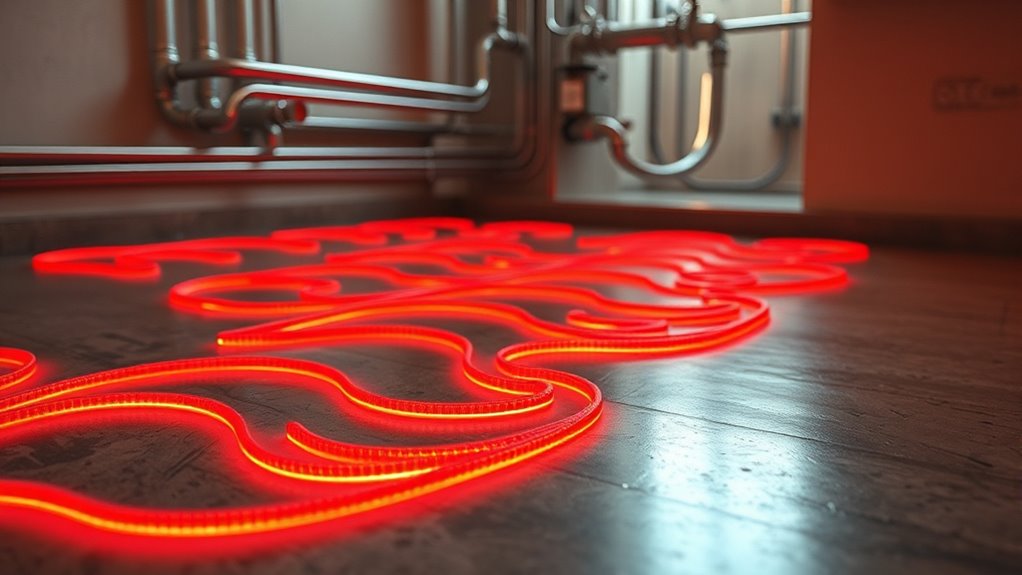
Heat transfer is the fundamental process that makes radiant floor and hydronic heating systems effective at warming indoor spaces. When you turn on these systems, heat moves from the heated water flowing through pipes or tubing into the surrounding materials and air, creating a comfortable environment. Understanding how heat transfer occurs helps you appreciate why these systems are efficient and how they provide even, consistent warmth.
Heat transfer from heated water to surrounding materials creates efficient, even indoor warmth.
The key to this process lies in the thermal conductivity of the materials used in your flooring and piping systems. Thermal conductivity measures how well a material can transfer heat. For radiant floors, materials like concrete, tile, or stone have high thermal conductivity, meaning they quickly absorb and distribute heat from the hot water pipes beneath. This property guarantees that warmth spreads evenly across the floor surface, directly affecting how comfortable you feel. Materials with low thermal conductivity, like wood or carpet, slow down heat transfer, which is why they are less effective as primary heating surfaces but can still contribute to overall comfort when combined with radiant systems.
Alongside conduction, convective heat transfer plays a significant role in warming your indoor space. Once the floor heats up via conduction, it warms the air immediately above it through convection. Warm air rises and circulates naturally, creating a gentle flow that distributes heat throughout the room. In some cases, you might notice that the temperature near the ceiling is similar to that near the floor, thanks to this convective process. Proper system design often incorporates fans or pumps to enhance convective heat transfer, ensuring that warm air reaches every corner of the room efficiently. This combination of conduction through the floor materials and convection in the air creates a balanced heating cycle that’s both energy-efficient and effective.
You might also consider that the rate of heat transfer depends on temperature differences. The greater the temperature difference between the hot water in the pipes and the room air, the faster heat moves through conduction and convection. This is why thermostats and control systems play an important role—they maintain ideal temperature levels, preventing unnecessary energy use while ensuring consistent warmth.
In essence, your radiant floor or hydronic heating system relies on the interplay between thermal conductivity and convective heat transfer to deliver comfort. By selecting materials with suitable thermal properties and optimizing convective airflow, you maximize the system’s efficiency. Understanding these principles helps you better appreciate how your heating setup works and how to maintain it for long-lasting, efficient performance.

PelPro PP150 Pellet Stove for Home Heating - 150 lb Hopper, 49,200 BTU Heats up to 2,500 Sq. Ft., Easy-Dial Temp Control, Built-in Thermostat with Auto-Ignition, Powerful & Quiet 265CFM Blower
PP150 pellet stoves for fireplaces are efficient for home heating up to 2,500 sq. ft. at almost 50,000...
As an affiliate, we earn on qualifying purchases.
Frequently Asked Questions
How Do Radiant Floor Systems Impact Indoor Air Quality?
Radiant floor systems improve indoor air quality by reducing dust circulation since they don’t rely on forced air. This minimizes the spread of allergens, leading to a healthier environment. You’ll notice less airborne dust and allergens, making it easier to breathe, especially if you have allergies or asthma. By eliminating traditional vents and fans, you create a cleaner, more comfortable space with better allergen reduction and improved indoor air quality.
What Are the Maintenance Requirements for Hydronic Heating Systems?
Maintain your hydronic heating system by flushing the system regularly to prevent build-up and guarantee efficiency. Monitor and service the pump consistently to avoid breakdowns. Check for leaks, bleed air from the lines, and replace filters as needed. Proper maintenance minimizes malfunctions, maximizes performance, and prolongs system lifespan. Stay proactive with system flushing and pump maintenance, ensuring your radiant heating remains reliable, efficient, and effective throughout its operational life.
How Does Insulation Affect Heat Transfer Efficiency?
Insulation markedly boosts heat transfer efficiency by increasing thermal resistance, which reduces heat loss. When you add proper insulation, it retains more heat within your radiant floor or hydronic system, improving overall performance. This means your system works less hard to maintain desired temperatures, saving energy and increasing comfort. Proper insulation minimizes heat escape, ensuring better heat retention and making your heating system more effective and energy-efficient.
Can Radiant Floor Heating Be Integrated With Solar Energy?
You can absolutely integrate radiant floor heating with solar energy. Solar panel integration allows you to harness sunlight efficiently, reducing energy costs. To guarantee consistent warmth, you can incorporate thermal storage systems, which store excess solar heat for later use. This combination maximizes renewable energy use, making your heating system more sustainable and cost-effective, even on cloudy days or during winter months.
What Are the Long-Term Cost Savings of Radiant Versus Traditional Systems?
You’ll see long-term cost savings with radiant systems because of their superior energy efficiency, which reduces your heating bills over time. Although the initial investment is higher, you’ll benefit from lower operating costs and increased comfort. As your system uses less energy, you save money annually, making radiant heating a smart choice financially in the long run compared to traditional systems.

Canyon Lodge Large Pellet Stove
Heats up to 2,000-3,000 sq. ft.
As an affiliate, we earn on qualifying purchases.
Conclusion
Think of your radiant floor system as a gentle river flowing beneath your feet, quietly delivering warmth with every ripple. As you walk across, you feel the comforting embrace of this hidden stream, spreading heat evenly and effortlessly. Understanding heat transfer is like mastering the currents beneath the surface—once you do, you can guarantee your home stays cozy, just like a peaceful river guiding warmth where it’s needed most.

VEVOR Floor Heating Mat,10 Sq.ft. 14℉-113℉ Electric Radiant Floor Heated Warm System with Digital Floor Sensing Thermostat, 110-120V Includes Installation Monitor, Adhesive Back for Easy Installation
Comfortable and Uniform Heating: The 10 Square Feet floor heating cable kit includes the heating mat, thermostat, alarm,...
As an affiliate, we earn on qualifying purchases.

Large Pellet Stove - 130lb Hopper
Built-in WiFi – Smart Home Technology
As an affiliate, we earn on qualifying purchases.