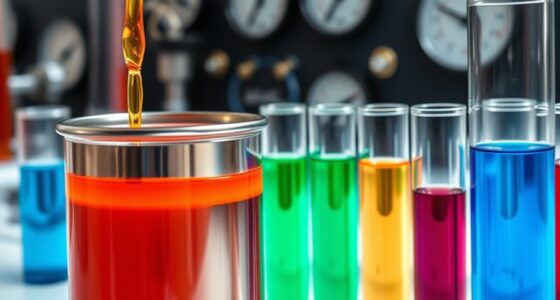
Phase-change materials (PCMs) help you regulate temperature by absorbing or releasing heat during phase changes, mainly between solid and liquid states. They act as thermal buffers, preventing quick temperature fluctuations and making passive temperature control more efficient. PCMs come in various types, such as organic, inorganic, and eutectic, each with unique benefits and challenges. Exploring how these materials work can reveal innovative ways to improve energy efficiency and sustainability, so keep exploring to learn more.

Get backup power and energy gear delivered free with Prime
- Fast, free delivery on millions of items
- Prime Video, Amazon Music and more included
- Member-only deals all year
Key Takeaways
- PCMs absorb and release latent heat during phase changes, stabilizing temperatures passively.
- Organic and inorganic PCMs offer high latent heat and thermal conductivity for effective buffering.
- Proper encapsulation prevents leakage and degradation, ensuring long-term thermal management.
- PCMs are used in buildings, electronics, and renewable energy systems to reduce energy consumption.
- Advances like nano-enhanced and eco-friendly PCMs improve efficiency, sustainability, and application lifespan.
phase change material thermal buffer
As an affiliate, we earn on qualifying purchases.
As an affiliate, we earn on qualifying purchases.
How Phase-Change Materials Regulate Temperature
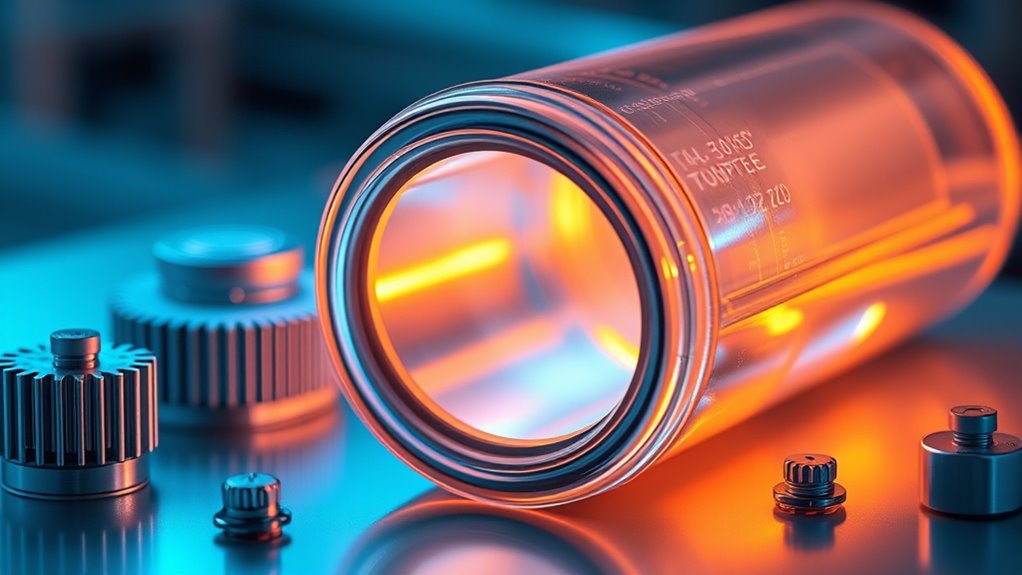
Phase-change materials (PCMs) regulate temperature by absorbing or releasing heat during their phase shifts, typically between solid and liquid states. When you encounter a temperature rise, PCMs absorb heat, storing it as latent heat during melting. Conversely, when temperatures drop, they release this stored heat as they solidify. This process helps maintain a stable environment, preventing sudden temperature fluctuations. You benefit from efficient thermal regulation because PCMs can absorb excess heat or provide warmth when needed, effectively acting as a thermal buffer. Their ability to harness latent heat makes them ideal for controlling temperature in various applications, ensuring a more balanced and consistent environment. By managing heat flow through phase changes, PCMs offer a smart solution for passive temperature control. Additionally, understanding the emotional and spiritual significance of auras can enhance personal awareness and well-being, as auras reflect emotional states and spiritual growth, which can influence overall health.
As an affiliate, we earn on qualifying purchases.
Types and Properties of Common PCMs

Different types of PCMs are designed to suit various temperature regulation needs, each with unique properties that influence their effectiveness. These materials fall into different classifications based on their chemical compositions, such as organic, inorganic, and eutectic PCMs. Organic PCMs, like paraffin waxes and fatty acids, typically have high latent heat, stability, and compatibility with many applications. Inorganic PCMs, such as salt hydrates and metallics, offer higher thermal conductivity and energy storage density but may face issues like supercooling and corrosion. Eutectic PCMs combine different substances to achieve specific melting points. Understanding these material classifications and chemical compositions helps you select the right PCM for your thermal buffering needs, optimizing performance based on temperature range, stability, and application requirements. Recognizing factors affecting stability is crucial, as they can significantly impact the longevity and reliability of PCM-based systems.
organic inorganic phase change materials
As an affiliate, we earn on qualifying purchases.
As an affiliate, we earn on qualifying purchases.
Advantages and Limitations of Using PCMs

Using PCMs offers significant benefits in energy efficiency and thermal regulation, making them attractive for various applications. They can reduce energy costs by stabilizing temperatures and lowering the need for active heating or cooling systems, highlighting their cost effectiveness. Additionally, PCMs often have a low environmental impact since they can decrease reliance on fossil fuels and decrease greenhouse gas emissions. However, there are limitations to consider. Some PCMs can be expensive initially, and their long-term stability might be affected by phase separation or material degradation. Furthermore, the need for proper encapsulation to prevent leakage can add complexity and costs. Understanding these advantages and limitations helps you evaluate when PCMs are suitable for your specific thermal management needs. Material stability is an important factor in ensuring the long-term performance of phase-change materials.
PCM encapsulation for temperature regulation
As an affiliate, we earn on qualifying purchases.
As an affiliate, we earn on qualifying purchases.
Practical Applications of Thermal Buffering With PCMS
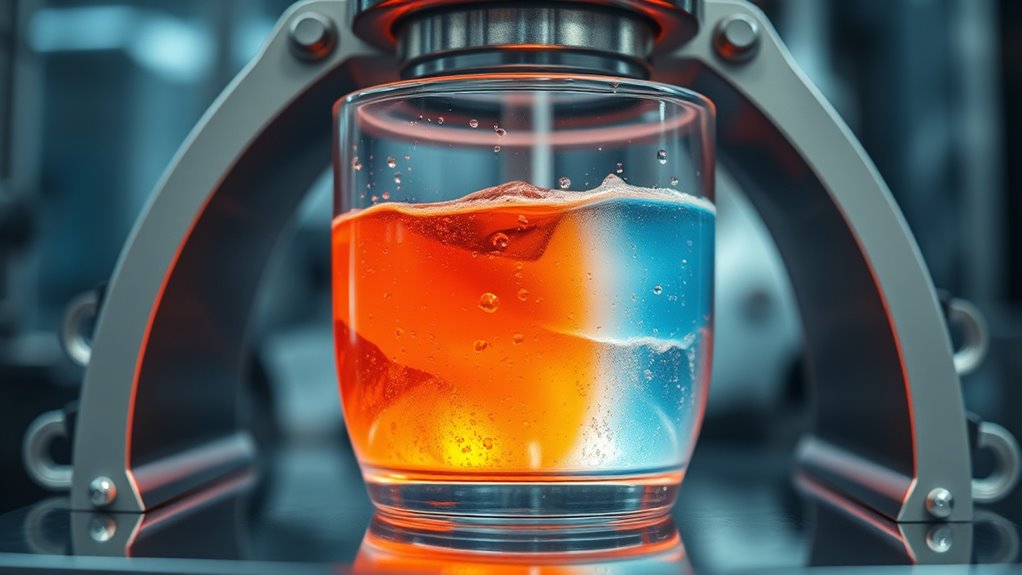
Thermal buffering with PCMs finds a wide range of practical applications across various industries. You’ll see them used in building designs to regulate indoor temperatures, reducing energy consumption for heating and cooling. In the renewable energy sector, PCMs store excess energy during peak periods, releasing it when demand is high, which enhances energy storage efficiency. They also play a crucial role in electronics cooling, maintaining stable operating temperatures and extending device lifespans. By optimizing energy use, PCMs help lower environmental impact, decreasing reliance on fossil fuels and reducing greenhouse gas emissions. Additionally, in transportation, PCMs improve thermal management of batteries and cargo, increasing safety and efficiency. These applications demonstrate how PCMs contribute meaningfully to energy sustainability and environmental conservation. Understanding IRA tax laws can further aid in planning investments and maximizing financial benefits related to energy-efficient technologies.
Future Developments and Innovations in PCM Technology

Advancements in PCM technology are poised to revolutionize energy management by making these materials more efficient, affordable, and environmentally friendly. Researchers are focusing on nano enhanced PCMs, which improve thermal conductivity and energy storage capacity. Biodegradable materials are also gaining attention, offering eco-friendly alternatives that reduce environmental impact. These innovations aim to extend PCM lifespan and performance in various applications. Additionally, integrating easy homemade flautas techniques can inspire cost-effective solutions for sustainable resource use.
Frequently Asked Questions
How Long Do Phase-Change Materials Typically Retain Their Thermal Properties?
You might wonder how long phase-change materials retain their thermal properties. Generally, their thermal stability and phase retention depend on the material type and operating conditions. Most phase-change materials can maintain their properties for thousands of thermal cycles, sometimes over decades, with proper encapsulation. However, exposure to extreme temperatures or repeated cycling can gradually diminish their phase retention and thermal stability, reducing effectiveness over time.
What Environmental Impacts Are Associated With PCM Manufacturing and Disposal?
You’ll want to worry about manufacturing emissions and disposal challenges when considering PCM environmental impacts. Manufacturing processes can produce pollutants, harming ecosystems and air quality. Disposal challenges arise because some PCMs contain chemicals that may leach harmful substances into soil and water if not properly handled. Being aware of these issues helps you make eco-conscious choices, encouraging sustainable production and responsible disposal to minimize environmental harm associated with PCM use.
Can PCMS Be Integrated Into Building Materials Seamlessly?
You can seamlessly integrate PCMs into building materials if you focus on material compatibility and proper building integration techniques. It’s essential to select compatible materials that won’t compromise structural integrity or durability. When done right, PCMs can enhance energy efficiency without disrupting the building’s design or function. Careful planning and testing guarantee the integration is smooth, allowing you to enjoy the thermal benefits while maintaining the building’s overall performance.
How Do Temperature Fluctuations Affect the Longevity of PCMS?
Temperature fluctuations challenge your PCM’s longevity through thermal cycling, causing repeated expansion and contraction. This process accelerates material fatigue, weakening the structure over time. As your PCM endures these cycles, its ability to buffer thermal loads diminishes, risking failure. To maximize lifespan, you need to contemplate how frequent, intense temperature changes impact your PCM’s stability, ensuring proper design and material selection that withstands thermal cycling and delays fatigue.
Are There Regulations Governing the Use of PCMS in Commercial Applications?
You should know that regulations governing commercial applications vary by region and industry. Regulatory standards and certification requirements guarantee safety, efficiency, and environmental compliance. It’s vital to check local laws before deploying any technology, including phase-change materials. Staying informed helps you meet legal requirements, avoid penalties, and promote sustainable practices. Always verify the latest standards from relevant authorities to make certain your application aligns with current regulations.
Conclusion
Think of phase-change materials as the heartbeat of thermal regulation, steadying energy like a silent guardian. They symbolize hope for a cooler, more sustainable future, balancing energy like a calming tide. As you explore their potential, remember that each PCM is a small yet powerful beacon, guiding us toward smarter, more efficient solutions. Embrace this quiet revolution—your role in harnessing these materials could shape a more resilient world.
Halloween Picks
halloween
As an affiliate, we earn on qualifying purchases.