
If you’re looking for the best DIY heat pump systems in 2025, I recommend options like the MRCOOL Easy Pro, MRCOOL 12000 BTU, and Senville mini splits. These systems are designed for straightforward installation, often featuring pre-charged lines and user-friendly components. They’re perfect for small to medium spaces and save you money on installation costs. Keep exploring to find detailed tips and what models suit your needs best.
Key Takeaways
- Many systems feature pre-charged Quick Connect lines, enabling straightforward DIY installation without specialized tools.
- Units like MrCool Easy Pro and similar models are designed for easy setup, suitable for experienced DIYers.
- Proper sizing, electrical hookup, and placement are crucial for safe, efficient DIY installation of heat pump systems.
- Some models may lack components like shut-off valves or protective grilles, requiring additional parts or professional assistance.
- Compatibility with existing ductwork, room size, and climate conditions should guide your choice for successful DIY installation.
MRCOOL 12000 BTU Ductless Inverter Mini Split Air Conditioner & Heat Pump
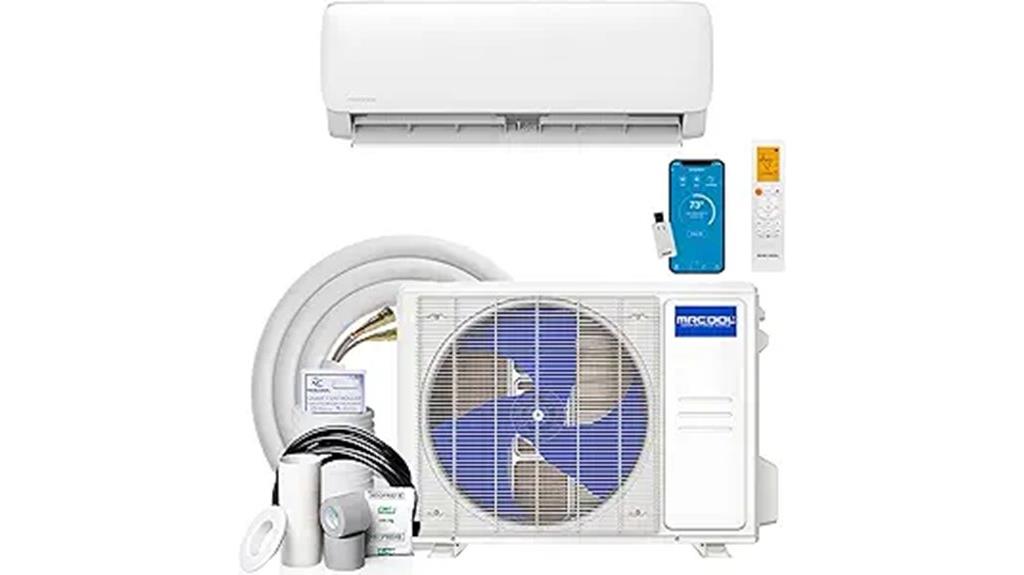
Are you looking for an energy-efficient, easy-to-install heating and cooling solution for your home or small office? The MRCOOL 12000 BTU Ductless Inverter Mini Split is perfect for that. This wall-mounted unit offers both heating and cooling, covering up to 550 square feet. Its inverter technology makes it energy-efficient, and features like timer mode, refrigerant leak detection, and Active Clean Technology improve air quality and maintenance. Rated 4.5 stars from hundreds of reviews, it’s designed for year-round comfort. Plus, as a DIY-friendly system, you can install it yourself, saving time and money while enjoying reliable climate control.
Best For: homeowners, small business owners, and DIY enthusiasts seeking an energy-efficient, easy-to-install heating and cooling solution for spaces up to 550 square feet.
Pros:
- Inverter technology provides energy-efficient operation and cost savings.
- Easy DIY installation suitable for homeowners without professional HVAC experience.
- Features like refrigerant leak detection and Active Clean Technology enhance air quality and maintenance.
Cons:
- Limited to spaces up to 550 square feet, not ideal for larger areas.
- Noise level at 43 decibels may be noticeable in very quiet environments.
- As a recent market entry, limited long-term customer feedback and warranty history.
MRCOOL 18000 BTU Ductless Mini Split Air Conditioner & Heat Pump System

The MRCOOL 18000 BTU Ductless Mini Split is an ideal choice for homeowners or DIY enthusiasts looking for an efficient, all-in-one heating and cooling solution that’s easy to install. With 18,000 BTUs, it’s perfect for spaces up to 800 sq ft. Its inverter technology guarantees quiet operation at just 43 decibels, providing reliable climate control year-round. The sleek, neutral design blends seamlessly into any interior. Plus, the system supports WiFi connectivity, allowing control via Google Assistant or Amazon Alexa. Its straightforward installation process makes it a top pick for those wanting to save on professional costs while enjoying consistent comfort.
Best For: homeowners or DIY enthusiasts seeking an efficient, easy-to-install ductless mini split system with smart WiFi control for spaces up to 800 sq ft.
Pros:
- Easy DIY installation reduces professional costs and mess
- Quiet operation at just 43 decibels ensures a peaceful environment
- Combines heating and cooling for year-round climate control
Cons:
- Limited to spaces up to 800 sq ft, not suitable for larger areas
- Requires a 230V power supply, which may need electrical upgrades in some homes
- WiFi connectivity depends on stable internet, which could affect remote control reliability
Watts Heat H2O Hot Water Recirculation System with Timer
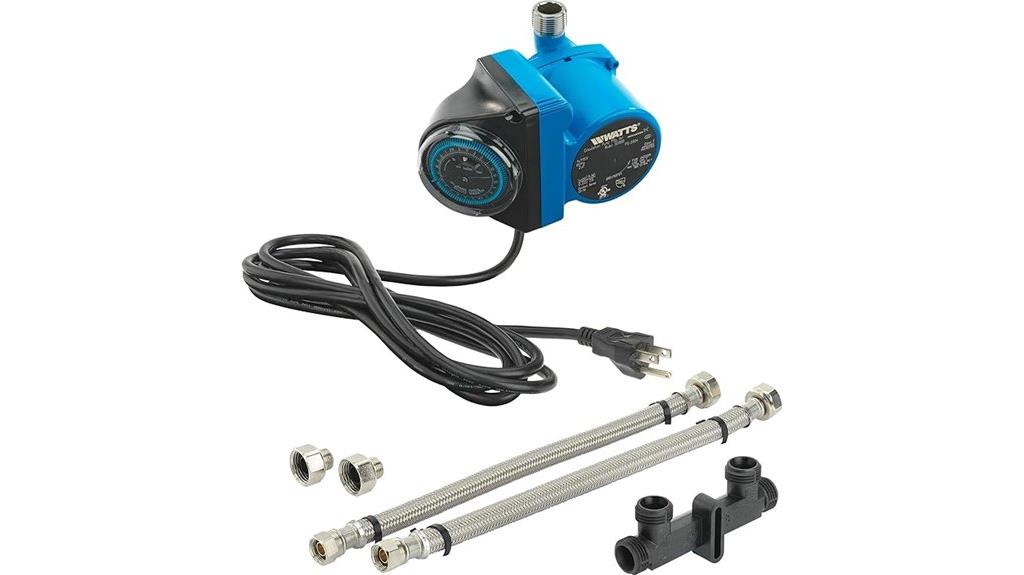
If you’re looking for an easy-to-install solution to get instant hot water, the Watts Heat H2O Hot Water Recirculation System with Timer is an excellent choice. It uses thermal bypass technology with a thermostatically controlled sensor valve and a pump at the water heater to keep water at 98°F throughout your home. Designed for DIY installation, it runs on 120V and requires no return line or extra electrical work. The system can deliver hot water in just 15 seconds, saving up to 15,000 gallons annually and reducing water bills by up to 10%. Its programmable timer offers flexible operation, making it both eco-friendly and cost-effective.
Best For: homeowners seeking an easy-to-install, energy-efficient solution to deliver instant hot water and reduce water waste without complex plumbing or electrical modifications.
Pros:
- Simple DIY installation with no need for a return line or additional electrical work
- Quick hot water delivery within 15 seconds, reducing wait time and water waste
- Programmable timer allows flexible operation to match household usage patterns
Cons:
- Not compatible with tankless water heaters
- Designed for indoor use only, limiting placement options
- Limited maximum flow rate of 3.4 GPM, which may not suit larger households with high water demands
MrCool VersaPro 3 Ton 16.1 SEER2 Central Ducted Heat Pump Split System
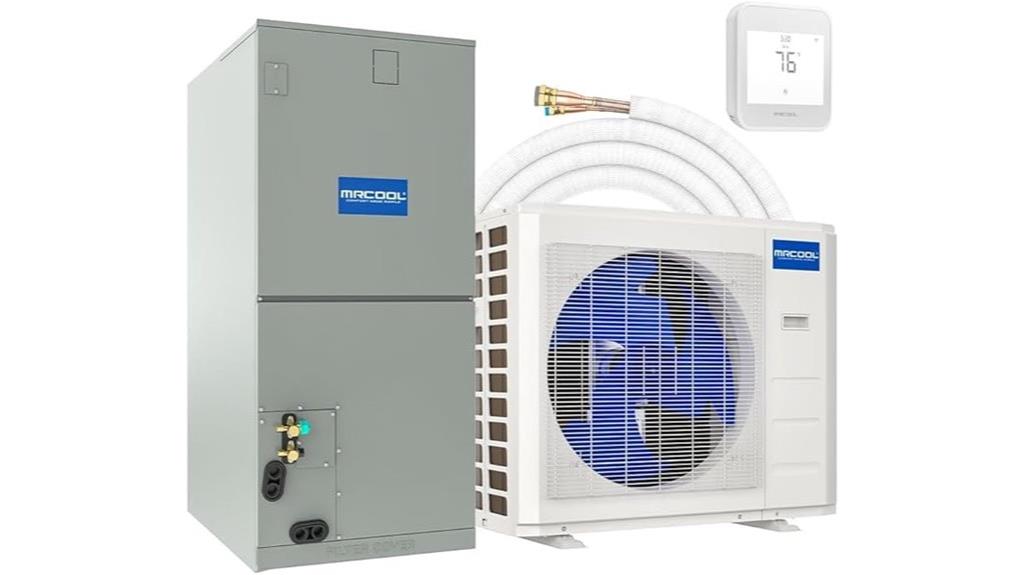
For homeowners seeking a reliable, energy-efficient cooling and heating solution they can install themselves, the MrCool VersaPro 3 Ton 16.1 SEER2 Central Ducted Heat Pump Split System stands out. It’s designed for multiposition installation and includes a 35-foot pre-charged line set, smart thermostat, and self-diagnostic features. With a 3-ton capacity, it’s perfect for medium-sized spaces. It runs efficiently with 16.1 SEER2 and uses eco-friendly R454B refrigerant. Its inverter technology ensures precise temperature control and reduces utility bills. Weighing just over 132 pounds, it’s manageable for DIY installation, making it a solid choice for those wanting energy savings and ease of setup.
Best For: homeowners seeking a reliable, energy-efficient, DIY-installed ducted heat pump system for medium-sized spaces.
Pros:
- Easy to install with pre-charged 35ft line set and DIY-friendly design
- High energy efficiency with 16.1 SEER2 and eco-friendly R454B refrigerant
- Includes smart thermostat with self-diagnostic and filter reminder features
Cons:
- Rated 3.7 out of 5 stars from limited reviews, indicating mixed customer satisfaction
- Available for purchase starting February 14, 2025, which may delay installation plans
- Relatively heavy at over 132 pounds, potentially requiring assistance during setup
MrCool Easy Pro 12k BTU Ductless Heat Pump Split System
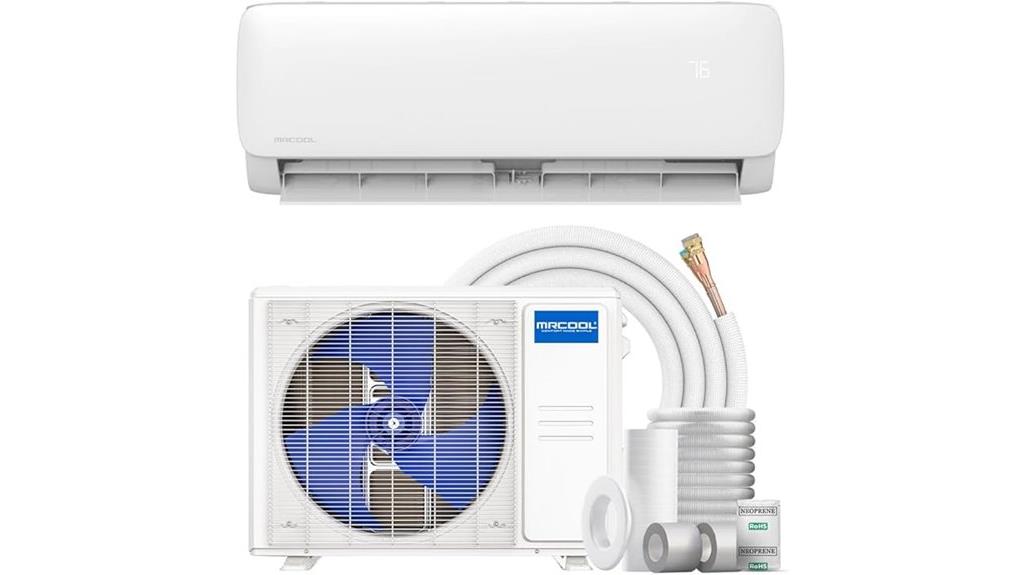
Designed for DIY enthusiasts, the MrCool Easy Pro 12k BTU Ductless Heat Pump Split System simplifies installation with its user-friendly setup process. It offers 19.5 SEER2 efficiency and a capacity suitable for spaces under 1200 sq ft, like sunrooms or garages. The system provides reliable heating and cooling year-round, with quiet operation at just 43 decibels. Its durable gold fin condenser resists rust, and the included 16-foot lineset makes connecting indoor and outdoor units straightforward. Weighing about 133 pounds, it’s compatible with 115 volts and requires no batteries. With a 1-year labor warranty and positive customer feedback, it’s an excellent choice for a DIY heat pump upgrade.
Best For: DIY homeowners seeking an energy-efficient, easy-to-install ductless heat pump system suitable for small to medium spaces under 1200 sq ft.
Pros:
- User-friendly installation designed for DIY enthusiasts with included 16-foot lineset
- Quiet operation at just 43 decibels, ideal for living or working spaces
- Durable gold fin condenser coating offers superior rust and corrosion resistance
Cons:
- Weighs approximately 133 pounds, which may be heavy for some installers
- Limited to 115-volt power supply, potentially restricting installation locations
- Only comes with a 1-year labor warranty, which may be shorter than some competitors
YITAHOME 12000 BTU Mini Split Air Conditioner Heat Pump System
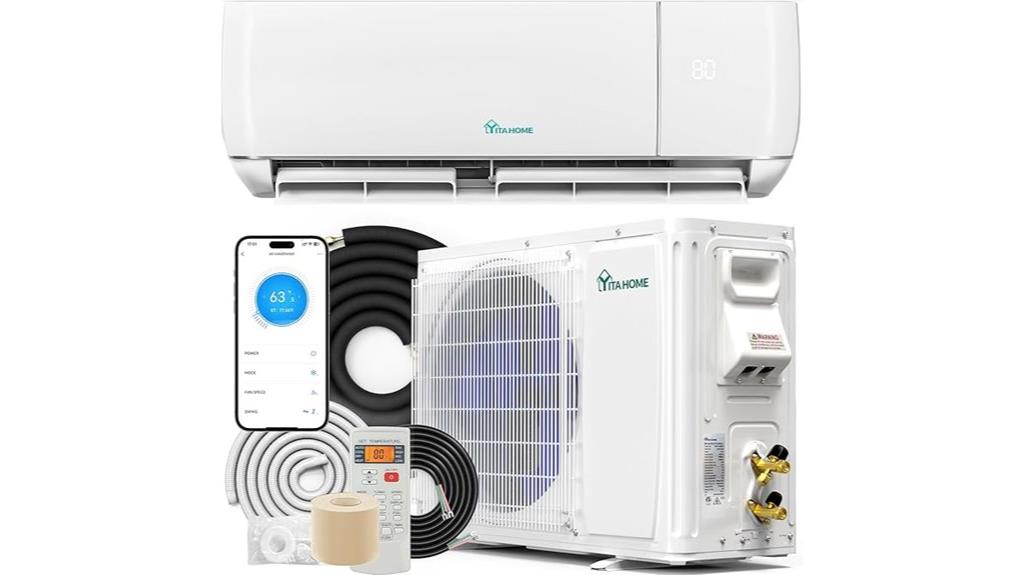
Looking to upgrade your space with a reliable, energy-efficient climate control system you can install yourself? The YITAHOME 12000 BTU Mini Split Air Conditioner Heat Pump System might be just what you need. It’s Wi-Fi enabled, offers 20 SEER2 inverter technology, and is suitable for rooms up to 750 sq. ft. Perfect for bedrooms, living rooms, or garages, it features five modes including heat and cool, with smart functions like self-diagnosis and sleep mode. Operating quietly below 41 decibels, it’s efficient and versatile. While installation requires a licensed pro, its all-encompassing kit and smart features make it a solid DIY-friendly option for reliable year-round comfort.
Best For: homeowners or renters seeking an energy-efficient, Wi-Fi-enabled mini split system for spaces up to 750 sq. ft., suitable for DIY installation with professional help.
Pros:
- Energy-efficient inverter technology with 20 SEER2 rating saves on electricity bills
- Quiet operation below 41 decibels ensures undisturbed comfort
- Smart features like Wi-Fi connectivity, self-diagnosis, and sleep mode for convenience
Cons:
- Installation requires a licensed HVAC professional, which may add to costs
- System ships in two separate packages that need to be assembled and installed
- Some components, like shut-off valves housing and side protection grille, are not included in the kit
MrCool Easy Pro 18k BTU Ductless Heat Pump Split System
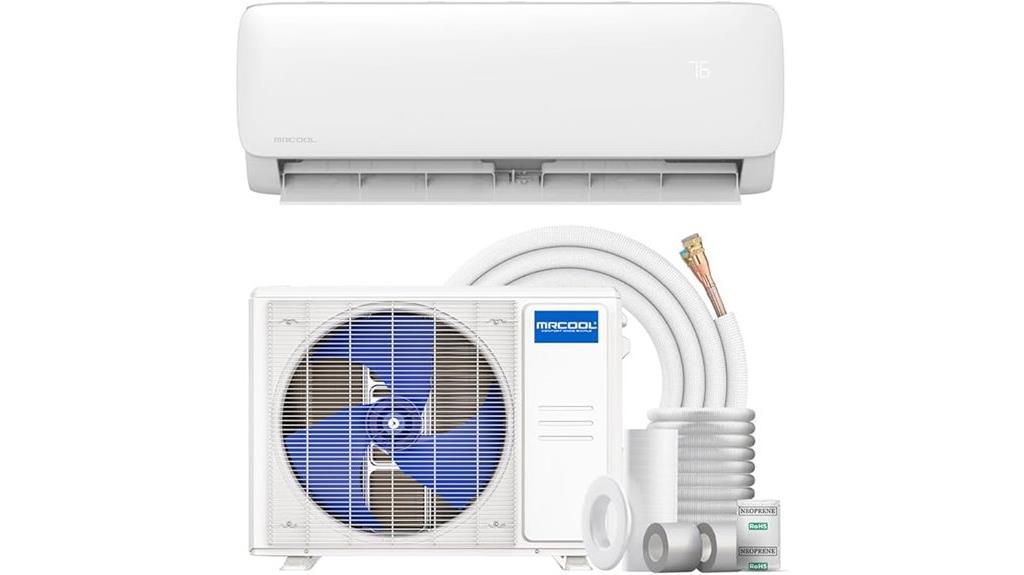
The MrCool Easy Pro 18k BTU Ductless Heat Pump Split System stands out as an ideal choice for homeowners who want to install their own heating and cooling solution without professional help. This 5th-generation system offers 18.9-20.2 SEER2 efficiency and a capacity suitable for spaces under 1200 sq ft, like sunrooms or garages. It provides reliable heating and cooling with an HSPF2 of 11.2. Its design includes a corrosion-resistant Gold Fin condenser and a 16-foot lineset for easy installation. Weighing just over 132 pounds, it’s built for DIY installation, backed by a one-year labor warranty, making it a top option for self-installers in 2025.
Best For: DIY homeowners seeking an efficient, easy-to-install ductless heating and cooling system for small to medium spaces under 1200 sq ft.
Pros:
- Easy DIY installation with included 16-foot lineset and straightforward design.
- High efficiency with up to 20 SEER2 and reliable year-round heating and cooling.
- Durable features like Gold Fin condenser coating for corrosion resistance.
Cons:
- Weighs over 132 pounds, which may require assistance during installation.
- Limited to spaces under 1200 sq ft, not suitable for larger areas.
- Only includes a 1-year labor warranty, which might be short for some users.
MRCOOL 12000 BTU 115V Ductless Mini Split Air Conditioner & Heat Pump System
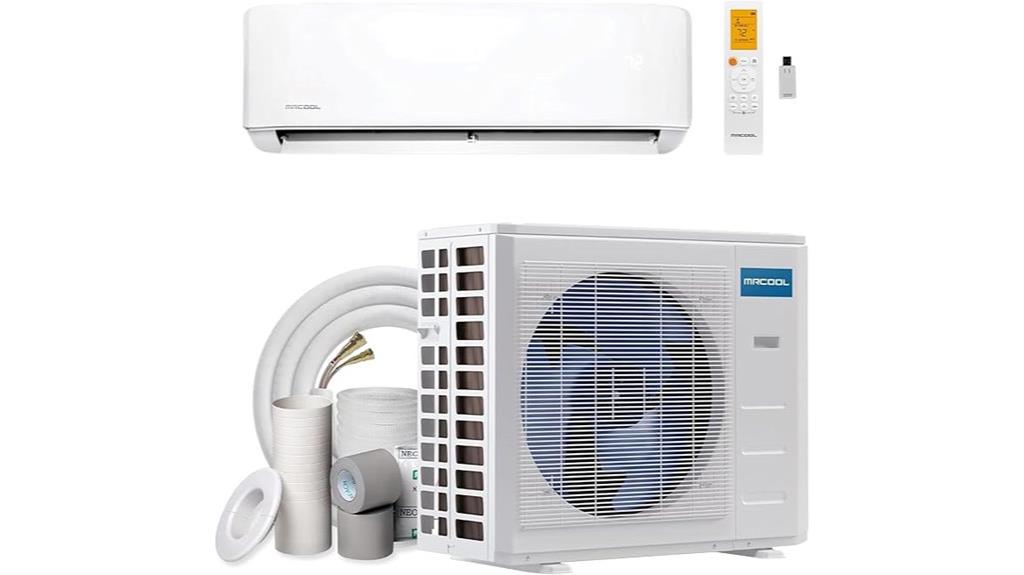
If you want a powerful, energy-efficient heating and cooling solution that’s easy to install yourself, the MRCOOL 12000 BTU ductless mini split system is an excellent choice. This fifth-generation DIY model offers both cooling and heating, making it perfect for spaces up to 550 square feet. It features a pre-charged 25-foot Quick Connect line set, allowing you to install it in hours without special tools or training. The sleek, modern design blends seamlessly into your interior, while the smart controller with Alexa and Google Assistant compatibility gives you remote, precise climate control. Quiet and efficient, this system delivers year-round comfort with minimal effort.
Best For: homeowners, small business owners, or office managers seeking an easy-to-install, energy-efficient heating and cooling solution for spaces up to 550 square feet.
Pros:
- Easy DIY installation with pre-charged 25-foot Quick Connect line set, no special tools needed
- Combines efficient cooling and heating for year-round comfort
- Smart control compatibility with Google Assistant and Amazon Alexa for remote operation
Cons:
- Suitable only for spaces up to 550 square feet, may not meet larger area needs
- Installation might be challenging in very tight or unusual wall spaces despite being DIY-friendly
- As a ductless system, it may require professional assessment for optimal placement and performance
MRCOOL 24000 BTU Ductless Inverter Mini Split AC & Heat Pump System

For homeowners and small business owners seeking an easy, cost-effective way to upgrade their climate control, the MRCOOL 24000 BTU Ductless Inverter Mini Split System stands out due to its straightforward DIY installation. It comes with pre-charged Quick Connect line sets, so you don’t need special tools or training—just a few hours, and you’re done. This system is suitable for spaces up to 1,000 sq ft, offers heating and cooling down to 5°F, and features smart alerts for maintenance. With WiFi control and reliable operation, it’s an efficient, user-friendly solution for comfortable, energy-efficient climate management.
Best For: homeowners and small business owners seeking an easy-to-install, energy-efficient climate control solution for spaces up to 1,000 sq ft with smart features and reliable heating and cooling capabilities.
Pros:
- Easy DIY installation with pre-charged Quick Connect line sets, requiring no special tools or training
- Capable of heating and cooling in low ambient temperatures down to 5°F, suitable for year-round comfort
- Includes smart WiFi control and maintenance alerts for enhanced convenience and efficiency
Cons:
- Designed for spaces up to 1,000 sq ft, may not be suitable for larger areas
- Installation, while simplified, still requires some basic technical skills and careful handling of components
- Limited color options and aesthetic customization for different interior styles
Senville 3 Ton Central Air Conditioner Heat Pump Split System
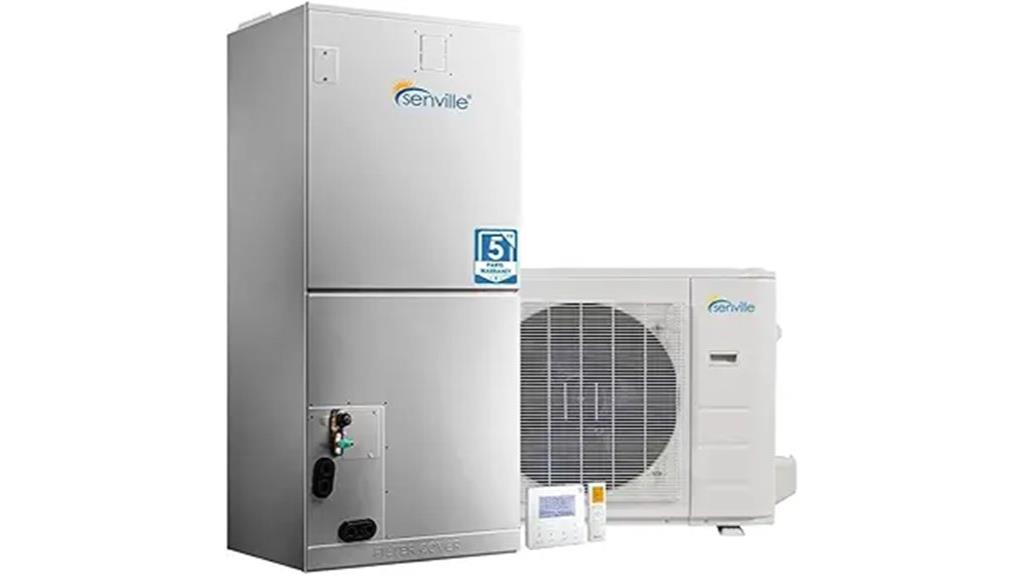
While the Senville 3 Ton Central Air Conditioner Heat Pump Split System is designed primarily for professional installation, its advanced features make it a compelling option for those with some technical skills seeking a reliable cooling and heating solution. It offers 36,000 BTU with inverter and variable speed technology, making it suitable for large spaces up to 2,000 sq ft. It can convert existing central AC into a high-efficiency mini-split system and operates efficiently in extreme cold down to -22°F. Built with durable materials and backed by a 10-year compressor warranty, it’s designed for long-term reliability, though professional installation is recommended.
Best For: Homeowners and small business owners seeking a high-efficiency, reliable heating and cooling system capable of covering large areas up to 2,000 sq ft, especially those looking to upgrade or replace existing central AC systems.
Pros:
- Inverter and variable speed technology for efficient, customizable temperature control
- Capable of reliable heating in extremely cold temperatures down to -22°F/-30°C
- Durable construction with a 10-year compressor warranty and 5-year parts warranty
Cons:
- Professional installation required; not suitable for DIY setup
- Higher initial investment compared to traditional systems
- May be overpowered or unnecessary for small or single-room spaces
MrCool Easy Pro 9k BTU Ductless Heat Pump Split System
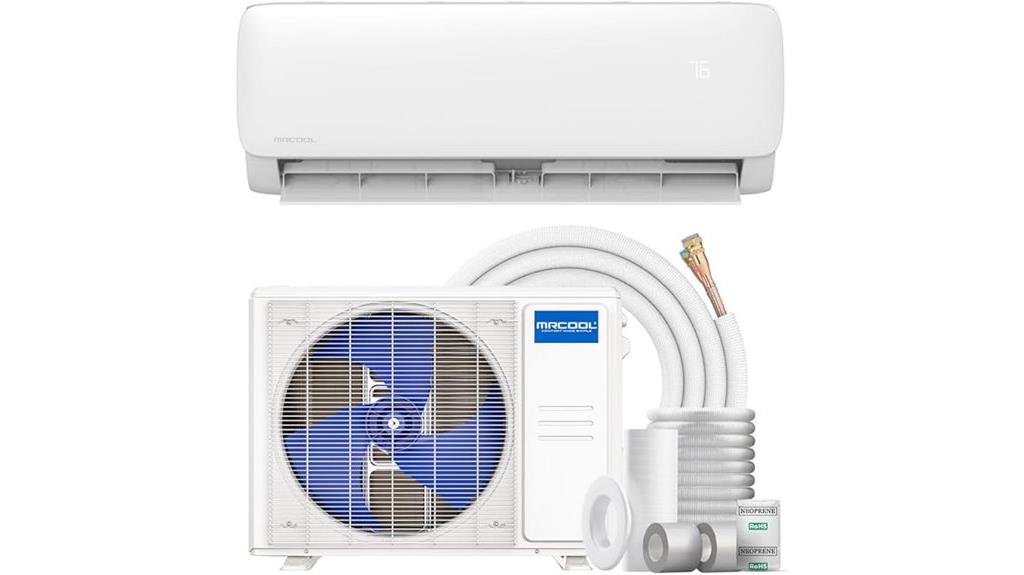
The MrCool Easy Pro 9k BTU Ductless Heat Pump Split System is an excellent choice for DIY enthusiasts seeking an efficient, easy-to-install heating and cooling solution for small to medium spaces. It offers a 20.2 SEER2 rating and handles spaces up to 1200 sq ft, making it perfect for sunrooms, garages, or game rooms. The system includes a 16-foot lineset and is designed for wall-mount installation, operating quietly at 43 decibels. With corrosion-resistant gold fin coating and a straightforward setup, it combines durability with user-friendly features, ensuring year-round comfort with both heating and cooling capabilities.
Best For: DIY homeowners seeking an efficient, easy-to-install ductless heating and cooling solution for small to medium spaces such as sunrooms, garages, or game rooms.
Pros:
- Easy DIY installation with included lineset and wall-mount design
- High energy efficiency with 20.2 SEER2 rating and 11.2 HSPF2 for year-round use
- Durable gold fin condenser coating resists corrosion and rust
Cons:
- Slightly heavy at 132.7 pounds, which may require assistance during setup
- Limited to spaces under 1200 sq ft, not suitable for larger areas
- Noise level of 43 decibels, which may be noticeable in very quiet environments
COSTWAY 12000BTU Mini Split Air Conditioner & Heater
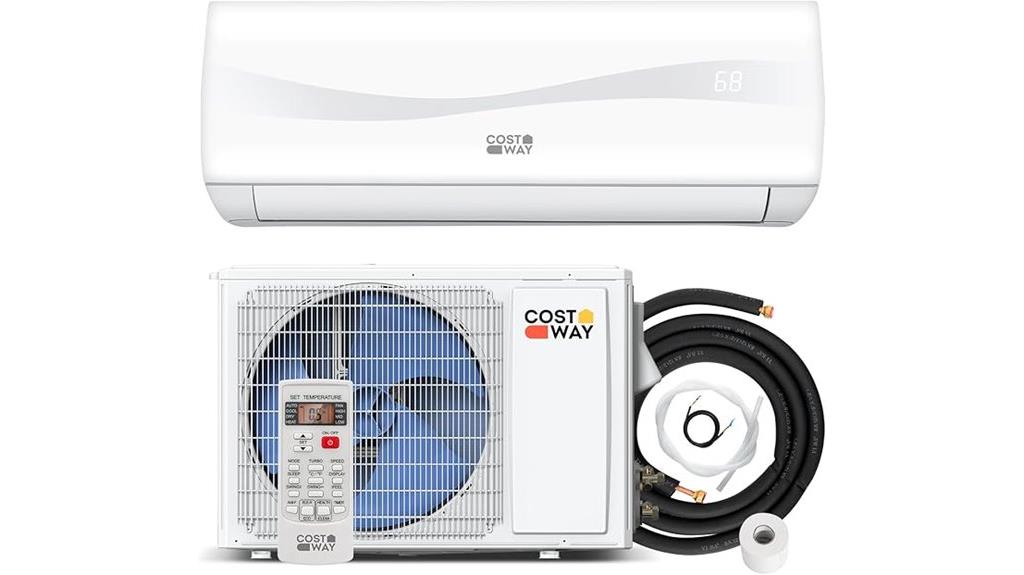
If you’re looking for an energy-efficient, easy-to-install mini split system, the COSTWAY 12000BTU Mini Split Air Conditioner & Heater is an excellent choice. It’s capable of cooling or heating rooms up to 750 sq. ft. with a 20 SEER2 rating, making it both powerful and efficient. The unit features advanced inverter technology that adjusts power for reduced energy use and longer compressor life. With multiple modes—auto, cool, dry, heat, fan—and quiet operation, it’s versatile and user-friendly. Plus, it’s eco-friendly, pre-charged with R32 refrigerant, and backed by a solid warranty, making it a reliable DIY option.
Best For: homeowners seeking an energy-efficient, easy-to-install ductless mini split system suitable for cooling and heating medium-sized rooms up to 750 sq. ft.
Pros:
- High energy efficiency with a 20 SEER2 rating, reducing energy costs.
- Versatile operation with five modes and four fan speeds for customized comfort.
- Eco-friendly R32 refrigerant and long-term warranty support reliable performance.
Cons:
- Installation must be performed by a licensed HVAC professional, which may add to initial costs.
- The unit’s maximum coverage is up to 750 sq. ft., limiting larger room applications.
- Availability of R32 refrigerant may vary; refilling might require consulting local vendors.
Senville LETO Series Mini Split Air Conditioner Heat Pump (9000 BTU)

The Senville LETO Series 9000 BTU Mini Split Heat Pump is an excellent choice for homeowners or small business owners looking to enhance their space with versatile climate control. This inverter system offers heating down to -15°C and cooling for year-round comfort. It functions as a dehumidifier, fan, and turbo mode, making it highly adaptable. The stylish design suits various settings, from homes to retail spaces. It comes with a complete installation kit, including a 16-foot line set, but professional installation is required. Backed by a 5-year warranty, it combines reliable performance with modern features like Alexa compatibility for remote control.
Best For: homeowners and small business owners seeking versatile, year-round climate control with stylish design and smart connectivity.
Pros:
- Inverter technology for efficient heating and cooling down to -15°C
- Multi-functionality including dehumidifier, fan, and turbo mode
- Alexa compatibility for remote control and voice commands
Cons:
- Professional installation required; not suitable for DIY setup
- Labor costs are not included in the warranty coverage
- Limited to 25 ft. pre-loaded refrigerant line set, which may restrict placement options
12000 BTU Ductless Mini Split AC Heat Pump
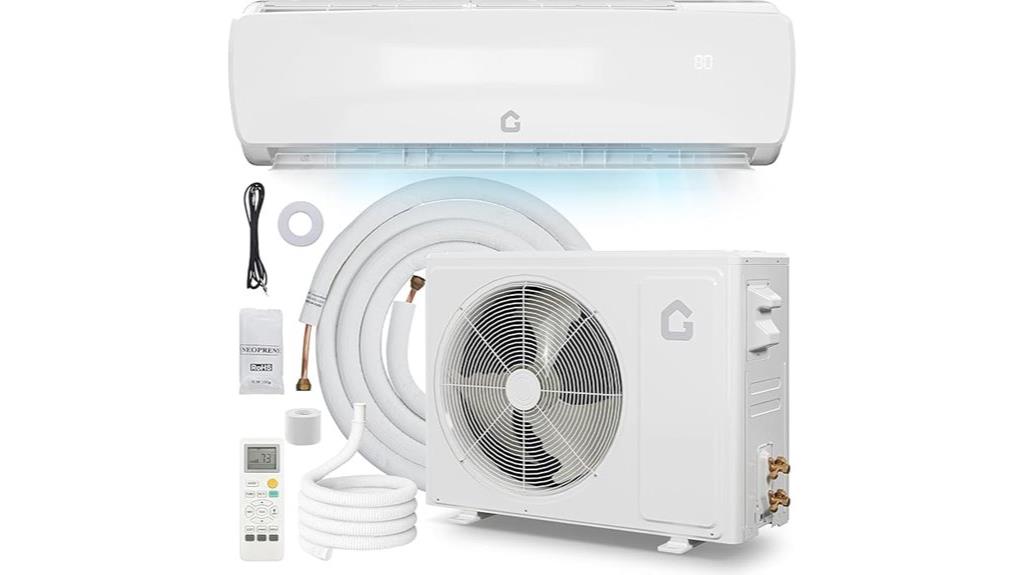
Looking for an easy-to-install heat pump that offers reliable year-round climate control? The 12,000 BTU Ductless Mini Split AC Heat Pump is perfect for apartments or rooms between 750 and 1,250 sq ft. It features a 19 SEER rating for energy efficiency, ultra-quiet operation, and a simple plug-and-play setup with a 115V connection. With four modes—cooling, heating, dehumidifying, and fan—it handles all seasons effortlessly. Built for durability, it includes long-lasting components like gold-fin coils and automatic defrost. Easy to install and highly efficient, this system keeps your space comfortable year-round without hassle.
Best For: individuals seeking an energy-efficient, easy-to-install ductless mini split system ideal for small to medium-sized rooms or apartments up to 1250 sq ft.
Pros:
- Energy-efficient 19 SEER rating reduces electricity costs over time.
- Ultra-quiet operation at indoor and outdoor units enhances comfort without noise disturbance.
- DIY plug-and-play installation simplifies setup without professional help.
Cons:
- Limited coverage area suitable primarily for spaces up to 1250 sq ft.
- No included remote control mention, which may affect convenience.
- Availability date listed as October 21, 2025, indicating potential delay in purchase or delivery.
Instant Hot Water Recirculating Pump Kit
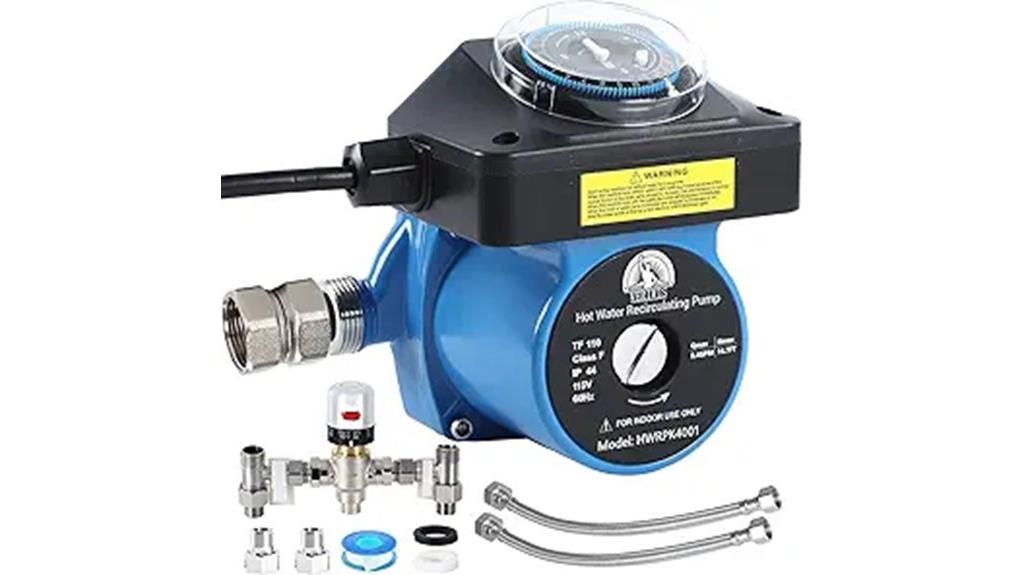
The VERIWIS Instant Hot Water Recirculating Pump Kit stands out as an ideal choice for homeowners seeking an easy, energy-efficient solution to deliver hot water instantly. It saves water, cuts heating costs, and boosts comfort by delivering hot water within 10 seconds through thermal bypass technology—no return line needed. The kit includes a quiet 120V pump, stainless steel sensor valve, fittings, and detailed instructions, making installation straightforward. With programmable 24-hour timers and compatibility with standard water heaters, it’s perfect for larger homes. Durable, energy-efficient, and maintenance-free, this kit pays for itself in just a few years while enhancing everyday convenience.
Best For: homeowners seeking an easy, energy-efficient solution to deliver instant hot water, especially in larger homes with standard tank water heaters.
Pros:
- Saves water and reduces heating costs by delivering hot water within 10 seconds.
- Easy DIY installation with all necessary components included; no additional store runs needed.
- Durable, energy-efficient, and maintenance-free stainless steel construction with programmable timer.
Cons:
- Requires electrical hookup and may need professional assistance for complex multi-loop systems.
- Initial cost may be higher compared to traditional water recirculating systems.
- Limited to compatible standard tank water heaters; may not suit tankless or non-standard systems.
Factors to Consider When Choosing a Diy Heat Pump System
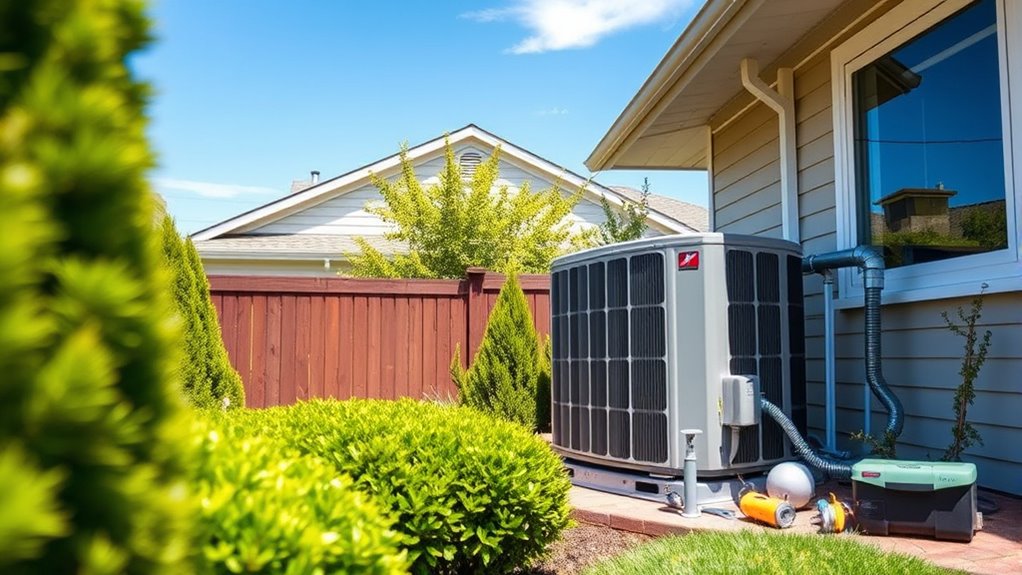
When selecting a DIY heat pump system, I consider factors like how well it fits my space and its energy efficiency ratings. I also look at how complicated the installation is, whether it suits my climate, and if it matches my home’s capacity needs. These points help me choose a system that’s effective and easy to maintain.
Compatibility With Space
Choosing a heat pump system that fits your space is essential for peak performance and efficiency. First, confirm the system’s capacity matches your room size—12,000 BTUs for up to 550 sq ft or 18,000 BTUs for up to 800 sq ft. Check if your existing ductwork is compatible, or if a ductless unit is better suited for limited or open spaces. Consider your climate; make sure the system’s heating and cooling range can handle your area’s temperature extremes. Measure your wall or ceiling space to verify the indoor unit’s size and mounting options. Finally, validate that the airflow and coverage area align with your room layout to promote even temperature distribution and supreme comfort.
Energy Efficiency Ratings
Energy efficiency ratings are key factors to contemplate when selecting a DIY heat pump system because they directly impact your long-term energy bills. Higher SEER (Seasonal Energy Efficiency Ratio) and HSPF (Heating Seasonal Performance Factor) ratings mean better efficiency and lower costs over time. Look for systems with ENERGY STAR certification, which guarantees the unit meets strict energy-saving standards. Inverter technology and variable speed compressors are also beneficial, as they adjust the system’s output to match demand, maximizing efficiency. Regular maintenance and proper sizing for your climate and space are vital too. By prioritizing these ratings and features, you guarantee a more energy-efficient system that saves you money and reduces environmental impact.
Installation Complexity
Installing a DIY heat pump system can vary substantially in complexity depending on its design and features. Ductless models tend to be simpler because they don’t require ductwork, while ducted systems involve more steps. Systems with pre-charged, quick-connect line sets make installation easier by removing the need to handle refrigerants or use specialized tools. Clear, detailed instructions and video tutorials can greatly reduce the difficulty, guiding you through each step and preventing mistakes. Including extensive mounting hardware and flexible components helps adapt the system to various indoor and outdoor setups, simplifying installation. However, if the system requires electrical modifications—like wiring thermostats or upgrading power supplies—the complexity increases, possibly needing advanced DIY skills or professional help.
Climate Suitability
When selecting a DIY heat pump system, it’s essential to contemplate whether your climate falls within the device’s ideal operating range, which is typically between 5°F and 118°F. If you often experience temperatures below freezing, look for models designed for cold climates, as they feature enhanced defrosting capabilities and better performance in low temperatures. Check the system’s HSPF and SEER ratings to ensure energy efficiency in your region. High ratings indicate better heating and cooling performance, especially in extreme weather. Additionally, consider whether the unit can handle temperature fluctuations and maintain efficiency during cold snaps or heatwaves. Choosing a system suited to your climate guarantees reliable operation, lower energy costs, and long-term durability.
System Capacity Needs
Choosing the right capacity for your DIY heat pump depends on accurately evaluating the size of the space you want to heat or cool. I recommend measuring the square footage of each room or zone, then selecting a system with an appropriate BTU rating—around 12,000 BTUs for spaces up to 550 sq ft. Climate plays a role; colder regions may need higher capacity units to ensure effective heating. Also, consider your insulation quality and air sealing, as well as the number of zones you plan to condition simultaneously. Higher energy efficiency ratings like SEER and HSPF can influence capacity choices, often balancing size with performance. Proper sizing prevents inefficient operation and ensures your system can handle your space comfortably year-round.
Control and Connectivity
Have you considered how smart connectivity can make managing your DIY heat pump more convenient? Choosing a system with compatible smart controllers that support voice assistants like Google Assistant and Amazon Alexa allows you to control your heat pump remotely, simplifying daily adjustments. WiFi connectivity is essential for seamless integration with home automation platforms, enabling scheduling and real-time monitoring. Look for systems that offer apps providing instant status updates, fault alerts, and maintenance notifications—these features help you stay on top of performance without hassle. Programmable timers and scheduling options can optimize energy efficiency and suit your lifestyle. Finally, opt for systems with user-friendly interfaces and clear setup guides, making connectivity setup and troubleshooting straightforward, especially for DIY installation.
Maintenance Requirements
Effective maintenance is key to keeping your DIY heat pump running smoothly and efficiently. Regularly cleaning and replacing filters ensures maximum airflow and heat exchange. It’s also important to check refrigerant levels periodically and address any leaks promptly to maintain peak performance. I recommend inspecting electrical connections and wiring for signs of wear or corrosion, tightening or repairing as needed to prevent issues. Clearing debris and obstructions around outdoor units is essential for proper ventilation and to prevent overheating. Additionally, scheduling professional maintenance once a year helps verify system components and guarantees long-term reliability. Staying on top of these tasks can extend your system’s lifespan, improve efficiency, and reduce unexpected repairs, making your DIY heat pump a dependable and cost-effective heating and cooling solution.
Budget Considerations
When selecting a DIY heat pump system, it’s essential to take into account your budget carefully to find a balance between cost and performance. First, determine your overall budget range, considering the initial purchase price, installation costs, and future maintenance expenses. Higher SEER and HSPF ratings often come with a higher upfront cost but can save you money through lower energy bills over time. Look for systems that are DIY-friendly, with pre-charged line sets and easy installation to cut labor costs. Don’t forget to explore available rebates, incentives, or discounts for energy-efficient models, which can considerably boost your budget’s value. By balancing these factors, you’ll choose a system that offers good performance without overstretching your finances.
Frequently Asked Questions
What Are the Common Installation Challenges for DIY Heat Pump Systems?
The most common challenges I face when installing a DIY heat pump are ensuring proper electrical wiring, handling refrigerant lines safely, and fitting the unit securely without leaks. Sometimes, I struggle with understanding complex manufacturer instructions or dealing with limited space. It’s essential to double-check system compatibility and have the right tools. Patience and careful planning help me overcome these obstacles and complete the installation successfully.
How Do I Troubleshoot Energy Efficiency Issues in My DIY Heat Pump?
If your DIY heat pump isn’t energy-efficient, I recommend checking the air filters and cleaning or replacing them regularly. Make sure the vents aren’t blocked, and inspect the outdoor unit for debris or obstructions. Also, verify that the thermostat is set correctly and functioning properly. If these steps don’t help, consider consulting a professional for a more detailed assessment to identify hidden issues affecting efficiency.
Can I Upgrade My Existing HVAC System With These DIY Options?
Yes, you can upgrade your existing HVAC system with DIY options, but it depends on your system’s compatibility and your skills. I recommend evaluating your current setup first. Then, choose compatible DIY heat pump kits that match your system’s specifications. Remember, some upgrades may require professional help, especially for electrical or refrigerant work. Always prioritize safety and consult local codes before proceeding.
What Safety Precautions Are Necessary During Installation?
During installation, I always wear safety gear like gloves and goggles to protect myself. I make sure to turn off the power supply before starting any work to avoid electrical shocks. I also read the manufacturer’s instructions carefully and follow local codes. If I feel unsure about any step, I don’t hesitate to consult a professional. Safety first—taking these precautions keeps me safe and guarantees a successful installation.
Are There Specific Local Codes or Permits Required for DIY Heat Pump Systems?
Yes, I found that local codes and permits are essential for installing a DIY heat pump system. I recommend checking with your city or county building department early on because requirements vary widely. Failing to get the proper permits can lead to fines or your system being deemed illegal. I always make sure to review local regulations beforehand so I stay compliant and avoid any issues down the line.
Conclusion
Think of a DIY heat pump as your home’s heartbeat—pumping warmth and comfort where you need it most. With the right system, you become the gardener of your own sanctuary, nurturing energy efficiency and coziness. As you choose from these top options, remember you’re planting seeds of independence and sustainability. In the end, your home becomes a thriving garden, blossoming with comfort, all powered by your hands and vision.