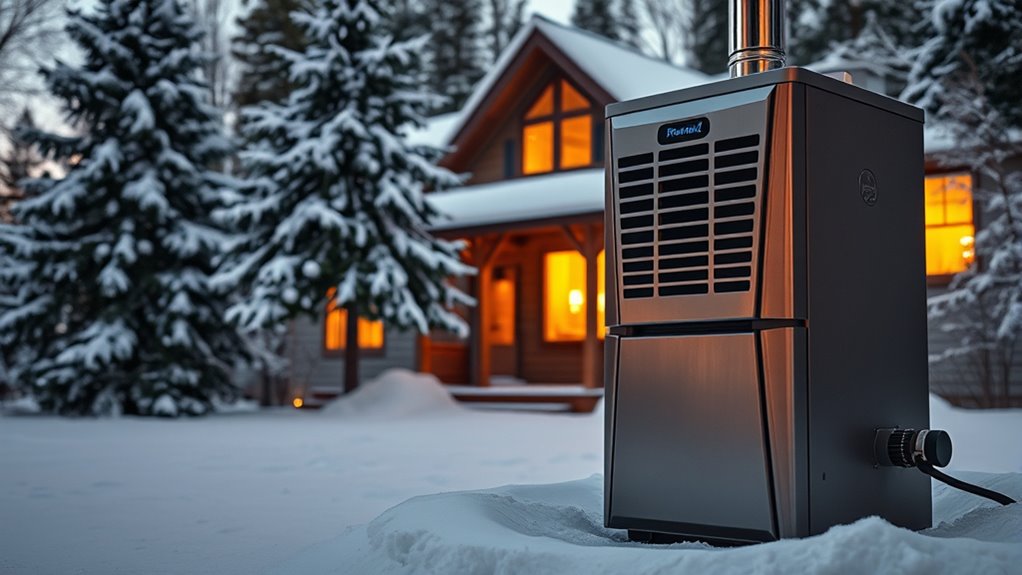

If you’re looking for the best gas furnace for cold climates, I recommend models with high efficiency, durable construction, and reliable ignition systems like silicon nitride ignitors. Features such as heavy-duty heat exchangers, variable-speed blowers, and corrosion-resistant materials help keep you warm during harsh winters. Choosing a unit with proper size and AFUE ratings is key. Stick around, and I’ll share detailed insights into top options that guarantee winter-long comfort.
Key Takeaways
- Look for furnaces with high AFUE ratings (>90%) for maximum energy efficiency in cold climates.
- Choose models with durable heat exchangers and corrosion-resistant materials for long-lasting performance.
- Opt for furnaces with sufficient BTU capacity tailored to your home’s size and insulation levels.
- Select units with reliable hot surface ignition systems and quality components to ensure consistent startup during winter.
- Consider brands offering advanced features like programmable thermostats and robust warranties for added convenience and peace of mind.
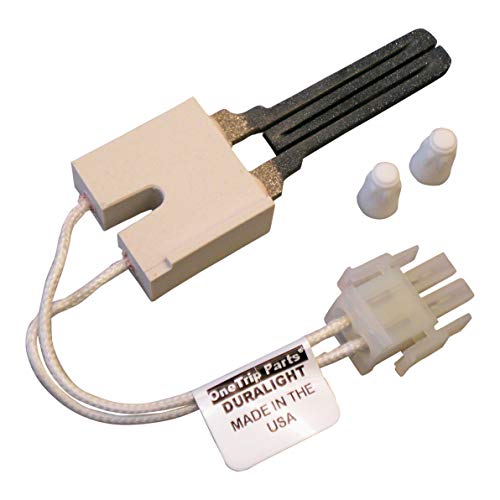
DURALIGHT Furnace Ignitor Direct Replacement For Rheem Ruud Weatherking OEM Part 62-22868-93
Duralight Two Year Replacement Warranty
As an affiliate, we earn on qualifying purchases.
DURALIGHT Furnace Ignitor Replacement for Rheem/Ruud/Weatherking OEM Part 62-22868-93
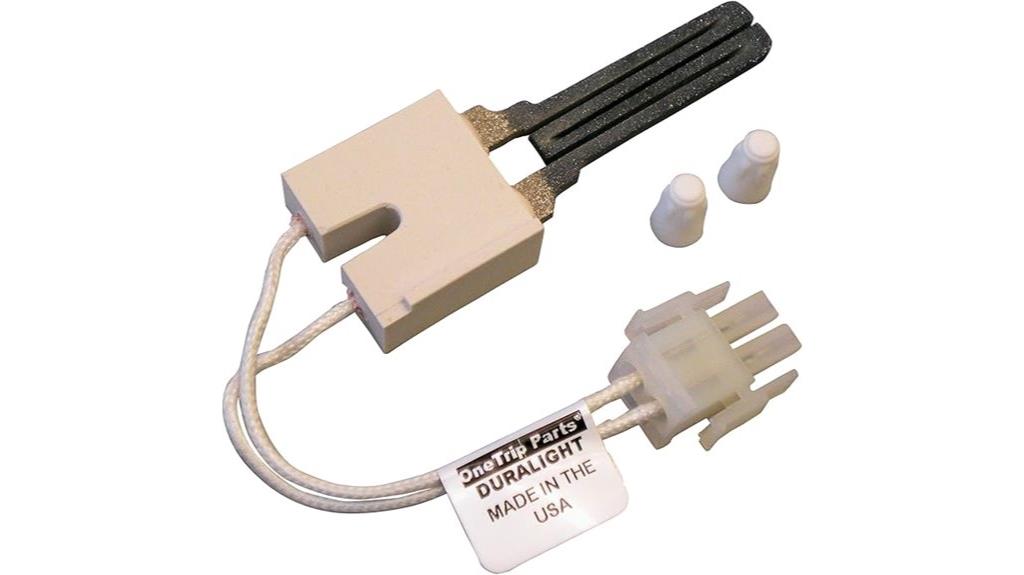
If you’re looking for a reliable replacement ignitor for your Rheem, Ruud, or Weatherking furnace, the DURALIGHT Furnace Ignitor OEM Part 62-22868-93 is an excellent choice. It’s designed as a direct replacement, so no adapters or wiring changes are needed, making installation straightforward. Made in the USA, it offers a two-year replacement warranty for added peace of mind. This ignitor fits most furnaces that utilize hot surface ignitors, ensuring compatibility. Keep your heating system running smoothly with this durable, OEM part that restores proper ignition and keeps your home warm during cold months.
Best For: homeowners or HVAC technicians seeking a reliable, OEM replacement ignitor for Rheem, Ruud, or Weatherking furnaces that utilize hot surface ignitors.
Pros:
- Exact fit requiring no adapters or wiring modifications, simplifying installation
- Made in the USA with durable construction for long-lasting performance
- Comes with a two-year replacement warranty for peace of mind
Cons:
- Not compatible with drum heat exchanger type furnaces
- Limited to furnaces that use hot surface ignitors, not suitable for other ignition types
- Replacement part may require professional installation if unfamiliar with furnace components

Suuwer Non-Programmable Thermostats for Home 1 Heat/1 Cool Conventional Single-Stage Systems (Blue Backlight)
【Notice】Please make sure to read the installation and wiring instructions provided in the pictures carefully before buying. If...
As an affiliate, we earn on qualifying purchases.
Non-Programmable Thermostat for Single-Stage Systems
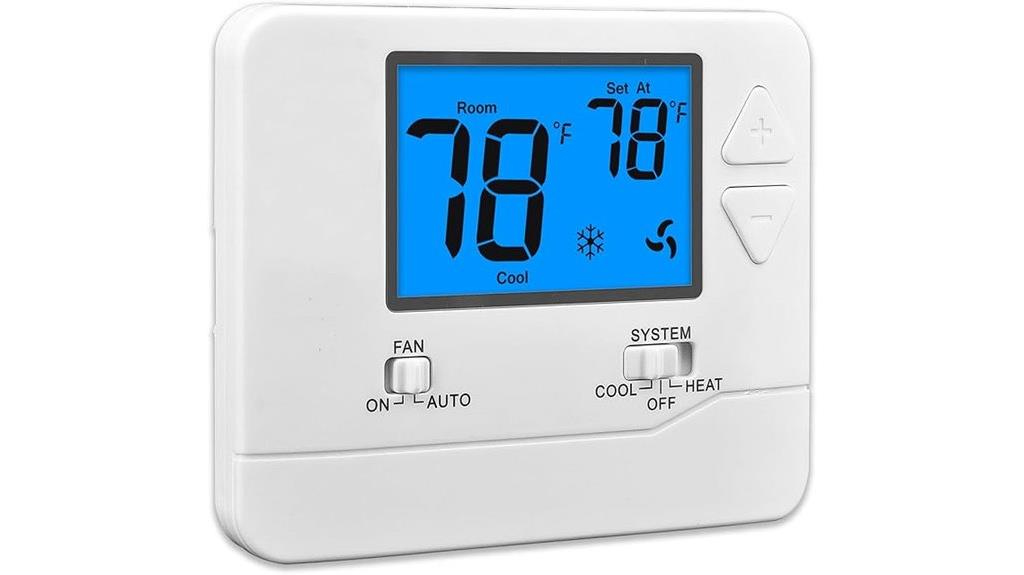
For those with single-stage heating systems, the Suuwer Non-Programmable Thermostat offers a straightforward and reliable way to control your home’s temperature. Its digital LCD with blue backlight is easy to read, even in low light, and the simple push-button controls make adjustments quick. Designed for 24VAC power or batteries, it doesn’t require a C-wire, simplifying installation. With precise temperature calibration of ±1°F and separate swing settings for heat and cool, it ensures comfort. Its compact size and easy wall-mount design make it a practical choice for reliable temperature management in conventional systems. Plus, with a 2-year warranty, you get peace of mind.
Best For: homeowners with single-stage heating and cooling systems seeking a simple, reliable, and easy-to-install thermostat without the need for a C-wire.
Pros:
- Easy to install with no C-wire required, compatible with most 24VAC systems or batteries
- Clear digital LCD display with blue backlight for easy reading in any lighting condition
- Precise temperature calibration and adjustable swing settings for customized comfort
Cons:
- Not compatible with multi-stage systems, heat pumps, or line voltage applications
- Limited to single-stage systems, so not suitable for more complex HVAC setups
- No programmable features, which may limit energy-saving options for some users

Honeywell Home RTH7600D 7-Day Programmable Touchscreen Thermostat, White
Large touchscreen display makes it easy to set your preferred temperature or set a weekly schedule for automated...
As an affiliate, we earn on qualifying purchases.
Honeywell Home RTH7600D 7-Day Programmable Touchscreen Thermostat, White

Looking to maximize comfort and energy efficiency in a cold climate? The Honeywell Home RTH7600D 7-Day Programmable Touchscreen Thermostat is a great choice. Its large, backlit touchscreen makes setting temperatures and scheduling easy. With a 7-day menu-driven program and four periods per day, you can customize your comfort and save energy when you’re away. Smart Response Technology learns your furnace’s startup times to ensure consistent comfort. It also features alerts for filter changes and low batteries, plus system protection to prevent compressor damage. Compatible with various heating and cooling systems, this thermostat simplifies managing your home’s temperature all winter long.
Best For: homeowners seeking an easy-to-use, programmable thermostat that maximizes comfort and energy savings during cold winters.
Pros:
- Large, backlit touchscreen display for intuitive temperature adjustments and scheduling
- 7-day menu-driven programming with four periods per day offers flexible customization
- Smart Response Technology learns furnace startup times for consistent comfort and automatic daylight savings adjustment
Cons:
- Compatibility may vary with certain complex HVAC systems; professional installation might be necessary
- Lacks advanced smart home integration features found in more modern thermostats
- The design and interface are straightforward but may feel outdated compared to newer touchscreen models

Duralight Furnace Hot Surface Ignitor Direct Replacement For Carrier Bryant Payne OEM Part LH33ZS004
Made in USA
As an affiliate, we earn on qualifying purchases.
Furnace Hot Surface Ignitor Replacement for Carrier Bryant Payne

When replacing the hot surface ignitor on Carrier, Bryant, or Payne furnaces, this direct OEM replacement part guarantees compatibility and reliable performance. Made in the USA by Duralight, it replaces OEM parts LH33ZS004, LH33ZS001, LH33ZS002, and LH33ZS003. The package includes two high-temperature ceramic wire nuts for easy installation. Weighing just 2.89 ounces, it’s designed as a dependable, straightforward replacement for various furnace models. Backed by a two-year warranty and positive customer reviews averaging 4.5 stars, this ignitor ensures your furnace ignites reliably, keeping you warm during the coldest winters.
Best For: homeowners or HVAC technicians seeking a reliable, OEM-compatible hot surface ignitor for Carrier, Bryant, or Payne furnaces that ensures efficient and dependable furnace ignition.
Pros:
- Made in the USA with a two-year warranty for quality assurance
- Includes two high-temperature ceramic wire nuts for easy installation
- Compatible as a direct replacement for multiple OEM parts (LH33ZS001, LH33ZS002, LH33ZS003, LH33ZS004)
Cons:
- Discontinued model, which may limit availability of certain parts or support
- Weighs only 2.89 ounces, which may require careful handling during installation
- Limited to furnace models compatible with OEM part numbers listed
Furnace Hot Surface Ignitor Replacement for Carrier Bryant Payne

If you own a Carrier, Bryant, or Payne gas furnace, guaranteeing reliable ignition is essential for consistent heating during cold months. The OEM Hot Surface Ignitor, part LH33ZS004, is designed to fit these models perfectly, replacing parts LH33ZS001 through LH33ZS004. Made from high-temperature ceramic with a durable heating element, it offers efficient ignition performance. The installation is straightforward, with included ceramic wire nuts for secure connections. Its compact design, with locating ridges and compatible plug style, ensures a perfect fit. Replacing your ignitor with this OEM part helps maintain reliable furnace operation and keeps your home warm all winter.
Best For: homeowners and HVAC technicians seeking a reliable OEM replacement hot surface ignitor for Carrier, Bryant, and Payne gas furnaces.
Pros:
- Compatible with multiple OEM part numbers LH33ZS001-LH33ZS004 for versatile replacements.
- Durable construction with high-temperature ceramic and efficient heating element.
- Easy installation with included ceramic wire nuts and matching plug style.
Cons:
- May require technical knowledge for proper installation.
- Replacement parts must match specific furnace models to ensure compatibility.
- Ceramic materials can be fragile if mishandled during installation.
Aerostar MERV 13 HVAC Filters (6 Pack)
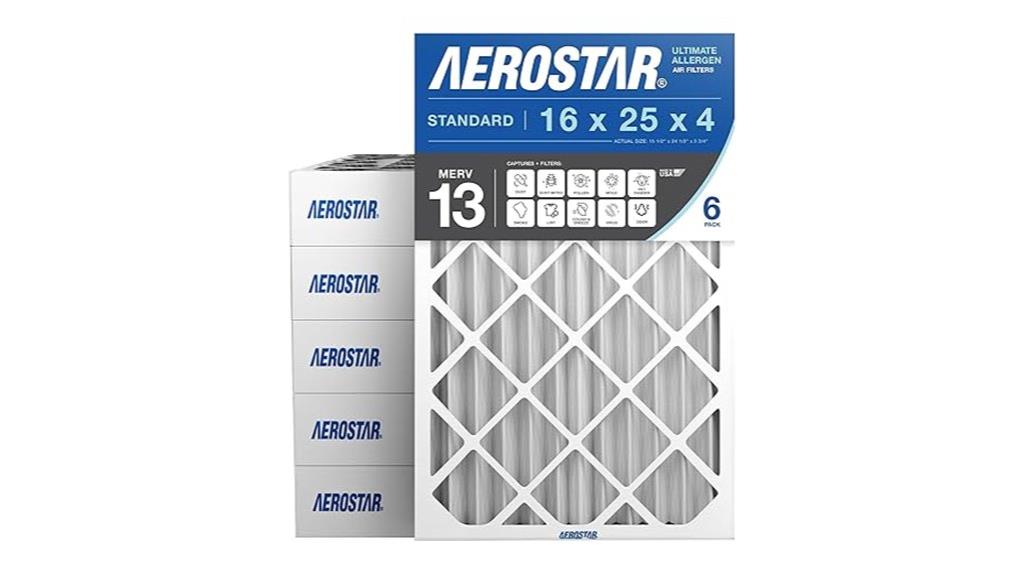
For homeowners seeking to maximize indoor air quality while maintaining efficient HVAC performance, the Aerostar MERV 13 HVAC Filters (6 Pack) offer an excellent choice. These pleated filters fit standard 16x25x4-inch systems and are easy to install. With a MERV 13 rating, they effectively trap microscopic particles like pollen, pet dander, mold spores, smoke, and even bacteria and viruses. This helps create a healthier home environment. Made from high-quality synthetic media, they provide strong filtration without restricting airflow. Replacing them every 3-6 months ensures peak performance and air quality. Overall, they’re a cost-effective way to keep your indoor air clean and your HVAC running smoothly.
Best For: homeowners and families seeking to improve indoor air quality while maintaining efficient HVAC system performance.
Pros:
- High MERV 13 filtration effectively captures microscopic particles like pollen, pet dander, mold spores, bacteria, and viruses.
- Easy to install and compatible with standard 16x25x4-inch HVAC systems, making maintenance straightforward.
- Made from durable synthetic media that balances strong filtration with low airflow resistance, supporting HVAC efficiency.
Cons:
- Replacement is recommended every 3-6 months, which may be more frequent than less efficient filters.
- The size specifications are nominal; actual dimensions slightly differ, requiring careful measurement for fit.
- As with all high-efficiency filters, airflow resistance increases slightly, which could impact airflow in some HVAC systems.
Silicon Nitride Hot Surface Furnace Ignitor for Carrier LH33ZG001

The Silicon Nitride Hot Surface Furnace Ignitor for Carrier LH33ZG001 stands out as a reliable replacement part for those seeking consistent ignition performance in their furnaces. This brand-new ignitor is compatible with Carrier, Bryant, and Payne models that use part numbers like LH33ZG001 and IGN001-003. It features a 120 VAC voltage, a warm-up time of just 20 seconds, and resistance ranging from 34 to 64 Ohms. Its durable silicon nitride surface guarantees long-lasting operation, and it’s designed to fit specific furnace models accurately. Overall, this ignitor offers a dependable solution to keep your furnace firing reliably through the coldest winters.
Best For: homeowners or HVAC technicians seeking a reliable, compatible replacement ignitor for Carrier LH33ZG001 furnace models to ensure efficient and consistent ignition performance.
Pros:
- Compatible with multiple brands including Carrier, Bryant, and Payne, offering versatile use
- Quick warm-up time of approximately 20 seconds for efficient operation
- Durable silicon nitride surface ensures long-lasting performance and reliability
Cons:
- Non-OEM replacement, which may raise concerns about brand authenticity for some users
- Resistance range of 34-64 Ohms may require testing for precise compatibility in specific models
- Limited detailed warranty information without direct inquiry
DuraVent 46DVA-18, Galvanized, 4 x 6-5/8

Looking for a reliable venting solution that guarantees safe and efficient operation in cold climates? The DuraVent 46DVA-18, Galvanized, 4 x 6-5/8″ is a top choice. Made from aluminum and galvanized steel, it features a sleek, laser-welded design with twist-lock connections that eliminate the need for gaskets or sealants. Its 18-inch length and coaxial setup make it ideal for direct vent appliances like gas stoves, fireplaces, or heaters. DuraVent’s reputation for innovation and durability guarantees this pipe provides a secure and tight fit, supporting safe venting even in harsh winter conditions. It’s a reliable, modern option for your venting needs.
Best For: homeowners and installers seeking a durable, efficient venting solution for gas appliances in cold climates with modern, sleek design.
Pros:
- Fully unitized twist-lock construction for quick and secure installation
- Laser-welded seams and no hems or beads for a sleek, modern appearance
- Suitable for direct vent appliances tested and listed for safe operation in harsh winter conditions
Cons:
- Limited to 4-inch inner diameter applications, not suitable for larger venting needs
- Requires subtracting 1.5 inches per joint during installation, which may affect length calculations
- May need sealant only if specified by the manufacturer, requiring careful adherence to installation guidelines
Goodman 3.5 Ton 15.2 SEER2 R32 Upflow AC System with 92% AFUE and Gas Furnace

If you need a reliable system that combines efficient cooling with robust natural gas heating, the Goodman 3.5 Ton 15.2 SEER2 R32 Upflow AC System is an excellent choice. It features a 120,000 BTU natural gas furnace with 92% AFUE, ensuring high efficiency during cold winters. The system uses eco-friendly R32 refrigerant, compliant with AIM ACT and Montreal Protocol standards. Designed for upflow installation, it’s fully charged for 15 feet of tubing and includes a copper tube enhanced aluminum fin condenser coil. Certified by AHRI and ETL, this unit offers durable performance to keep your home comfortable year-round.
Best For: homeowners seeking a reliable, energy-efficient cooling and heating system with eco-friendly refrigerant and natural gas heating capabilities.
Pros:
- Combines high-efficiency cooling (15.2 SEER2) with robust natural gas heating (92% AFUE) for year-round comfort
- Eco-friendly R32 refrigerant reduces environmental impact and complies with AIM ACT and Montreal Protocol
- Fully charged for 15 feet of tubing, ensuring easier installation and reduced setup time
Cons:
- Upflow installation may not be suitable for all home layouts or existing duct configurations
- Higher initial cost compared to basic or less efficient systems
- Requires professional installation and maintenance for optimal performance
Factors to Consider When Choosing Gas Furnaces for Cold Climates

When selecting a gas furnace for cold climates, I focus on key factors like heating capacity to guarantee it can handle harsh winters. I also pay attention to energy efficiency ratings to save on bills and durability to assure long-lasting performance. Additionally, I consider compatibility features and maintenance needs to find a furnace that fits my home’s specific requirements.
Heating Capacity
Choosing the right gas furnace for cold climates means paying close attention to its heating capacity, measured in BTUs, to make certain it can effectively warm your space during the coldest months. It’s vital that the furnace’s capacity matches the size and insulation level of your home; too small, and it won’t keep up, too large, and it’ll waste energy. Look for models with higher capacity ratings that can handle peak winter demands. Furnaces designed specifically for cold climates often feature larger heat exchangers and greater heat output. Ensuring proper sizing is essential—an undersized unit struggles to heat efficiently, while an oversized one leads to increased energy costs and inefficiency. Accurate capacity ensures consistent warmth and peak performance all winter long.
Energy Efficiency Ratings
Energy efficiency ratings are essential when selecting a gas furnace for cold climates because they directly impact your long-term energy costs and comfort. Higher AFUE ratings, especially above 90%, mean your furnace converts more fuel into heat, reducing waste and lowering bills. Models with variable-speed blowers adjust airflow based on demand, optimizing efficiency during harsh winters. Proper home insulation and sealing guarantee these high-efficiency furnaces perform as intended, preventing heat loss. Advanced heat exchanger designs recover more heat from combustion gases, boosting performance. Some models utilize condensing technology, extracting additional heat from exhaust gases, which is particularly beneficial during long cold seasons. Prioritizing high efficiency ensures your furnace operates effectively, saving money and providing consistent warmth throughout the winter months.
Durability and Materials
Durability is vital when selecting a gas furnace for cold climates, as harsh weather conditions can accelerate wear and tear. I look for models built with high-quality, corrosion-resistant materials like stainless steel or aluminized steel, which can withstand moisture and extreme temperatures. The heat exchanger is indispensable; cast iron or stainless steel ones offer longevity and resist cracking or rust. Heavy-duty cabinets made from thick-gauge steel or reinforced materials boost structural integrity in severe weather. Components like burners and ignitors should be crafted from high-temperature, wear-resistant parts to guarantee reliable operation over many seasons. Proper insulation and sealed cabinets also matter—they protect internal parts from moisture and temperature fluctuations, extending the furnace’s lifespan and maintaining consistent performance during the coldest months.
Compatibility Features
Ensuring your gas furnace is compatible with your home’s existing ductwork and venting system is vital to prevent installation problems and guarantee efficient operation. I always recommend double-checking that the furnace’s size and BTU capacity match your home’s square footage and the demands of cold weather. It’s also essential to verify the fuel type—natural gas or propane—matches what’s available locally. Efficiency ratings, like AFUE, matter because they determine how much energy your furnace uses and how much you save over time. Additionally, look for models with advanced ignition systems and durable heat exchangers, as these features guarantee reliable performance during extreme cold. Compatibility features aren’t just about installation—they directly impact your comfort, energy bills, and long-term furnace performance.
Maintenance Requirements
Maintaining your gas furnace in cold climates requires regular attention to key components to keep it running efficiently. I recommend inspecting and cleaning the hot surface ignitor and burners frequently to ensure reliable startup and combustion during frigid weather. Changing air filters every 1 to 3 months is essential to maintain proper airflow and prevent strain on the system, especially in winter. Scheduling annual professional inspections helps identify corrosion, leaks, and combustion issues before they worsen. It’s also important to verify that your thermostat is accurately calibrated to avoid improper cycling. Additionally, keep the blower motor and fan components well-lubricated and dust-free. Proper maintenance not only extends your furnace’s lifespan but also guarantees peak performance throughout the coldest months.
Cost and Budget
Choosing the right gas furnace for cold climates involves weighing both upfront costs and long-term expenses. These furnaces usually cost between $2,000 and over $5,000, depending on size, efficiency, and installation needs. Higher capacity models with advanced features are more expensive initially but can save money over time through lower energy bills, especially if they have a high AFUE rating. Don’t forget to factor in installation costs, which vary based on ductwork, venting, and required modifications. Long-term costs also include maintenance and repairs, so selecting a reliable, efficient furnace can reduce ongoing expenses. While the initial investment might be higher, a well-chosen furnace tailored for cold climates can be more economical in the long run.
Frequently Asked Questions
What Are the Top Energy Efficiency Ratings for Cold Climate Gas Furnaces?
The top energy efficiency ratings for cold climate gas furnaces are typically between 90% and 98% AFUE. I look for models with an AFUE of at least 90% because they maximize heat output while minimizing energy waste. Higher ratings, like 95% or above, are even better, especially in severe winters, as they help reduce energy bills and environmental impact while keeping my home warm and comfortable.
How Do Different Blower Types Impact Furnace Performance in Cold Weather?
Different blower types considerably influence furnace performance in cold weather. I find that multi-speed blowers offer better control, adjusting airflow based on demand, which helps maintain consistent warmth and improves efficiency. Single-speed blowers are simpler but may cause temperature fluctuations. Variable-speed blowers are ideal in cold climates—they modulate airflow smoothly, providing better heat distribution, reducing energy use, and ensuring your home stays warm and comfortable even during the coldest months.
What Maintenance Tips Extend the Lifespan of Furnaces in Harsh Climates?
To extend your furnace’s lifespan in harsh climates, I recommend regular maintenance like changing filters every 1-3 months, inspecting and cleaning vents, and scheduling professional tune-ups annually. Keep an eye on ductwork for leaks, and clear debris around outdoor units. Staying proactive with these simple steps helps your furnace run efficiently, reduces breakdowns, and ensures reliable warmth throughout the coldest winters.
Are There Specific Safety Features Essential for Cold Climate Furnaces?
Think of safety features as the armor protecting your home’s warmth. For cold climate furnaces, I’d verify it has a carbon monoxide detector, automatic shut-off, and a venting system that prevents dangerous gases from building up. These safety features act like a guardian angel, keeping you safe from unseen threats. Without them, even the warmest furnace could turn hazardous. Prioritize these essentials for peace of mind during winter’s chill.
How Does Insulation Influence Furnace Size and Efficiency in Cold Regions?
Insulation plays a big role in determining furnace size and efficiency in cold regions. When your home is well-insulated, it retains heat longer, so you don’t need a super powerful furnace. This means a more appropriately sized unit that uses less energy. Poor insulation forces the furnace to work harder, increasing energy bills and wear. So, upgrading insulation can keep your furnace running efficiently and keep your home warmer.
Conclusion
When choosing a gas furnace for cold climates, you want reliability, efficiency, and durability. You want warmth, comfort, and peace of mind. You need performance, protection, and value. Ultimately, you deserve a furnace that keeps you warm, saves you money, and stands the test of time. So, consider your needs carefully, weigh your options wisely, and invest confidently—because a cozy winter starts with the right furnace.