If you’re looking for the best thermostats for high voltage heat pumps in 2025, I recommend considering models like Honeywell’s RTH7600D, ecobee enhancements, and smart options like the Honeywell Wi-Fi color thermostat. These support multi-stage systems, offer reliable control, and energy savings. Safety features and proper wiring are essential for high-voltage systems. Keep going, and I’ll break down each model’s features and what to look for to guarantee peak performance.
Key Takeaways
- The article reviews various thermostat types suitable for high-voltage heat pumps, including manual, programmable, and smart options.
- It highlights compatibility requirements, such as needing a C-wire and support for 24VAC systems.
- The guide emphasizes features like energy efficiency, ease of installation, and remote control capabilities.
- Specific models like Honeywell, ecobee, and meross are detailed for their reliability and advanced functionalities.
- Safety considerations, wiring standards, and system compatibility are key factors for selecting the best thermostats in 2025.

Heagstat H721 Non-Programmable Heat Pump Thermostat, 2 Heat/1 Cool, with 4.5 sq. Inch Display
Before buying, please confirm whether the product is compatible with your system, and check the size of the...
As an affiliate, we earn on qualifying purchases.
H721 Non-Programmable Heat Pump Thermostat
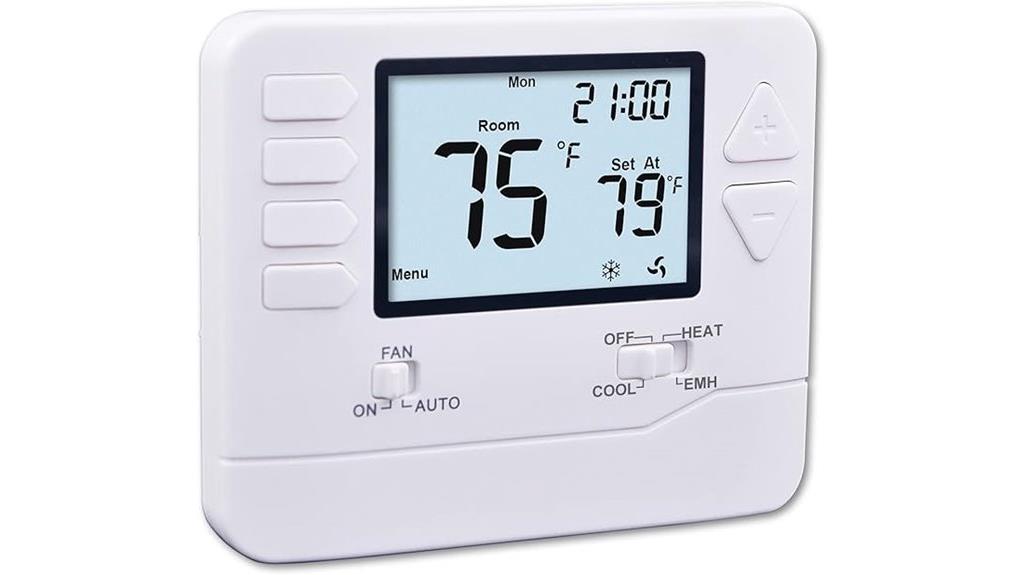
If you’re looking for a reliable, straightforward thermostat for your heat pump system, the H721 Non-Programmable Heat Pump Thermostat is an excellent choice. It controls room temperature with 2 heat/1 cool capacity and works with heat pump and single-stage systems like gas, oil, or electric furnaces. The large, backlit digital display makes it easy to read, and it offers accurate temperature control within ±1°F. With features like dual power options, temperature calibration, and a compressor delay, it ensures comfort and efficiency. Simple to mount and operate, this thermostat is perfect for those who want reliable performance without complex programming.
Best For: homeowners with heat pump or single-stage heating systems seeking a simple, reliable thermostat without programming features.
Pros:
- Easy to install and operate with a clear, backlit digital display
- Accurate temperature control within ±1°F for consistent comfort
- Dual power options (battery and hardwire) for flexible installation
Cons:
- Not compatible with multistage, 110-240V electric heat, or mini split systems
- Lacks programmable scheduling features for customized temperature settings
- Limited to 2 heat/1 cool capacity, not suitable for complex HVAC setups

Honeywell Home RTH7600D 7-Day Programmable Touchscreen Thermostat, White
Large touchscreen display makes it easy to set your preferred temperature or set a weekly schedule for automated...
As an affiliate, we earn on qualifying purchases.
Honeywell Home RTH7600D 7-Day Programmable Touchscreen Thermostat, White
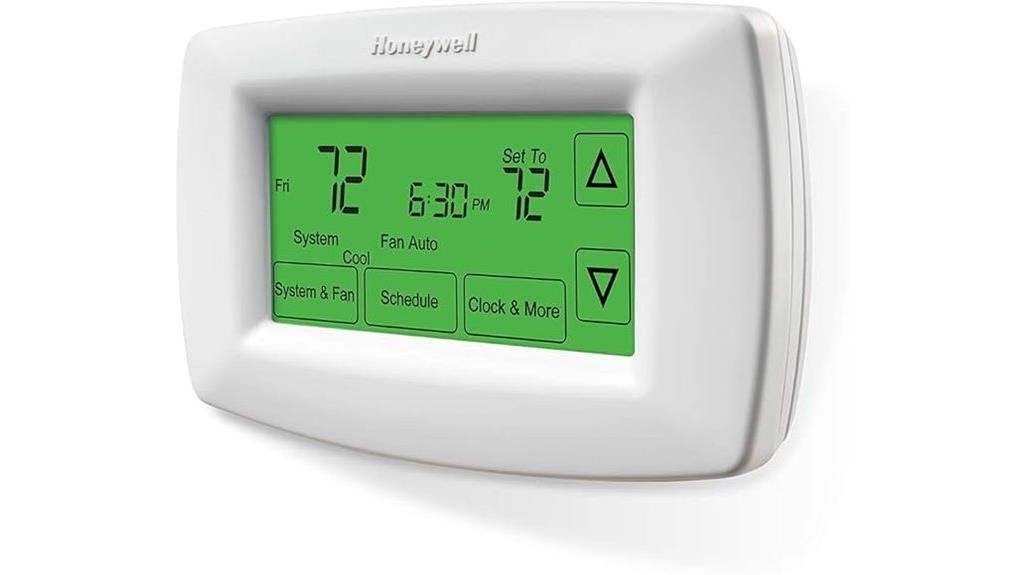
The Honeywell Home RTH7600D stands out as an excellent choice for homeowners seeking reliable, programmable control over their high-voltage heat pumps. Its large, backlit touchscreen makes setting schedules straightforward, displaying current temperature and set points simultaneously. With 7-day programming and four periods per day, I can customize my heating and cooling needs easily. It supports various systems, including heat pumps with auxiliary heat, and adjusts automatically with features like Smart Response Technology. Installation is simple, and it includes helpful alerts for filter changes and low batteries. Overall, it combines ease of use with dependable performance, making it a top pick for reliable climate control.
Best For: homeowners seeking reliable, programmable control over their high-voltage heat pump systems with easy-to-use scheduling and smart features.
Pros:
- Large, backlit touchscreen display for simple programming and real-time monitoring
- Supports a wide range of HVAC systems, including heat pumps with auxiliary heat
- Features like Smart Response Technology and alerts for filter changes enhance comfort and maintenance
Cons:
- Not compatible with warm air furnaces, electric baseboard, or high-voltage electric systems
- Requires wired connection; not suitable for wireless installation options
- Limited to 7-day programming with four periods per day, which may not suit more complex schedules

Thermostat for Heat Pump,NonProgrammable Thermostat for Home, Conventional Single-Stage Systems,2 Heat/1 Cool Heat Pump Or 1 Heat/1 Cool, Easy DIY Install,Blue Backlight
· High Compatibility: Heat pump multi-stage systems or conventional single-stage systems, Forced air (gas, oil or electric), Electric...
As an affiliate, we earn on qualifying purchases.
Thermostat for Heat Pump, Non-Programmable
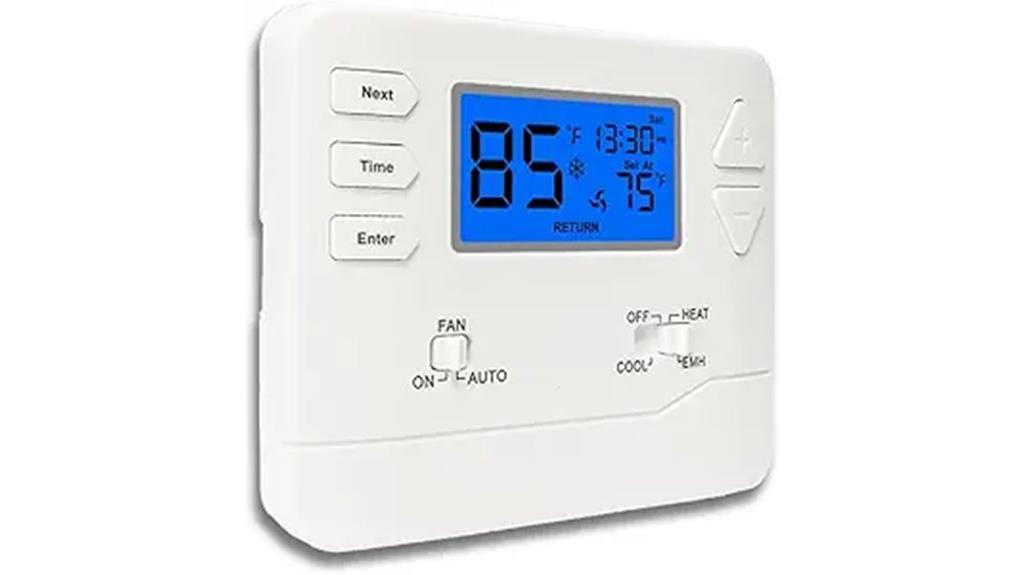
Non-programmable thermostats excel for homeowners who prioritize simplicity and quick installation without sacrificing compatibility. They support a wide range of systems, including heat pumps, forced air, electric furnaces, and even gas fireplaces, making them versatile choices. Installation is straightforward, often taking less than 30 minutes, thanks to large terminal blocks and universal bases. With features like a clear blue backlit display and easy-to-use controls, they offer reliable temperature regulation. Powered by 24VAC or batteries, most don’t need a C-wire. These thermostats provide simple, effective control, perfect for those who want dependable operation without complex programming.
Best For: homeowners seeking a simple, reliable thermostat that easily integrates with a variety of heating and cooling systems without complex programming.
Pros:
- Easy installation in under 30 minutes with large terminal blocks and universal base
- Supports a wide range of compatible systems including heat pumps, forced air, and gas fireplaces
- Features a clear blue backlit LCD display and straightforward controls for user-friendly operation
Cons:
- Not compatible with multi-stage conventional or dual fuel/hybrid systems
- Lacks advanced programming features for customized scheduling
- May not be suitable for line voltage or 12V RV systems
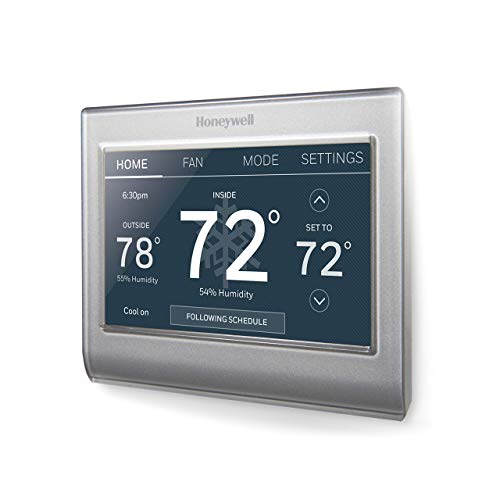
Honeywell Home RTH9585WF1004 Wi-Fi Smart Color Thermostat, 7 Day Programmable, Touch Screen, Energy Star, Alexa Ready, Gray
COMFORT COMES IN YOUR COLOR. Personalize your Wi-Fi Smart Color Programmable Thermostat to fit your décor.
As an affiliate, we earn on qualifying purchases.
Honeywell Wi-Fi Smart Color Thermostat
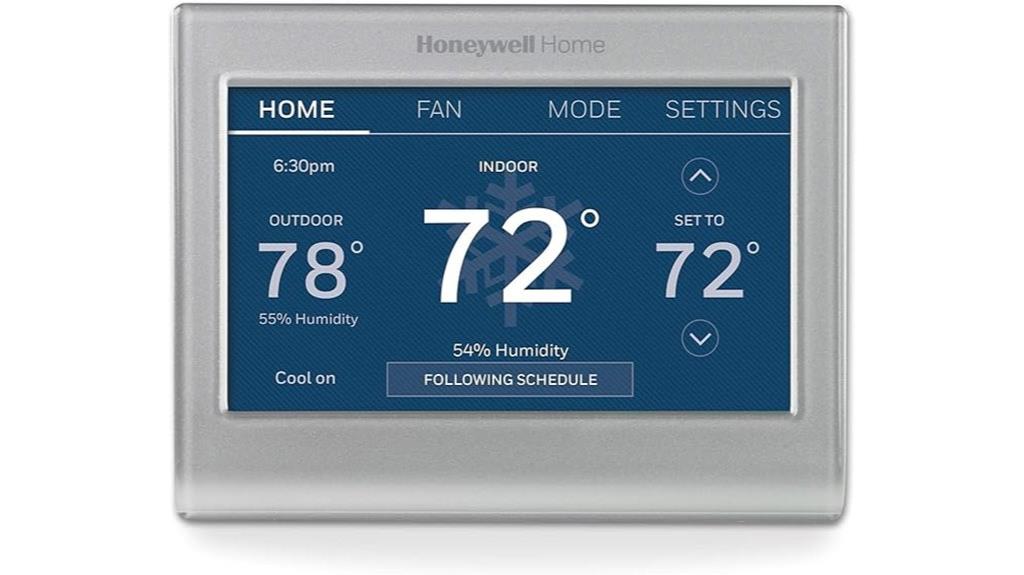
For homeowners seeking a versatile, energy-efficient thermostat compatible with various high voltage heat pump setups, the Honeywell Wi-Fi Smart Color Thermostat stands out. It features a customizable color touchscreen, a 7-day programmable schedule, and smart response technology for ideal comfort. Compatible with forced air systems, hot water, steam, and heat pumps with electric backup, it does require a C-wire. You can control it remotely via the app or voice assistants like Alexa and Google Home. With built-in weather display, alerts, and energy reports, it helps you save energy and costs. Its sleek design and easy setup make it a reliable choice for modern homes.
Best For: homeowners seeking a customizable, energy-efficient smart thermostat compatible with various high-voltage heating systems and remote control options.
Pros:
- Customizable color touchscreen and user-friendly interface for easy operation
- Supports a wide range of heating systems, including forced air, hot water, steam, and heat pumps with electric backup
- Energy Star certified with energy reports, alerts, and utility programs to save costs and reduce environmental impact
Cons:
- Requires a C-wire for installation, which may not be present in all homes
- Discontinued model, potentially affecting availability and support options
- Not compatible with electric baseboard heat (120-240V)
Emerson 1F72-151 5-2 Day Programmable Thermostat for Heat Pump Systems
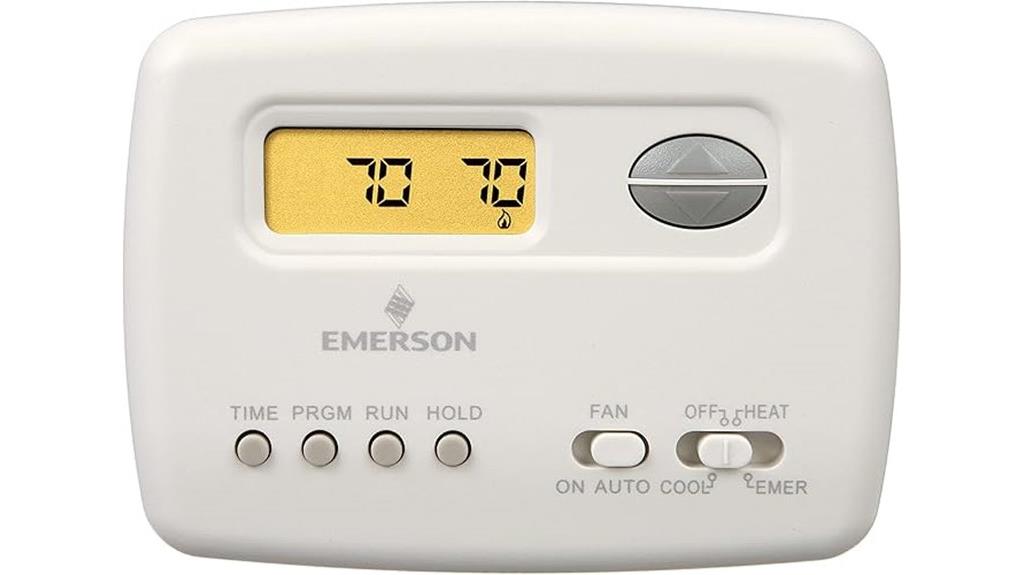
If you need a reliable thermostat tailored for residential heat pump systems, the Emerson 1F72-151 is an excellent choice. It’s designed specifically for 2H/1C heat pump setups, offering precise temperature control within ±1°F. Its large, backlit LCD display makes it easy to read, while the digital, curved design adds a modern touch. It supports 24-volt and millivolt systems, with a simple wired connection and a 5-2 day programmable schedule for weekday and weekend comfort. Powered by hardwiring and backup batteries, it’s straightforward to install and use. Although it lacks Wi-Fi, it’s durable, with a proven track record since 2003, rated highly by users.
Best For: homeowners with residential heat pump systems seeking a reliable, easy-to-use programmable thermostat without Wi-Fi connectivity.
Pros:
- Precise temperature control within ±1°F for optimal comfort
- Large, easy-to-read backlit LCD display simplifies adjustments
- Simple wired installation with backup batteries ensures consistent operation
Cons:
- Lacks Wi-Fi or remote connectivity for remote temperature management
- Not compatible with millivolt or 3-wire zone valve systems
- Limited to 5-2 day scheduling, which may not suit all lifestyle needs
Thermostat for Heat Pump, Non-Programmable
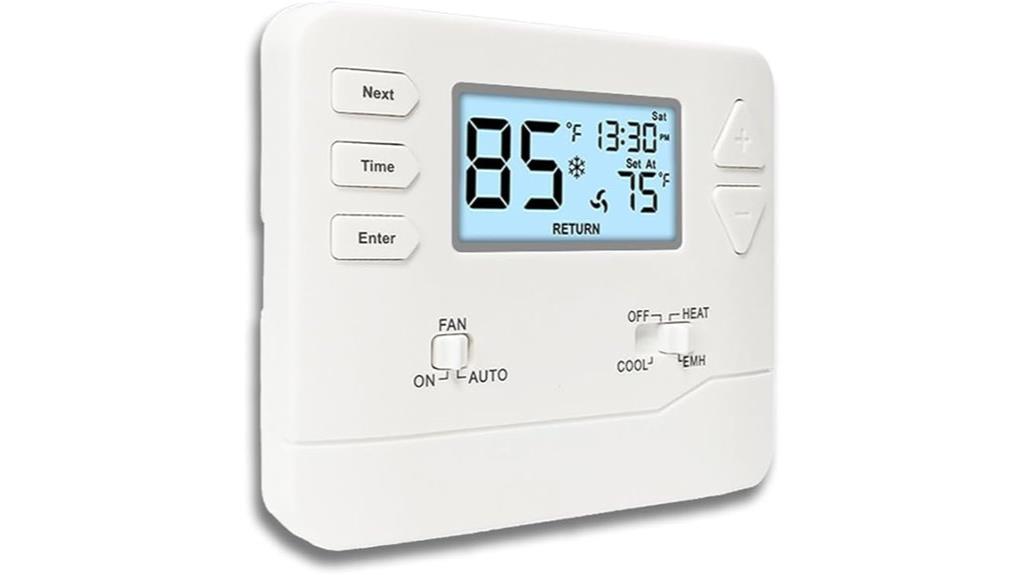
A non-programmable thermostat designed for heat pumps offers straightforward control with easy-to-read displays and simple adjustments, making it ideal for homeowners who prefer manual operation without the complexity of programming. It supports a variety of systems, including multi-stage heat pumps, forced air, electric furnaces, and hot water systems, though it’s not compatible with multi-transformer or multi-stage conventional systems. Installation is quick and user-friendly, often completed within 30 minutes, thanks to large terminal blocks and a universal sub-base. With features like a backlit LCD display and adjustable temperature differential, this thermostat provides reliable, easy-to-use control tailored to your comfort needs.
Best For: homeowners seeking a straightforward, manual thermostat control for compatible heat pump and heating/cooling systems without the need for programming features.
Pros:
- Easy installation within 30 minutes using large terminal blocks and a universal sub-base
- Clear, backlit LCD display for easy reading in any lighting conditions
- Adjustable temperature differential for energy efficiency and system longevity
Cons:
- Not compatible with multi-stage conventional systems or dual fuel/hybrid heating setups
- May require a C-wire only for certain heat-only or cool-only systems
- Lacks programmable scheduling features for automated temperature adjustments
meross Smart Thermostat for Electric Baseboard and In-Wall Heaters

The meross Smart Thermostat stands out for its easy installation and compatibility with high-voltage electric baseboard and in-wall heaters, making it an excellent choice for homeowners seeking quick setup and reliable performance. It installs in under 30 minutes and supports systems with 4 or more wires, handling loads up to 16A or 1920W at 120V. It integrates seamlessly with Apple HomeKit, Alexa, Google Home, and SmartThings, allowing voice control and automation. The thermostat features a sleek LCD display, programmable schedules, energy monitoring, and open window detection, all designed to optimize comfort and energy savings effortlessly.
Best For: homeowners seeking a quick-to-install, energy-efficient smart thermostat compatible with high-voltage electric baseboard and in-wall heaters.
Pros:
- Easy installation in under 30 minutes with high compatibility for electric baseboard and in-wall heating systems.
- Supports multiple smart home platforms including Apple HomeKit, Alexa, Google Home, and SmartThings for versatile voice control and automation.
- Features energy monitoring, open window detection, and programmable scheduling to optimize comfort and reduce energy costs.
Cons:
- Requires a high-voltage wiring setup with 4 or more wires, which might not be suitable for all homes.
- Limited to systems with a maximum load of 16A, 1920W at 120V or 3840W at 240V, potentially restricting use with higher-capacity systems.
- Does not include electric baseboard heaters; compatible only with systems designed for high-voltage electric heating.
Sensi Lite Smart Thermostat

For high voltage heat pump setups seeking an easy, flexible upgrade, the Sensi Lite Smart Thermostat stands out with its simple DIY installation and compatibility with most HVAC systems. It features a built-in level and step-by-step instructions, making setup straightforward. While most systems don’t need a C-wire, heat pump and heat/cool only systems do. The thermostat offers programmable scheduling, Wi-Fi connectivity, and works seamlessly with Alexa, Android, and iOS devices for remote control. Certified ENERGY STAR, it helps save around 23% on energy costs. Plus, Sensi Lite prioritizes privacy, not selling data or using activity info for ads, giving you peace of mind.
Best For: homeowners with high voltage heat pump systems seeking an easy-to-install, flexible smart thermostat that offers remote control and energy savings.
Pros:
- Easy DIY installation with built-in level and step-by-step instructions
- Compatible with most HVAC systems, including heat pumps and heat/cool only setups
- ENERGY STAR-certified, helping to reduce HVAC energy costs by approximately 23%
Cons:
- Requires a C-wire for heat pump and heat/cool only systems; not needed on most other systems
- Limited to Wi-Fi enabled control, which depends on internet connectivity
- Does not sell personal data or use activity info for advertising, which may limit certain data-driven features
Honeywell Smart Color Wi-Fi Thermostat

If you want a smart thermostat that seamlessly integrates with your home’s heating and cooling system, the Honeywell Smart Color Wi-Fi Thermostat stands out thanks to its customizable color touchscreen and compatibility with a wide range of heat pumps and forced air systems. It’s ENERGY STAR certified, helping you save energy with personalized tips, heating/cooling tracking, and rebate options. The high-definition display shows indoor/outdoor temperatures, humidity, and weather forecast. It supports remote control via app and smart home platforms like Alexa and Google Assistant. With smart response technology learning your household cycle, it guarantees ideal comfort while reducing energy use.
Best For: homeowners seeking a customizable, energy-efficient smart thermostat compatible with a variety of heating and cooling systems and integrated with smart home platforms.
Pros:
- High-definition, customizable color touchscreen display for easy monitoring and control
- Compatible with multiple system types including heat pumps and forced air systems, with remote app access
- ENERGY STAR certified, promoting energy savings and rebate opportunities
Cons:
- Requires C-wire or adapter for power, which may complicate installation in some homes
- Not suitable for electric baseboard heating systems (120-240V)
- Slightly higher price point compared to basic thermostats due to advanced features
Honeywell Home RTH6580WF Wi-Fi 7-Day Programmable Thermostat, White
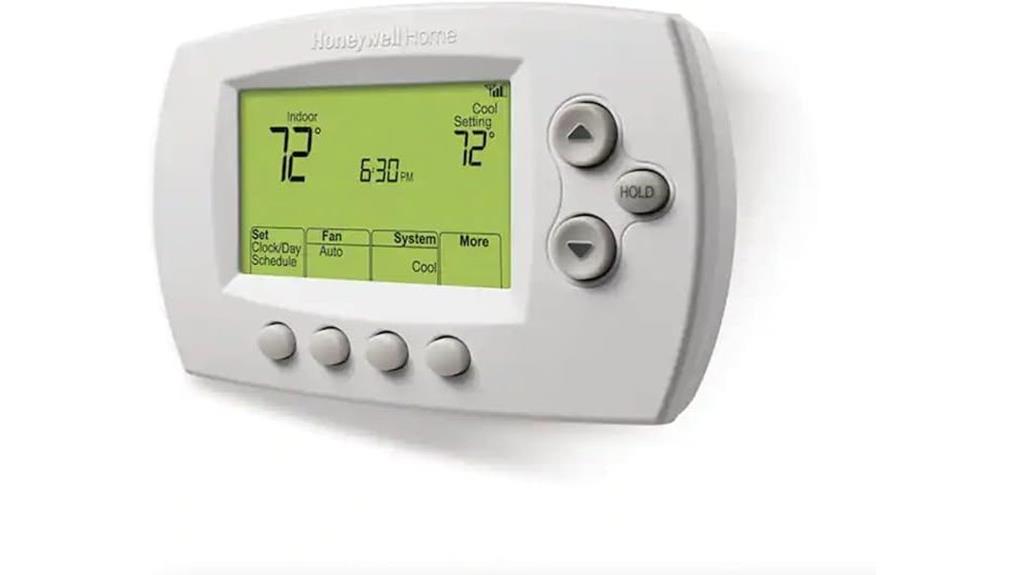
Looking for a thermostat that combines smart control with reliable performance for high voltage heat pumps? The Honeywell Home RTH6580WF Wi-Fi 7-Day Programmable Thermostat is a solid choice. It lets you control your system remotely via the Total Connect Comfort or Honeywell Home app, and it’s compatible with Alexa, Google Assistant, and Cortana. Designed for forced air systems and heat pumps with electric backup, it offers easy DIY installation, a user-friendly backlit display, and a 7-day schedule. ENERGY STAR certified, it helps save energy and reduce bills. Just guarantee your system has a C-wire, as it doesn’t support electric baseboard heat.
Best For: homeowners seeking a reliable, energy-efficient smart thermostat compatible with high voltage heat pumps and easy DIY installation.
Pros:
- Easy to install and configure with intuitive controls and a user-friendly backlit display
- Compatible with popular voice assistants like Alexa, Google Assistant, and Cortana for hands-free control
- ENERGY STAR certified, promoting energy savings and lower utility bills
Cons:
- Requires a C-wire for operation; not suitable for systems without one
- Does not support electric baseboard heat (120-240V)
- Limited to compatible system types, so verify your system before purchase
ecobee Smart Thermostat Enhanced, Programmable Wi-Fi Thermostat
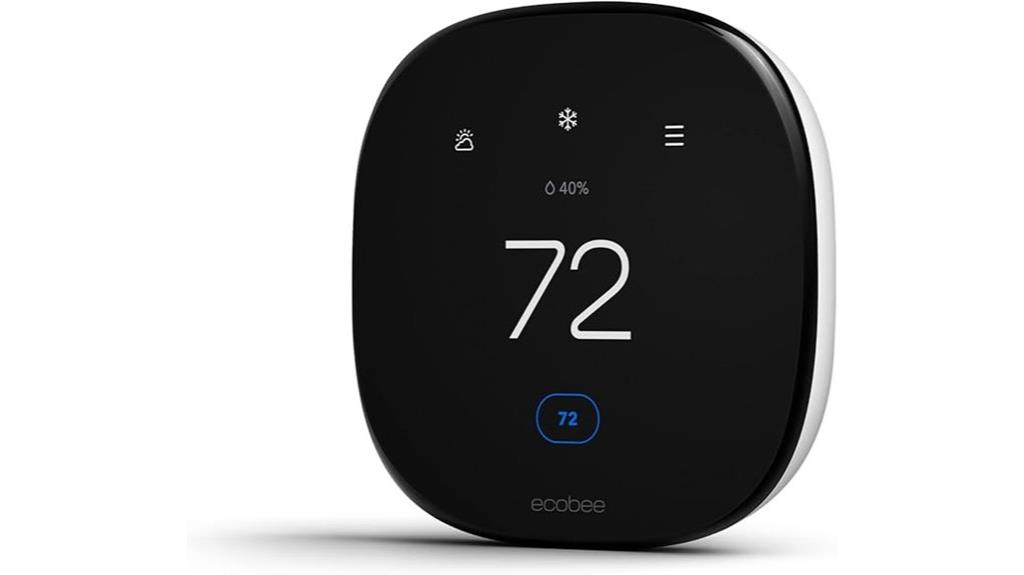
The ecobee Smart Thermostat Enhanced stands out as an excellent choice for homeowners seeking energy savings and smart control, especially those with high voltage heat pumps. It can cut heating and cooling costs by up to 26% annually through occupancy-based adjustments, schedule suggestions, and pre-heating or cooling before arrival. Compatible with most 24 VAC systems, including heat pumps, it offers easy installation with a Power Extender Kit for homes without a C-wire. The thermostat supports app control via smartphones and integrates seamlessly with platforms like Apple HomeKit, Alexa, and Google Assistant, providing reliable, flexible management of your high voltage heat pump system.
Best For: homeowners with high voltage heat pumps seeking energy-efficient, smart control of their HVAC system.
Pros:
- Offers up to 26% annual energy savings through occupancy detection and schedule optimization
- Compatible with a wide range of 24 VAC HVAC systems, including heat pumps and boilers
- Supports app control and smart home platform integration for flexible, remote management
Cons:
- Requires a hardwired 24V power source, which may involve professional installation for some users
- Slightly larger dimensions may be less suitable for very tight wall spaces
- Limited to models with a C-wire or Power Extender Kit for optimal performance
Programmable Thermostat for House with Auto Switching
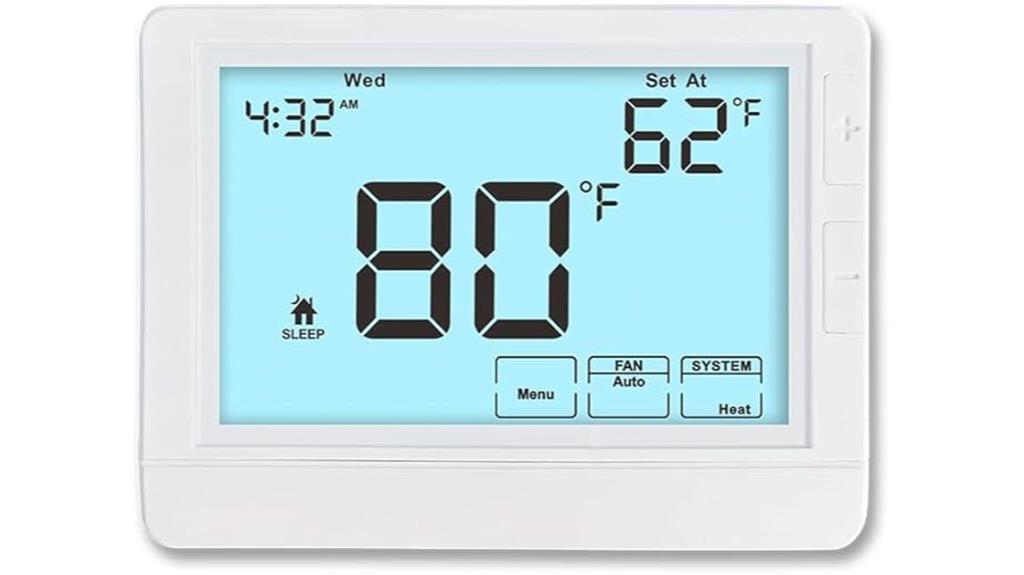
A programmable thermostat with auto switching is ideal for homeowners who want seamless comfort and energy savings without having to manually adjust settings. It supports a wide range of systems, including multi-stage heat pumps, forced air, electric furnaces, and hot water systems. With automatic changeover between heating and cooling modes, it guarantees superior comfort year-round. Easy to install and operate, it features a user-friendly LCD display and flexible programming options that match your schedule. Built by an experienced company with 20+ years in the industry, it offers reliable performance and 24/7 customer support, making it a smart choice for high voltage heat pump households.
Best For: homeowners seeking an energy-efficient, easy-to-install programmable thermostat that automatically switches between heating and cooling modes for diverse system types.
Pros:
- Supports a wide range of HVAC systems including multi-stage heat pumps and forced air systems.
- Features an intuitive, backlit LCD display and simple controls for user-friendly operation.
- Manufactured by an experienced company offering reliable performance and 24/7 customer support.
Cons:
- Not compatible with two-transformer or dual fuel/hybrid heating systems.
- Does not support line voltage, radiant-ceiling heat, or mini-split systems.
- Requires verification of system compatibility prior to purchase to ensure proper functionality.
Honeywell WiFi Smart Thermostat RTH8800WF2022
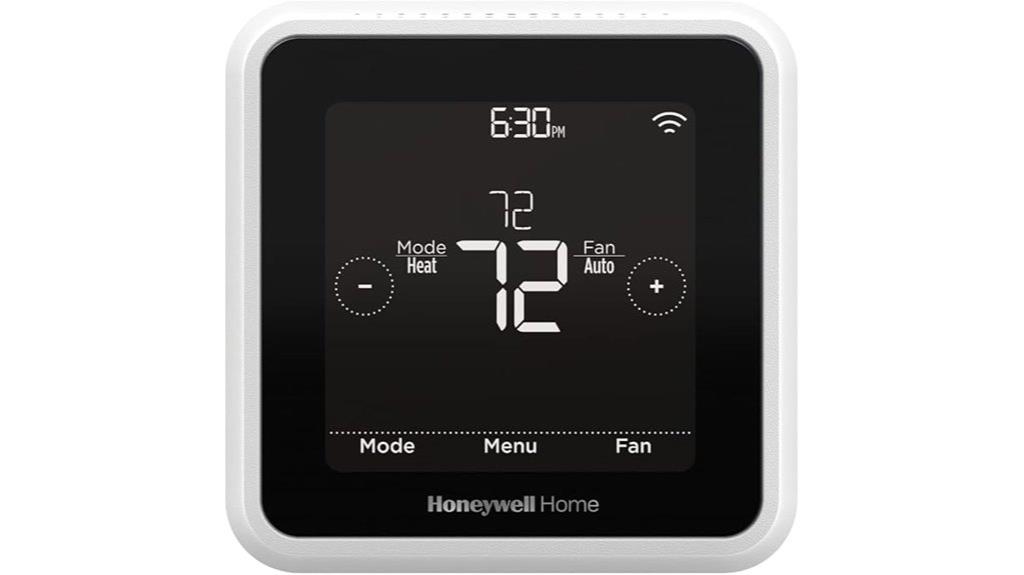
If you’re seeking a thermostat that combines smart technology with energy savings, the Honeywell WiFi Smart Thermostat RTH8800WF2022 is an excellent option, especially if your system supports C-wire power. It features a 7-day programmable touchscreen, geofencing, Alexa compatibility, and ENERGY STAR certification. Designed to control heat/cool systems like heat pumps and air conditioners, it can help save 8-16% on energy bills through scheduling. You can remotely manage it via smartphone or voice assistants. Keep in mind, it requires a C-wire connection and isn’t compatible with heating-only oil furnaces without one. Overall, it’s a reliable choice for modern, energy-efficient control.
Best For: homeowners with compatible heating and cooling systems seeking a smart, energy-efficient thermostat with remote control and voice assistant integration.
Pros:
- Supports 7-day programmable scheduling and geofencing for personalized comfort and energy savings
- Compatible with Alexa, Google Assistant, and Apple HomeKit for seamless smart home integration
- ENERGY STAR certification helps reduce energy consumption and lowers utility bills
Cons:
- Requires a C-wire power adapter; not compatible with heating-only oil furnaces without one
- Limited to systems with 24V voltage; incompatible with certain proprietary or high-voltage systems
- Slightly larger dimensions may require adequate space for installation
Non Programmable Digital Thermostat for Home
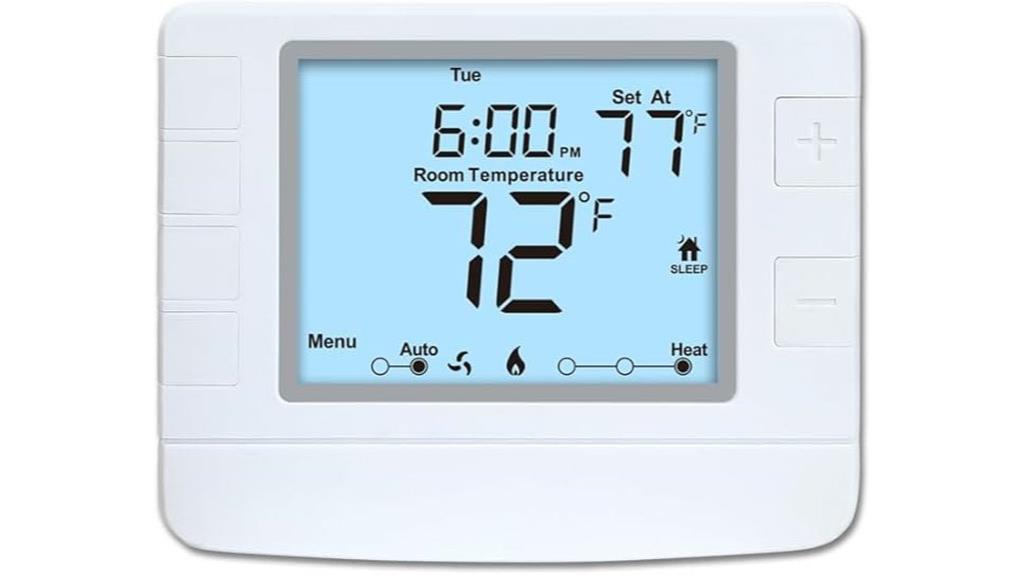
For homeowners seeking a straightforward, reliable thermostat, this non-programmable digital model offers an excellent solution. It supports various systems, including forced air, electric furnaces, heat pumps, and gas fireplaces, but isn’t compatible with dual fuel or line voltage systems. Installation is quick and simple, taking about 30 minutes with large terminal blocks and a universal base. The intuitive backlit LCD display makes operation easy, while adjustable swing settings help optimize energy use. Manufactured by a trusted company with over 20 years of experience, it also provides 24/7 customer support, ensuring dependable control for your home heating needs.
Best For: homeowners seeking a simple, reliable, non-programmable digital thermostat compatible with a variety of heating systems for easy DIY installation.
Pros:
- Easy to install within 30 minutes using large terminal blocks and a universal base
- User-friendly with a large, backlit LCD display for clear visibility
- Supports adjustable temperature swing and calibration for energy efficiency
Cons:
- Not compatible with dual fuel, line voltage systems, or electric baseboard heating
- Lacks programmable scheduling features for advanced temperature control
- Limited to specific heating systems; not suitable for all configurations
Factors to Consider When Choosing a Thermostat for High Voltage Heat Pump
When selecting a thermostat for a high voltage heat pump, I focus on voltage compatibility to guarantee safety and proper operation. I also consider control system features, wiring simplicity, and safety protections to make installation and daily use smooth. Finally, I look for energy efficiency options to maximize performance and savings over time.
Voltage Compatibility Requirements
Choosing a thermostat that matches your high voltage heat pump’s electrical requirements is essential for safe and reliable operation. High voltage heat pumps usually run at 120V or 240V, so your thermostat must support these voltage levels. Always verify the thermostat’s specifications to confirm it’s rated for the same voltage as your system. Many thermostats designed for high voltage setups support line voltages of 110V, 120V, or 240V, but double-check the product details to avoid mismatches. Using a thermostat with incompatible voltage ratings can lead to malfunctions, safety hazards, or even void your warranty. To prevent these issues, carefully review the thermostat’s datasheet and confirm it’s suitable for your specific high voltage heat pump’s wiring and voltage requirements.
Control System Features
Selecting a thermostat with the right control system features is crucial to guarantee your high voltage heat pump operates efficiently and reliably. First, verify it supports high-voltage systems with compatible control voltages of 120V or higher. Adjustable temperature swing settings help optimize energy use and extend system lifespan. A user-friendly interface, such as backlit displays and easy manual controls, ensures reliable operation. Reliable switching capabilities, including automatic changeover between heating and cooling, are essential for seamless climate control. Additionally, advanced features like programming options, remote access, or smart home integration can greatly enhance convenience and system management. These control system features help maximize your heat pump’s efficiency, comfort, and ease of use, making them key factors in your selection process.
Wiring and Installation Ease
Ensuring easy wiring and installation is essential to a smooth thermostat upgrade for your high voltage heat pump. First, make sure the thermostat supports your system’s voltage, typically 120V or 240V. Check that the wiring setup matches your existing high-voltage connections, which often involve multiple wires or specialized terminals. Look for models with large, clear terminal blocks that facilitate secure, straightforward wiring during installation. A universal sub-base or mounting plate designed for easy DIY setup can save you time and frustration. Additionally, opt for thermostats with flexible wiring options, such as support for powering via the high-voltage line or auxiliary power, simplifying the overall installation process. These features ensure a hassle-free upgrade, giving you reliable control with minimal effort.
Safety and Overload Protections
When dealing with high voltage heat pumps, safety is paramount, and proper overload protections are essential to prevent electrical damage or hazards. Look for thermostats with built-in circuit breakers or fuses that can disconnect power during surges or overloads. Safety standards also require short-circuit and ground-fault protections, reducing the risk of electrical shocks. Having proper disconnect switches or emergency shutoff options ensures safe servicing without exposure to live currents. Insulation ratings and secure wiring terminals are critical for preventing overheating and fires. Regular inspection and maintenance of overload protection components are crucial to keep the system reliable and safe over time. Prioritizing these safety features helps protect your equipment, property, and personal safety when managing high voltage heat pump systems.
Energy Efficiency Options
Energy efficiency features play a significant role in choosing the right thermostat for high voltage heat pumps. Programmable schedules and adaptive learning technology help optimize heating, cutting down energy waste. Opting for a thermostat that supports multi-stage heat pump systems allows for better control across different modes, ensuring energy isn’t wasted during less demanding periods. Thermostats with temperature swing adjustments help reduce unnecessary cycling, conserving power while maintaining comfort. Remote access capabilities enable me to monitor and adjust settings from anywhere, promoting smarter energy management. Additionally, selecting ENERGY STAR certified models guarantees adherence to strict efficiency standards, which means lower electricity bills and less environmental impact. Prioritizing these features helps maximize both comfort and energy savings in the long run.
Frequently Asked Questions
How Do High Voltage Heat Pumps Differ From Standard Systems in Thermostat Requirements?
High voltage heat pumps need thermostats with specialized wiring and higher voltage compatibility, unlike standard systems that work with lower voltages. I’ve found that these thermostats must handle more power safely and often include advanced features for managing the system’s unique demands. It’s essential to choose a thermostat designed specifically for high voltage applications to guarantee reliable control and safety.
Are There Specific Safety Features Necessary for High Voltage Heat Pump Thermostats?
Yes, there are specific safety features needed for high voltage heat pump thermostats. I always look for units with surge protection to prevent voltage spikes and overload protection to avoid electrical hazards. Additionally, insulation and proper grounding are essential to guarantee safety. These features help me keep my system safe, reliable, and compliant with electrical standards, giving me peace of mind when managing high voltage equipment.
Can These Thermostats Be Integrated With Home Automation Systems Easily?
Did you know that over 60% of smart homes now integrate their thermostats with automation systems? Yes, these thermostats can usually be integrated with home automation systems quite easily. I’ve found that many models support Wi-Fi and compatible apps, making setup straightforward. This means you can control your high voltage heat pump remotely and automate temperature adjustments, enhancing convenience and energy efficiency.
What Is the Typical Lifespan of Thermostats Designed for High Voltage Heat Pumps?
Thermostats designed for high voltage heat pumps typically last around 10 to 15 years with proper maintenance. I’ve found that choosing models from reputable brands and keeping them clean and updated helps extend their lifespan. Regularly checking connections and replacing batteries when needed also guarantees reliable performance. Overall, investing in quality thermostats means you get longer service, reducing the hassle and ensuring your heating system runs smoothly for years.
Do High Voltage Heat Pump Thermostats Require Professional Installation?
High voltage heat pump thermostats usually need professional installation. I picture a skilled technician carefully wiring everything behind your control panel, ensuring safety and proper function. While some DIY enthusiasts might handle simple setups, the complex wiring and voltage requirements make professional help essential. It’s like trusting a chef with a delicate dish — experts know how to do it right, avoiding risks and ensuring your system runs smoothly.
Conclusion
Choosing the right thermostat for your high voltage heat pump might seem like a challenging task, but with the right info, it’s manageable—like steering through the labyrinth with Ariadne’s thread. Whether you prefer a simple non-programmable model or a smart, Wi-Fi-enabled device, I’ve highlighted options to suit your needs. Remember, a good thermostat guarantees comfort and efficiency, making your home feel like a palace, even in the coldest of winters.