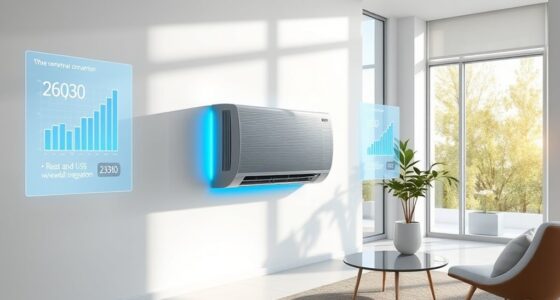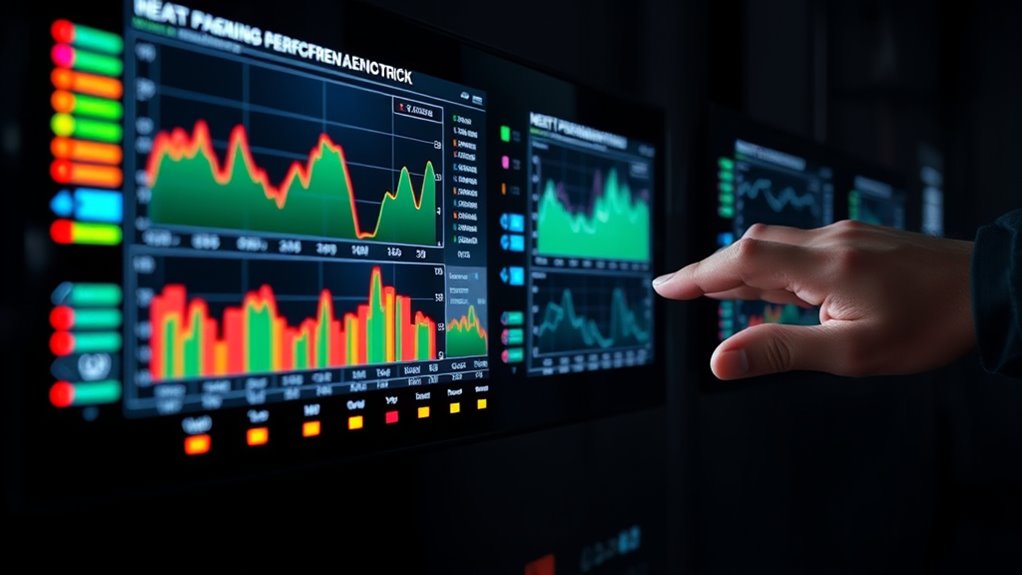
Monitoring your heat pump’s performance data helps you spot inefficiencies, adjust settings, and prevent issues before they worsen. Track key information like run times, indoor and outdoor temperatures, and energy consumption to understand how usage patterns affect costs. By paying attention to these details, you can optimize operation, reduce energy waste, and extend your system’s lifespan. Keep exploring to discover how to make the most of your heat pump’s data for better energy savings.
Key Takeaways
- Track heat pump run times, temperature readings, and energy consumption to identify efficiency patterns and optimize operation.
- Analyze seasonal variations and usage patterns to adjust settings and reduce unnecessary energy waste.
- Regularly review performance data to detect early signs of declining efficiency or system issues.
- Use data insights to set and monitor energy reduction goals for continuous system improvement.
- Identify unusual power consumption patterns to troubleshoot problems and extend system lifespan.
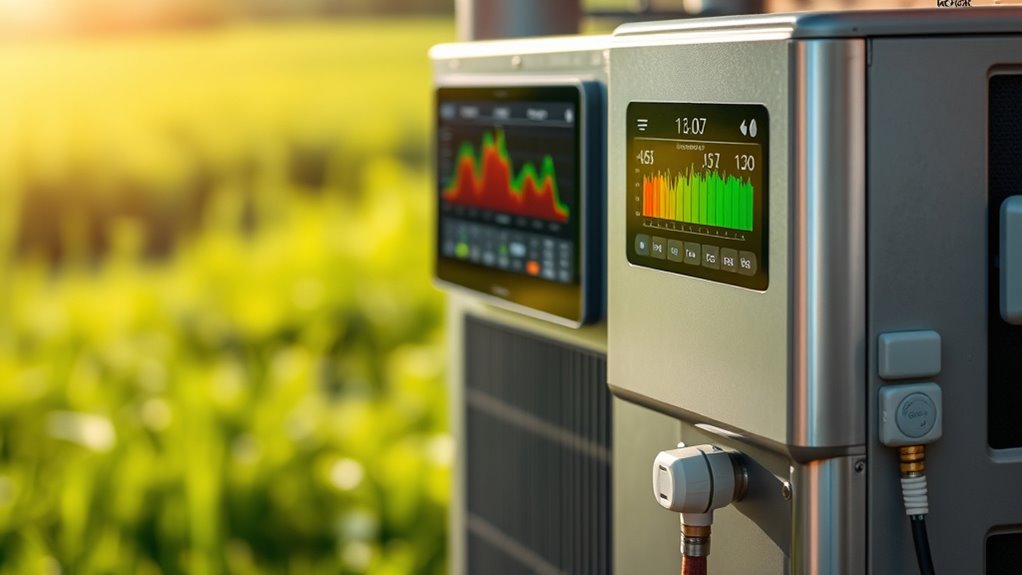
Monitoring your heat pump’s performance data gives you valuable insights into how your usage patterns impact overall energy consumption. If you frequently run your heat pump during the coldest parts of the day, it could be less energy-efficient than if you programmed it to operate during milder times or used a smart thermostat to optimize its operation. Tracking data such as run times, indoor and outdoor temperatures, and power draw helps you understand your system’s behavior. This information enables you to make informed decisions about adjusting settings or scheduling maintenance, both of which contribute to better energy efficiency. Additionally, understanding how passive voice can make your writing less clear helps you communicate your findings more effectively. Your usage patterns directly influence your heat pump’s energy efficiency. For instance, setting your thermostat too high or too low causes the system to work harder, consuming more power. By analyzing the performance data, you can find the ideal temperature settings that balance comfort with minimized energy use. Additionally, understanding seasonal variations in your energy consumption allows you to prepare for adjustments needed during colder or warmer months. This proactive approach ensures your heat pump doesn’t waste energy when it’s unnecessary. Regularly reviewing your heat pump’s data also helps you spot potential issues early, such as declining efficiency or unusual power consumption. Catching these signs before they become major problems can extend your system’s lifespan and keep your energy bills in check. Using this data, you can set realistic goals for reducing energy consumption and track your progress over time. It’s a continuous process that empowers you to maximize your heat pump’s performance and minimize waste.

Vidapool 75,000 BTU Swimming Pool Heater 12 COP Electric Pool Heat Pump for Above Ground and Inground Pools Heating and Cooling Smart WiFi Control Pools Up to,21000 Gallons
High BTU Powerful Heating, Energy-Saving & Safe: A new star in pool heating with ETL certification, stylish design,…
As an affiliate, we earn on qualifying purchases.
As an affiliate, we earn on qualifying purchases.
Frequently Asked Questions
How Often Should I Review Heat Pump Performance Data?
You should review your heat pump performance data monthly to stay on top of performance metrics and identify issues early. Regular reviews help you adjust your maintenance schedule proactively, ensuring efficiency and longevity. Keep an eye on energy consumption, refrigerant levels, and system pressures. By staying vigilant, you prevent costly repairs and optimize energy savings, making sure your heat pump operates smoothly throughout the year.
What Are Signs of Inefficient Heat Pump Operation?
Think of your heat pump as a well-tuned orchestra; if it’s out of sync, inefficiencies show. You might notice inconsistent heating or cooling, longer run times, or higher energy bills. Check your thermostat settings and make certain refrigerant levels aren’t low, as both can cause poor performance. If you see these signs, it’s time to review your system’s performance data and consider maintenance to restore harmony.
Can Monitoring Data Predict Future Equipment Failures?
Yes, monitoring data can predict future equipment failures. By analyzing heat pump performance data, you can identify patterns and early warning signs that indicate potential issues. This predictive maintenance approach allows you to address problems before they cause breakdowns, saving you money and downtime. Regular data analysis helps you stay ahead of failures, ensuring your heat pump operates efficiently and reliably over the long term.
How Do Weather Changes Affect Energy Consumption Readings?
Weather changes can dramatically impact your energy consumption readings, sometimes making your bills skyrocket like a rocket to the moon. Seasonal variations and weather patterns directly influence how your heat pump performs; colder weather increases energy use, while warmer temperatures reduce it. Monitoring these fluctuations helps you understand your system’s efficiency, allowing you to optimize settings and save money despite unpredictable weather shifts.
What Is the Ideal Energy Use Benchmark for My Heat Pump?
The ideal energy use benchmark for your heat pump depends on its size and efficiency rating, but generally, aiming for energy efficiency means your system should operate within manufacturer-recommended performance ranges. To optimize performance, regularly review your energy consumption data, ensuring your heat pump isn’t overworking. By maintaining proper system settings and scheduling routine maintenance, you’ll improve performance optimization and keep your energy use aligned with the best efficiency standards.

New! Honeywell Home Smart Thermostat, Conventional/Heat Pump Compatibility, WiFi Thermostat for Home, X2S, Gray
CONTROL: Connect to WiFi and control from anywhere using the First Alert app – Matter Certified and also…
As an affiliate, we earn on qualifying purchases.
As an affiliate, we earn on qualifying purchases.
Conclusion
By tracking your heat pump’s performance, you often find surprises—like noticing how small adjustments can save energy or uncovering hidden issues just when you least expect them. It’s funny how paying attention to these details not only boosts efficiency but also makes you more aware of your home’s energy habits. So, stay curious and keep monitoring; sometimes, the simplest insights come when you least anticipate them, turning routine checks into valuable discoveries.
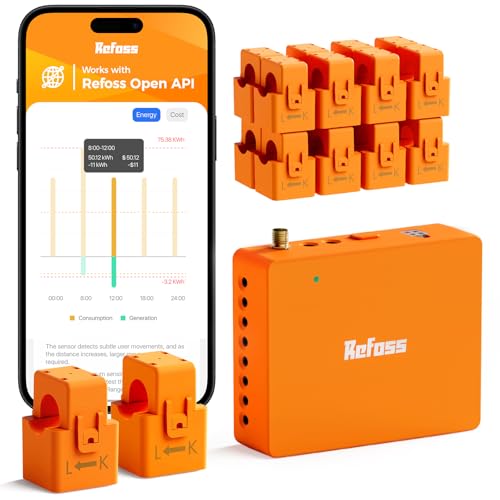
Refoss Smart Home Energy Monitor Real-Time Electricity Usage Monitor with 16x60A Circuit Sensor, Energy Meter, Local Data Storage with Open API & Web UI, Home Assistant, Solar Metering, ETL Certified
AUDIT EVERY CENT & SLASH ELECTRIC BILLS: Stop the guesswork and start saving. By monitoring 18 individual circuits…
As an affiliate, we earn on qualifying purchases.
As an affiliate, we earn on qualifying purchases.

Sediment Buster UL Verified V699054 Water Heater Flushing, Cleaning Tool
UL Verified V699054 for heat & pressure: Verified for safety and reliability under high temperature and pressure conditions
As an affiliate, we earn on qualifying purchases.
As an affiliate, we earn on qualifying purchases.