To prepare your home for a heat pump installation, start by improving insulation in your attic, walls, and floors to boost efficiency. Seal all ductwork to prevent leaks and ensure good airflow. Clear the installation area of obstructions and confirm your electrical system supports the new unit. Consider upgrading your thermostat and scheduling the work during a convenient time. Getting these steps right now can save energy and reduce costs. Keep going to learn more about optimizing your home’s readiness.
Key Takeaways
- Ensure proper insulation in attic, walls, floors, and crawl spaces to maximize heat pump efficiency.
- Seal all ductwork to prevent air leaks and improve airflow performance.
- Clear the installation area of obstructions and verify electrical support for the new system.
- Schedule installation when the home is well-prepared and coordinate with your installer ahead of time.
- Consider conducting a home energy assessment to identify additional upgrades for optimal efficiency.
Installing a heat pump requires careful preparation to guarantee a smooth and efficient process. Before the installation day, you’ll want to assess your home’s current condition and make necessary improvements. Start by focusing on insulation improvements. Proper insulation helps your heat pump work more effectively by maintaining consistent indoor temperatures and reducing energy waste. Check your attic, walls, floors, and crawl spaces for any gaps or areas where insulation is lacking. Upgrading or adding insulation can markedly boost your system’s performance and lower your energy bills over time. Investing in quality insulation now ensures your home retains heat in winter and stays cool in summer, making the heat pump’s job easier.
Proper insulation boosts heat pump efficiency and reduces energy costs.
Next, pay close attention to duct sealing. If your home has ductwork, it’s essential to ensure all ducts are properly sealed before installation. Leaky ducts allow conditioned air to escape, forcing your heat pump to work harder and increasing energy costs. Conduct a thorough inspection of your duct system, looking for gaps, holes, or loose connections. Seal these leaks with appropriate duct sealant or metal tape to prevent air loss. Properly sealed ducts improve airflow, enhance comfort, and optimize your heat pump’s efficiency from day one. Duct sealing is a simple step that can have a big impact on your system’s overall performance and your comfort levels.
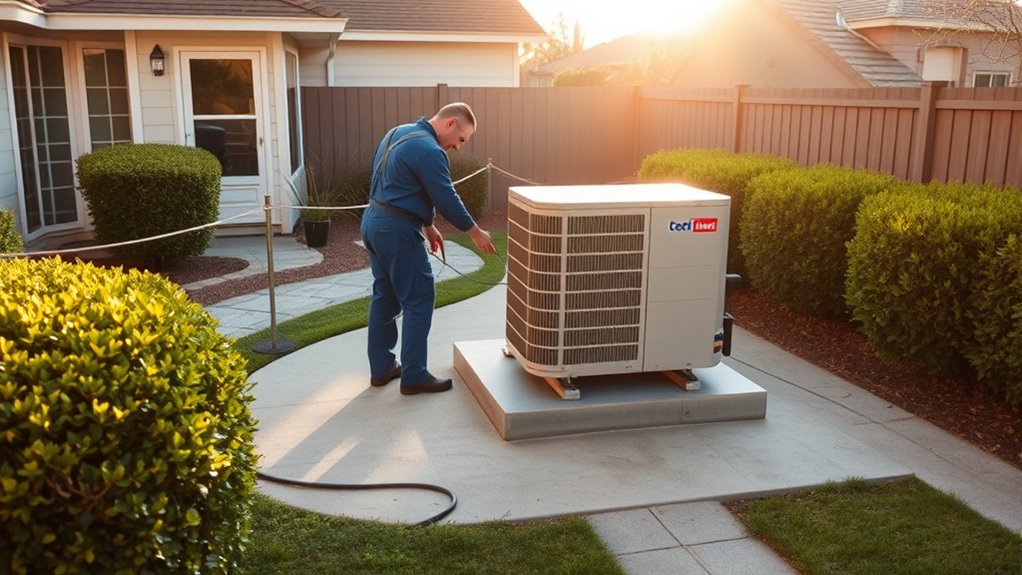
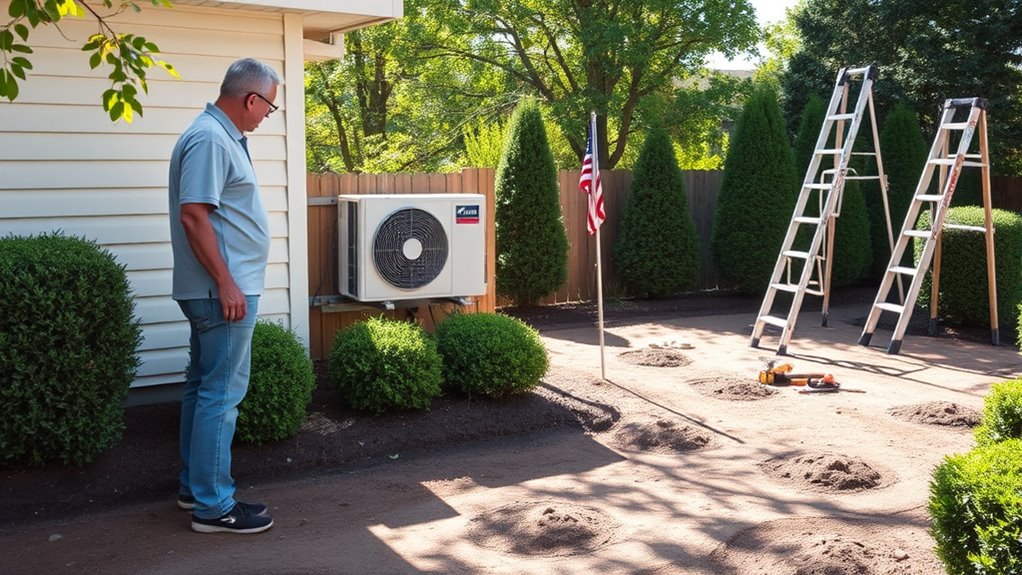
In addition to insulation improvements and duct sealing, clear the area around where the heat pump will be installed. Remove any obstructions or debris that could hinder the process. Check that your electrical system can support the new unit’s power requirements; sometimes, upgrades are necessary. If you have an existing system, consider whether your current thermostat is compatible or if it needs an upgrade to maximize energy savings and control.
Planning ahead also means scheduling your installation during a time when your home is prepared for work to be done. Make sure access points are clear, and communicate with your installer about any specific concerns or preferences. Doing these preparatory steps not only speeds up the installation but also ensures your new heat pump operates at peak efficiency right from the start. By paying attention to insulation improvements, duct sealing, and general home readiness, you’re setting the stage for a successful upgrade that will keep your home comfortable and energy-efficient for years to come.
To further ensure your home’s readiness, consider home energy assessments that can identify additional areas for efficiency improvements before installation.
Frequently Asked Questions
How Long Does a Typical Heat Pump Installation Take?
A typical heat pump installation takes about one to three days, depending on your home’s size and complexity. The installation timeline can vary based on scheduling considerations, such as contractor availability and necessary preparations. You should plan for some flexibility, as unforeseen issues may extend the process slightly. Communicate with your installer to set realistic expectations and make certain that the scheduling aligns with your needs.
Are There Any Permits Required for Installation?
You’ll need to check permit requirements before installing your heat pump, as installation regulations vary by location. Most areas require a building permit to make certain of safety and compliance with local codes. You should contact your city or county building department to determine what permits are necessary. Securing the proper permits helps avoid fines or delays during installation, ensuring everything meets legal standards and is safely installed.
Can I Install a Heat Pump Myself?
While a DIY installation might seem tempting, it’s best to seek professional assistance for installing a heat pump. Attempting a DIY installation could lead to issues with efficiency, safety, or code compliance. Professionals have the expertise to handle electrical and refrigerant connections correctly. This guarantees your system runs smoothly and avoids potential costly mistakes. Trust experts to do the job right and keep your home safe and comfortable.
What Warranties Are Offered With New Heat Pumps?
You’ll find various warranty options when you buy a new heat pump, often including manufacturer and extended warranties. Coverage details typically encompass parts, compressor, and sometimes labor, providing peace of mind. Be sure to read the warranty terms carefully, as coverage can vary between brands and models. This guarantees you understand what’s protected and for how long, so you’re prepared if repairs become necessary.
How Will a Heat Pump Affect My Energy Bills?
A heat pump can considerably lower your energy bills by providing efficient heating and cooling, leading to energy savings. You’ll notice bill reduction because it uses less electricity compared to traditional HVAC systems. Plus, because heat pumps operate year-round with high efficiency, you’ll enjoy consistent comfort while saving money over time. Expect your energy costs to decrease as you switch to this eco-friendly, cost-effective solution for your home.
Conclusion
Getting your home ready for a heat pump isn’t just about ticking boxes; it’s like laying a solid foundation for a smooth upgrade. When you prepare properly, you’ll enjoy cozy comfort and energy savings without a hitch. Think of it as tuning up your favorite car — a little effort now means a much sweeter ride later. So, roll up your sleeves and get ready — your home’s new heart is waiting to beat warmly and efficiently.