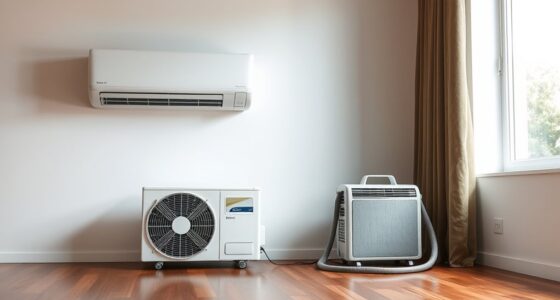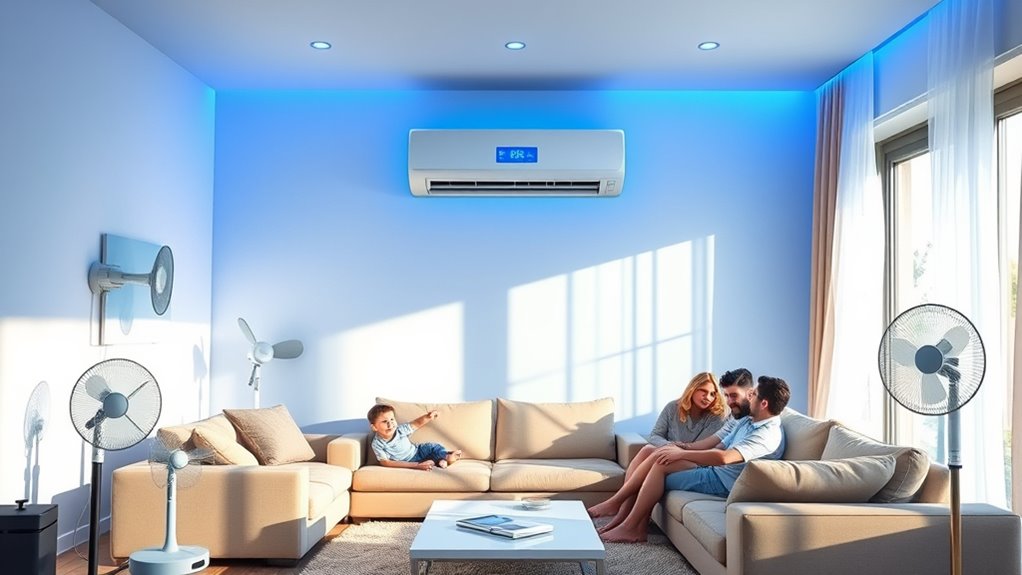
To effectively cope with heatwaves, combine air conditioning with smart ventilation practices. Keep your AC clean and set it to a comfortable, energy-efficient temperature. Use cross-ventilation early in the day or evening by opening windows opposite each other, and employ fans to circulate cool air. Stay hydrated with plenty of water and avoid caffeine or alcohol. Wearing lightweight clothing and taking breaks in shaded or cooled spaces helps further. Continuing will show you more ways to stay safe and comfortable.

Get backup power and energy gear delivered free with Prime
- Fast, free delivery on millions of items
- Prime Video, Amazon Music and more included
- Member-only deals all year
Key Takeaways
- Use cross-ventilation by opening windows on opposite sides to enhance natural airflow and reduce reliance on air conditioning.
- Set ceiling fans to rotate counterclockwise to push cool air downward and improve indoor cooling efficiency.
- Combine ventilation with hydration by sipping water regularly and consuming electrolyte drinks to prevent dehydration.
- Keep indoor environments cool by shading windows, closing curtains during peak heat, and using exhaust fans in kitchens and bathrooms.
- Limit air conditioning use by maximizing natural ventilation, wearing lightweight clothing, and staying in shaded or cooled areas.

Have you ever wondered how to stay safe during an intense heatwave? When temperatures soar, it’s essential to adopt effective cooling strategies to protect yourself and your loved ones. One of the key methods is optimizing ventilation strategies within your home. Good airflow helps reduce indoor temperatures naturally and prevents the buildup of heat. Opening windows during the cooler parts of the day, such as early mornings and evenings, can create a breeze that cools your space without relying solely on air conditioning. Cross-ventilation, where you open windows on opposite sides of the house, allows air to flow freely through rooms, removing hot air and inviting in cooler air from outside. If your home has ceiling fans, use them to enhance air circulation—set them to rotate counterclockwise in the summer to push air downward. Ventilation isn’t just about opening windows; consider using exhaust fans in kitchens and bathrooms to expel warm, moist air, which can make the interior feel hotter. Additionally, placing fans strategically near open windows can draw in cooler air and exhaust warm indoor air, further lowering indoor temperatures. Incorporating the right types of fans can significantly improve airflow and cooling efficiency during heatwaves.
Alongside ventilation strategies, staying properly hydrated is vital during heatwaves. Hydration techniques involve more than just drinking water; they require consistent effort to maintain your body’s fluid balance. Keep a water bottle nearby and sip regularly, even if you don’t feel thirsty, since thirst can be a sign that your body is already becoming dehydrated. Incorporate electrolyte-rich drinks if you’re sweating excessively, as they help replenish lost minerals. Avoid caffeine and alcohol, as these can dehydrate you further. Eating light, hydrating foods like fruits and vegetables also contributes to your hydration levels. Remember, older adults and children are more vulnerable to dehydration, so their intake should be monitored more closely. Wearing lightweight, loose-fitting clothing and staying in shaded or cool areas can help reduce fluid loss and heat stress. If you’re outdoors, take frequent breaks in shaded or air-conditioned spots, and make sure everyone around you stays hydrated too.
Managing your environment with these ventilation strategies and hydration techniques can make a significant difference in how you cope with extreme heat. By actively controlling indoor airflow and ensuring your body stays well-hydrated, you can prevent heat-related illnesses and stay comfortable during even the most intense heatwaves. Preparing ahead with these simple yet effective practices helps you face the heat confidently, ensuring your safety and well-being when the temperature climbs dangerously high.
energy-efficient portable air conditioner
As an affiliate, we earn on qualifying purchases.
As an affiliate, we earn on qualifying purchases.
Frequently Asked Questions
How Often Should I Service My Air Conditioner During Heatwaves?
During heatwaves, you should service your air conditioner at least once every 1-2 months. Regular air filter maintenance is vital, so change filters every 1-2 months to keep airflow ideal. Additionally, check refrigerant levels to guarantee your system runs efficiently. If you notice reduced cooling or increased energy use, schedule a professional service promptly. Consistent maintenance keeps your AC effective and extends its lifespan during extreme heat.
Can Using a Fan Help Reduce Air Conditioning Costs?
Think of a fan as your cooling sidekick, working hand-in-hand with your air conditioner. Using a fan can boost fan efficiency, helping circulate cool air more evenly and reduce the workload on your AC. This teamwork leads to significant cost savings, as your air conditioner doesn’t have to run as often or as hard. So, turn on that fan and let it help you chill out without breaking the bank.
What Are the Best Settings for Energy-Efficient Cooling?
Set your thermostat to around 78°F (25-26°C) when you’re home and active, and raise it when you’re away. Focus on thermostat optimization by using programmable settings to adjust temperatures automatically. Improve insulation to keep cool air in and hot air out, reducing cooling needs. Use fans to supplement the air conditioning, and close blinds or curtains during peak sunlight hours. These steps help you stay comfortable while saving energy and lowering costs.
How Can I Prevent Air Conditioner Mold Growth?
Worried about mold growth in your air conditioner? Regular air conditioner maintenance is key. You should change filters frequently, clean the coils, and make certain proper drainage to prevent moisture buildup. Have you considered mold prevention tips like using a dehumidifier or keeping the unit dry? These proactive steps help stop mold from thriving, ensuring cleaner, healthier air and maintaining your AC’s efficiency during the heat.
Are There Eco-Friendly Alternatives to Traditional Air Conditioning?
Yes, you can opt for eco-friendly alternatives like solar cooling and evaporative cooling systems. Solar cooling uses sunlight to power your AC, reducing energy consumption and emissions. Evaporative cooling, or swamp coolers, cools air through evaporation, using markedly less electricity than traditional units. Both options are energy-efficient, environmentally friendly, and cost-effective in the long run, helping you stay cool while minimizing your carbon footprint.
As an affiliate, we earn on qualifying purchases.
Conclusion
As you follow these air conditioning tips, you’ll notice how comfort becomes second nature during heatwaves. Coincidentally, the more you stay cool and hydrated, the better you’ll feel—proving that small habits make a big difference. When the next heatwave hits, you’ll realize that being prepared isn’t just about equipment, but about staying mindful of your well-being. Ultimately, your comfort and health are worth every effort—because sometimes, staying cool is just a matter of smart choices.
As an affiliate, we earn on qualifying purchases.
As an affiliate, we earn on qualifying purchases.
Fall Picks
fall essentials
As an affiliate, we earn on qualifying purchases.