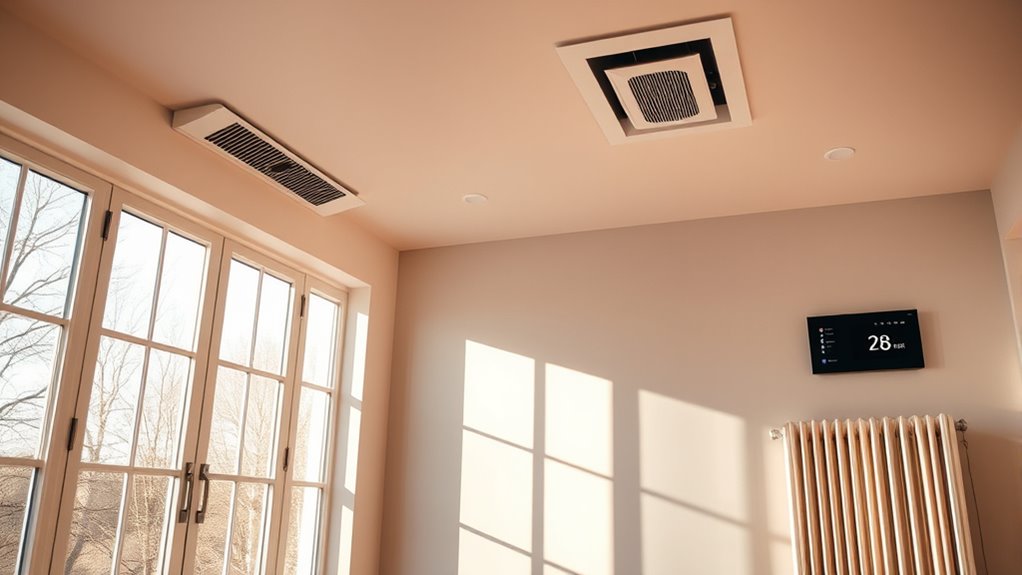
To improve energy efficiency in your home’s heating and cooling, focus on upgrading insulation, sealing gaps, and using smart thermostats to optimize temperature control. Regular maintenance, like changing filters and checking systems, helps guarantee your HVAC runs smoothly. Simple actions such as shading windows or opening blinds for natural warmth can also make a difference. Implementing these strategies not only lowers bills but benefits the environment. Keep exploring to learn more ways to maximize your home’s energy efficiency.
Key Takeaways
- Upgrading insulation and sealing gaps reduces heat transfer, improving heating and cooling efficiency.
- Installing smart thermostats optimizes system operation based on household schedules and occupancy.
- Regular maintenance, like filter changes and system check-ups, ensures HVAC efficiency and prolongs equipment lifespan.
- Utilizing natural light, shading, and window treatments can decrease reliance on mechanical heating and cooling.
- Combining small behavioral actions with technological upgrades creates a comprehensive approach to energy-efficient home climate control.
Improving energy efficiency in home heating and cooling is essential for saving money and reducing your environmental impact. When you focus on making your home more energy-efficient, you’re not only lowering your utility bills but also decreasing your carbon footprint. One of the most effective ways to do this is through insulation upgrades. Proper insulation helps keep the warm air inside during winter and prevents heat from entering during summer. By sealing gaps and adding insulation to your attic, walls, and floors, you can considerably reduce the workload on your heating and cooling systems. This means your HVAC units won’t have to work as hard, leading to less energy consumption and longer equipment lifespan.
Upgrading insulation reduces energy use and extends your HVAC system’s lifespan.
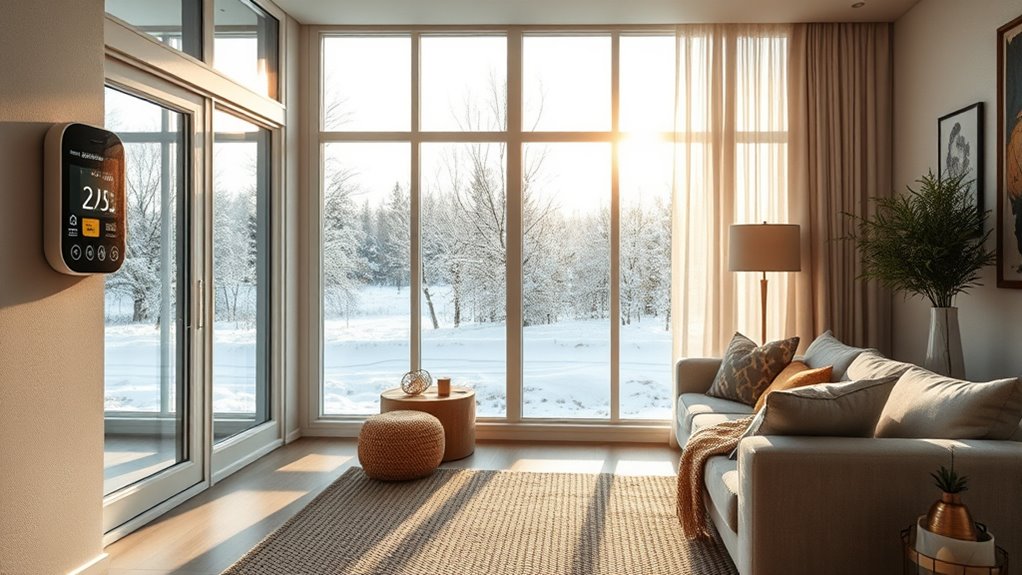
Alongside insulation upgrades, installing smart thermostats can revolutionize your home’s energy management. These devices learn your schedule and preferences, automatically adjusting temperatures to optimize comfort and efficiency. Instead of manually setting the thermostat, a smart thermostat will lower the heating or cooling when you’re away or asleep, then ramp up just before you return home. This level of control prevents unnecessary energy use and ensures you’re not wasting money on heating or cooling an empty house. Many smart thermostats also provide energy usage reports, giving you insights into how your habits impact your bills, and allowing you to fine-tune your settings for maximum savings.
In addition to insulation and smart thermostats, consider other simple adjustments. Regularly maintaining your HVAC system, like replacing filters and scheduling professional check-ups, keeps it running efficiently. When filters are clogged or systems are neglected, they consume more energy and wear out faster. Using ceiling fans can also assist your heating and cooling efforts, helping distribute conditioned air more evenly throughout your home. Properly inflating tires on your bicycles—though unrelated to home energy—serves as a reminder that maintaining equipment at optimal conditions can improve overall efficiency in various areas of life.
Furthermore, shading windows with blinds or curtains during hot months can reduce the heat gain inside, easing the burden on your cooling system. Conversely, during colder months, opening blinds to sunlight can naturally warm your home. These small, intentional actions, combined with technological upgrades like insulation and smart thermostats, create a holistic approach to energy efficiency.
Ultimately, making your home more energy-efficient isn’t just about cutting costs; it’s about adopting smarter habits and investing in technology that supports sustainable living. Upgrading insulation and utilizing smart thermostats are two of the most impactful steps you can take. They work together to improve comfort, reduce waste, and ensure your home uses energy wisely, benefiting both your wallet and the planet.

Canyon Lodge Large Pellet Stove
Heats up to 2,000-3,000 sq. ft.
As an affiliate, we earn on qualifying purchases.
Frequently Asked Questions
How Do Seasonal Changes Affect Energy Efficiency Strategies?
Seasonal temperature fluctuations considerably influence your energy efficiency strategies. You should adapt your approach to weather pattern changes, like insulating better in winter to retain heat and using fans or ventilation in summer to cool down. These adjustments help optimize your HVAC system’s performance, reduce energy waste, and lower bills. By staying aware of seasonal shifts, you can implement targeted solutions that improve comfort and efficiency year-round.
What Are the Long-Term Cost Benefits of Energy-Efficient Systems?
Investing in energy-efficient systems saves you money over time through lower utility bills and reduced maintenance costs. You’ll see significant cost savings as these systems operate more efficiently, cutting your energy consumption. Plus, you’ll lessen your environmental impact by reducing greenhouse gas emissions. Long-term, these benefits make energy-efficient heating and cooling systems a smart choice, providing financial savings and helping you contribute to a healthier planet.
Are There Government Incentives for Upgrading Home Heating and Cooling?
Yes, you can benefit from government incentives when upgrading your home heating and cooling systems. Look into rebate programs and tax credits available in your area, which can substantially reduce your upfront costs. These incentives encourage energy-efficient upgrades, helping you save money in the long run. Make sure to check the specific requirements and deadlines for applying, so you can take full advantage of these valuable financial benefits.
How Does Insulation Impact Overall Energy Savings?
Insulation markedly boosts your energy savings by reducing heat transfer through your home’s walls, attic, and floors. Using quality insulation materials creates effective thermal barriers, keeping warm air inside during winter and outside during summer. This means your heating and cooling systems don’t have to work as hard, lowering energy bills and increasing comfort. Proper insulation is a smart investment that enhances overall efficiency and helps you save money over time.
What Maintenance Practices Optimize System Efficiency Over Time?
You should regularly schedule system calibration and replace filters to optimize your heating and cooling system’s efficiency. Calibrating your system guarantees it runs at peak performance, while changing filters every 1-3 months keeps airflow unobstructed and maintains indoor air quality. Additionally, cleaning ducts and checking for leaks help prevent energy waste. Consistent maintenance not only extends your system’s lifespan but also saves you money on energy bills.

PelPro PP150 Pellet Stove for Home Heating - 150 lb Hopper, 49,200 BTU Heats up to 2,500 Sq. Ft., Easy-Dial Temp Control, Built-in Thermostat with Auto-Ignition, Powerful & Quiet 265CFM Blower
PP150 pellet stoves for fireplaces are efficient for home heating up to 2,500 sq. ft. at almost 50,000...
As an affiliate, we earn on qualifying purchases.
Conclusion
Remember, a stitch in time saves nine. By improving your home’s heating and cooling efficiency, you save energy, lower bills, and reduce your environmental impact. Simple upgrades like sealing leaks, installing a programmable thermostat, and maintaining your system make a big difference. Don’t wait for costly repairs or discomfort—take action now. When you prioritize energy efficiency, you’re not only protecting your wallet but also helping create a healthier planet for everyone.

Large Pellet Stove - 130lb Hopper
Built-in WiFi – Smart Home Technology
As an affiliate, we earn on qualifying purchases.

ALORAIR Whole House Dehumidifier, 90 PPD Commercial Grade Whole Home Dehumidifiers for Garages, Water Damage Restoration, 2300 Sq.Ft dehumidifiers for Crawl Space
Energy Efficient Whole House Dehumidifier: 90 pints per day at AHAM condition, 70 Pint at DOE, up to...
As an affiliate, we earn on qualifying purchases.