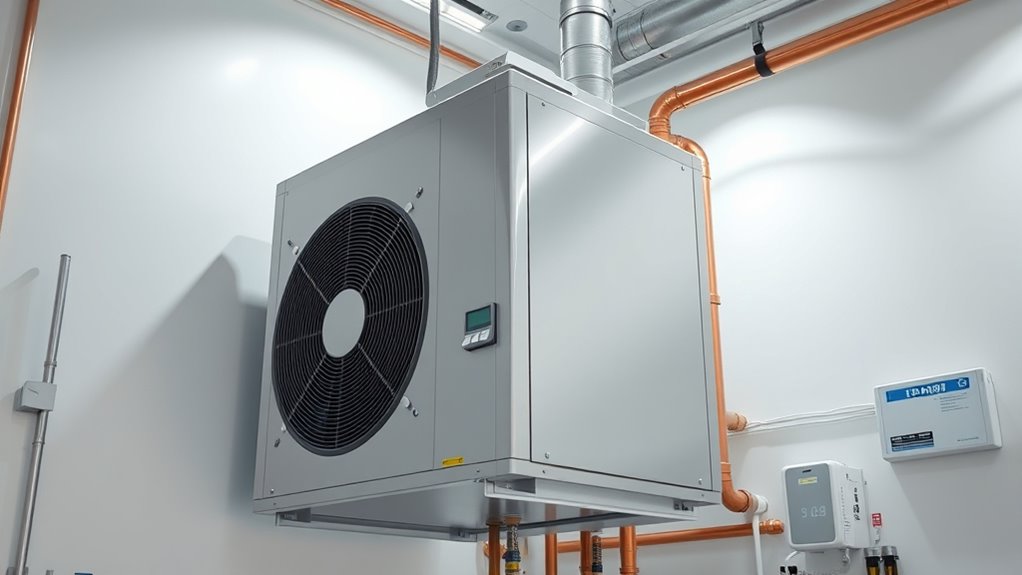
Heat pumps in healthcare facilities offer an energy-efficient way to regulate temperature, ensuring comfort and safety for patients and staff. They transfer heat instead of generating it, which reduces energy use and operational costs. Proper maintenance, including regular inspections and using smart monitoring systems, helps keep them running smoothly. By choosing heat pumps, your facility supports sustainability and reliable climate control—keep going to discover how to maximize their benefits.
Key Takeaways
- Heat pumps provide energy-efficient heating and cooling, ensuring precise temperature control crucial for healthcare environments.
- They reduce operational costs and support sustainable practices in healthcare facilities.
- Regular maintenance and staff training are essential to maintain system reliability and efficiency.
- Smart monitoring systems enable real-time performance tracking and proactive maintenance.
- Proper integration of heat pumps enhances patient comfort, staff safety, and environmental responsibility.
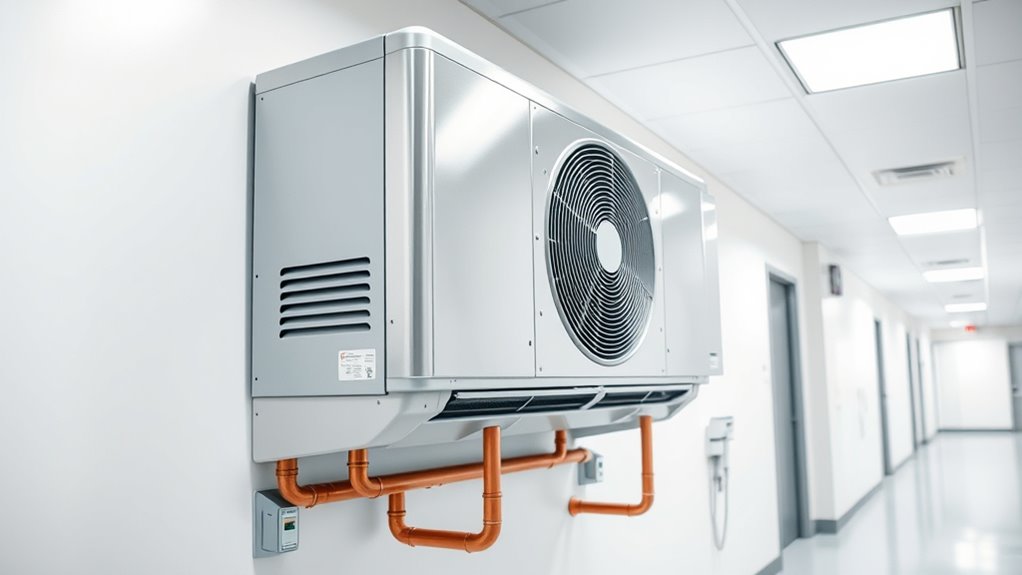
Heat pumps are increasingly becoming an essential component in healthcare facilities, offering an energy-efficient way to provide both heating and cooling. As you look for reliable HVAC solutions, you’ll find that heat pumps stand out because they can notably reduce energy consumption while maintaining a comfortable environment for patients and staff. Their ability to transfer heat rather than generate it makes them a smart investment, especially in settings where temperature control is critical. By choosing a heat pump, you’re not only maximizing energy efficiency but also aligning with sustainable practices that can lower operational costs over time.
Implementing effective maintenance strategies is indispensable to maximize the benefits of heat pumps in healthcare environments. Regular inspections and timely servicing ensure that the system operates at peak efficiency and prevent unexpected breakdowns. You’ll want to establish a routine schedule for checking refrigerant levels, cleaning filters, and inspecting electrical connections. These steps help maintain peak performance, reduce energy waste, and extend the lifespan of your equipment. Additionally, keeping detailed maintenance records allows you to track system performance and identify potential issues early, which is especially important in healthcare settings where system reliability directly impacts patient care.
Another key aspect of maintenance strategies involves training your staff to recognize early signs of system inefficiency. Educating your team on proper operation and routine checks can make a noticeable difference. For example, recognizing unusual noises or a drop in heating or cooling output can alert you to problems before they escalate. Preventative maintenance not only preserves the energy efficiency of your heat pump but also minimizes downtime, ensuring continuous comfort within your facility. This proactive approach helps you avoid costly repairs and keeps the system running smoothly, which is essential when dealing with sensitive environments like hospitals or clinics.
Furthermore, integrating smart controls and monitoring systems can enhance your maintenance strategies. These tools provide real-time data on system performance, enabling you to identify inefficiencies promptly and schedule maintenance as needed. By leveraging technology, you can optimize energy usage further, saving on operational costs and reducing your carbon footprint. In a healthcare setting, where consistent climate control is imperative, these strategies safeguard against disruptions that could compromise patient safety or equipment functioning. Energy-efficient operation and proactive management are key to maintaining a safe and comfortable environment in healthcare facilities.

PelPro PP150 Pellet Stove for Home Heating - 150 lb Hopper, 49,200 BTU Heats up to 2,500 Sq. Ft., Easy-Dial Temp Control, Built-in Thermostat with Auto-Ignition, Powerful & Quiet 265CFM Blower
PP150 pellet stoves for fireplaces are efficient for home heating up to 2,500 sq. ft. at almost 50,000...
As an affiliate, we earn on qualifying purchases.
Frequently Asked Questions
How Do Heat Pumps Affect Indoor Air Quality in Hospitals?
Heat pumps improve indoor air quality in hospitals by enhancing air filtration, which reduces airborne contaminants and allergens. They also help maintain ideal humidity levels, preventing mold growth and dust mites. With better humidity control, you create a healthier environment for patients and staff. By actively managing these factors, heat pumps support a cleaner, safer hospital atmosphere, ultimately contributing to improved health outcomes and comfort.
Are Heat Pumps Suitable for All Climate Zones in Healthcare Settings?
You’ll find that heat pumps are highly adaptable, with over 90% of models now offering climate adaptability, making them suitable for many regions. They excel in regional efficiency, providing reliable heating and cooling across diverse climate zones. While some extreme climates may require supplementary systems, most healthcare settings can confidently implement heat pumps, optimizing energy use and maintaining indoor comfort regardless of local weather conditions.
What Is the Typical Lifespan of a Heat Pump in Hospitals?
You can expect a heat pump in hospitals to last around 10 to 15 years, depending on equipment durability and maintenance. Seasonal performance plays a key role; well-maintained units perform better across temperature fluctuations, extending their lifespan. Regular servicing helps guarantee peak operation and prevents early wear and tear. By prioritizing maintenance, you’ll maximize your heat pump’s longevity, ensuring reliable climate control in your healthcare facility for many years.
How Do Heat Pumps Integrate With Existing HVAC Systems?
Your heat pump seamlessly integrates with your existing HVAC system, acting like a missing puzzle piece falling perfectly into place. To guarantee smooth compatibility, you should assess system compatibility and consider installation factors such as ductwork, electrical requirements, and control systems. Proper planning minimizes disruptions and maximizes efficiency, making your upgrade straightforward. With careful integration, your healthcare facility benefits from enhanced climate control and energy savings, supporting ideal patient care.
What Are the Maintenance Requirements for Healthcare-Grade Heat Pumps?
You need to regularly perform filter maintenance to keep your healthcare-grade heat pumps running efficiently and maintain air quality standards. Additionally, refrigerant checks are essential to guarantee proper system operation and prevent leaks that could compromise performance or safety. Schedule these maintenance tasks periodically, following the manufacturer’s guidelines, and consider professional inspections to identify potential issues early, ensuring your heat pumps operate reliably in critical healthcare environments.

Canyon Lodge Large Pellet Stove
Heats up to 2,000-3,000 sq. ft.
As an affiliate, we earn on qualifying purchases.
Conclusion
Just like a reliable heartbeat keeps a patient alive, heat pumps keep healthcare facilities comfortable and efficient. By choosing this eco-friendly technology, you guarantee a safer, healthier environment for patients and staff alike. Embracing heat pumps is like planting a seed for a greener future—sustainable and essential. So, take action today and harness their benefits to transform your healthcare facility into a model of comfort and responsibility.

Large Pellet Stove - 130lb Hopper
Built-in WiFi – Smart Home Technology
As an affiliate, we earn on qualifying purchases.

Medium Pellet Stove - 60lb Hopper
Built-in WiFi – Smart Home Technology
As an affiliate, we earn on qualifying purchases.