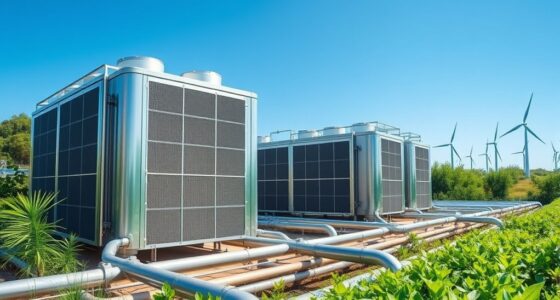
When comparing renewable energy options for powering heat pumps, solar thermal and geothermal systems are top choices. Solar thermal captures sunlight to heat water, lowering reliance on grid electricity, especially in sunny climates. Geothermal taps underground temperatures for consistent, reliable energy year-round. While solar thermal is more cost-effective upfront, geothermal offers higher efficiency with longer-term savings. If you’d like to explore how these options match your climate and needs, there’s more to uncover below.
Key Takeaways
- Solar thermal systems are cost-effective and suitable for sunny climates, providing heat directly to assist heat pumps.
- Geothermal energy offers consistent, reliable heating and cooling, unaffected by weather or season.
- Solar thermal relies on sunlight availability, reducing efficiency during cloudy days or winter months.
- Geothermal systems require higher upfront investment but deliver long-term savings and stable performance.
- Both renewable options can be integrated with heat pumps to enhance energy efficiency and sustainability.

Are you looking for a sustainable way to power your heat pump? If so, exploring renewable energy options can help you reduce your carbon footprint and lower energy costs. Two popular choices are solar thermal systems and geothermal energy. Both harness natural resources to provide clean, efficient heating and cooling, but they differ markedly in setup, efficiency, and suitability.
Solar thermal systems capture sunlight using collectors installed on your roof or property. These collectors absorb solar energy and convert it into heat, which can directly warm your heat pump or preheat water for domestic use. Solar thermal is highly effective in sunny climates and can considerably reduce reliance on grid electricity. It’s a straightforward technology, often less costly to install than other renewable options, and features minimal ongoing maintenance. However, its efficiency depends heavily on sunlight availability, so it works best in areas with ample sunshine. During cloudy days or winter months, you might need supplementary heating sources to maintain consistent comfort levels.
Solar thermal collectors efficiently harness sunlight for heating, reducing reliance on grid electricity in sunny climates.
Geothermal energy, on the other hand, taps into the stable underground temperature to provide heating and cooling. You install a ground loop system, which circulates a fluid that absorbs heat from the earth during winter and dissipates heat back into the ground during summer. This method offers a highly reliable and consistent energy source, regardless of weather conditions or season. Geothermal systems tend to have higher upfront costs but deliver impressive efficiency and long-term savings. They can operate effectively year-round, making them ideal if you’re looking for a low-maintenance, resilient solution. Plus, geothermal energy has a smaller land footprint compared to large solar thermal arrays, and it doesn’t depend on weather variability. Additionally, integrating reliable backup power options can ensure your system remains operational during power outages or grid interruptions.
When comparing these options, consider your location, climate, budget, and available space. Solar thermal is often more accessible and easier to install if you have sufficient sunlight and a suitable roof or open area. Geothermal systems require more extensive installation but provide steady, year-round performance that can considerably cut your energy bills over time. Both technologies can work seamlessly with heat pumps, enhancing their efficiency and sustainability. Ultimately, your choice depends on your specific circumstances and priorities, but integrating renewable energy into your heating system is a smart step toward a greener, more cost-effective home.

First E.C. Conference on Solar Collectors in Architecture: Integration of Photovoltaic and Thermal Collectors in New and Old Building Structures
As an affiliate, we earn on qualifying purchases.
As an affiliate, we earn on qualifying purchases.
Frequently Asked Questions
How Do Seasonal Variations Affect Renewable Energy Efficiency for Heat Pumps?
Seasonal variations impact renewable energy efficiency for heat pumps because solar variability and wind fluctuations change throughout the year. During winter, lower sunlight and wind speeds reduce energy generation, making it harder to meet heat demands. In summer, increased solar and wind output improve efficiency. You can counteract this by using energy storage or hybrid systems, ensuring consistent heat pump operation despite these seasonal changes.
What Are the Initial Costs of Installing Different Renewable Energy Systems?
Think of the cost comparison like planting seeds—your upfront investment varies. Solar panel systems might require a higher initial cost, but they offer long-term savings, while small wind turbines often need less upfront but may have higher maintenance costs. Generally, geothermal systems demand significant initial investment but excel in efficiency. Your choice depends on your budget and long-term goals, balancing initial costs with future energy savings.
How Do Maintenance Needs Differ Between Renewable Options for Heat Pumps?
You’ll find that system maintenance varies based on the renewable energy option you choose. Solar systems typically require minimal upkeep, mainly cleaning panels and checking connections, thanks to their durable components. In contrast, geothermal systems need regular inspections of underground loops, and wind turbines demand ongoing component durability checks. Overall, choosing options with robust components reduces maintenance needs, ensuring your heat pump runs efficiently with less frequent repairs.
Are There Any Government Incentives for Renewable Energy-Powered Heat Pumps?
Imagine your energy bills shrinking so dramatically, they almost disappear! Yes, there are government incentives like solar subsidies and tax credits that make switching to renewable-powered heat pumps super affordable. These programs can cover a significant portion of installation costs, transforming your home into a model of efficiency. Don’t miss out on these opportunities to save money and help the environment—act now to take advantage of these generous incentives.
What Is the Typical Lifespan of Renewable Energy Components Used With Heat Pumps?
You can expect renewable energy components used with heat pumps to last around 10 to 20 years, depending on their component durability and maintenance. Inverters, solar panels, and batteries generally have longer replacement timelines, often reaching 15-20 years with proper care. Regular inspections and timely maintenance help extend their lifespan, ensuring your system runs efficiently and avoids unnecessary replacements.

Geothermal Heat Pump Systems (Green Energy and Technology)
As an affiliate, we earn on qualifying purchases.
As an affiliate, we earn on qualifying purchases.
Conclusion
As you explore renewable energy options for your heat pump, the choices you make today could shape your home’s future sustainability. Will you harness the sun’s power with solar panels or tap into the wind’s whisper with turbines? Each option offers unique benefits and challenges, but the true impact lies ahead. The decision you make now could open a cleaner, greener tomorrow—if you dare to take the next step. The future of your energy journey awaits.

Solar Water Heating–Revised & Expanded Edition: A Comprehensive Guide to Solar Water and Space Heating Systems (Mother Earth News Wiser Living Series)
New
As an affiliate, we earn on qualifying purchases.
As an affiliate, we earn on qualifying purchases.

Ground-Source Heat Pumps: Fundamentals, Experiments and Applications
As an affiliate, we earn on qualifying purchases.
As an affiliate, we earn on qualifying purchases.