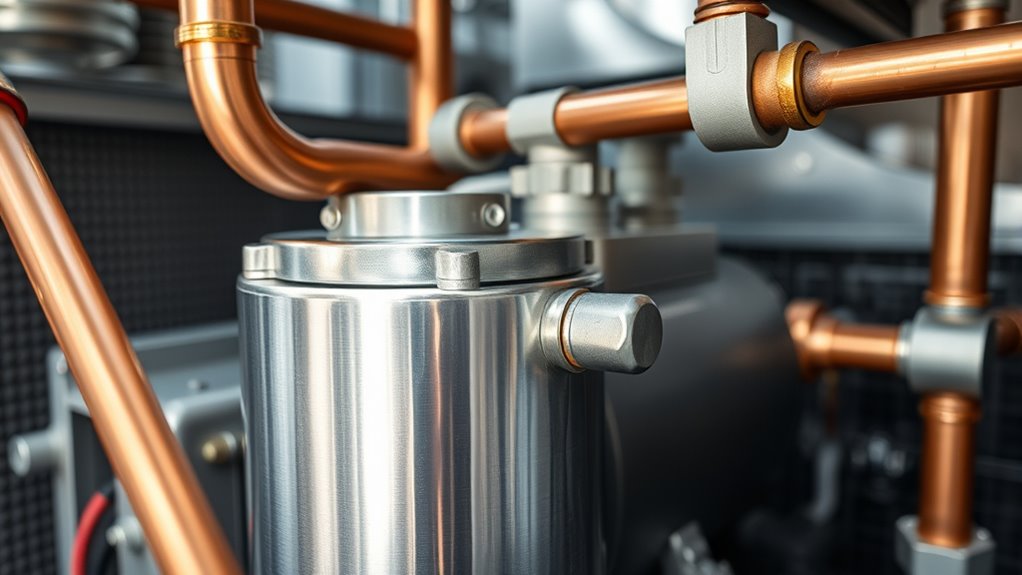

The compressor plays a vital role in your refrigerant cycle by increasing the pressure and temperature of the refrigerant vapor, enabling it to flow efficiently through the system. It draws in low-pressure vapor from the evaporator and compresses it to a high-pressure, high-temperature state, which allows heat to be released in the condenser. Understanding how the compressor works can help you grasp how your cooling system maintains its efficiency—stay tuned for more details.
Key Takeaways
- Increases refrigerant pressure and temperature for efficient heat transfer in the system.
- Converts low-pressure vapor into high-pressure, high-temperature vapor to facilitate condensation.
- Maintains pressure differential to ensure smooth refrigerant flow throughout the cycle.
- Overcomes system resistance, enabling continuous circulation of refrigerant.
- Acts as the driving force that enables the refrigerant to absorb and release heat effectively.
The compressor plays a vital role in the refrigerant cycle by actively increasing the pressure and temperature of the refrigerant. During operation, it draws in low-pressure, low-temperature refrigerant vapor from the evaporator. This is where the compression process begins. As you activate the compressor, it compresses the refrigerant, which significantly raises its pressure. This increase in refrigerant pressure is crucial because it allows the refrigerant to flow effectively through the system and facilitates heat transfer during subsequent stages.
The compressor increases refrigerant pressure and temperature, enabling effective flow and heat transfer within the cooling cycle.
As the refrigerant is compressed, its temperature also rises. This is due to the work done by the compressor on the refrigerant molecules, causing them to move faster and generate heat. The high-pressure, high-temperature vapor then moves to the condenser. Without this compression process, the refrigerant wouldn’t reach the necessary pressure levels to release heat efficiently in the condenser or to continue the cycle. The compressor essentially acts as the engine that keeps the refrigerant moving, maintaining the pressure differential needed for the cycle to function smoothly.
The key to understanding the compressor’s role is recognizing how it manages refrigerant pressure. By increasing the pressure, the compressor ensures that the refrigerant can release heat in the condenser more effectively, transitioning from vapor to liquid. This phase change is vital for the cooling process, as it allows the refrigerant to absorb heat from the space you’re trying to cool. The compressor’s ability to control refrigerant pressure also impacts the overall efficiency of the system. If the pressure isn’t properly maintained, the system’s cooling capacity diminishes, and energy consumption increases.
Furthermore, the compressor’s design and operation influence how well the refrigerant pressure is regulated throughout the cycle. It must generate enough pressure to overcome system resistance and ensure continuous flow. Properly functioning compressors maintain the right balance, preventing issues like refrigerant slugging or insufficient pressure buildup, which can impair system performance. As you can see, the compression process isn’t just about increasing pressure; it’s about creating the conditions necessary for the refrigerant to absorb and release heat efficiently, enabling the entire cooling cycle to work optimally. Additionally, advancements in AI in HVAC systems contribute to better compressor control and system efficiency.
Frequently Asked Questions
How Does the Compressor Affect Overall System Efficiency?
The compressor impacts your system’s efficiency by controlling pressure regulation and managing energy consumption. When it runs efficiently, it minimizes energy use while maintaining ideal pressure levels, ensuring the refrigerant flows smoothly through the cycle. If it struggles or consumes excess energy, overall system performance drops. Regular maintenance and choosing an efficient compressor help you save energy and keep your system running at peak efficiency.
What Are Common Signs of Compressor Failure?
When your compressor starts acting up, it’s often a sign of trouble. You might notice loud compressor noise or refrigerant leaks, which indicate potential failure. If the compressor struggles to start or the system isn’t cooling properly, don’t ignore these signs. Catching issues early can save you from bigger headaches down the line. Stay alert, because ignoring these signs could lead to a complete system breakdown.
How Often Should Compressor Maintenance Be Performed?
You should perform compressor maintenance every 3 to 6 months, depending on usage and manufacturer’s recommendations. Keep an eye on lubrication schedules to guarantee proper oil levels and prevent wear. Regular vibration monitoring helps detect early issues, reducing the risk of failure. Consistent maintenance keeps your compressor running efficiently, prolongs its lifespan, and minimizes costly repairs. Always follow the specific guidelines provided by your equipment manufacturer for ideal results.
What Types of Compressors Are Used in Refrigeration?
Think of compressors as the heart of refrigeration, pumping life into the system. You’ll find various types like reciprocating, scroll, screw, and centrifugal compressors. To keep them beating smoothly, regular compressor lubrication is vital, reducing noise and preventing wear. Each type serves different needs, but all rely on proper maintenance to ensure quiet operation and efficiency, much like tuning an instrument for harmonious performance.
How Does Refrigerant Type Impact Compressor Selection?
You should consider refrigerant compatibility when choosing a compressor, as not all compressors work efficiently with every refrigerant type. The refrigerant’s properties influence compressor sizing to guarantee peak performance and energy efficiency. Using the correct compressor designed for your specific refrigerant helps prevent system failures and maintains reliable operation, making it vital to match both refrigerant type and compressor size during system design and installation.
Conclusion
Think of the compressor as the heart of your refrigeration system, pumping life into the cycle. It’s like a mighty river’s source, pushing the refrigerant’s journey forward, turning cold into warmth and back again. Without it, the cool breeze would fade away, and the system would stall. So, remember, your compressor keeps the chill alive—be it a gentle stream or roaring river, it’s the essential force that keeps everything flowing smoothly.