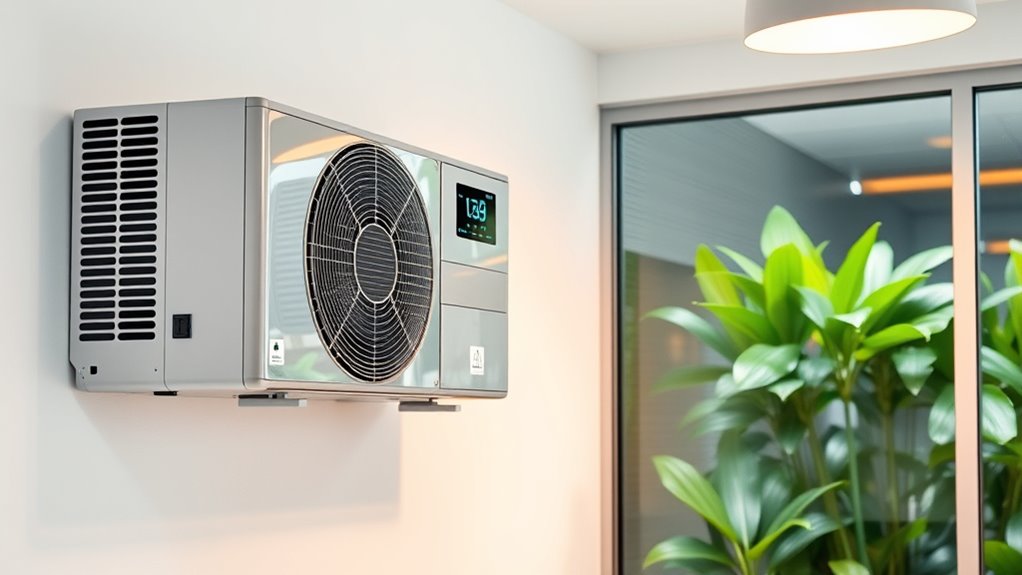

Heat pump systems help you manage indoor humidity by automatically adjusting moisture levels along with temperature control. They remove excess moisture through dehumidification, passing warm, moist air over cold coils to condense water. As humidity fluctuates, the system switches between dehumidifying and heating modes to keep your environment comfortable and dry. Equipped with sensors, these systems precisely regulate moisture, ensuring a healthy, cozy space. Continue exploring to discover how these advanced features work together seamlessly.
Key Takeaways
- Heat pumps actively regulate indoor humidity by dehumidifying warm, moist air and maintaining optimal moisture levels.
- They automatically switch between heating and dehumidification modes based on real-time humidity sensor data.
- Advanced sensors enable precise control, preventing excess dryness or dampness in indoor environments.
- Combining climate control and moisture management reduces the need for separate dehumidifiers, enhancing energy efficiency.
- Proper humidity balance improves indoor air quality, prevents mold growth, and promotes a healthier, more comfortable home.
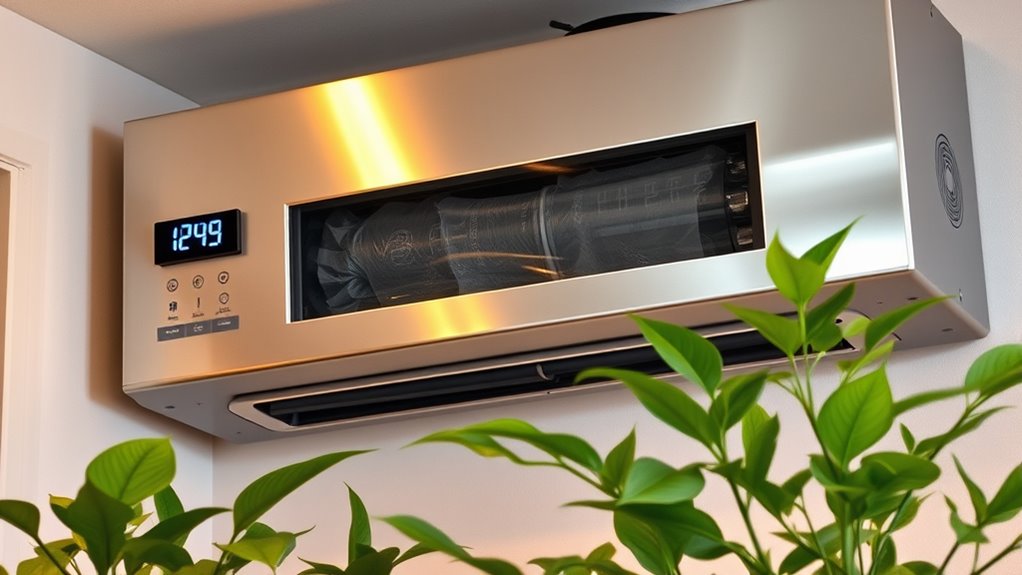
Have you ever wondered how heat pump systems help maintain ideal humidity levels in your home? These systems are more than just climate control—they actively manage moisture to create a comfortable environment. One of the key ways they do this is through their impressive dehumidification efficiency. Unlike traditional air conditioners that only cool air, heat pumps can also remove excess moisture effectively. This dual functionality allows them to balance humidity levels without compromising energy efficiency. When you set your heat pump to dehumidify, it draws in warm, moist air, passes it over cold coils, and condenses the moisture out. This process not only reduces humidity but also prevents problems like mold, mildew, and dust mites, which thrive in damp conditions. As a result, your home stays dry and comfortable, no matter the season.
The beauty of moisture balancing with a heat pump lies in its ability to adjust automatically. When humidity levels rise, the system responds by increasing dehumidification, pulling moisture out of the air. Conversely, when humidity drops below a comfortable level, the heat pump shifts to heating mode, adding moisture back into the air if needed. This dynamic response ensures that your indoor environment remains consistently comfortable without the need for constant manual adjustments. Because heat pumps are designed to operate efficiently across a wide range of conditions, they provide reliable humidity control without markedly increasing your energy bills. This balance between dehumidification efficiency and moisture regulation makes heat pumps a smart choice for maintaining healthy indoor air quality.
Additionally, modern heat pump systems come equipped with humidity sensors that monitor moisture levels in real time. These sensors inform the system when to switch between dehumidification and heating modes, fine-tuning the moisture levels with precision. This proactive approach prevents excessive dryness or dampness, enhancing your overall comfort. It also helps protect your home’s structure and furnishings from damage caused by excess moisture or dryness. By integrating advanced technology, heat pumps offer a seamless way to achieve ideal humidity control, ensuring that your home environment stays cozy, healthy, and energy-efficient. Overall, the ability of heat pump systems to deliver high dehumidification efficiency and effective moisture balancing makes them an excellent choice for anyone looking to improve indoor air quality and maintain a stable, comfortable climate year-round.

New! Honeywell Home Smart Thermostat, Conventional/Heat Pump Compatibility, WiFi Thermostat for Home, X2S, Gray
CONTROL: Connect to WiFi and control from anywhere using the First Alert app – Matter Certified and also…
As an affiliate, we earn on qualifying purchases.
As an affiliate, we earn on qualifying purchases.
Frequently Asked Questions
How Does a Heat Pump Differentiate Between Heating and Dehumidifying Modes?
A heat pump differentiates between heating and dehumidifying modes through sensor switching and mode detection. When humidity levels rise, the system detects the increased moisture via sensors, prompting it to switch modes. In dehumidifying mode, the heat pump runs in a way that cools the air to remove moisture, then switches back to heating when humidity drops. This automatic mode detection guarantees ideal comfort and humidity control.
Can Humidity Control With Heat Pumps Be Effective in Extremely Humid Climates?
Yes, humidity control with heat pumps can be effective in extremely humid climates, especially when they feature dehumidifier integration. These systems adapt to the climate by removing excess moisture efficiently. Look for models with advanced dehumidification modes and climate adaptability features, which guarantee consistent comfort. Properly maintained heat pumps can reduce humidity levels, improve air quality, and help you stay comfortable even during the most humid days.
What Maintenance Is Required for Optimal Humidity Regulation?
To keep your heat pump’s humidity regulation ideal, you need to perform regular filter maintenance and sensor calibration. Change filters every 1-3 months to ensure efficient airflow and moisture control. Additionally, calibrate sensors annually to maintain accurate humidity readings. Keep an eye on system performance and address any irregularities promptly. Proper maintenance ensures your heat pump effectively manages humidity, keeping your indoor environment comfortable and healthy.
Are There Any Health Risks Associated With Improper Humidity Control?
If you don’t maintain proper humidity levels, you risk indoor allergens and mold growth, which can cause health issues like allergies, asthma, or respiratory problems. High humidity promotes mold, while low humidity can lead to dry skin and irritation. Regularly monitoring and adjusting your heat pump system ensures ideal humidity control, helping you breathe easier and reduce health risks associated with improper moisture levels.
How Does Humidity Control Impact Overall Energy Efficiency?
Proper humidity control boosts your energy efficiency by reducing the workload on your heat pump, leading to significant energy savings. When humidity levels are optimized, your system doesn’t have to work as hard to maintain comfort, which also enhances your overall comfort. Keeping humidity balanced prevents overuse of heating or cooling, helping you save money and enjoy a more comfortable environment year-round.

Moiswell 70 Pints Commercial Dehumidifier with Drain Hose, Compact Crawl Space Dehumidifiers for Basement and Home, Energy Star Certified, Automatic Defrost | MOISWELL Defender ME-7
Energy Star Certified Portable Dehumidifier: Moiswell commercial dehumidifier Defender ME-7 is efficiently removes up to 70 pints at…
As an affiliate, we earn on qualifying purchases.
As an affiliate, we earn on qualifying purchases.
Conclusion
With a heat pump system, controlling humidity becomes simple and effective, ensuring a comfortable home year-round. Some might worry about higher energy bills, but modern heat pumps are energy-efficient, saving you money in the long run. Plus, maintaining proper humidity levels improves air quality and prevents mold. Don’t let concerns hold you back—investing in a heat pump means enjoying a healthier, more comfortable living space without sacrificing efficiency.

Temprium 12000 BTU Mini Split Air Conditioner 115V, 22 SEER2 AC & Heat Pump, Quiet Ductless System for Up to 750 Sq.Ft, R32 Refrigerant, WiFi Smart Control, Indoor & Outdoor Units, Installation Kit
【Unmatched Energy Efficiency with 22 SE2ER2】 Slash your utility bills with our advanced Inverter technology and industry-leading 22…
As an affiliate, we earn on qualifying purchases.
As an affiliate, we earn on qualifying purchases.

Geevon Indoor Outdoor Thermometer Wireless with 3 Remote Sensors, Temperature Humidity Monitor for Home with Comfort Indicator, Temp Alarm, Digital Hygrometer Thermometer Battery Powered
【Accurate Temperature & Humidity Readings】 Wireless indoor outdoor digital thermometer for home with large LCD display measures the…
As an affiliate, we earn on qualifying purchases.
As an affiliate, we earn on qualifying purchases.