
Many new buyers trip up on choosing the right EV charger amperage because they overlook how it affects charging speed and safety. Picking too high can overload your home’s circuits and violate electrical codes, while too low results in slow charging. To guarantee both safety and efficiency, you need a charger that matches your vehicle’s requirements and your electrical system’s capacity. Keep going to discover how to make the best choice for your setup.

Get backup power and energy gear delivered free with Prime
- Fast, free delivery on millions of items
- Prime Video, Amazon Music and more included
- Member-only deals all year
Key Takeaways
- New buyers often struggle to determine the correct amperage that balances charging speed and existing home electrical capacity.
- Selecting too high amperage can overload circuits, while too low prolongs charging time, causing confusion.
- Understanding the home’s electrical panel capacity is essential to avoid costly upgrades.
- Proper consultation with a licensed electrician ensures safe, code-compliant amperage selection.
- Misjudging amperage needs can lead to safety hazards and future electrical system issues.
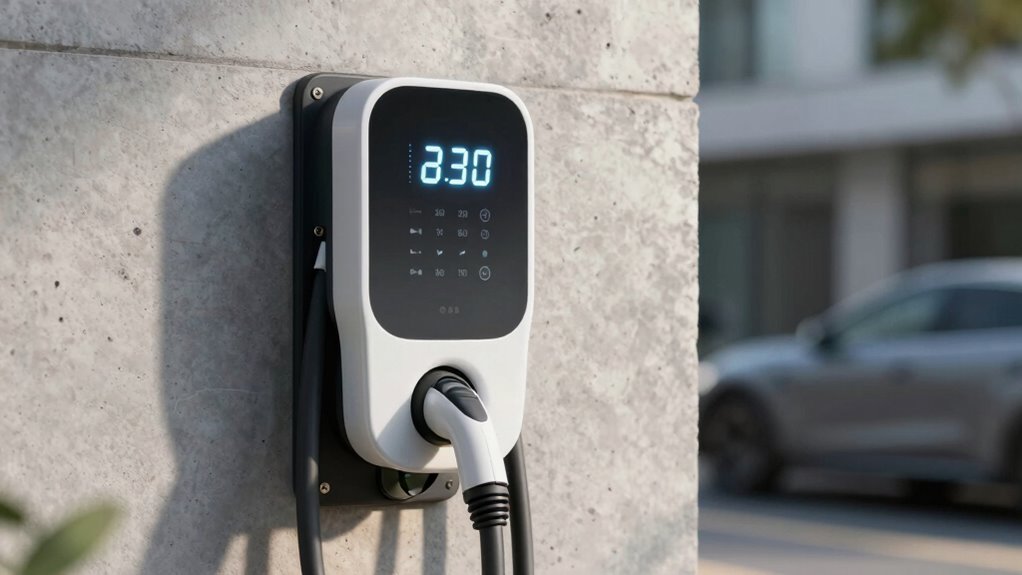
When choosing an electric vehicle (EV) charger, understanding amperage is essential to guarantee safe and efficient charging. Amperage determines how quickly your vehicle charges, but many new buyers find the concept confusing. The key is to match the charger’s amperage with your home’s electrical system and your vehicle’s requirements. A higher amperage charger can charge your EV faster, but it also demands more from your electrical setup. If you select a charger with too high an amperage for your home’s wiring, you risk overloading circuits or violating electrical code compliance. Conversely, choosing one with too low an amperage might mean longer charging times, which can be inconvenient.
Choosing the right amperage ensures safe, efficient EV charging without overloading your home’s electrical system.
One common mistake is not giving enough thought to charging station placement**. It’s critical to position your charger where it’s accessible and safe, considering how much space you have and how the cable will reach your vehicle. Proper placement also involves ensuring the circuit panel can support the charger’s amperage. If your electrical system isn’t prepared, you might need to upgrade wiring or circuit breakers, which should be done in accordance with electrical code compliance standards. Failing to do so can lead to safety hazards and legal issues down the line. Additionally, understanding your electrical system capacity** can help you avoid costly upgrades later and ensure your charger functions optimally.
Many new EV owners overlook the importance of consulting a licensed electrician during installation. An expert can assess your current electrical system, recommend the right amperage for your charger, and ensure that everything adheres to electrical code requirements. Proper electrical code compliance isn’t just about legality; it’s about safety and reliability. Installing a charger with the wrong amperage or improper placement can cause electrical faults, overheating, or fires. Plus, many insurance policies require certified installations to maintain coverage, so skipping this step can be costly.
Understanding the relationship between charger amperage, placement, and electrical code compliance might seem overwhelming at first, but it’s worth getting right from the start. As a new EV owner, you want a setup that’s safe, reliable, and efficient. Take the time to evaluate your home’s electrical capacity, choose a charger with an appropriate amperage, and place it thoughtfully. Consulting professionals ensures that your installation meets all safety standards and avoids future problems. Being aware of home electrical wiring can help you identify potential upgrades needed for a safe installation.
As an affiliate, we earn on qualifying purchases.
Frequently Asked Questions
How Do I Upgrade My Home Electrical Panel for Higher Amperage?
To upgrade your home electrical panel for higher amperage, you should first consult a licensed electrician to assess your current system and plan electrical upgrades. They’ll guarantee safety considerations are met, like proper grounding and load calculations. The electrician will then replace or upgrade your panel, making sure it can handle the increased amperage safely. Always prioritize safety and professional guidance when performing electrical upgrades to prevent hazards.
Are Higher Amperage Chargers Compatible With All EV Models?
Higher amperage chargers aren’t compatible with all EV models, especially if your vehicle’s battery capacity and onboard charging system can’t handle the increased power. Check your EV’s charging specifications and confirm your home’s charging infrastructure supports the charger’s amperage. Upgrading may require a new electrical panel, so consult a professional. Matching charger amperage with your vehicle’s capabilities ensures safe, efficient charging without damaging your car or home wiring.
Can I Install an EV Charger Without Professional Assistance?
You can install an EV charger yourself if you’re comfortable with electrical work, but it’s best to consult a professional for safety and code compliance. Consider options like wireless charging or solar integration to enhance your setup. DIY installation might be suitable for simple chargers, but for advanced features and reliable operation, hiring a licensed electrician guarantees proper installation, safety, and long-term performance.
What Are the Long-Term Cost Implications of Higher Amperage Chargers?
Higher amperage chargers can increase your energy consumption by up to 50%, which impacts your long-term costs. While they charge faster, this can lead to more wear on your battery, potentially shortening its lifespan. Over time, you might spend more on battery replacements or upgrades. Consider balancing faster charging with battery health to optimize costs, as a 10% reduction in battery longevity can markedly raise your expenses.
How Does Charger Amperage Affect Charging Speed and Efficiency?
Higher amperage chargers boost charging speed and efficiency because they deliver more power, reducing the time it takes to recharge your EV’s battery capacity. When selecting a charging station, consider how the amperage matches your vehicle’s capabilities and your typical driving habits. Properly installed high-amperage chargers make certain of quicker, more efficient charging, especially at frequent charging station locations, saving you time and keeping your EV ready for longer trips.
As an affiliate, we earn on qualifying purchases.
Conclusion
Understanding your EV charger’s amperage isn’t just a small detail; it’s the key that unlocks smooth, worry-free charging. When you pick the right amperage, you’re setting the stage for reliable performance and peace of mind—like having a trusted roadmap on a journey. Don’t let the amperage question trip you up. Instead, arm yourself with knowledge, and enjoy the ride toward efficient, effortless charging that keeps you moving forward.
As an affiliate, we earn on qualifying purchases.
EV charging cable with adjustable amperage
As an affiliate, we earn on qualifying purchases.
As an affiliate, we earn on qualifying purchases.
Halloween Picks
halloween
As an affiliate, we earn on qualifying purchases.