
Sealing your ductwork before installing a heat pump offers real payback by preventing energy waste, reducing your utility bills, and extending the system’s lifespan. It guarantees conditioned air reaches your living spaces effectively, improving indoor air quality and comfort. Plus, it minimizes strain on your heat pump, lowering repair costs down the line. Taking this proactive step saves money long-term and boosts efficiency. Keep exploring to discover how sealing ducts makes a smarter, more eco-friendly investment in your home.
Key Takeaways
- Sealing ducts before installation reduces energy waste, lowering utility bills and providing faster return on investment.
- Proper duct sealing enhances heat pump efficiency and extends system lifespan by minimizing strain and repair needs.
- Sealed ducts improve indoor air quality by preventing dust, mold, and pollutants from entering the HVAC system.
- Addressing duct leaks upfront prevents costly repairs and system failures, saving long-term maintenance costs.
- Proactively sealing ducts ensures consistent indoor temperatures, increasing comfort and maximizing energy savings over time.
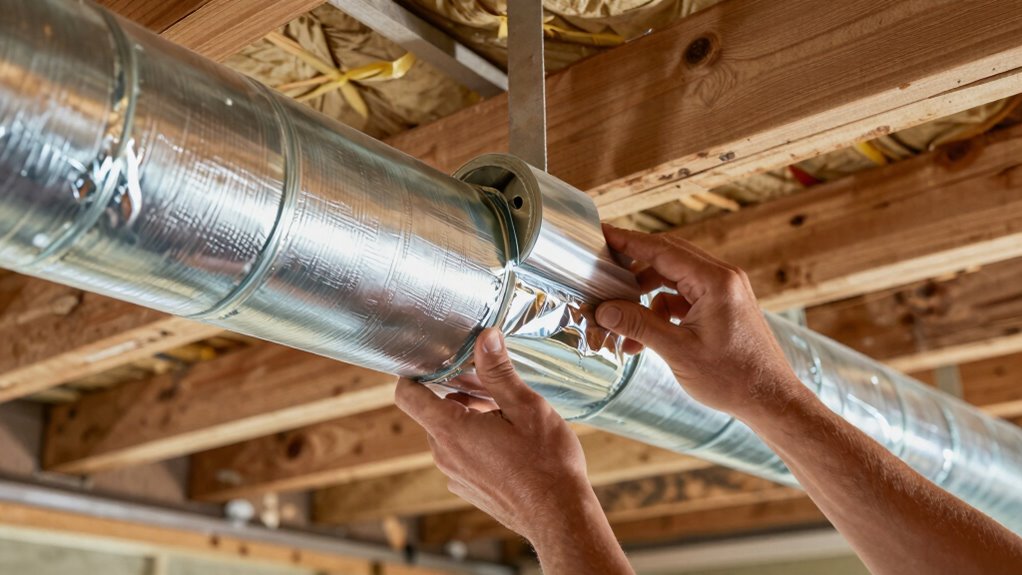
Sealing ducts before installing a heat pump is a crucial step that can considerably improve your system’s efficiency and lifespan. When you address duct leakage upfront, you prevent unnecessary energy loss, which means your heat pump works smarter, not harder. Duct leakage occurs when gaps, holes, or poorly connected ducts allow conditioned air to escape before reaching your living spaces. This escape not only wastes energy but also puts extra strain on your system, leading to higher utility bills and increased wear and tear. By sealing these leaks early, you make sure that the air your heat pump produces reaches its intended destination, maximizing energy efficiency and comfort.
Sealing ducts early boosts efficiency, extends system lifespan, and ensures consistent, comfortable indoor temperatures.
When ducts are sealed properly, you get a more consistent temperature throughout your home. Without leaks, your heat pump maintains the desired indoor climate without constantly running at full capacity. This stability translates into lower energy consumption because your system isn’t fighting against air leaks that siphon away heated or cooled air. In turn, your utility bills drop, and you see a faster return on your investment. Plus, sealing duct leaks reduces the workload on your heat pump, extending its lifespan and decreasing the likelihood of costly repairs down the line. Proper duct sealing techniques are essential to ensure the effectiveness of the process.
Beyond saving energy, sealing ducts also improves indoor air quality. Leaky ducts can draw in dust, mold, and other pollutants from attics, crawl spaces, or unconditioned areas. When you seal these leaks, you prevent contaminants from entering your HVAC system, leading to cleaner air inside your home. This is especially important if anyone in your household has allergies or respiratory issues.
While sealing ducts might seem like a minor step, it’s a strategic move that greatly impacts your heat pump’s performance. If you skip this step, you’re inherently throwing money away through energy waste and risking premature equipment failure. Investing in duct sealing before installing your heat pump gives you a real payback: lower energy bills, improved comfort, and a longer-lasting system. It’s the kind of proactive maintenance that ensures your HVAC setup runs efficiently for years to come, giving you peace of mind and a healthier home environment. So, don’t overlook this critical step—sealing your ducts is a smart investment that pays off in the long run.

No. 7 Mastic® Premium Air Duct Sealing Kit Grey
Kit Includes: One quart can that contains 915 ml or 30.9 fl. oz. of No. 7 Mastic
As an affiliate, we earn on qualifying purchases.
As an affiliate, we earn on qualifying purchases.
Frequently Asked Questions
How Much Can Sealing Ducts Save on Energy Bills?
Sealing ducts can save you up to 20-30% on energy bills. When you perform a thorough duct inspection, you identify leaks and inefficiencies. Using effective sealing techniques, like mastic sealant or foil tape, you prevent conditioned air from escaping. This improves your heat pump’s efficiency, lowers energy costs, and enhances indoor comfort. Regular duct sealing is a smart investment for long-term savings and better system performance.
What Materials Are Best for Sealing Ducts Effectively?
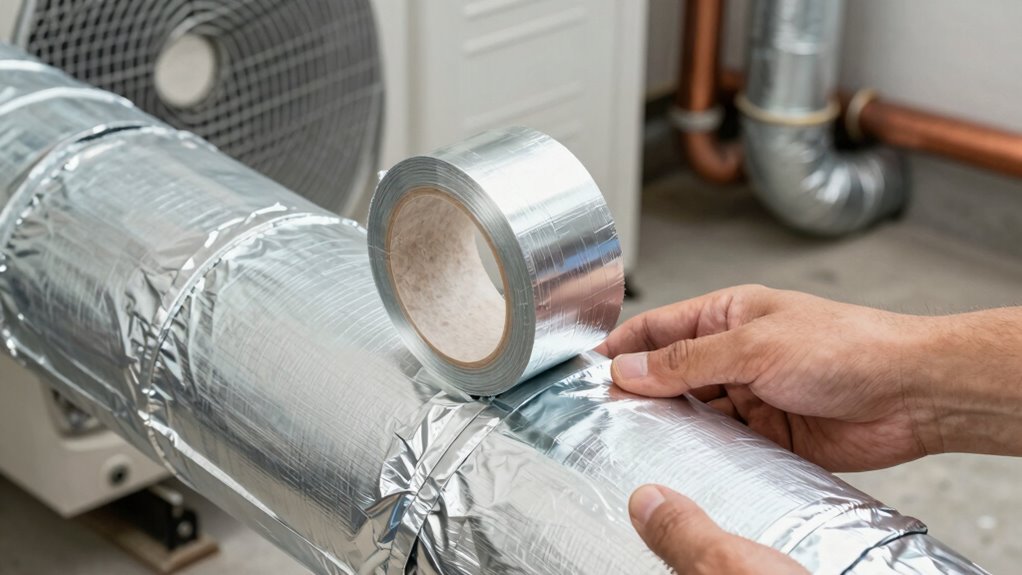
Think of duct sealing materials as your home’s armor against energy loss. Use foil tape or mastic sealant for sealing joints and seams, ensuring airtight connections. Duct insulation, like fiberglass or foam board, keeps heat from escaping or entering. Employ proper sealing techniques, such as thorough cleaning and applying sealant evenly. These materials and methods create a tight, efficient system, maximizing heat pump performance and reducing energy bills.
How Long Does Duct Sealing Typically Take?
Duct sealing usually takes about 2 to 4 hours, depending on the system’s size and duct conditions. You start with a thorough duct inspection to identify leaks and use effective sealing techniques like mastic or foil tape. Proper inspection allows you to target problem areas, ensuring a tight seal. Taking your time during sealing improves efficiency, reduces energy costs, and enhances your heat pump’s performance.
Can I Seal Ducts Myself or Hire a Professional?
You can attempt to seal ducts yourself, but beware of DIY challenges that might lead to ineffective results or even damage. Hiring a professional guarantees proper sealing, maximizing energy savings and system efficiency. While DIY might seem tempting, the professional benefits—expertise, proper tools, and long-term savings—often outweigh the initial effort. For the best outcome, consider your skills and the complexity of your duct system before deciding.
Does Duct Sealing Qualify for Energy Efficiency Rebates?
Yes, duct sealing can qualify for energy efficiency rebates if it’s part of your duct maintenance and airflow optimization efforts. Many utility programs incentivize homeowners who improve their duct system, reducing energy waste and increasing system efficiency. To maximize your chances, verify your duct sealing is done professionally, provides proper airflow, and is documented properly. Check with your local utility or energy agency to see if you qualify for specific rebates.

Gorilla Waterproof Patch & Seal Tape, White Tape, 4" x 10' (Pack of 1) – Permanent Weather Resistant Seal for Leaks and Repairs
Permanent seal: This Gorilla tape creates a permanent bond that instantly seals out air, water, and moisture
As an affiliate, we earn on qualifying purchases.
As an affiliate, we earn on qualifying purchases.
Conclusion
Sealing your ducts before installing a heat pump isn’t just a smart move—it’s the key to discovering its full potential. Think of it as giving your system a clean slate, allowing it to perform efficiently and save you money. Don’t let leaks steal your comfort or your cash. When you seal those ducts, you’re not just fixing a problem; you’re opening the door to a more comfortable, energy-efficient home. After all, isn’t a better home worth the effort?

Red Devil 0841DW F-Seal 181 Fiber Reinforced Water Based Duct Sealant, 1 Gallon, White
SUPERIOR SEALING: Fiber-reinforced formula ensures leak-free HVAC systems, improving energy efficiency and performance
As an affiliate, we earn on qualifying purchases.
As an affiliate, we earn on qualifying purchases.

Duct Vacuum Attachment for Shop Vac, HVAC Cleaning Tool for Air Vent, Shop Vac Accessory with Strong Seal for Supply Nozzle(3in*9in) (Black)
Strong Seal for Enhanced Suction: This duct cleaner attachment creates an excellent seal on furnace supply ducts, significantly…
As an affiliate, we earn on qualifying purchases.
As an affiliate, we earn on qualifying purchases.