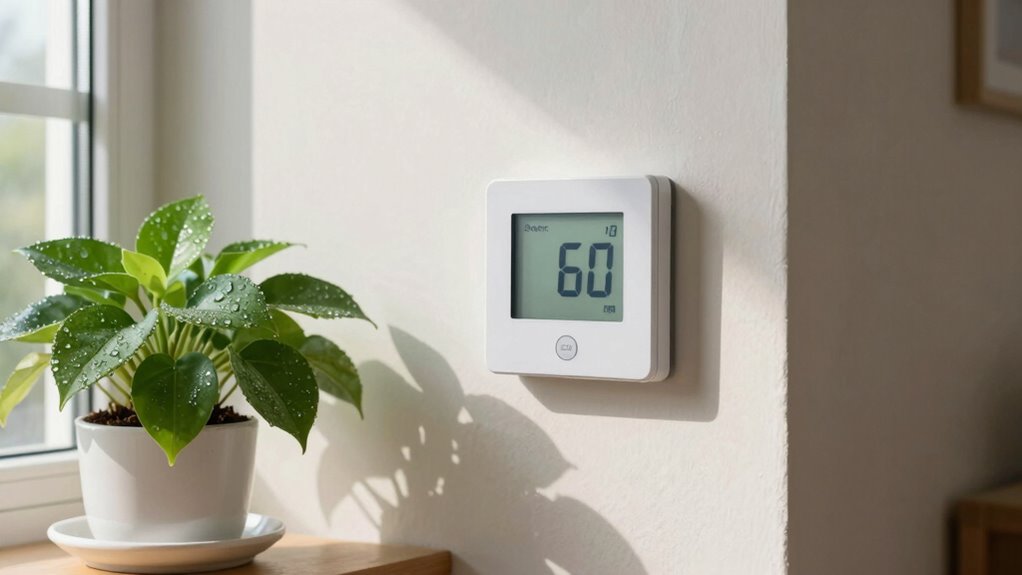

Many homeowners set their humidity levels too high, often above 50%, which can lead to mold growth, musty odors, and structural damage. Higher humidity makes your home feel warmer in summer and colder in winter, forcing your HVAC system to work harder and increasing energy bills. Keeping humidity between 30% and 50% helps prevent mold and reduces energy costs. Want to find out how to maintain the ideal balance? Keep exploring for more tips.
Key Takeaways
- Many homeowners set humidity levels above 50%, increasing mold and dust mite risks.
- Higher setpoints lead to excessive moisture, promoting mold growth and structural damage.
- Elevated humidity levels cause HVAC systems to work harder, wasting energy.
- Too high humidity often results in musty odors and indoor air quality issues.
- Homeowners frequently overlook the importance of monitoring and adjusting humidity with a hygrometer.
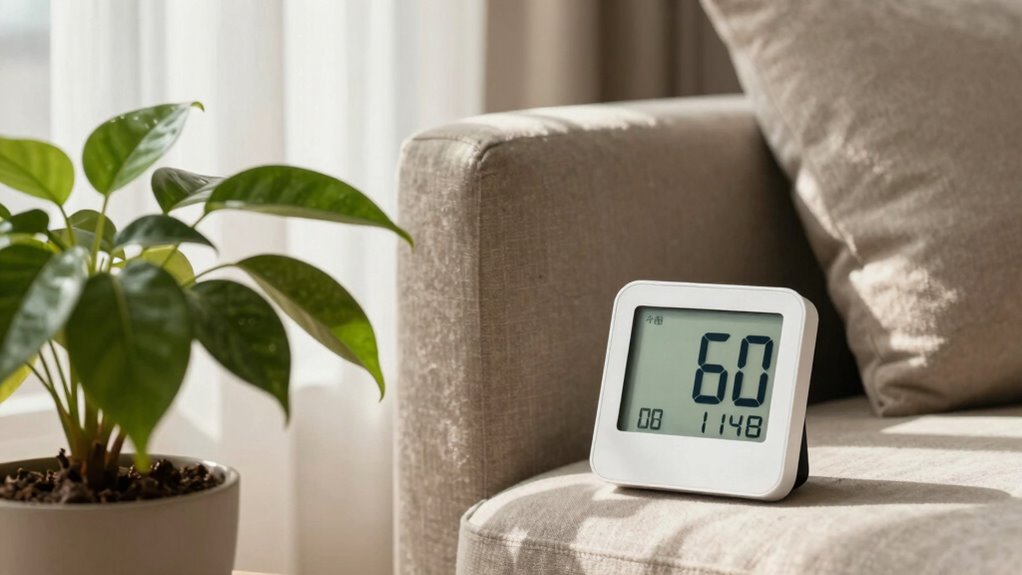
If your humidity setpoint is too high, you might notice issues like mold growth, musty odors, or increased dust mites in your space. Many homeowners set their humidifiers or dehumidifiers higher than necessary, thinking it makes their home more comfortable. However, keeping humidity levels too elevated can actually work against your comfort and health. High humidity encourages mold growth, which can cause health problems and damage your home’s structure. It also creates an environment where dust mites thrive, leading to allergies and respiratory issues. To avoid these problems, maintaining an ideal humidity level is essential, typically between 30% and 50%.
One key reason to keep your humidity setpoint on the lower side is energy efficiency. When humidity levels are excessive, your heating and cooling systems have to work harder to regulate the indoor climate, leading to higher energy consumption. Excess moisture makes the air feel warmer in summer and colder in winter, prompting you to run your HVAC system more frequently. By adjusting your humidity setpoint to a more moderate level, you reduce the strain on your heating and cooling units, saving you money on energy bills. Proper humidity control also minimizes the need for additional air filtration or cleaning, making your overall home maintenance more effective. Additionally, maintaining correct humidity levels can help prevent mold growth, which is crucial for protecting your home and health.
Mold prevention is another critical benefit of setting your humidity at an appropriate level. Mold spores flourish in damp environments, which often result from overly high humidity. When you keep your humidity in check, you create an inhospitable environment for mold growth. This not only protects your health but also preserves the integrity of your home. Mold can cause staining, unpleasant odors, and structural damage that’s costly to repair. Proper humidity control also helps maintain the durability of your building materials, reducing long-term repair costs. An understanding of home environment and humidity interactions can further assist in creating a healthier living space. Regularly monitoring your humidity levels with a hygrometer ensures you’re maintaining the right setpoint, and knowing how indoor air quality interacts with humidity can further optimize your home’s comfort.
Furthermore, understanding the relationship between air circulation and humidity levels can enhance your ability to maintain a balanced environment. By setting your humidity lower, you’re effectively reducing the risk of mold taking hold in hidden areas such as behind walls or under flooring.
Many homeowners overlook the importance of proper humidity levels, assuming that a higher setting offers more comfort. However, the truth is that a balanced humidity level improves comfort without sacrificing energy efficiency or mold prevention. You might feel more comfortable with slightly lower humidity because your skin won’t feel clammy, and your home won’t feel damp or sticky. It’s a small adjustment that can make a big difference in your home’s health, safety, and efficiency. Regularly monitoring your humidity levels with a hygrometer ensures you’re maintaining the right setpoint, preventing problems before they start, and keeping your home safe and comfortable all year round.

TempPro TP50 Digital Hygrometer Indoor Thermometer Room Thermometer
- Wellness Indicator: Air condition status with icons
- High Accuracy & Fast Updates: ±2-3%RH and ±1°F, updates every 10 seconds
- Record High & Low Levels: Displays temperature and humidity extremes
As an affiliate, we earn on qualifying purchases.
As an affiliate, we earn on qualifying purchases.
Frequently Asked Questions
How Does High Humidity Affect Indoor Air Quality?
High humidity worsens indoor air quality by boosting airborne allergens like mold and dust mites, making allergies and asthma symptoms worse. It also traps indoor pollutants, such as pet dander and bacteria, creating a damp environment perfect for their growth. You might notice stuffy air, increased odors, or respiratory issues. To improve air quality, keep humidity levels in check, ideally between 30-50%, to reduce airborne allergens and indoor pollutants effectively.
Can High Humidity Cause Mold Growth?
Yes, high humidity can cause mold growth. When you don’t practice proper humidity control, moisture levels rise, creating an ideal environment for mold to develop. To prevent this, focus on mold prevention by keeping indoor humidity between 30-50%. Use dehumidifiers, fix leaks promptly, and guarantee good air circulation. These steps help you control humidity effectively, reducing mold risk and maintaining healthier indoor air quality.
What Are Signs of Excessively Humid Indoor Environments?
You notice a musty smell lingering in your home, and walls feel damp to the touch. These are signs of excessively humid indoor environments. If your dehumidifier’s humidity sensor accuracy is off or you neglect regular dehumidifier maintenance, humidity levels can rise unnoticed. Over time, this fosters mold growth and allergens. Keep an eye on moisture signs, and guarantee your equipment’s sensors are calibrated for effective control.
Does High Humidity Increase Energy Costs?
Yes, high humidity can increase your energy costs because it forces your air conditioning system to work harder to maintain comfort. Proper humidity control improves energy efficiency by reducing the load on your HVAC system. When indoor humidity levels are too high, it takes more energy to cool your home and remove excess moisture. Keeping humidity at ideal levels helps you save money and keeps your space comfortable year-round.
How Often Should I Check My Home’s Humidity Levels?
Think of your home’s humidity levels as a delicate dance—balance is key. You should check your humidity levels at least once a month using reliable humidity sensors. Regularly monitor and adjust your dehumidifier for peak performance, ensuring it doesn’t become a silent energy thief. Consistent dehumidifier maintenance keeps your indoor air comfortable, healthy, and energy-efficient, preventing those sneaky mold or musty odors from taking hold.

BEDRED Dehumidifier, 95OZ Dehumidifier for Home 1000 sq ft – Quiet with Auto Shut Off & Relaxing 7 Color Ambient Light, Ideal for Livingroom, Bedroom, Basement (Black)
- Cooling Technology: Thermoelectric dehumidification for moisture removal
- Auto Shutoff: Automatically powers down when tank is full
- Ambient Lighting: 7-color soothing LED light for ambiance
As an affiliate, we earn on qualifying purchases.
As an affiliate, we earn on qualifying purchases.
Conclusion
If you keep your home’s humidity setpoint too high, you’re likely sacrificing comfort and energy efficiency. Did you know that maintaining indoor humidity above 60% can lead to mold growth and increased allergens? By lowering your humidity setpoint to around 45%, you not only improve air quality but also reduce mold and dust mites, creating a healthier living space. Take control now—your lungs and wallet will thank you.

Levoit Humidifiers for Bedroom Large Room, 6L, 60H Runtime, 26dB, Smart App
- Large Capacity Tank: 6L tank for up to 60 hours of use
- Effective Room Coverage: Covers rooms up to 505 sq ft
- Quiet Operation: Operates at 26dB for peaceful use
As an affiliate, we earn on qualifying purchases.
As an affiliate, we earn on qualifying purchases.
TempPro TP50 Digital Hygrometer Indoor Thermometer Room Thermometer
- Wellness Indicator: Air condition status with icons
- High Accuracy & Fast Updates: ±2-3%RH and ±1°F, updates every 10 seconds
- Record High & Low Levels: Displays temperature and humidity extremes
As an affiliate, we earn on qualifying purchases.
As an affiliate, we earn on qualifying purchases.