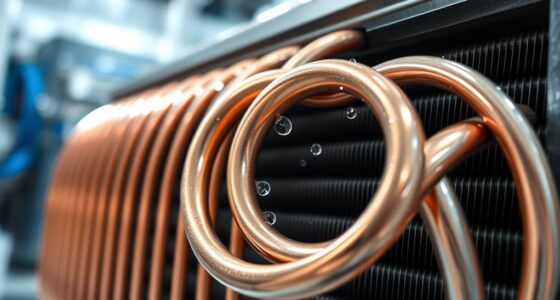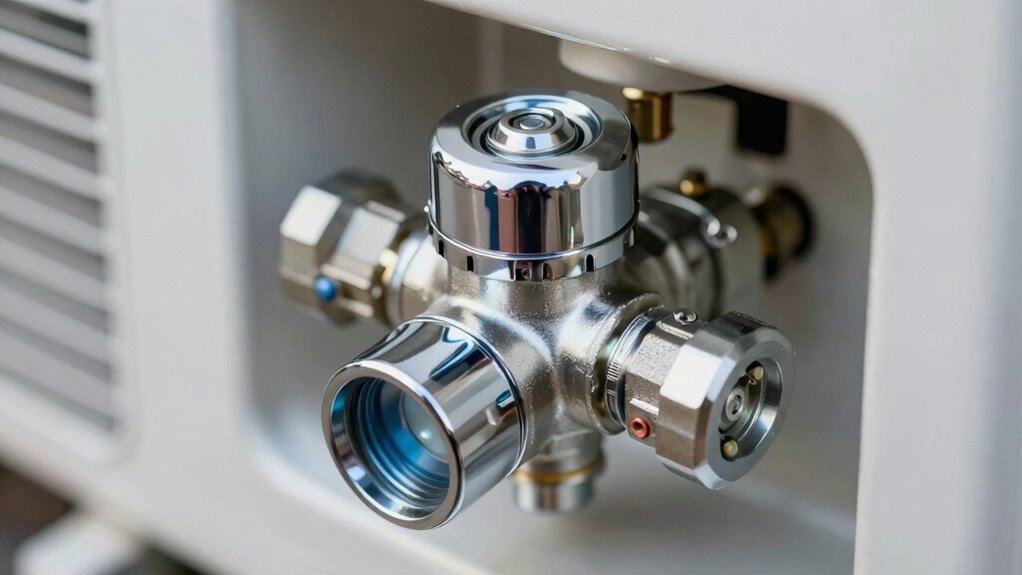

During mode changes, the reversing valve actively redirects refrigerant flow to switch your HVAC system between heating and cooling. It uses an electric coil to shift an internal piston, changing the pathways for the refrigerant. This process guarantees that the indoor and outdoor coils switch roles correctly, maintaining system efficiency and comfort. If you want to understand exactly how this quick switch happens and why it’s so important, you’ll find the details quite interesting.
Key Takeaways
- The reversing valve shifts positions to redirect refrigerant flow depending on heating or cooling mode.
- It uses an electric coil to move an internal piston, changing the refrigerant pathway.
- During mode change, the valve quickly switches refrigerant flow, altering indoor and outdoor coil roles.
- Proper operation ensures efficient heat transfer and system performance during mode transitions.
- Malfunctions can cause refrigerant flow issues, reducing efficiency and potentially damaging system components.
Have you ever wondered what happens inside your heat pump when it switches between heating and cooling modes? The answer lies in a small but essential component called the reversing valve. This valve acts like a traffic controller for refrigerant, redirecting its flow depending on whether your system needs to heat or cool. When the mode changes, the reversing valve shifts position, altering the path of the refrigerant to guarantee it functions correctly for the new setting. This process is seamless but critical to the system’s efficiency and performance. Proper operation of the reversing valve ensures optimal refrigerant flow, which is vital for maintaining your heat pump’s efficiency during mode changes.
During a mode change, the reversing valve’s primary job is to reverse the refrigerant flow. In cooling mode, refrigerant absorbs heat from inside your home and expels it outside. When switching to heating, the valve flips and reroutes the refrigerant, allowing it to absorb heat from the outside air and transfer it indoors. This switch influences the compressor’s efficiency because the compressor must adapt to different pressures and flow patterns. Proper refrigerant flow, maintained by the valve’s precise operation, ensures the compressor runs smoothly and efficiently, preventing unnecessary strain that could reduce its lifespan. Additionally, the reversing valve’s movement is activated by a small electric coil, which is energized or de-energized depending on the desired mode. When you select heating or cooling, this coil pulls or releases a piston inside the valve, changing its position. As a result, the internal pathways for refrigerant are redirected, switching the roles of the indoor and outdoor coils. The change is rapid, often happening within seconds, but it’s fundamental that it happens correctly to avoid refrigerant leaks or system inefficiencies. Regular maintenance practices can help prolong the lifespan of this critical component, especially in changing weather conditions. An understanding of the reversing valve’s operation can also aid in diagnosing potential issues early.
Reversing valve switches refrigerant flow, optimizing compressor efficiency during mode changes for heating and cooling.
Refrigerant flow is central to the heat pump’s operation, and the reversing valve’s role in controlling this flow directly impacts the system’s efficiency. When functioning correctly, it ensures the refrigerant moves along the best path for either heating or cooling, maximizing heat transfer and energy efficiency. If the reversing valve malfunctions or gets stuck, refrigerant flow may be compromised, leading to decreased compressor efficiency, higher energy bills, or even system failure. Proper maintenance and understanding of this component can help prevent such issues, ensuring your system remains reliable and efficient for years to come. Recognizing the signs of reversing valve problems can save you from costly repairs and downtime.
In short, during mode changes, the reversing valve acts as a gatekeeper, redirecting refrigerant flow to switch between heating and cooling. This process is indispensable for maintaining ideal compressor efficiency and ensuring your heat pump operates smoothly. Understanding this tiny but powerful component helps you appreciate how your system adapts quickly to your comfort needs, all while keeping energy consumption in check.

Carrier HVAC Reversing Valve 24V
- Genuine OEM Part: Original equipment manufacturer quality
- HVAC Compatibility: Supports various Carrier HVAC systems
- Dimensions: Size: 5x8x10 inches
As an affiliate, we earn on qualifying purchases.
As an affiliate, we earn on qualifying purchases.
Frequently Asked Questions
How Long Does It Take for the Reversing Valve to Switch Modes?
The reversing valve typically switches modes within about 1 to 3 seconds. During this time, refrigerant flow changes direction as the valve operation occurs, shifting between heating and cooling modes. You might notice a brief noise or slight system delay during this process. Factors like system design and temperature differences can influence the exact switching time, but generally, it’s a quick shift to guarantee efficient HVAC operation.
Can the Reversing Valve Fail Without Obvious Symptoms?
Sure, your reversing valve might be secretly plotting its failure, even without obvious symptoms. It can fail silently, disrupting refrigerant flow and causing your system to misbehave. Regular valve maintenance is your best defense against this covert sabotage. If you notice uneven cooling or heating, don’t dismiss it—your reversing valve could be hiding a problem, and ignoring it might turn into a costly surprise down the line.
Is the Reversing Valve More Prone to Failure in Certain Climates?
Yes, your reversing valve is more prone to failure in extreme climates, especially those with high humidity or freezing temperatures. Climate-specific durability impacts how well the valve holds up over time. Installation considerations, like proper insulation and correct positioning, are vital to prevent stress and corrosion. If you live in harsh conditions, make sure to perform regular maintenance and choose a model designed for your climate to extend its lifespan.
How Can I Tell if the Reversing Valve Is Stuck?
Imagine your reversing valve as a busy traffic cop, guiding refrigerant flow. If it’s stuck, you’ll notice unusual sounds, like banging or hissing, and the system won’t switch modes properly. Check for refrigerant leaks or poor lubrication, which can cause sticking. If issues persist, you might need reversing valve lubrication or even reversing valve replacement. A professional inspection guarantees safe, efficient operation and prevents further damage.
Does the Reversing Valve Impact Energy Efficiency During Mode Changes?
Yes, the reversing valve impacts energy efficiency during mode changes. When it functions properly, it smoothly switches between heating and cooling modes, ensuring your system uses energy efficiently. However, if the valve is stuck or faulty, your system might work harder, wasting energy and increasing costs. Regular maintenance helps keep the reversing valve in good shape, maintaining peak energy efficiency during mode changes and overall system operation.
Carrier HVAC Reversing Valve 24V
- Genuine OEM Part: Original equipment manufacturer quality
- HVAC Compatibility: Supports various Carrier HVAC systems
- Dimensions: Size: 5x8x10 inches
As an affiliate, we earn on qualifying purchases.
As an affiliate, we earn on qualifying purchases.
Conclusion
So, next time you switch your heat pump from heating to cooling, remember the reversing valve is like a skilled switchboard operator, seamlessly redirecting the flow of refrigerant. It’s quietly working behind the scenes, making those mode changes smooth and efficient. Without it, your comfort system would be like a ship without a rudder—lost and unpredictable. Understanding its role helps you appreciate the clever engineering that keeps your home cozy year-round.

WW51X116 – ClimaTek Upgraded Heat Pump Reversing Valve Replaces General Electric
- Brand New Upgraded Heat Pump Valve: This is a brand new upgraded Heat Pump Reversing Valve
- Direct Replacement for WW51X116: This ClimaTek Part Directly Replaces Part # WW51X116
- High-Quality Durable Replacement: Top Quality ClimaTek Replacement Part, Built to Last!
As an affiliate, we earn on qualifying purchases.
As an affiliate, we earn on qualifying purchases.
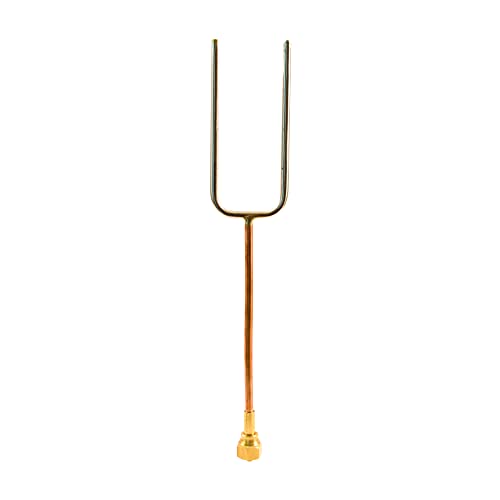
Uniweld – OMER-OPN-893853 Type17TFT Tuning Fork Tip for Defective Reversing Valve Removal
- Made in the USA: Proudly made in the USA and flame tested
- Durable Stainless Steel Tip: Tough, durable stainless steel 8-flame tuning fork tip
- Flexible Copper Elbow: Bendable copper elbow for versatile fitting
As an affiliate, we earn on qualifying purchases.
As an affiliate, we earn on qualifying purchases.