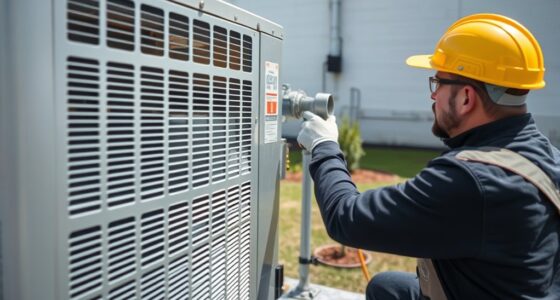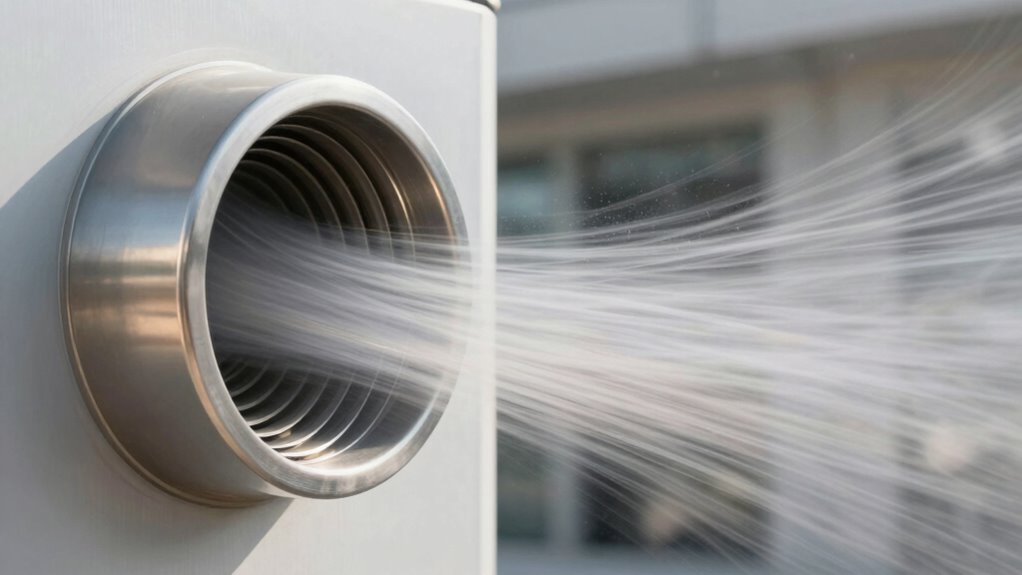

If you rush through your ventilation system installation, you risk creating noisy airflow by skipping proper steps. Loose fittings, misaligned parts, and poorly sealed joints can cause vibrations, whistling, or hissing sounds over time. These shortcuts may save time initially but lead to louder, less efficient operation later. To avoid unwanted noise and maintain system performance, it’s crucial to install carefully and securely. Keep going to discover how proper installation can prevent these common issues.
Key Takeaways
- Skipping detailed steps can lead to misaligned or poorly sealed duct joints, causing noise from air leaks.
- Rushing installation may result in loose fittings and unsealed joints that produce whistling or hissing sounds.
- Improper securing of components allows vibrations to transfer, amplifying noise throughout the system.
- Shortcuts in airflow pathway design can cause turbulence and increased noise levels.
- Neglecting vibration dampers and insulation increases system vibrations and overall noise.
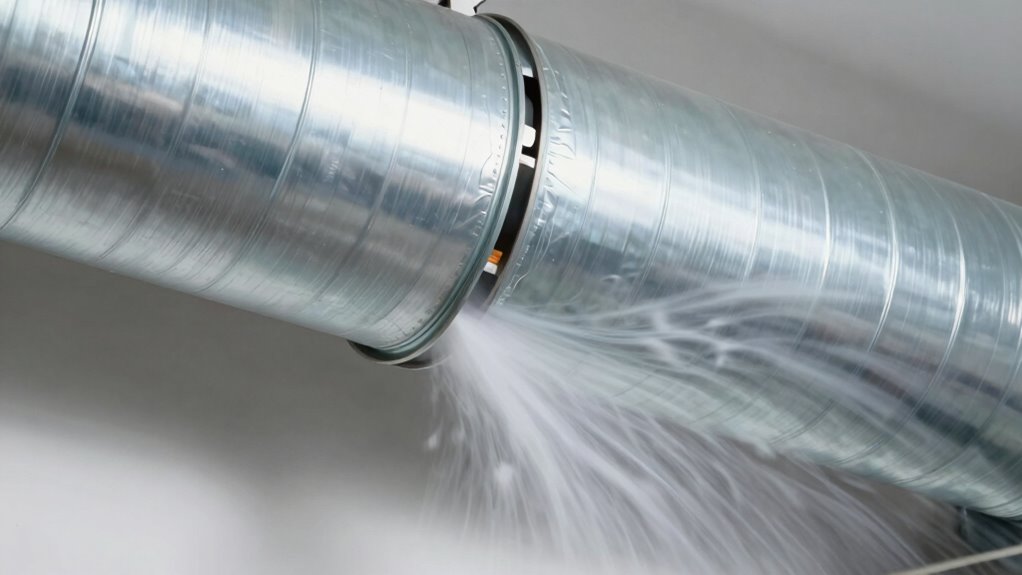
Installing certain airflow components quickly might seem like a good idea at first, but it can lead to unexpected noise issues down the line. When you rush the installation process, you risk compromising the ventilation efficiency of your system. Properly installed components guarantee smooth airflow, reducing turbulence that often causes unwanted noise. Skipping detailed setup steps might save time initially, but it can result in vibrations or rattling sounds as air moves through poorly sealed or misaligned parts. Over time, these small issues compound, making your ventilation system louder and less effective.
Rushing airflow component installs causes noise, inefficiency, and long-term system issues—take time for proper setup.
Noise mitigation becomes more challenging when shortcuts are taken during installation. If components aren’t properly aligned or secured, vibrations can transfer through ducts and mounts, amplifying noise levels. For example, loose fittings or improperly sealed joints create air leaks that generate whistling or hissing sounds. These leaks not only increase noise but also decrease ventilation efficiency because they allow conditioned air to escape and unconditioned air to enter. This imbalance can strain your system, leading to higher energy costs and reduced comfort.
Furthermore, improper installation affects the overall durability of your airflow system. If you don’t follow manufacturer guidelines or neglect to use the recommended mounting brackets and insulation, you might inadvertently increase vibrations and noise. Over time, these vibrations can loosen connections or damage components, making noise an ongoing problem. In contrast, taking the time to carefully secure and balance each part assures quieter operation and extends the lifespan of your system. Ensuring proper installation practices helps maintain system integrity and reduces the likelihood of future noise issues.
Another aspect to contemplate is that quick fixes often overlook the importance of airflow pathways. Sharp turns, abrupt transitions, or cramped spaces can create turbulence that boosts noise levels and hampers ventilation efficiency. When you prioritize quality over speed, you’ll design smoother pathways for air to flow, minimizing turbulence and noise. Properly designed ductwork, insulation, and vibration dampers work together to maintain a quieter environment while optimizing airflow.
Additionally, considering the color accuracy and contrast ratio during installation can help ensure the system operates quietly by reducing the need for adjustments and rework later on.
In the end, rushing the installation might seem like a time-saver, but it often leads to more noise, less ventilation efficiency, and higher maintenance costs. Paying attention to detail, following best practices, and avoiding shortcuts will give you a quieter, more effective airflow system that performs reliably over time. It’s worth investing the extra effort upfront to prevent noisy surprises later.

ZOWZEA 2Pcs 8" Motorized Duct Damper,On/Off Backdraft Damper Control, Stainless Steel Airflow Control Damper for HVAC System, 24V AC
[Stainless Steel]: This 8-inch electric damper is made of stainless steel, compared with cheap galvanized iron, it can…
As an affiliate, we earn on qualifying purchases.
As an affiliate, we earn on qualifying purchases.
Frequently Asked Questions
Can This Shortcut Be Used for All Types of Ventilation Systems?
This shortcut isn’t suitable for all ventilation systems, as it can impact ventilation efficiency and cause noise issues. While it might work well for some setups, you should check compatibility first. For maximum noise reduction and airflow, consider system-specific adjustments. Ignoring these details could lead to increased noise and less effective ventilation, so always evaluate your system’s requirements before applying this shortcut to guarantee it meets your needs.
What Safety Precautions Should Be Taken During Installation?
During installation, you should wear safety gear like gloves, goggles, and a dust mask to protect yourself. Always prioritize electrical safety by disconnecting power sources before starting work and using insulated tools. Keep the work area clear of hazards and follow manufacturer instructions carefully. If you’re unsure about any step, consult a professional. These precautions help prevent injuries and guarantee a safe, smooth installation process.
How Long Does It Typically Take to Complete the Shortcut?
The installation shortcut usually takes about 15 to 30 minutes, depending on your process efficiency. You can speed up the installation duration by preparing all tools and materials beforehand and following the step-by-step instructions carefully. Staying focused and avoiding unnecessary delays guarantees a smooth process. With proper planning, you’ll complete the shortcut quickly, saving time and reducing disruptions caused by noisy airflow during the installation.
Are There Any Long-Term Maintenance Concerns With This Shortcut?
You might face some durability concerns with this shortcut over time, especially if it’s not installed properly. It could lead to increased wear and tear, potentially raising maintenance costs. Cost implications include possible repairs or adjustments down the line. To keep things running smoothly, you should regularly check the installation and address any issues promptly, ensuring durability and minimizing long-term expenses.
Will Using This Shortcut Affect the Air Quality Indoors?
Using this shortcut won’t improve your air quality; ironically, it might make it worse. By bypassing proper ventilation, you reduce airflow efficiency and trap pollutants indoors. You may not notice immediately, but over time, stale air and allergens build up, degrading indoor air quality. So, while it seems like a quick fix, it could lead to a less healthy environment, defeating the purpose of good ventilation altogether.

Flamorrow Insulated Foam Panels for Portable AC Window Seal Kit, Sturdy & Thick Air Conditioner Insulating Panel, Adjustable AC Window Seal Panels for Seal Heat, Fill Gap, Reduce Noise, 3 Pack
Well Sealed Window Vents: Our portable ac window insulated foam panels provide a reinforced seal for windows and…
As an affiliate, we earn on qualifying purchases.
As an affiliate, we earn on qualifying purchases.
Conclusion
So, next time you choose an installation shortcut, remember it might bring more noise than you expect—like a whisper turned roar. You’re aiming for quick, but instead, you could end up with a bustling, noisy airflow that disrupts your peace. Think of it as trading a quiet stream for a raging river—fast but loud. Weigh your options carefully; sometimes, taking the longer path keeps things calm and quiet.

ETERART Heavy-Duty Aluminum Foil Duct Tape – 2" x 20 Yds, High-Temp Seal for HVAC, Dryer Vents & Insulation, Stops Air Leaks & Resists Extreme Heat for Home Repair, Silver
STOPS AIR LEAKS & SAVES ENERGY: Designed for HVAC contractors and DIYers. This heavy-duty aluminum foil tape creates…
As an affiliate, we earn on qualifying purchases.
As an affiliate, we earn on qualifying purchases.

AC Infinity MULTIFAN S4, Quiet 140mm USB Fan, UL-Certified for Receiver DVR PlayStation Xbox Computer Cabinet Cooling
Ultra-quiet UL-certified USB fan designed to cool various electronics and components.
As an affiliate, we earn on qualifying purchases.
As an affiliate, we earn on qualifying purchases.