
The duct design rule for uneven rooms is to balance airflow by measuring each vent’s output and adjusting dampers accordingly, ensuring all areas get proper conditioned air. Large or oddly shaped spaces may need bigger or extra vents, and duct insulation helps maintain consistent temperatures. Combining proper airflow with insulation reduces drafts, hot or cold spots, and energy waste—creating a comfortable, efficient space. Keep exploring to discover how these strategies work together for ideal results.
Key Takeaways
- Proper duct sizing ensures balanced airflow across uneven room layouts.
- Adjusting dampers based on airflow measurements optimizes air distribution.
- Insulating ducts reduces temperature loss, maintaining consistent comfort.
- Tailored vent placement addresses varying room shapes and sizes.
- Combining airflow balancing with insulation enhances overall HVAC efficiency.
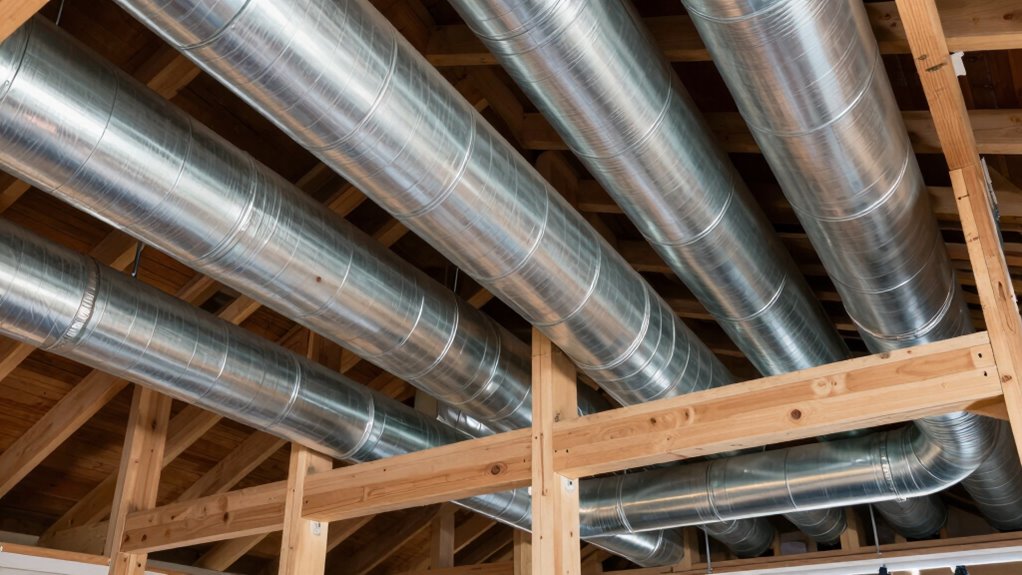
When designing duct systems for uneven rooms, understanding how to balance airflow is vital to guarantee comfort and efficiency. Uneven rooms, with their varying shapes and sizes, can cause airflow disparities that lead to hot or cold spots, uncomfortable drafts, or increased energy bills. To prevent this, you need to focus on effective airflow balancing, ensuring each part of the room receives the right amount of conditioned air. One key aspect often overlooked is insulation considerations. Proper insulation in the ductwork helps maintain temperature consistency, reducing energy loss that could otherwise undermine your airflow adjustments.
Effective airflow balancing and proper duct insulation are essential for comfort and energy efficiency in uneven rooms.
In uneven rooms, airflow balancing involves more than simply opening or closing vents. You must consider how air moves through different pathways, accounting for the room’s unique shape and size. For instance, larger or irregularly shaped areas might require larger or additional vents to distribute air evenly. When balancing airflow, it’s essential to measure the actual airflow at each vent, then adjust dampers accordingly. This process ensures that every part of the room receives a consistent air volume, which improves comfort and prevents energy waste. Additionally, airflow measurement is crucial for accurate adjustments and optimal system performance. Improving duct design with proper sizing can further enhance airflow distribution.
Insulation considerations are equally critical in this process. If the ductwork isn’t well insulated, especially in unconditioned spaces like attics or basements, temperature loss can occur before the air reaches the room. This makes the airflow less effective and can cause temperature imbalances within the room, despite your efforts to balance airflow. Insulating ducts along their entire length minimizes this heat transfer, helping maintain the desired temperature and reducing the workload on your heating or cooling system. Proper insulation techniques can also contribute to noise reduction, leading to a quieter environment and increased comfort.
Balancing airflow and insulation considerations go hand-in-hand. When you improve insulation, you’re less likely to need excessive airflow adjustments to compensate for heat loss or gain. Conversely, when airflow is properly balanced, insulation helps stabilize the room’s temperature, making your HVAC system more efficient. This synergy means fewer energy costs and better comfort overall. Remember, a well-designed duct system for uneven rooms should incorporate both airflow balancing techniques and appropriate insulation—these combined efforts ensure the conditioned air reaches every part of the room efficiently, maintaining steady temperatures and reducing energy consumption. By paying attention to these factors, you create a smarter, more comfortable space, even in the most challenging room layouts. Proper insulation plays a crucial role in ensuring your duct system operates at peak efficiency and comfort.

1800ceiling 6"" Radial Air Dampers for HVAC Diffusers-2pack, Silver
Snaps into the neck of your HVAC diffuser.
As an affiliate, we earn on qualifying purchases.
As an affiliate, we earn on qualifying purchases.
Frequently Asked Questions
How Does Duct Size Impact Room Temperature Consistency?
Duct size directly impacts room temperature consistency by affecting airflow optimization. If the ducts are too small, airflow decreases, leading to uneven temperatures and hot or cold spots. Conversely, oversizing ducts can cause noise and inefficiency. Proper duct sizing guarantees balanced airflow, maintaining consistent temperatures across rooms. When you optimize duct design, you improve comfort and energy efficiency, preventing the common issue of uneven room temperatures caused by poor duct sizing.
Can Uneven Rooms Be Balanced Without Major Duct Modifications?
Yes, you can balance uneven rooms without major duct modifications! Start with airflow optimization by adjusting dampers or installing small balancing registers, which can dramatically improve airflow to the chilly or stuffy areas. Zoning solutions also work wonders—by creating dedicated zones, you direct conditioned air exactly where it’s needed. These quick fixes can turn your uneven rooms into a harmonious, comfy space without extensive ductwork changes.
What Role Does Duct Insulation Play in Uneven Room Heating?
Duct insulation substantially impacts uneven room heating by enhancing insulation effectiveness and increasing thermal resistance. When you insulate ducts properly, you prevent heat loss or gain as air travels through the system, ensuring more consistent temperatures across rooms. Without adequate insulation, even the best duct design can struggle to deliver balanced heat. As a result, investing in proper duct insulation helps you achieve more uniform heating and improves overall system efficiency.
Are There Specific Duct Materials Better for Uneven Room Airflow?
In the age of steampunk innovations, you realize that certain duct materials, like insulated flexible ducts or rigid metal, boost airflow efficiency. These materials reduce friction and heat loss, helping guarantee even heating across rooms. Flexible ducts are easier to install and adapt to space constraints, while rigid metal ducts provide better airflow and durability. Choosing the right duct material depends on your home’s layout and your goals for consistent, efficient heating.
How Often Should Duct Systems Be Inspected for Uneven Heating?
You should inspect your duct system annually to catch uneven heating early. During these inspections, use airflow sensors to detect any blockages or pressure imbalances that cause uneven airflow. Duct cleaning can help remove debris and guarantee smooth airflow, preventing hot or cold spots. Regular inspections help maintain efficient heating, improve comfort, and extend the lifespan of your ductwork, making certain every room stays evenly heated.

Vanlison Professional Hot Wire Anemometer – Wind Speed Meter & Air Flow Measurement for HVAC, Measures CFM/CMM, Temperature (℃/℉), Ventilation Ducts, Fans | Auto-Off & Backlit LCD Display
5-in-1 Precision Measurement: Accurately measure Wind Speed (m/s, ft/min, km/h, MPH, knots), Air Flow Volume (CFM, CMM), and…
As an affiliate, we earn on qualifying purchases.
As an affiliate, we earn on qualifying purchases.
Conclusion
Understanding duct design rules helps you balance airflow in uneven rooms, ensuring comfort and efficiency. When properly implemented, you can reduce energy costs by up to 30%, making your heating and cooling system much more effective. By paying attention to these principles, you’ll prevent hot and cold spots, creating a consistent temperature throughout your space. Remember, a well-designed duct system isn’t just about airflow—it’s about optimizing your entire home’s comfort and savings.

AC Infinity Flexible 6-Inch Aluminum Ducting, Heavy-Duty Four-Layer Protection, 25-Feet Long for Heating Cooling Ventilation and Exhaust
Designed for ventilation applications including HVAC, dryer, grow rooms and tents.
As an affiliate, we earn on qualifying purchases.
As an affiliate, we earn on qualifying purchases.

Busy Mango 2-Pack Magnetic Air Vent Deflector, 9 to 15 Inches Adjustable Clear Vent Cover & Redirector for Floor/Wall/Ceiling Registers, High-Grade Plastic AC/Heat Deflector (-35°F to 284°F) for Home
Precise Airflow Control & Enhanced Home Comfort:This versatile air vent deflector gives you precise command over your heating…
As an affiliate, we earn on qualifying purchases.
As an affiliate, we earn on qualifying purchases.