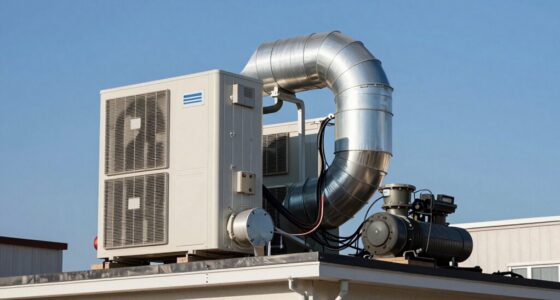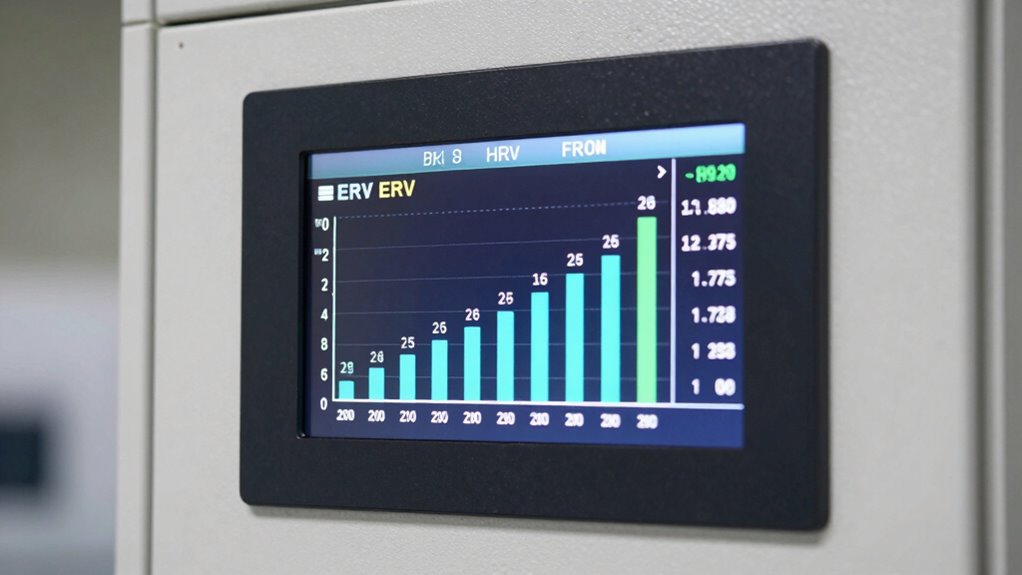

To understand ERV and HRV airflow ratings accurately, look at the specifications labeled as “max,” “nominal,” or “rated” airflow, usually measured in CFM or L/s. These numbers show how much air the system can move under different conditions. Keep in mind that real-world performance might vary from these ratings, especially if filters clog or ducts are poorly designed. If you keep exploring, you’ll gain better insights into making informed choices for your home.

Get backup power and energy gear delivered free — and shop member deals
- Fast, free delivery on millions of items
- Access to Prime Big Deal Days deals on October 6–7
- Prime Video, Amazon Music and more included
Key Takeaways
- Check if the airflow ratings are labeled as “max,” “nominal,” or “rated” to understand their operational context.
- Compare the specified units (CFM or L/s) to your home’s ventilation needs for accurate assessment.
- Review the testing standards used by the manufacturer to ensure ratings reflect realistic performance conditions.
- Consider whether the ratings are from controlled lab tests or real-world measurements, as they can differ.
- Ensure the system’s airflow capacity matches your home size and ventilation requirements for optimal efficiency.

Ever wondered how to interpret the airflow ratings of ERVs (Energy Recovery Ventilators) and HRVs (Heat Recovery Ventilators)? Understanding these ratings is vital because they directly impact your home’s ventilation efficiency and indoor air quality. When you look at airflow ratings, you’re fundamentally evaluating how well the system can exchange stale indoor air for fresh outdoor air. To do this accurately, you need to grasp the airflow measurement techniques used to determine these ratings. Manufacturers typically test airflow using standardized methods, such as measuring cubic feet per minute (CFM) or liters per second (L/s). These measurements indicate the volume of air the unit can move under specific conditions. The key is to compare these figures to your home’s size and ventilation needs. For instance, a higher airflow rating generally means better ventilation efficiency, but only if the system is properly balanced and installed.
You should also pay attention to the rated airflow values at different operational points, often labeled as “max,” “nominal,” or “rated” airflow. These numbers tell you how much air the system can handle when running at full capacity versus typical operation. Understanding airflow measurement techniques helps you interpret these ratings correctly. For example, some systems are tested in controlled environments, which might not exactly match your home’s conditions. Knowing this, you can ask whether the airflow ratings reflect real-world performance or ideal lab conditions. This helps prevent overestimating a unit’s effectiveness. Additionally, measurement techniques can vary between manufacturers, influencing how you compare different systems. Recognizing the testing standards used in these measurements can help you make more accurate comparisons.
Furthermore, considering the airflow capacity in relation to your home’s ventilation needs can ensure optimal indoor air quality. Variations in airflow can affect ventilation efficiency, especially if filters become clogged or if ductwork isn’t properly designed. When reviewing airflow ratings, look for information on how the system performs under varying conditions. This detail ensures you’re selecting a ventilation solution that maintains peak airflow and indoor air quality over time.
As an affiliate, we earn on qualifying purchases.
Frequently Asked Questions
What Is the Difference Between ERV and HRV Airflow Ratings?
ERV and HRV airflow ratings differ mainly in ventilation standards and their approach to air exchange. ERVs transfer both heat and moisture, making them ideal for controlling humidity, while HRVs focus on heat transfer, enhancing energy efficiency. When comparing ratings, consider the air exchange rates and how each system meets your ventilation needs, especially regarding humidity control and energy savings. This helps guarantee you select the right system for your space.
How Do Airflow Ratings Impact Indoor Air Quality?
Airflow ratings are like the pulse of your home’s air quality, directly affecting indoor air quality. Higher ratings mean better ventilation efficiency, which helps remove pollutants and allergens. You should focus on proper air filtration combined with ideal airflow to keep the air fresh and healthy. When airflow ratings are accurate, your home feels more comfortable, reducing dust, odors, and airborne contaminants for a cleaner, safer environment.
Are Higher Airflow Ratings Always Better?
Higher airflow ratings aren’t always better because they can affect airflow efficiency and increase noise considerations. If the airflow rate is too high, your ventilation system might become noisy and less energy-efficient, which can compromise comfort. You should look for a balanced airflow rating that meets your indoor air quality needs without causing excessive noise. Ultimately, choose an ERV or HRV system that offers peak airflow efficiency suited for your space.
How Often Should I Review My ERV or HRV Airflow Ratings?
You should review your ERV or HRV airflow ratings at least once a year as part of your maintenance schedule. Regular checks help guarantee airflow optimization and that your system operates efficiently. If you notice changes in air quality or system performance, consider more frequent reviews. Consistent monitoring keeps your ventilation system functioning correctly, prevents issues, and maintains healthy indoor air quality.
Can Airflow Ratings Vary Between Different Brands/Models?
Yes, airflow ratings can vary between different brands and models. Variations in airflow measurement impact ventilation efficiency, so it’s crucial to compare ratings carefully. When choosing an ERV or HRV, look at the airflow ratings provided—higher ratings generally mean better ventilation efficiency. Keep in mind that different models may have unique features affecting airflow, so always review the specifications to make certain you select a unit that meets your ventilation needs.
As an affiliate, we earn on qualifying purchases.
Conclusion
Understanding ERV and HRV airflow ratings isn’t rocket science—you just need to know what to look for. Remember, a higher airflow rating typically means better ventilation and air quality for your space. Did you know that proper ventilation can reduce indoor air pollution by up to 50%? By confidently reading these ratings, you’ll make smarter decisions, ensuring your home stays fresh and healthy without any guesswork.
airflow measurement tools for HVAC
As an affiliate, we earn on qualifying purchases.
As an affiliate, we earn on qualifying purchases.
home ventilation system with CFM ratings
As an affiliate, we earn on qualifying purchases.
As an affiliate, we earn on qualifying purchases.
Fall Picks
fall essentials
As an affiliate, we earn on qualifying purchases.