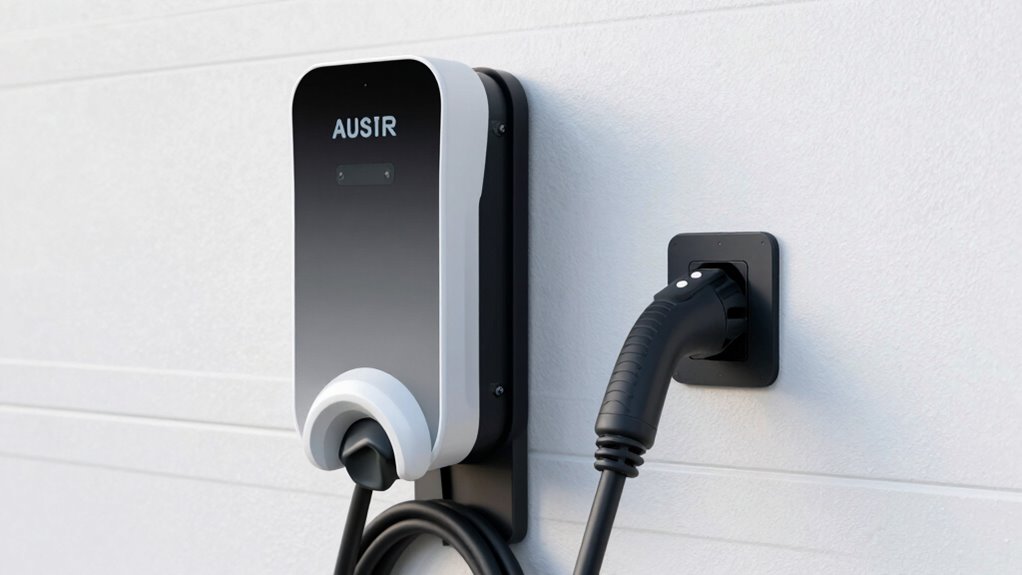

Choosing between a hardwired and plug-in home charger depends on your lifestyle and future plans. If you want fast, permanent charging and have a busy schedule, a hardwired charger might be best. But if you prefer flexibility, occasional use, or rent your home, a plug-in charger offers convenience. Consider your space, budget, and how often you’ll charge. Keep exploring to find the setup that truly fits your needs and future EV plans.
Key Takeaways
- Hardwired chargers are ideal for permanent, high-power setups, while plug-in chargers offer flexibility and portability.
- Consider your daily usage, vehicle range, and charging speed needs when choosing between the two options.
- Hardwired systems require professional installation, whereas plug-in chargers can often be set up independently.
- Space constraints and future mobility plans influence whether a fixed or portable solution best suits your home.
- Emerging wireless charging may shift preferences, but current needs and routines should guide your decision.
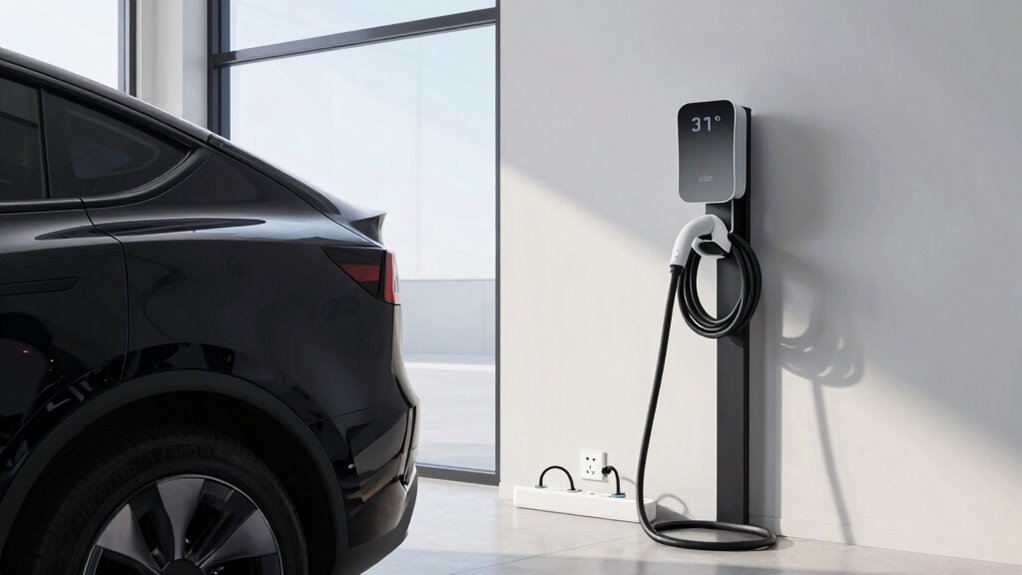
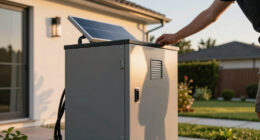
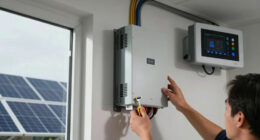
Are you wondering how to set up a reliable and convenient home charging station for your electric vehicle? The choice between a hardwired system and a plug-in setup largely depends on your driving habits, space, and convenience preferences. Hardwired chargers are permanently installed, typically mounted on your garage wall, offering a sleek, integrated look. They often come with higher power levels, which means faster charging times—perfect if you have a busy schedule or own a long-range EV. On the other hand, plug-in chargers are portable and easier to install, allowing you to move or upgrade them as needed. They’re a flexible option if you rent or plan to change your charging location, or if you want the convenience of taking your charger with you on trips.
Wireless charging is emerging as a futuristic alternative, providing the possibility of charging your EV without physical cables. Although still in the early stages of adoption, wireless charging pads or mats can be placed in your garage or driveway, allowing your vehicle to charge simply by parking over them. This setup offers a clean, clutter-free look and eliminates the need to plug and unplug cables. However, keep in mind that wireless charging is typically less efficient than wired options and may take longer to fully charge your vehicle. It’s ideal if you prioritize convenience and a seamless experience over quick charging speeds. As wireless charging technology advances, it may become a more practical and efficient option for everyday use. Additionally, as charging infrastructure continues to develop, wireless options could become more widespread and accessible. Increasing energy transfer efficiency in wireless systems will be key to their future success.
Wireless EV charging offers a sleek, cable-free option but may charge more slowly than wired solutions.
Portable chargers add another layer of flexibility. These compact units can be plugged into standard outlets and carried around as needed. While they usually don’t deliver the same fast charging capabilities as dedicated home chargers, they’re perfect for emergencies or occasional use. If you often find yourself away from your home charging station or want an emergency backup, portable chargers can be a valuable addition. They’re also handy if you’re testing new EVs or don’t want to commit to a permanent installation right away.
Ultimately, your decision hinges on your lifestyle and priorities. If you prefer a sleek, permanent setup that provides rapid charging and minimal fuss, a hardwired charger is a solid investment. If you value flexibility, portability, or are renting, a plug-in charger or portable option might suit you better. Wireless charging, while promising, is still evolving but can be a convenient future-proof choice once it becomes more mainstream. As technology advances, color accuracy in charging accessories may improve, providing more precise and efficient energy transfer. Whichever setup you choose, make sure it aligns with your daily routine, budget, and space constraints to guarantee a reliable and hassle-free charging experience at home.
hardwired EV home charger
As an affiliate, we earn on qualifying purchases.
As an affiliate, we earn on qualifying purchases.
Frequently Asked Questions
Can I Install a Home Charger Myself or Need a Professional?
You can install a home charger yourself if you have strong DIY safety and installation skills, but it’s often better to hire a professional. Charging station installation involves electrical work that can be dangerous without proper knowledge. A licensed electrician ensures the setup is safe, compliant with codes, and correctly wired. If you’re unsure about your skills or safety, it’s wise to guarantee professional help for a secure, reliable charging system.
What Is the Average Cost Difference Between Hardwired and Plug-In Chargers?
The cost comparison between hardwired and plug-in chargers shows that plug-in options are generally more affordable upfront, often costing $300 to $600, while hardwired chargers can range from $500 to over $1,200. Installation expenses also differ, with plug-in chargers typically requiring less labor and complexity, reducing overall costs. Keep in mind, though, that long-term considerations like durability and power capacity may influence your choice beyond just initial expenses.
Are There Any Safety Concerns With DIY Installation?
You should be aware that electrical safety is essential when considering DIY installation, as improper work can pose serious risks. Studies show that DIY electrical projects can lead to increased fire hazards and shocks. DIY risks include faulty wiring or incorrect grounding, which compromise safety. If you lack experience, it’s best to hire a professional. Ensuring proper installation minimizes electrical safety issues and protects your home and loved ones.
How Does Your Vehicle’s Make and Model Influence Charger Choice?
Your vehicle’s make and model directly influence your charger choice because of vehicle compatibility and charging speed. Some vehicles require specific connectors or higher power levels, affecting whether a hardwired or plug-in charger suits you best. Check your car’s specifications to confirm compatibility, then select a charger that offers the right charging speed. This guarantees safe, efficient charging tailored to your vehicle, maximizing convenience and performance.
What Maintenance Is Required for Different Charging Setups?
You need to regularly check charger compatibility to guarantee your setup works smoothly. For hardwired chargers, expect more complex installation and occasional electrical inspections, especially if you upgrade your system. Plug-in chargers require less maintenance, just keeping the cord and plug in good condition. Always follow manufacturer guidelines for upkeep, and consider professional help if you notice compatibility issues or installation concerns. Proper maintenance keeps your charging setup safe and efficient.
portable EV charger
As an affiliate, we earn on qualifying purchases.
As an affiliate, we earn on qualifying purchases.
Conclusion
Whether you choose hardwired or plug-in, your home charging setup should suit your schedule, space, and safety needs. Remember, the right connection creates convenience, confidence, and consistency. Don’t delay your decision—diligently assess your options and decide wisely. A well-wired or plug-in plan promises peace of mind, powering your journey forward. Make your move today; master your method, and enjoy the magic of a more manageable, more mobile tomorrow.
wireless EV charging pad
As an affiliate, we earn on qualifying purchases.
As an affiliate, we earn on qualifying purchases.
EV charging station for garage
As an affiliate, we earn on qualifying purchases.
As an affiliate, we earn on qualifying purchases.