Proper pad placement is key to reducing noise, improving drainage, and increasing your brake system’s lifespan. When pads are correctly aligned, you prevent vibrations and squeals that can happen from improper contact. Good placement also helps water and debris escape efficiently, protecting your brakes from corrosion and overheating. If your pads aren’t positioned properly, expect increased wear and potential damage. Keep your brakes in top shape—discover more about how precise placement can make a difference.
Key Takeaways
- Proper pad placement ensures optimal contact, reducing vibrations that cause noise during braking.
- Correct positioning facilitates effective drainage and ventilation, preventing moisture buildup and corrosion.
- Accurate pad alignment distributes braking force evenly, minimizing uneven wear and extending service life.
- Proper placement improves heat dissipation, lowering the risk of overheating and brake fade.
- Well-installed pads reduce unnecessary vibrations and squeals, enhancing overall brake system durability.
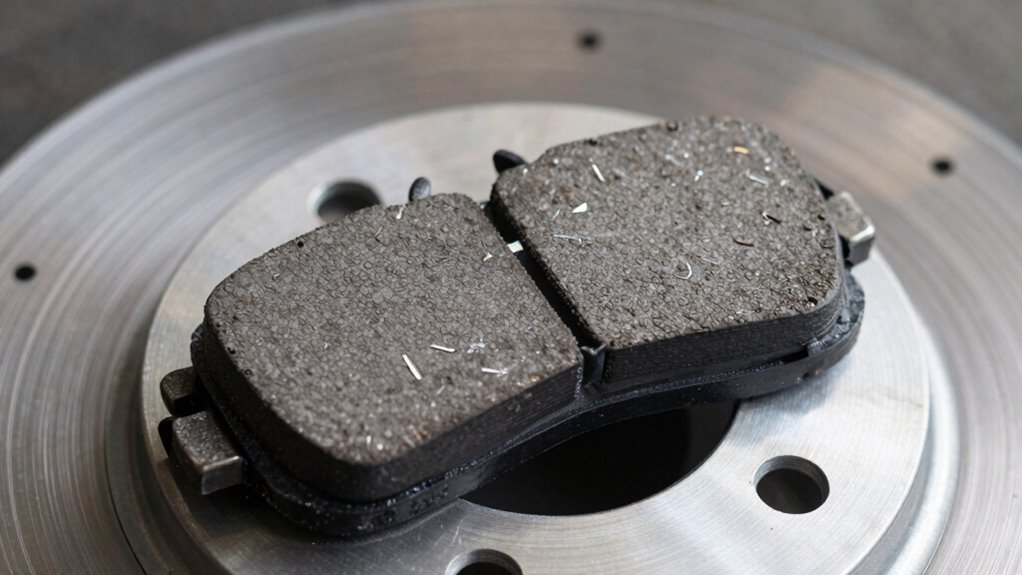
Proper pad placement is fundamental because it directly impacts comfort, safety, and performance. When you position brake pads correctly, you guarantee the system works smoothly and efficiently. One key aspect of achieving this is understanding the importance of material compatibility. Not all pads are suitable for every rotor or caliper, so selecting materials that match your specific brake components is essential. Using incompatible materials can cause uneven wear, increased noise, or even damage to your braking system over time. When you pay attention to material compatibility, you reduce the risk of vibrations and squeals that can develop from poor fit or improper materials rubbing against each other.
Installation accuracy plays a critical role in how your brake system functions. If pads aren’t installed precisely, you might notice increased noise, uneven braking, or premature wear. Proper installation ensures that the pads sit flush against the rotor, maintaining ideal contact without gaps or misalignment. This not only improves braking performance but also helps in extending the lifespan of your pads and rotors. When you focus on installation accuracy, you avoid common issues like uneven pad wear, which can lead to frequent replacements and higher maintenance costs. It also minimizes vibrations or squealing sounds caused by misaligned pads. Additionally, proper pad placement facilitates better heat dissipation, preventing overheating and brake fade during intense use. Ensuring correct installation techniques can further optimize overall brake system longevity and safety, especially when considering material compatibility to prevent issues related to incompatible parts. Proper alignment and positioning are also crucial for maintaining consistent braking performance over time. Moreover, paying attention to drainage and ventilation can help prevent moisture buildup and corrosion, preserving the integrity of your brake components.
As an affiliate, we earn on qualifying purchases.
Frequently Asked Questions
How Does Pad Placement Affect Tire Wear Patterns?
Pad placement directly impacts tire wear patterns by influencing tire alignment and wear distribution. If the pads aren’t properly aligned, you’ll notice uneven tire wear, such as more wear on one side or in specific spots. Proper pad placement guarantees even contact with the road, promoting balanced wear and extending tire life. Regularly checking alignment and adjusting pads accordingly keeps your tires wearing evenly and optimizes vehicle performance.
Can Improper Pad Placement Cause Vehicle Vibration?
Improper brake pad placement can definitely cause vehicle vibration. When your brake pad alignment is off, it leads to uneven rotor contact points, which create imbalances during braking. This uneven contact results in vibrations that you feel in the steering wheel or brake pedal. Ensuring proper pad placement helps maintain smooth rotor contact, reducing vibrations, improving braking performance, and extending the service life of your brake components.
What Materials Are Best for Optimal Pad Placement?
You should choose materials like high-quality ceramic or semi-metallic pads for ideal placement. These materials offer excellent durability, ensuring your brakes last longer and perform better. Proper installation techniques, such as aligning pads correctly and applying even pressure, are essential to maximize benefits. Avoid soft or low-grade materials, as they tend to wear quickly, causing noise and drainage issues. Selecting the right material and following proper installation methods will enhance your brake system’s performance and longevity.
How Often Should Pad Placement Be Checked or Adjusted?
You should check your pad alignment and make adjustments at regular intervals—ideally every 6 to 12 months—to prevent issues from snowballing. If you notice uneven wear, noise, or drainage problems, adjust sooner. Consistent adjustment intervals keep your system running smoothly, prolonging its life and maintaining peak performance. Think of it as giving your system a health checkup—preventative care that saves you from costly repairs later.
Does Pad Placement Influence Brake Noise During Operation?
Yes, pad placement directly influences brake noise during operation. Proper pad alignment guarantees even contact with the rotor, which helps reduce noise. When pads are correctly positioned, you’ll experience smoother braking and less squealing or grinding. Conversely, misaligned pads can cause vibrations and annoying noises. Regularly checking and adjusting pad placement is essential to maintain noise reduction, improve braking performance, and extend the lifespan of your brake components.
As an affiliate, we earn on qualifying purchases.
Conclusion
So, next time you’re deciding where to place a pad, remember that a simple shift can unexpectedly improve noise reduction, drainage, and even extend service life. It’s almost like a coincidence—small adjustments making a big difference. Sometimes, the right placement just naturally aligns everything better, making your work easier and more efficient. Keep experimenting, and you might discover that perfect spot where everything falls perfectly into place, just by chance.
As an affiliate, we earn on qualifying purchases.
As an affiliate, we earn on qualifying purchases.