To compare 120V and 240V floor heating systems accurately, assess your space size and heating needs first. 240V systems are more efficient for larger areas, offering better heat delivery and lower long-term costs, but may require costly installations. 120V systems work well for small areas and are easier to install but may consume more electricity over time. Evaluating your electrical setup and future expenses will help you make an informed choice—more details lie ahead.
Key Takeaways
- Assess the size of the area to determine if a small (120V) or large (240V) system is appropriate.
- Check existing electrical capacity and compatibility before choosing between 120V and 240V options.
- Calculate long-term energy costs considering efficiency differences and potential operating savings.
- Review installation requirements and costs associated with dedicated circuits or electrical upgrades.
- Match system voltage to specific heating needs for uniform, effective coverage without unnecessary guesswork.
Are you trying to decide between 120V and 240V floor heating systems for your home? Making the right choice involves understanding how each system impacts your home’s energy efficiency and the installation costs you’ll face. While both options can provide effective heating, they differ markedly in their energy consumption and setup requirements, so it’s essential to weigh these factors carefully.
Energy efficiency is a vital aspect when comparing these systems. Generally, 240V systems tend to be more energy-efficient because they operate at higher voltage levels, allowing them to deliver heat more effectively with less power loss. This means they can warm a space more uniformly and often at a lower operating cost over time. Conversely, 120V systems might consume more electricity to produce the same amount of heat, leading to higher utility bills in the long run. However, the actual efficiency also depends on the size of the area you’re heating and the insulation of your home. If you’re heating a small area or a single room, a 120V system could suffice without greatly impacting your energy bills, especially if you use a programmable thermostat to control usage. Additionally, understanding the power requirements of each system can help you better plan your installation and energy usage. Recognizing these factors can help you optimize your system’s performance and energy savings.
240V systems are more energy-efficient, offering uniform heating and lower operating costs for larger spaces.
When it comes to installation costs, the differences are more pronounced. Installing a 120V system is typically simpler and less expensive because it can often be plugged into existing outlets, meaning you might avoid extensive wiring or electrical upgrades. This makes 120V systems more appealing if you’re working with a tight budget or doing a DIY installation. On the other hand, 240V systems usually require a dedicated circuit and sometimes new wiring, which can increase your installation costs. If your home’s electrical system isn’t already equipped for higher-voltage wiring, you’ll need to factor in the cost of professional installation and potential upgrades to your electrical panel. Understanding electrical system compatibility can help prevent unexpected expenses and delays during installation. It’s also helpful to consider long-term operating costs when comparing the overall affordability of each system.
In addition to installation costs, consider how each system integrates with your home’s existing setup. 240V systems are often more suited for larger spaces or whole-home heating because of their efficiency and capacity. Meanwhile, 120V systems work well for smaller areas or supplemental heating, potentially saving you money upfront. Ultimately, the choice depends on your specific needs, budget, and long-term energy savings goals. By understanding these differences, you can make a more informed decision without guessing, ensuring your investment provides both comfort and value over time.

Warming Systems 15 Sq Ft 120V Electric Floor Heating System Mat Kit
- Complete Electric Floor Heating Kit: Includes 15 sq ft heating mat and thermostat
- Easy Installation Design: Flexible mat fits room layouts with secure double-sided tape
- Touchscreen Thermostat Included: Features 7-day programming, safety, and energy monitoring
As an affiliate, we earn on qualifying purchases.
As an affiliate, we earn on qualifying purchases.
Frequently Asked Questions
Can I Switch Between 120V and 240V Systems Later?
You can switch between 120V and 240V systems later, but it depends on your floor heating system’s design and wiring. Check for voltage flexibility and power compatibility before making changes. You might need to upgrade wiring or components to handle the new voltage safely. Consulting an electrician guarantees your system remains safe and efficient, preventing damage or hazards during the shift.
Which System Is More Energy-Efficient for Large Areas?
For large areas, 240V systems tend to be more energy-efficient because they spread energy consumption evenly and operate at higher power levels, reducing overall energy use. To determine which is best for your needs, perform a detailed cost analysis considering energy consumption, installation costs, and long-term savings. This way, you can choose the system that offers peak efficiency and cost-effectiveness for your space.
How Do Installation Costs Compare Between 120V and 240V?
You’ll find that installation costs for 120V systems are generally lower because they require less complex wiring and often don’t need a dedicated circuit, offering greater voltage flexibility. In contrast, 240V systems might involve higher upfront expenses due to specialized wiring and electrical work. When comparing costs, consider both the initial installation and long-term efficiency, as this helps you choose the best option for your space and budget.
Are 120V and 240V Systems Compatible With Existing Thermostats?
Did you know most thermostats are designed for specific voltages? When it comes to voltage conversion, 120V and 240V systems often aren’t compatible with the same thermostat. You’ll need to check your thermostat’s specifications—many are only compatible with one voltage. To guarantee proper operation, you might have to upgrade or replace your thermostat, especially if switching between voltages. Always verify thermostat compatibility before installation to avoid issues later.
What Safety Considerations Are Unique to Each Voltage System?
You should know that safety considerations differ between 120V and 240V systems due to voltage compatibility and safety regulations. With 240V systems, there’s a higher risk of electrical shock, so proper grounding and insulation are vital. For 120V systems, make certain that circuit breakers and wiring meet local safety codes. Always follow manufacturer instructions and local safety regulations to prevent hazards when installing or servicing either system.
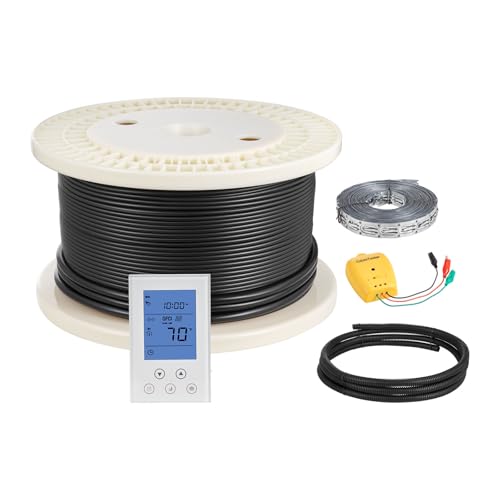
VEVOR 200 sqft Underfloor Heating Cable Kit, 240V Electric Radiant Heated Floor System, with Smart Control Thermostat & Alarm, Easy Installation for Tile, Stone, Vinyl, Home Improvement
- Smart Thermostat with Full Control: Programmable with 7-day scheduling and dual sensors
- Flexible & Secure Mat Design: Compatible with various flooring types
- Professional Security Certification: Dual-layer protection and leak-proof grounding
As an affiliate, we earn on qualifying purchases.
As an affiliate, we earn on qualifying purchases.
Conclusion
Think of choosing between 120V and 240V floor heating like picking the right pair of shoes for a hike. The 120V system is your comfy sneakers—perfect for smaller, cozy spaces. The 240V system is your sturdy hiking boots—built for larger areas and tougher terrain. By understanding their differences, you’ll walk confidently, knowing you’ve selected the perfect fit for your home’s warmth needs. Now, step forward with warmth and comfort!

SunTouch SunStat CommandPlus Touchscreen Programmable Smart Wi-Fi Thermostat for Electric Floor Heating Systems, 4.3" Screen, Floor and Air Sensing Control, Energy Monitoring, Remote Access
- Remote Wi-Fi Access: Control your thermostat remotely from anywhere
- SmartStart Technology: Pre-warms floors for scheduled times
- Large Touchscreen Display: 4.3-inch easy-to-read digital screen
As an affiliate, we earn on qualifying purchases.
As an affiliate, we earn on qualifying purchases.

LuxHeat Floor Heating Single Splice Kit for Floor Heating Cables and Mats – Splice Kit Includes: Ferrules and 2X Heat Shrink for Double Insulation
- Product Type: LuxHeat Single Splice Kit
- Application: For Floor Heating Cables and Mats
- Repair Use: Fixes Damaged Heating Wires
As an affiliate, we earn on qualifying purchases.
As an affiliate, we earn on qualifying purchases.