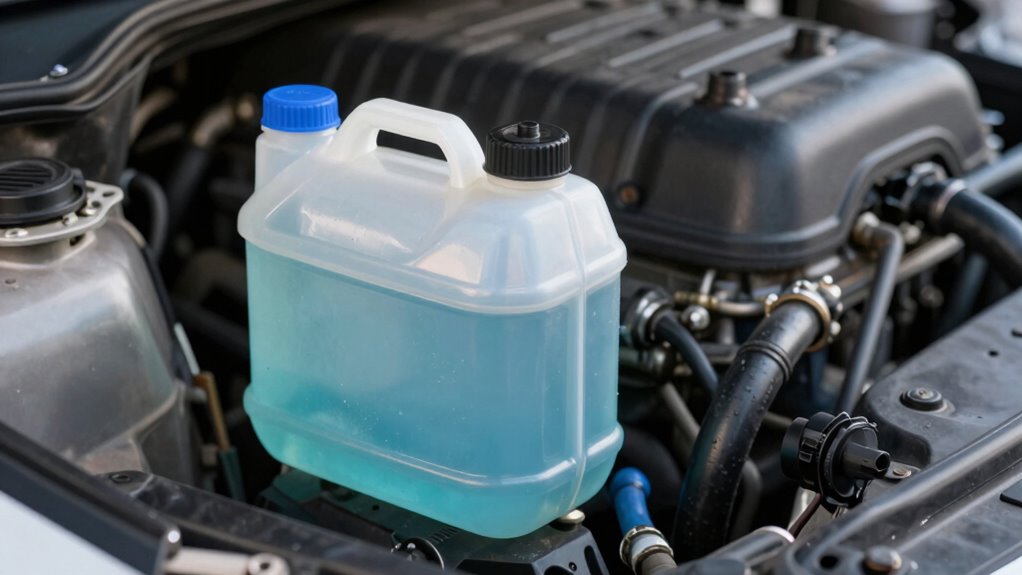

Mixing antifreeze with the wrong ratio can seriously hurt your engine’s efficiency and cause long-term damage. If you use too much coolant concentrate, it becomes acidic, leading to corrosion and rust, while too much water reduces freezing resistance and heat transfer. Both mistakes can cause overheating, freezing, and uneven cooling, putting extra strain on your engine parts. Keep in mind, proper mixing is key to protecting your vehicle’s performance—stay with us to learn more about getting it right.
Key Takeaways
- Using an incorrect antifreeze-to-water ratio can impair heat transfer, leading to engine overheating or freezing.
- Excessive coolant concentrate increases acidity, causing corrosion and reducing cooling system efficiency.
- Too much water diminishes freezing resistance, risking engine damage in cold climates.
- Improper mixing causes uneven cooling, creating hot spots that reduce engine performance and lifespan.
- Incorrect ratios compromise the cooling system’s ability to regulate temperature, hurting fuel efficiency.
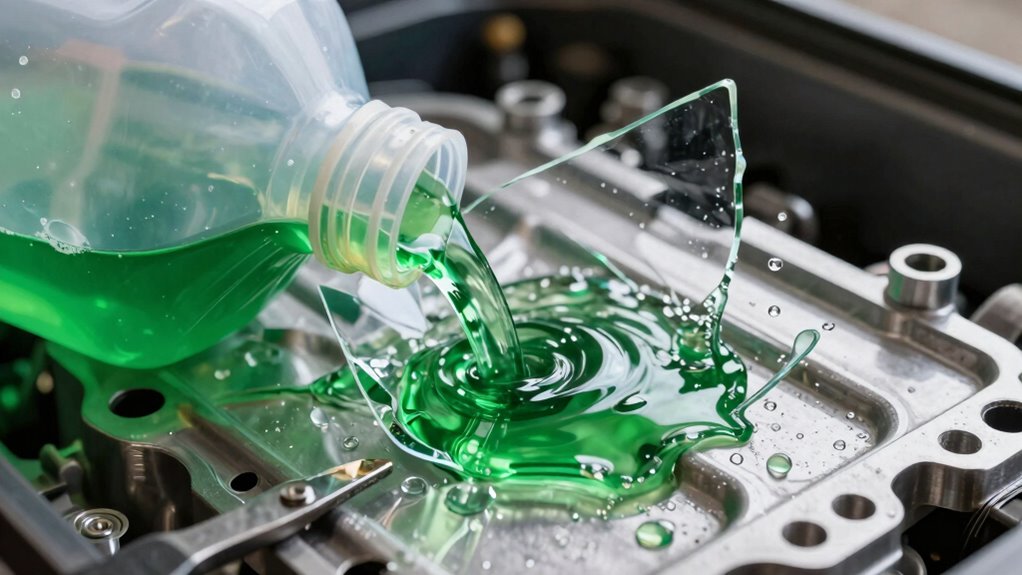
Mixing antifreeze incorrectly can lead to serious engine problems, especially during the cold months. When you don’t get the mixture right, your engine’s coolant system can suffer from issues like coolant corrosion, which can cause leaks and damage over time. Proper antifreeze mixing isn’t just about preventing freezing; it’s essential for maintaining optimal temperature regulation within your engine. If the mixture is off, your engine might overheat in summer or freeze in winter, both of which are costly and dangerous. Correctly mixed antifreeze also improves energy efficiency by ensuring the cooling system operates smoothly and reduces strain on your engine components. The key to a good antifreeze mix is understanding the right ratio of coolant to water. Most manufacturers recommend a 50/50 blend, which offers a balance of freezing protection and heat transfer efficiency. When you use too much coolant concentrate, it can become overly acidic and promote coolant corrosion, leading to rust and deposits that clog your radiator and hoses. On the other hand, too much water reduces the mixture’s ability to resist freezing and diminishes its capacity to regulate temperature effectively. This imbalance can cause your engine to run hotter than it should or, in colder weather, allow the coolant to freeze, risking costly damage. Additionally, correctly mixed antifreeze can help reduce emissions and improve overall engine efficiency, making it a vital aspect of vehicle maintenance.
Incorrect antifreeze mixing can cause engine damage, overheating, freezing, and corrosion over time.
Getting the mix wrong impacts your vehicle’s ability to maintain proper temperature regulation. Coolant is designed not just to prevent freezing but also to transfer heat away from your engine efficiently. An improper mixture hampers this process, leading to hot spots and uneven cooling. Over time, this can cause parts to wear prematurely or warp, decreasing your engine’s overall efficiency and lifespan. Additionally, poor temperature regulation can trigger warning lights on your dashboard and result in more frequent breakdowns. Ensuring the right mixture also means understanding the recommended mixture ratios provided by manufacturers, which vary based on climate and vehicle specifications. Properly mixed antifreeze also protects engine components from corrosion and wear, extending the lifespan of your vehicle. Maintaining the correct antifreeze mixture is crucial for engine performance and ensuring your vehicle operates safely across different seasons.
antifreeze coolant mix ratio tester
As an affiliate, we earn on qualifying purchases.
As an affiliate, we earn on qualifying purchases.
Frequently Asked Questions
How Often Should Antifreeze Be Replaced?
You should replace your antifreeze every 2 to 5 years, depending on your vehicle’s specifications and driving conditions. Regular antifreeze recycling and testing help maintain ideal coolant quality. Over time, coolant additives break down, reducing efficiency and risking engine damage. Don’t forget to check your coolant’s color and level regularly. Properly replacing and maintaining antifreeze ensures your cooling system stays effective, preventing overheating and costly repairs down the road.
Can Mixing Different Brands of Antifreeze Cause Issues?
Mixing different brands of antifreeze? That’s like inviting your chemistry set to a party—chaotic and potentially dangerous. Brand compatibility matters because incompatible formulations can trigger chemical reactions, forming gunk or corrosion. Instead of risking engine drama, stick to one trusted brand. Your cooling system will thank you, and you’ll avoid costly repairs. Keep it simple, keep it safe—your engine’s health depends on it.
What Are Signs of an Antifreeze Mixture Problem?
If your coolant mixture has issues, you might notice overheating, engine temperature fluctuations, or coolant leaks. These signs indicate coolant compatibility problems or improper mixture calibration. You could see engine performance drops or warning lights on your dashboard. Always check the antifreeze ratio and verify you’re using compatible products. A correct mixture prevents corrosion, overheating, and guarantees your cooling system runs efficiently, avoiding costly repairs.
Does Antifreeze Color Indicate Its Type or Quality?
Antifreeze color can give you clues about its type or quality due to color coding, but it’s not a foolproof indicator. Typically, green, orange, pink, or yellow antifreeze each serve different purposes and may contain varying additives. Always check the label and specifications instead of relying solely on color. Properly matching antifreeze types guarantees maximum performance and prevents potential engine damage caused by incompatible mixtures.
Is There a Preferred Antifreeze Concentration for Winter?
Like a knight preparing for battle, you want the right antifreeze formulation for winter. The preferred antifreeze concentration for cold weather is typically 50/50, combining antifreeze and water. This balance prevents freezing and corrosion while maintaining cooling efficiency. Remember, Concentration adjustments are vital—too much antifreeze reduces heat transfer, while too little risks freezing. Always follow manufacturer guidelines to guarantee peak protection and engine performance during winter.
As an affiliate, we earn on qualifying purchases.
Conclusion
If you ignore the proper antifreeze mix, you risk damaging your engine and reducing its efficiency. Many believe that a simple ratio suffices, but research shows that incorrect mixes can lead to corrosion and overheating, especially in extreme climates. By understanding the science behind antifreeze chemistry, you can guarantee peak performance and longevity. Don’t rely on guesswork—accurately mixing antifreeze isn’t just about protection; it’s about maintaining your vehicle’s health for the long haul.
As an affiliate, we earn on qualifying purchases.
As an affiliate, we earn on qualifying purchases.