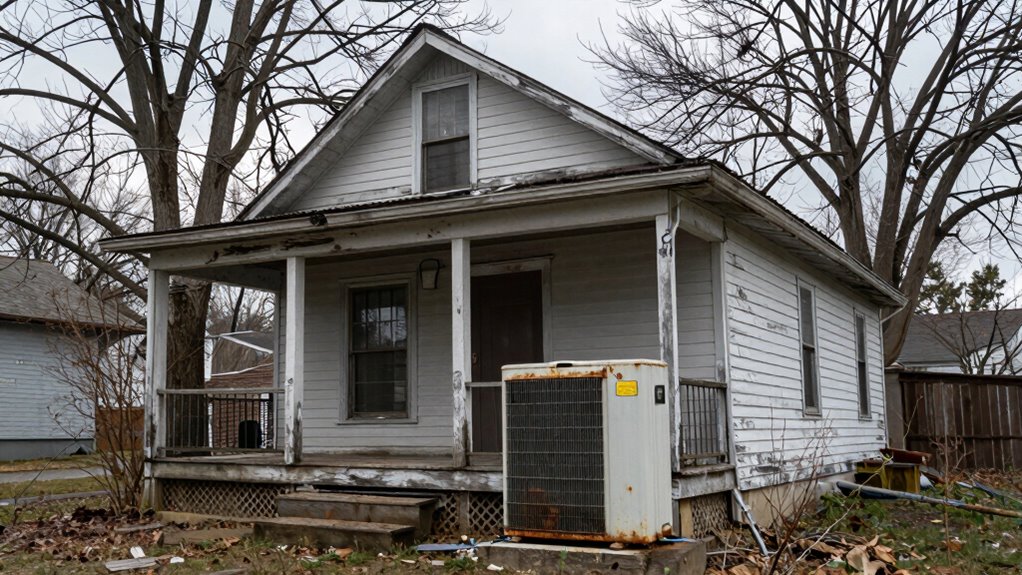
Old drafty homes need a different heat pump plan because they often have poor insulation and building flaws that make it hard to retain heat. This causes your heat pump to work harder and run longer, increasing energy costs and wear. Sealing gaps, upgrading insulation, and fixing structural issues help keep heat inside and improve efficiency. By addressing these problems, you can enjoy better comfort and lower bills—if you want to learn how, keep exploring these solutions.
Key Takeaways
- Old drafty homes lose heat through gaps and poor insulation, requiring tailored heating solutions to improve efficiency.
- Standard heat pump plans may overwork in poorly insulated homes, leading to higher energy costs and system wear.
- Addressing building flaws and sealing leaks enhances heat retention, reducing the load on the heat pump.
- Customized installation strategies ensure the heat pump works effectively with existing structural issues.
- Proper insulation upgrades complement heat pump performance, maximizing comfort and energy savings in older homes.
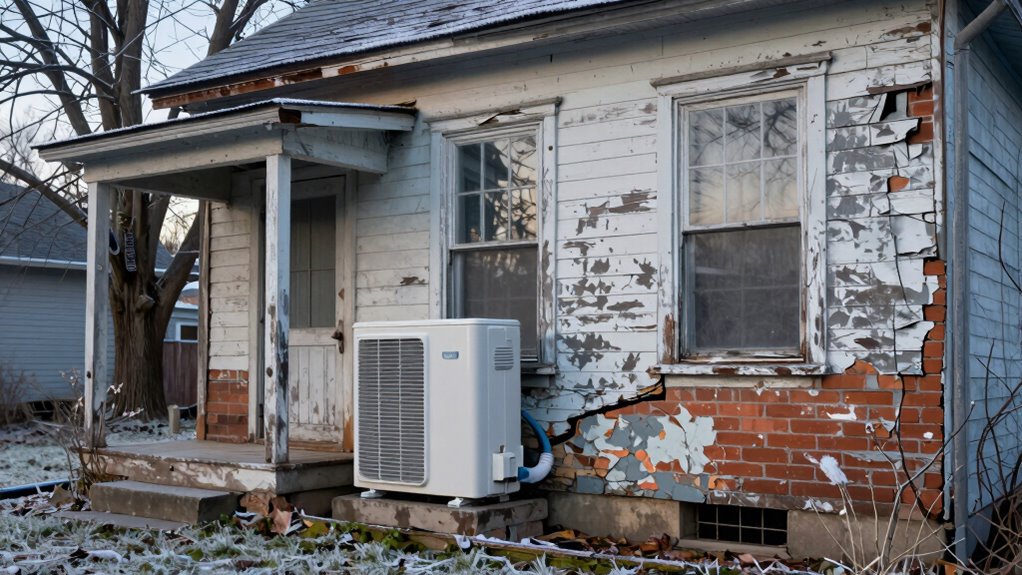
Old, drafty homes often struggle to stay warm, making heating both inefficient and costly. If you’re considering a heat pump, you need to understand that these homes require a different plan to maximize their benefits. The key lies in addressing the root cause of heat loss: poor insulation. Insulation upgrades are vital because they greatly improve energy efficiency, allowing your heat pump to work less and provide better warmth. Without proper insulation, even the most advanced heat pump can’t do its job effectively. It will have to run longer and harder to compensate for the heat escaping through walls, ceilings, and floors.
Proper insulation is essential for efficient heat pump performance in old, drafty homes.
When you upgrade insulation in an old home, you create a more controlled environment that retains heat better. This not only improves comfort but also minimizes heat loss through various building flaws. This means you won’t rely as heavily on the heat pump to maintain a comfortable temperature. Instead, the system can operate more efficiently, lowering your energy bills and reducing wear and tear on the unit. Proper insulation also helps keep cold drafts out, making your home feel warmer and more consistent. It’s a step that pays off in comfort and savings over time. Understanding building flaws can help you identify other potential areas where heat may escape, allowing for a more comprehensive approach to insulation. Additionally, addressing air leaks around windows and doors can significantly enhance your home’s thermal performance. Recognizing air infiltration points can further improve your home’s overall energy efficiency.
A one-size-fits-all approach to installing a heat pump simply doesn’t work in an older, draftier home. Instead, you need a tailored plan that considers the specific insulation needs of your space. For example, sealing gaps around windows and doors, adding insulation to attics and basements, or upgrading wall insulation can make a big difference. These improvements guarantee that the heat generated by your heat pump stays inside where it’s needed most. When your home is better insulated, your heat pump doesn’t have to work as hard, which extends its lifespan and enhances overall energy efficiency. Additionally, understanding common building flaws can help identify other potential heat loss points that should be addressed. By investing in these upgrades, you optimize your system’s performance and long-term durability.
insulation upgrade for old homes
As an affiliate, we earn on qualifying purchases.
As an affiliate, we earn on qualifying purchases.
Frequently Asked Questions
How Do Drafty Homes Affect Heat Pump Efficiency?
Drafty homes lower heat pump efficiency because cold air leaks make it harder for the system to maintain a consistent temperature. To improve efficiency, you should focus on draft sealing to prevent air loss and consider an insulation upgrade to keep heat inside. These steps help your heat pump work less hard, saving energy and reducing your utility bills. Proper sealing and insulation are essential for peak heat pump performance in drafty homes.
Can Existing Insulation Be Improved Before Installing a Heat Pump?
Yes, you can improve existing insulation before installing a heat pump. Start with insulation upgrades to fill gaps and boost thermal resistance, which helps your system work more efficiently. Combine this with air sealing to reduce drafts and prevent heat loss. These improvements make your home more comfortable, lower energy costs, and guarantee your new heat pump performs at its best in your drafty spaces.
Are Specific Heat Pump Models Better for Old Homes?
Think of your old home as a vintage car needing a modern upgrade. Some alternative models with advanced features are better suited for drafty, aged houses. These units use modern technology, offering improved efficiency and better climate control. Look for heat pumps designed specifically for older homes, with features like enhanced insulation compatibility and variable-speed fans. Selecting the right model guarantees you get warmth without overburdening your home’s existing structure.
How Often Should I Service a Heat Pump in an Old House?
You should service your heat pump at least once a year, especially in an old house. Regular maintenance helps optimize energy savings and keeps your system running efficiently. Check and clean filters, inspect the outdoor unit for debris, and schedule professional tune-ups to prevent breakdowns. Following maintenance tips guarantees your heat pump works effectively, reduces energy costs, and extends its lifespan, making your old home more comfortable and energy-efficient year-round.
What Are the Cost Differences in Upgrades for Drafty Homes?
You’ll find that the cost comparison for upgrades in drafty homes varies depending on the insulation and sealing improvements needed. Upgrading a heat pump in a drafty house often costs more upfront due to additional insulation or sealing work. Consider upgrade considerations like energy efficiency and long-term savings, which can offset higher initial expenses. Investing in proper insulation and sealing enhances heat pump performance, ultimately reducing your energy bills over time.
air sealing kit for windows and doors
As an affiliate, we earn on qualifying purchases.
As an affiliate, we earn on qualifying purchases.
Conclusion
So, when your old, drafty home welcomes a new heat pump, it’s like fitting a gentle, warm blanket over a restless, shivering house. With the right plan, you guarantee chilly gusts into cozy whispers, transforming your space from a wind-swept cave into a snug sanctuary. Think of it as guiding a stubborn sailboat safely into harbor—careful adjustments assure warmth sails smoothly through every creak and crack, making your home a haven no wind can ruin.
energy-efficient heat pump for drafty houses
As an affiliate, we earn on qualifying purchases.
As an affiliate, we earn on qualifying purchases.
As an affiliate, we earn on qualifying purchases.