
Hydronic emitters, like baseboards or underfloor tubing, change the heat pump conversation by providing gentle, even warmth at lower system temperatures. This makes your heating more energy-efficient, reducing utility bills and extending the system’s lifespan. Water’s heat retention also minimizes heat loss, and the combination offers quieter, more comfortable heating. As technology advances, these systems become even more sustainable. Want to discover how this smart setup can benefit your home? Keep exploring.
Key Takeaways
- Hydronic emitters enable heat pumps to operate efficiently at lower water temperatures, enhancing overall energy savings.
- They provide consistent, even warmth, improving comfort compared to traditional forced-air systems.
- Combining hydronic systems with heat pumps reduces electricity consumption and extends equipment lifespan.
- Higher initial installation costs are offset by long-term operational savings and environmental benefits.
- Advances in technology optimize hydronic heat pump systems for greater efficiency and sustainability.

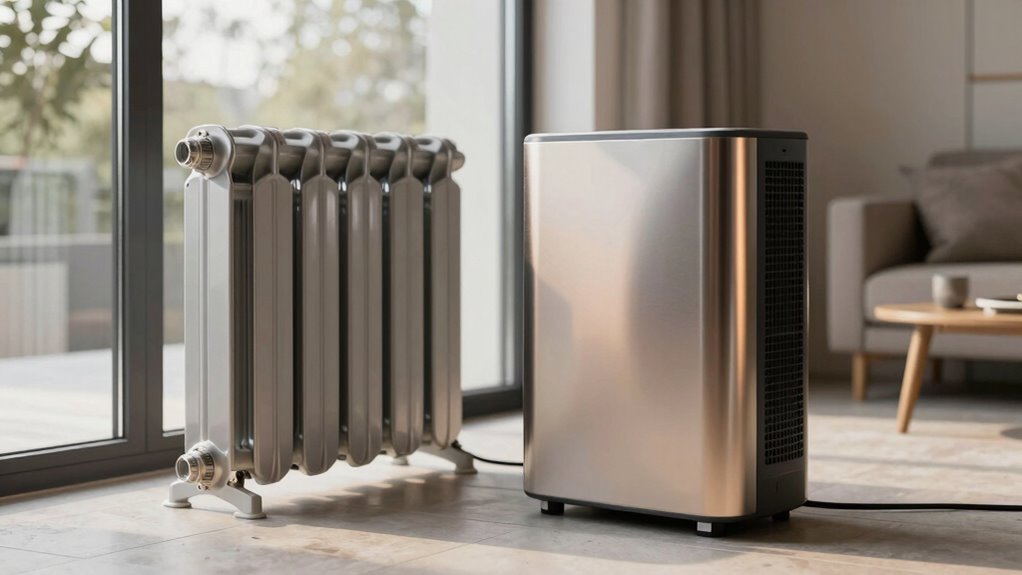
Have you ever wondered how hydronic emitters work seamlessly with heat pumps to provide efficient heating? When you combine these systems, you’re creating a setup that maximizes energy efficiency while often reducing overall operation costs. Hydronic emitters—such as baseboards, radiators, or underfloor tubing—distribute heat through water heated by the heat pump. This method allows for gentle, consistent warmth, which feels more natural and comfortable compared to traditional forced-air systems. Because heat is delivered evenly at lower temperatures, it minimizes energy waste and improves overall efficiency. This synergy between hydronic emitters and heat pumps makes your home not just warmer but smarter in how it consumes energy, leading to lower utility bills over time.
One of the biggest benefits of integrating hydronic emitters with heat pumps is the boost in energy efficiency. Heat pumps operate most effectively at moderate temperatures, and hydronic systems are designed to work optimally within this range. As a result, you’re able to extract more heat from the environment and transfer it into your living space, reducing the need for auxiliary heating sources. This means you use less electricity, which is good for both your wallet and the environment. Additionally, hydronic systems tend to have lower heat loss because water retains heat longer than air, allowing for lower flow temperatures. This synergy not only enhances energy efficiency but also extends the lifespan of your heat pump since it doesn’t have to work as hard. Moreover, advancements in molecular-scale circuits and nanotech fabrication challenges are paving the way for more efficient heating technologies in the future.
However, the initial installation costs of combining hydronic emitters with heat pumps can be a concern. Installing hydronic systems requires more upfront investment compared to traditional forced-air heating because of the need for piping, pumps, and sometimes floor modifications. The complexity of installation can also influence costs, especially in retrofit situations where existing structures may need adjustments. Despite these higher initial costs, many homeowners find that the energy savings over time outweigh the upfront expenses. In the long run, lower operating costs, increased comfort, and the potential for government incentives or rebates make this combination an appealing choice. Plus, the quiet operation and consistent warmth provided by hydronic emitters contribute to a more comfortable living environment, further justifying the initial investment.
In essence, hydronic emitters change the heat pump conversation by emphasizing efficiency and comfort, even if the initial setup requires a larger investment. Over time, the energy savings and enhanced performance can make the combined system a smart, sustainable choice for your home’s heating needs.
As an affiliate, we earn on qualifying purchases.
Frequently Asked Questions
Are Hydronic Emitters Compatible With All Heat Pump Models?
Hydronic emitters aren’t compatible with all heat pump models, but many modern systems offer good hydronic compatibility, enhancing system flexibility. You should check your heat pump’s specifications to see if it supports hydronic heating, as some units are designed specifically for this purpose. When compatible, hydronic emitters can optimize comfort and efficiency, giving you more control over your heating system. Always consult with a professional to guarantee proper integration.
What Are the Installation Costs for Hydronic Emitters?
Installation costs for hydronic emitters vary based on your home’s size and existing plumbing, but generally, you can expect a cost comparison to traditional systems. While installation challenges like retrofitting can increase expenses, the long-term energy savings often offset initial costs. You should budget for professional installation to guarantee efficiency, and consider potential upgrades to your heat pump system that can optimize performance with hydronic emitters.
How Do Hydronic Emitters Impact Overall Energy Efficiency?
Think of hydronic emitters as gentle rivers flowing through your home, enhancing energy efficiency. They optimize your heat pump’s performance, leading to significant energy savings by distributing heat evenly and reducing waste. This eco-friendly approach minimizes your carbon footprint, offering environmental benefits. As a result, you enjoy lower utility bills and a more sustainable living space, making hydronic emitters a smart choice for energy-conscious homeowners.
Can Hydronic Systems Be Integrated With Existing Heating Setups?
Yes, you can integrate hydronic systems with your existing heating setup. It often involves adding alternative water heating options, like a boiler or heat pump, to work alongside your current system. Radiant floor integration is a popular choice, providing even, efficient heat. This setup lets you switch between or combine methods, improving energy efficiency and comfort without completely replacing your existing infrastructure.
What Maintenance Is Required for Hydronic Emitters in Heat Pump Systems?
Maintenance for hydronic emitters is straightforward and essential for their longevity. You should regularly check and flush the system, inspect for leaks, and guarantee the pump operates smoothly. Follow the manufacturer’s maintenance schedules to keep your system durable. Neglecting these tasks is like ignoring the engine in a race car—your system can falter. With proper upkeep, your hydronic emitters will deliver consistent, efficient heat for years to come.
underfloor hydronic heating system
As an affiliate, we earn on qualifying purchases.
As an affiliate, we earn on qualifying purchases.
Conclusion
You might think that hydronic emitters are just an old-fashioned heating method, but in reality, they’re transforming the heat pump conversation. Many believe that heat pumps only work well with forced-air systems, but studies show hydronic emitters enhance efficiency and comfort. Embracing this combination debunks the myth that heat pumps aren’t suitable for all climates. So, don’t dismiss hydronic emitters—they could be the key to revealing better, more sustainable heating solutions.
As an affiliate, we earn on qualifying purchases.
energy-efficient hydronic emitters
As an affiliate, we earn on qualifying purchases.
As an affiliate, we earn on qualifying purchases.