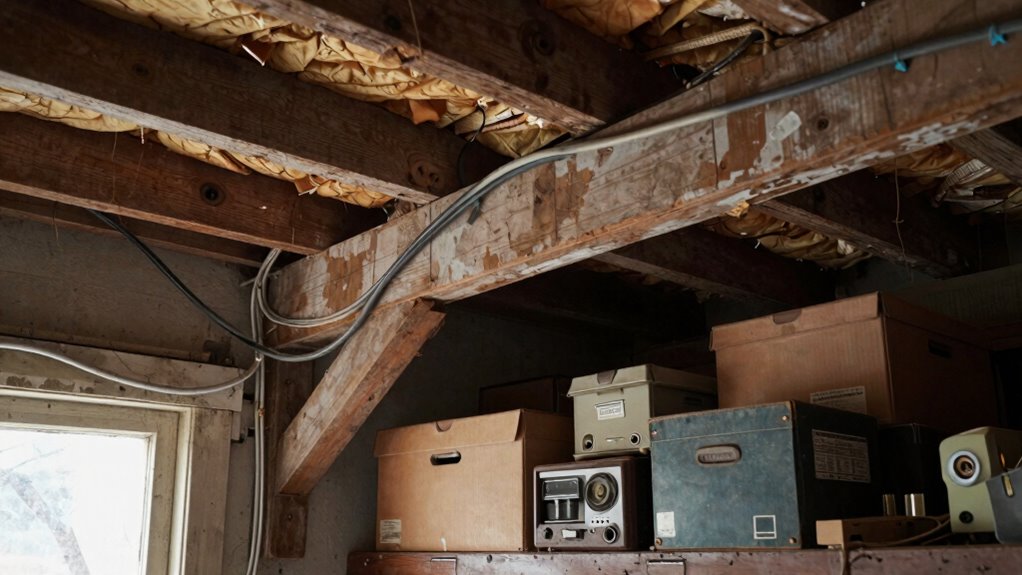
Sealing attic bypasses is a quick, affordable fix that delivers immediate energy savings and improves your home’s comfort. Unlike fancy equipment upgrades, sealing tackles the root cause of air leaks, which are responsible for much of your energy loss. It also makes your existing HVAC system work more efficiently, saving you money in the long run. Keep going to discover how this simple fix can outperform costly upgrades every time.
Key Takeaways
- Sealing attic bypasses is a low-cost fix with immediate energy savings, unlike expensive equipment upgrades.
- It addresses the root cause of air leaks, enhancing home efficiency more effectively than new HVAC systems.
- Proper sealing reduces the workload on existing systems, improving their performance and lifespan.
- Sealing bypasses provides long-term benefits and high return on investment, unlike temporary solutions from equipment upgrades.
- Combining sealing with insulation maximizes energy efficiency, making it a more comprehensive and cost-effective approach.
When it comes to improving your home’s energy efficiency, deciding between attic bypasses and equipment upgrades can be confusing. You might think investing in a new HVAC system or high-tech appliances will deliver faster results, but often, the real savings come from addressing the less obvious issues—like attic bypasses. These gaps and leaks in your attic insulation are hidden energy drains that, when sealed properly, can significantly boost your home’s efficiency. Fixing these bypasses is a cost-effective move that offers substantial, immediate benefits. Instead of spending thousands on fancy equipment, you’re tackling the root cause of energy loss, ensuring your existing systems operate more efficiently.
Attic bypasses are often overlooked because they’re invisible without inspection, yet they’re responsible for a large portion of air leaks. When warm or cool air escapes through these gaps, your heating and cooling systems have to work harder, which raises your energy bills. Sealing these bypasses is a straightforward, affordable fix that directly impacts your energy efficiency. It’s a low-cost solution that yields high returns, especially when compared to the hefty price tag of new equipment. Plus, sealing leaks is a one-time effort—once done correctly, it keeps your home comfortable year-round and reduces your reliance on energy-consuming systems.
Sealing attic bypasses reduces air leaks, lowers energy bills, and improves home comfort with a simple, cost-effective fix.
While upgrading your HVAC or installing fancy smart thermostats may seem appealing, these improvements often don’t address the fundamental leakiness of your attic. Without sealing those bypasses, your new equipment will still be fighting against uncontrolled air leaks, making it less effective and more costly in the long run. By prioritizing attic bypass sealing, you optimize the performance of your existing systems, leading to genuine cost savings over time. This approach also minimizes the need for future repairs or upgrades, further saving you money and hassle. Recognizing the importance of home insulation can further enhance your energy savings efforts.
In essence, attic bypasses are the low-hanging fruit of home energy efficiency. They’re quick to fix, inexpensive, and deliver immediate results. When you focus on sealing these leaks, you’re not just making your home more energy efficient—you’re also saving money. It’s a smart, practical choice that outperforms more complex and costly equipment upgrades in terms of cost savings and lasting impact. Instead of pouring money into new gadgets, you’ll find that sealing attic bypasses gives you the biggest bang for your buck, keeping your home comfortable and your energy bills down. Addressing air leaks is a simple step that can greatly improve overall home performance.
As an affiliate, we earn on qualifying purchases.
Frequently Asked Questions
How Much Do Attic Bypass Installations Typically Cost?
Attic bypass installations usually cost between $200 and $600, depending on the size and complexity. You’ll find the cost comparison favors bypasses because they’re simple and affordable. Plus, installation challenges are minimal compared to upgrading fancy equipment, which can be costly and complicated. With bypasses, you get energy efficiency and moisture control at a fraction of the price, making them a smart, budget-friendly choice for many homeowners.
How Long Does an Attic Bypass Installation Take?
An attic bypass installation usually takes about one to two days, depending on the project’s size. Think of it like a well-orchestrated symphony—your contractor works efficiently to install attic insulation and upgrade ventilation systems. You’ll see progress quickly, with minimal disruption. The process involves carefully sealing bypasses to improve energy efficiency, and most homeowners find the effort worthwhile for long-term savings and a healthier home environment.
Are Attic Bypasses Suitable for All Types of Homes?
Attic bypasses aren’t suitable for all homes; their compatibility depends on your attic’s insulation and ventilation needs. If your home has outdated or inadequate insulation, an attic bypass can improve efficiency without disrupting existing systems. However, in homes with advanced insulation setups, bypasses might have limited impact. It’s best to evaluate your attic’s current insulation and ventilation to determine if an attic bypass will enhance energy savings and comfort effectively.
Can Attic Bypasses Improve Energy Efficiency Immediately?
Imagine sealing attic bypasses in your home, and you’ll see energy savings right away. They can improve energy efficiency immediately by reducing air leaks, which keeps conditioned air inside. While installation challenges might arise, proper sealing guarantees quicker results compared to costly equipment upgrades. You’ll notice lower energy bills almost instantly, making attic bypasses a simple yet effective way to boost your home’s efficiency without waiting for complex upgrades.
What Maintenance Is Required for Attic Bypass Systems?
You need to regularly inspect your attic bypass system to guarantee its attic insulation remains effective and its bypass durability stays intact. Clean out any debris that might obstruct airflow and check for signs of wear or damage. Seal any leaks promptly to maintain energy efficiency. Proper maintenance keeps your attic bypass system functioning smoothly, preventing insulation from settling or shifting, and helps sustain your home’s energy savings over time.
As an affiliate, we earn on qualifying purchases.
Conclusion
Remember, sometimes the simplest fix is the best fix. Attic bypasses often outshine fancy equipment upgrades because they target the root of the problem—drafts and air leaks—saving you money and energy. Like fixing a leaky faucet before replacing the entire plumbing, sealing those bypasses guarantees your system runs efficiently. Don’t overlook the power of small changes; they can make a big difference, proving that sometimes, less really is more.
As an affiliate, we earn on qualifying purchases.
As an affiliate, we earn on qualifying purchases.