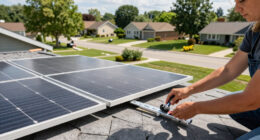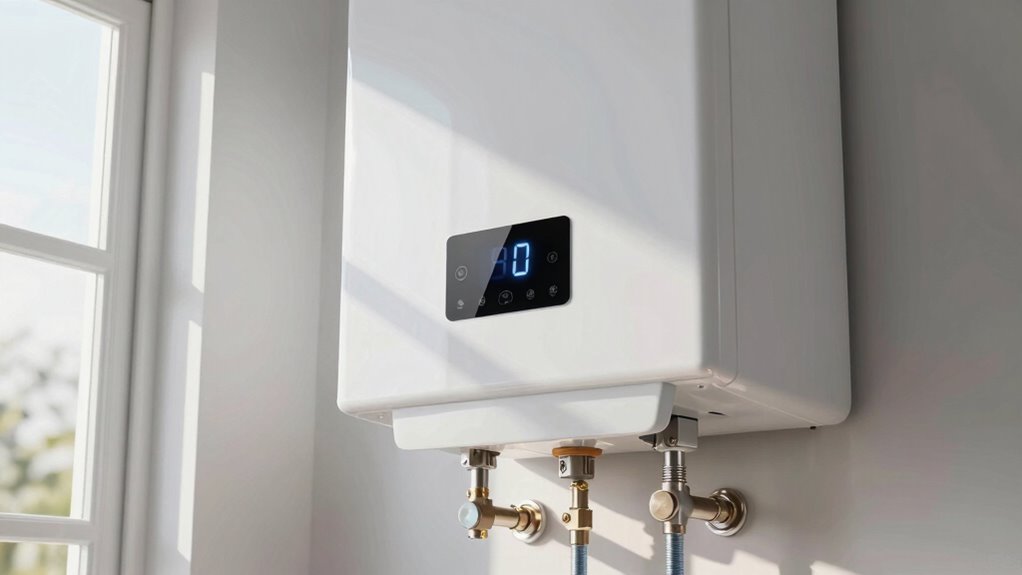

Water heating is one of the fastest ways to boost your home’s energy efficiency because it accounts for a large portion of energy use. Small improvements, like installing solar thermal collectors and smart controls, can lead to significant savings and lower your carbon footprint. These systems optimize when and how your water heats, reducing waste and costs. To discover how you can maximize these benefits, keep exploring the smart ways to upgrade your water heating system.
Prime for Young Adults — start your free trial
Fast free delivery, streaming and member deals for eligible 18–24 year olds.
As an affiliate, we earn on qualifying purchases.
Key Takeaways
- Water heating consumes a significant portion of household energy, making efficiency improvements highly impactful.
- Integrating solar thermal collectors preheat water, reducing reliance on grid electricity and lowering costs.
- Smart controls optimize energy use by scheduling heating and detecting malfunctions early, enhancing overall efficiency.
- Combining solar and smart technologies maximizes energy savings, especially during sunny days, minimizing backup energy needs.
- Long-term savings and environmental benefits make water heating upgrades a cost-effective efficiency opportunity.
Water heating accounts for a considerable chunk of your household energy use, but it’s also an area where small improvements can lead to big savings. One promising approach involves integrating solar energy solutions with your existing system. Solar integration allows you to harness the sun’s power to heat water, reducing reliance on grid electricity and lowering your bills. Installing solar thermal collectors on your roof can preheat your water before it even reaches your conventional heater, making your entire system more efficient. This setup not only cuts costs but also reduces your carbon footprint, aligning your household with sustainable practices.
Alongside solar integration, adopting smart controls can revolutionize your approach to water heating. Smart controls enable you to monitor and adjust your system remotely, ensuring it operates only when needed. For example, you can schedule heating cycles during off-peak hours or when you’re most likely to use hot water, minimizing unnecessary energy use. These intelligent systems can also detect leaks or malfunctions early, preventing waste and costly repairs. By optimizing when and how your water heater operates, smart controls help you save energy without sacrificing comfort. Additionally, implementing advanced sensors can further enhance system responsiveness and efficiency.
Combining solar integration with smart controls creates a dynamic, responsive water heating system. During sunny days, your system can prioritize solar energy, reducing the load on your backup heater. When the sun isn’t shining, the smart controls can seamlessly switch to traditional power sources, ensuring you always have hot water when needed. This synergy maximizes efficiency and minimizes waste, giving you a smarter way to manage household energy. Plus, with real-time data and customizable settings, you gain more control over your energy consumption, allowing you to tailor your system to your lifestyle and usage habits.
Over time, these innovations can considerably cut your energy bills and lessen your environmental impact. While installing solar integration and smart controls might seem like an upfront investment, the long-term savings and sustainability benefits are well worth it. As technology advances, these systems are becoming more affordable and easier to install, making them accessible options for homeowners enthusiastic to boost efficiency. In addition, understanding energy protocols can help you optimize your system’s performance and integration with other smart home devices. Moreover, choosing systems that adhere to recognized energy standards can ensure safety and maximum efficiency. Being aware of renewable energy options and incentives can also make your transition to more efficient water heating more cost-effective. Ultimately, water heating is often the next big efficiency win because it combines proven renewable energy strategies with modern control technology, giving you a powerful way to reduce energy waste and make your home greener. Embracing innovative solutions is essential to achieving maximum efficiency in household energy use.
As an affiliate, we earn on qualifying purchases.
Frequently Asked Questions
How Much Energy Does Water Heating Typically Consume Annually?
You typically use around 4,500 kWh annually for water heating, though this varies based on your usage patterns and household size. Your energy consumption depends on factors like the number of people, hot water needs, and efficiency of your system. By understanding your usage patterns, you can identify opportunities to reduce energy consumption, such as installing energy-efficient water heaters or adjusting your hot water habits to save energy.
What Are the Most Cost-Effective Water Heating Upgrades?
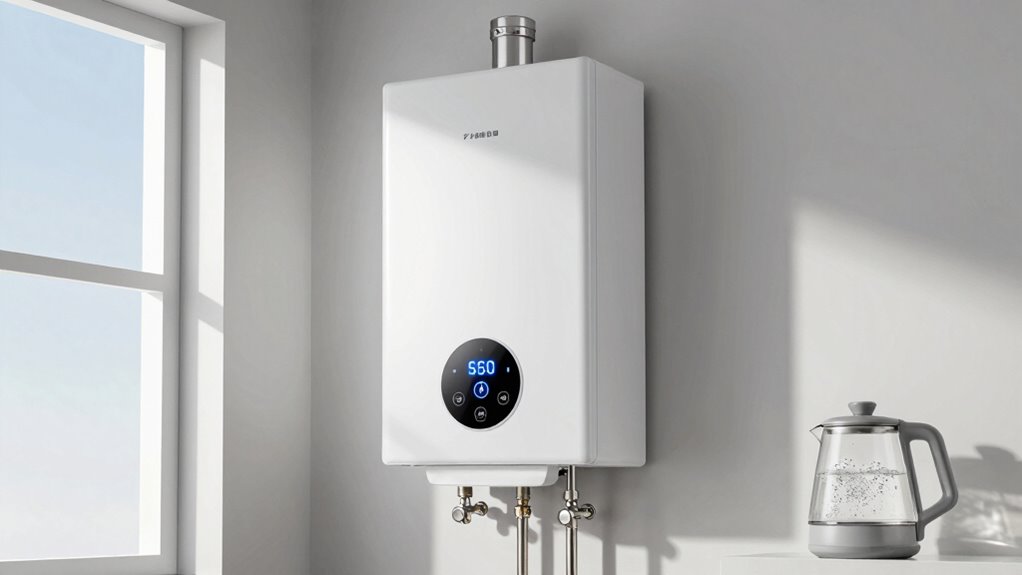
Switching to a tankless water heater is one of the most cost-effective upgrades, as it heats water only when needed, reducing energy waste. Pair it with smart controls to optimize usage further, adjusting temperatures remotely or scheduling heating times. These upgrades lower your energy bills, extend system lifespan, and improve efficiency. Overall, tankless systems combined with smart controls offer quick, significant savings and better control over your water heating.
How Does Insulation Impact Water Heating Efficiency?
Insulation considerably boosts water heating efficiency by reducing heat loss. Using the right insulation types, like foam or fiberglass, and proper installation techniques, such as sealing gaps and wrapping pipes, keeps water hotter longer. You’ll notice lower energy bills and quicker hot water delivery. Proper insulation minimizes energy waste, making your water heating system more effective and eco-friendly. Investing in quality insulation and correct installation truly makes a difference.
Can Solar Water Heaters Significantly Reduce Energy Bills?
Sure, solar water heaters can slash your energy bills, thanks to generous solar incentives and abundant sunshine. They harness the sun’s free energy, turning your hot water needs into a budget-friendly adventure. With hot water savings piling up, you’ll soon marvel at how a sunny outlook on energy can transform your utility bills. Who knew that just a little solar magic could make your wallet smile?
What Maintenance Improves Water Heater Lifespan and Efficiency?
You can extend your water heater’s lifespan and boost efficiency by performing regular tank maintenance and sediment removal. Flushing out sediment build-up prevents corrosion and improves heating performance. Check the anode rod annually and replace it if necessary to prevent tank corrosion. Keeping the thermostat at recommended settings also helps. Regular inspections and maintenance guarantee your water heater runs smoothly, saving you energy and reducing costly repairs over time.
As an affiliate, we earn on qualifying purchases.
Conclusion
Upgrading your water heater can substantially boost your home’s efficiency—did you know that water heating accounts for nearly 20% of energy use in a typical household? By choosing a more efficient system, you not only save money on bills but also reduce your environmental impact. Don’t overlook this often-overlooked area; a smarter water heating system is a simple step toward big savings and sustainability. Take action today and make your home more efficient!
As an affiliate, we earn on qualifying purchases.
tankless water heater with smart controls
As an affiliate, we earn on qualifying purchases.
As an affiliate, we earn on qualifying purchases.
Flea & tick season Picks
flea and tick prevention
As an affiliate, we earn on qualifying purchases.