TL;DR

Get backup power and energy gear delivered free with Prime
- Fast, free delivery on millions of items
- Prime Video, Amazon Music and more included
- Member-only deals all year
A GreenBuildingAdvisor Q&A published Nov. 2 examines whether a small North Texas home should use central ducted HVAC or four single-zone minisplit heat pumps. The homeowner estimates a heating load of about 21,000 Btu/hr and says the minisplits could cost roughly $500 each to buy and install, but the source does not establish that estimate or resolve which system is better.
GreenBuildingAdvisor published a Q&A on Nov. 2 about a homeowner-designer’s choice between central ducted HVAC and four individual minisplit heat pumps for a small, high-performance home in North Texas. The discussion lays out trade-offs in cost, room-by-room control, filtration and installation, but the source material does not establish a final system choice or verify the homeowner’s cost estimate.
The planned house has two bedrooms and 1,200 square feet, with an additional 800-square-foot conditioned attic. The owner, identified by the forum name “big_o” and referred to in the article as Big, estimates the home’s heating load at about 21,000 Btu per hour. The home is in North Texas, within Climate Zone 3A.
Big’s original proposal uses four single-zone minisplit heat pumps: one in each bedroom, one in the living room and one in the attic. He says four 9,000-Btu-per-hour units could be purchased and installed for approximately $500 each. That figure is his estimate as reported in the Q&A; the supplied material does not provide bids, an equipment specification or an independent cost comparison.
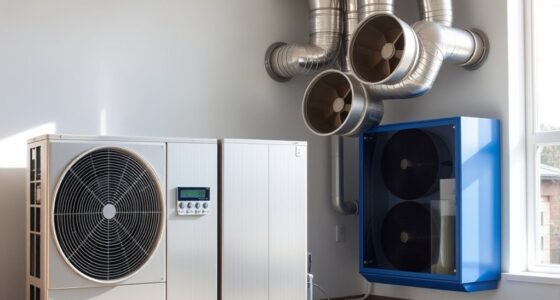
The article describes the competing benefits rather than reporting a completed installation or test. It says central ductwork can support more even temperatures, centralized filtration and whole-house humidity control. Ductless units can offer room-by-room temperature control and installation flexibility, and may allow occupants to heat or cool only the spaces in use. Ductwork takes up space and can add cost; poor design or installation can also reduce system efficiency.
System Choice Shapes Comfort and Cost
For a home with several distinct spaces, the decision affects more than the equipment’s purchase price. A ducted system can distribute conditioned air throughout the house and centralize filtration and humidity management. Individual minisplits instead give occupants separate controls for different rooms, a feature that may suit households whose rooms are used at different times.
The trade-off is especially relevant in a compact, energy-efficient home, where space for ducts and the cost of multiple indoor units can both influence design. Big’s estimate invites comparison, but it does not by itself account for verified installation costs, operating expenses, maintenance or whether the proposed equipment is properly sized. The source does not supply enough information to declare either approach the better choice for this specific house.
Products Worth Considering

Ring Alarm 8-Piece Kit (2nd Gen) Home Security System

Ring Alarm 14-Piece Wireless Security System Kit

Shark PowerDetect Corded Stick Vacuum with HEPA Filtration, Purple (HZ4001AMZ)
As an affiliate, we earn on qualifying purchases.
A North Texas Home Design Debate
The Q&A is part of GreenBuildingAdvisor’s ongoing “Q&A Spotlight” coverage of questions raised by readers and members. In this discussion, Big said an online group responded unanimously in favor of a central ducted system after he shared his original minisplit plan. That reaction is reported as part of the discussion, not as a technical finding or a formal survey.
The article also points readers to an earlier discussion by Allison Bailes comparing single-zone minisplits with multisplit systems, which connect multiple indoor units to one outdoor unit. The current question is different: whether a home designed around several single-zone units would be better served by a central ducted arrangement. The supplied source presents the alternatives and their commonly cited advantages, but it does not include the full eight-point case Big says he is questioning.
““I’ve thought about it a lot, and a ducted system makes even less sense.””
— Big, the homeowner-designer identified in the GreenBuildingAdvisor discussion as “big_o”
Costs and Final System Choice
The provided report does not say which system Big ultimately selects or whether the home has been built. It also does not provide contractor bids, a detailed load calculation, equipment performance data, duct design or an operating-cost comparison. The $500-per-unit estimate is attributed to Big, and it is unclear what equipment, labor or other work it includes.
Although the article identifies potential benefits and drawbacks for each approach, it does not establish how well either would perform in this particular layout. The suitability of individual units, the distribution of heating and cooling, and the value of centralized filtration or humidity control remain unresolved in the supplied material.
Design Details Will Decide
The source does not announce a decision or a scheduled follow-up. Any comparison for this project would need to be based on the home’s design and verified proposals for both approaches, including equipment sizing, installation scope and the planned treatment of the conditioned attic.
Readers should treat the Q&A as a discussion of competing design considerations, not a final recommendation. The next confirmed development, if reported, would be Big’s system choice or additional project details that clarify the costs and expected performance.
Key Questions
What systems is the homeowner comparing?
He is weighing central ducted HVAC against four single-zone minisplit heat pumps, planned for the bedrooms, living room and conditioned attic.
How large is the planned home?
The design includes a 1,200-square-foot, two-bedroom house and an additional 800-square-foot conditioned attic in North Texas.
How much does the homeowner estimate the minisplits would cost?
Big estimates about $500 to purchase and install each of four 9,000-Btu-per-hour units. The source does not independently verify the figure or describe what it includes.
Does the report recommend ducted HVAC or minisplits?
No. It describes potential advantages and drawbacks of both approaches but does not report a final decision or establish which system would perform better in this home.
Source: greenbuildingadvisor.com