
TL;DR

Get backup power and energy gear delivered free with Prime
- Fast, free delivery on millions of items
- Prime Video, Amazon Music and more included
- Member-only deals all year
A report by Ideal Home examines whether adding insulation can make existing homes warmer and reduce heating costs. Experts say the benefits depend on the building and insulation type; poorly chosen work in older homes can create moisture and damp problems.
Retrofitting insulation may help householders keep homes warmer and limit heat loss, but the right approach depends on how a property was built, according to experts quoted by Ideal Home and guidance on window insulation products. The report warns that older homes can develop damp problems if insulation reduces their ability to manage moisture or is installed without adequate ventilation.
The report presents insulation as one way to retain heat rather than relying as heavily on central heating. It does not provide measured savings, energy-bill comparisons or a guarantee that a particular retrofit will pay for itself. The financial benefit for an individual household will depend on the home and the work carried out.
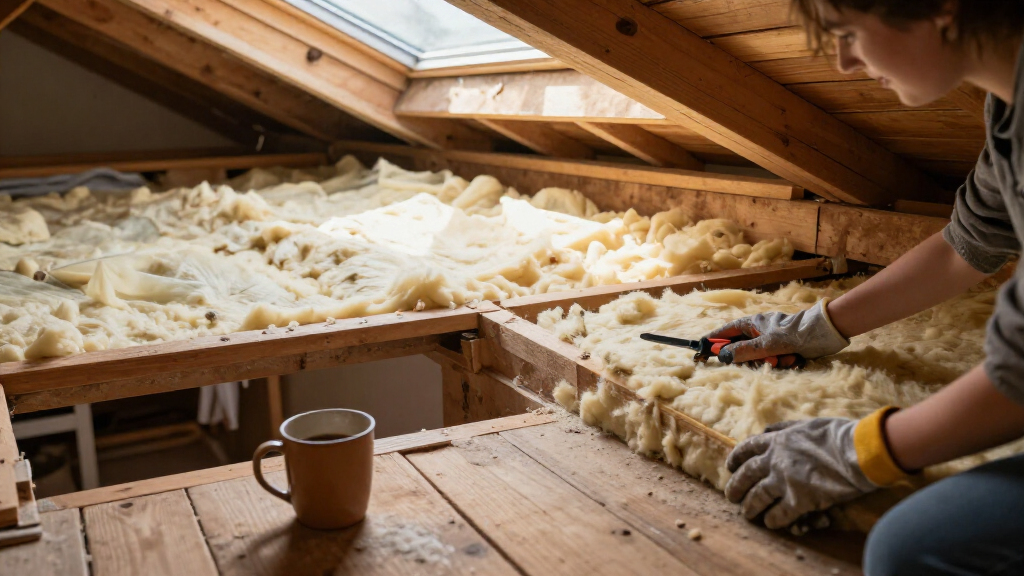
Loft insulation is described as a relatively straightforward option. Cavity-wall insulation may also be completed quickly when a property is suitable: Becky Lane, CEO of Furbnow, says the work typically takes two to four hours, with residents able to remain at home and no internal disruption. Martyn Fowler, founder of Elite Renewables, says installers generally drill small holes in external walls, inject insulation and repair the holes afterwards.
Internal wall insulation is more disruptive, Fowler says, because work can require moving radiators, sockets, skirting boards and sometimes kitchen fittings, followed by finishing and redecorating. External wall insulation keeps most work outside but can require scaffolding and adjustments to downpipes, window surrounds and other fittings. The report says floor insulation depends greatly on access beneath the floor.
How Insulation Affects Bills and Comfort
For households facing heating costs, reducing heat escaping from a home could help maintain comfort while using less heating. But the report does not establish how much any household would save, or how long savings might take to offset installation costs. Its central point is that insulation is not a single, uniform job: property suitability, installation costs and disruption all shape the likely result.
Choosing the wrong system can also create costs beyond the installation itself. Lane and Fowler warn that moisture trapped in an older building can lead to damp. That risk means a warmer home should not be treated as the only measure of success; the building’s ventilation and ability to dry out also matter. Homeowners considering work should first establish the wall construction and seek advice appropriate to the property.
Products Worth Considering

Philips Hue Festavia Outdoor Globe String Lights, 8 Bulbs, 22 ft

Philips Hue Play Gradient 65-Inch Smart TV Light Strip

Dyson Airsmooth Styling Brush
As an affiliate, we earn on qualifying purchases.
Why Older Walls Need Different Treatment
The report distinguishes between older solid-wall homes and properties with cavity walls. Lane says traditional buildings, particularly those built before the 1930s, were often designed to allow moisture to pass through walls. Making such a home more airtight without adequate ventilation can trap moisture, she says.
Fowler similarly cautions that a Victorian solid-wall house behaves differently from a 1930s cavity-wall property. Older solid walls may need to dry out, and the wrong insulation material or poor installation could contribute to damp. By contrast, cavity-wall insulation may be less disruptive, but Fowler says installers should check the wall’s condition, exposure to driving rain and whether the cavity is clear before filling it.
These are expert observations reported by Ideal Home, not a property-specific assessment or a detailed installation specification. The source material does not set out costs, expected energy savings or a complete suitability checklist.
“With an old house you really need to understand what you’re dealing with before you start.”
— Becky Lane, CEO of Furbnow
Savings and Suitability Still Vary
The report supplies no quantified bill savings, upfront prices, payback periods or energy-use data. It therefore cannot show whether insulation would lower costs for a specific household or how quickly any savings might cover the work.
Suitability also remains property-specific. The source does not identify a particular home being assessed, recommend a named insulation product or provide a full survey. Risks depend on factors including wall construction, moisture behaviour, ventilation and, for cavity walls, the cavity’s condition and exposure to driving rain. The report’s claims about installation times and disruption are expert estimates, not a guarantee for every project.
Assess the Home Before Work
The report advises householders to understand how their home is built before choosing insulation. In practice, the next step is to establish whether walls are solid or cavity construction and to assess moisture and ventilation considerations before agreeing to work. Any proposed method should be matched to the property rather than selected on the assumption that all insulation systems are interchangeable.
Householders should also compare the disruption of each option: loft or suitable cavity work may be less intrusive, while internal wall insulation can affect rooms and fittings, and external insulation may require scaffolding. The source gives no timetable for further findings or policy action; decisions about a particular home remain dependent on an appropriate property assessment.
Key Questions
Can retrofitting insulation reduce heating bills?
It may reduce heat loss and heating demand, but the report provides no measured savings or payback figures. Results depend on the property, the insulation work and household heating use.
Is insulation suitable for every older home?
No single method suits every building. Experts quoted by Ideal Home say older solid-wall homes need careful attention to moisture and ventilation, while cavity-wall properties require checks on the cavity and wall condition.
Which insulation work is least disruptive?
The report describes loft insulation as relatively straightforward. Suitable cavity-wall insulation may take two to four hours, according to Becky Lane, while internal wall insulation can involve moving fittings and redecorating.
Can insulation cause damp?
It can contribute to moisture problems if the system is unsuitable or if a home is made more airtight without adequate ventilation, experts quoted in the report warn. The risk depends on the building and the installation.
What should homeowners check before insulating?
Find out how the walls are constructed and consider moisture management and ventilation. For cavity walls, Martyn Fowler says condition, exposure to driving rain and whether the cavity is clear should be checked before insulation is added.
Source: idealhome.co.uk