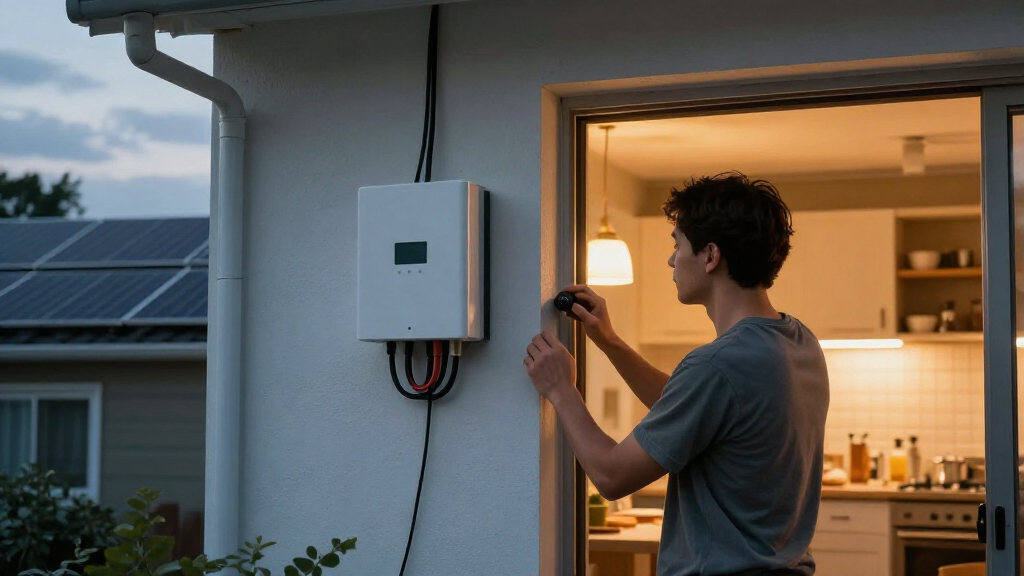

The ECO-WORTHY 48V Home Backup Power System pairs 10,240Wh of LiFePO4 storage with a 10,000W inverter, putting it in the larger, more installation-oriented end of home backup systems. Its strongest case is the ability to supply both 120V and 240V loads while leaving room to expand. The tradeoff is that this is a substantial system to plan around: its components ship separately, and the stated battery capacity does not promise a particular runtime without knowing the loads. It is worth considering for homeowners building a serious backup setup, but a smaller or more integrated power station is a better fit for occasional, portable use.

Get backup power and energy gear delivered free with Prime
- Fast, free delivery on millions of items
- Prime Video, Amazon Music and more included
- Member-only deals all year

ECO-WORTHY 48V Home Backup Power System with 10,240Wh Batter
- ✔ Battery chemistry: LiFePO4
- ✔ Battery configuration: Two 51.2V 100Ah batteries
- ✔ Total battery capacity: 10,240Wh
Why This Product Stands Out
The notable feature here is the scale of the inverter and battery combination. Many portable backup products prioritize convenience and serve a few appliances or electronics. ECO-WORTHY instead pairs 10.24kWh of stored energy with a 10kW inverter, a configuration aimed at buyers who want to plan around multiple household loads. That makes it a stronger candidate for a fixed backup project than a small emergency power box, while also raising the stakes for correct system sizing and installation.
Split-phase 120V/240V output is a practical differentiator for homes with compatible 240V equipment. It gives the system a broader role than a 120V-only unit, though the specification alone does not establish which circuits it can support in a particular home. Buyers need to match their loads and intended wiring to the system. Expansion through parallel inverters and batteries can also support a staged build, but that flexibility matters most to people with a clear reason to add capacity later.
Within the home backup category, this is a high-capacity, installation-oriented package, not a compact entry-level choice. The dual MPPT controllers and communications options add useful system-building tools, but they will not make the batteries last longer by themselves. The central question is whether the buyer needs this level of output, 240V capability, and potential expansion; if not, a smaller integrated station is likely easier to live with.
Key Features and What They Mean
Two 51.2V 100Ah LiFePO4 batteries provide 10,240Wh of stated capacity. That reserve can keep essential household loads running longer than a small portable battery, which benefits homeowners preparing for outages that may last beyond a few hours. LiFePO4 chemistry is commonly chosen for stationary storage, where rechargeable batteries are expected to serve as part of an ongoing backup setup. Capacity alone does not establish runtime: lights, networking equipment, and a cycling refrigerator draw energy differently from heating or cooking appliances, so estimate essential use before treating this system as whole-home coverage.
The 10,000W pure sine wave inverter converts battery power to AC output, with a stated 20,000W peak rating. Its continuous output can let a planned system serve a broader mix of household appliances at once than a low-wattage portable unit. That is useful for homeowners who want several selected circuits available during an outage, rather than power for just a few small devices. Pure sine wave output provides the kind of AC waveform many household devices are designed to use. The peak rating covers brief surges, so check sustained appliance draw when deciding what can run together.
120V single-phase and 120V/240V split-phase output can support backup plans involving standard household loads and compatible 240V equipment. This matters to owners whose essential loads include equipment that a 120V-only unit cannot serve. The output specification does not determine which circuits can be backed up in a particular home; wiring, transfer arrangements, and appliance requirements still need to be matched by a qualified installer.
The two independent MPPT controllers manage solar panels through two separately controlled input paths. For buyers with panel groups on different roof faces or orientations, that setup can make it easier to incorporate both groups into one system. The included charger is specified at up to 200A, while Bluetooth, Wi-Fi, and CAN/RS485 provide ways to monitor the system and communicate with compatible equipment. These tools are most useful to owners integrating solar or coordinating a more involved installation: monitoring can help them check system status, and communications can link compatible components. They matter less to someone who will not use solar or review system data.
Parallel expansion gives owners the option to add compatible batteries or inverters as their backup needs grow. A homeowner building in stages may be able to increase storage or output without replacing the initial system. The benefit depends on component compatibility and whether the installation can support the added capacity, so expansion is most valuable when there is a realistic plan to use it.
Performance and Real-World Use
In day-to-day use, the system’s appeal depends on a well-defined backup plan. The battery reserve can support essential circuits for a useful period, but no fixed runtime follows from the capacity figure alone. A refrigerator cycling intermittently, lights, and network equipment create a different load profile from cooking appliances, heating, or other high-draw equipment. Buyers should prioritize what must stay on and estimate both power draw and duration before choosing a system of this size.
Installation and delivery need coordination. Because items ship separately, the complete setup may not be ready at the same time. The dimensions supplied for the system are 20.55 × 17.13 × 5.63 inches, but those numbers do not account for the space needed for safe installation, access, wiring, or any supporting equipment. Plan the placement and electrical configuration before delivery, rather than assuming this behaves like a self-contained unit that can simply be moved from a box to a countertop.
App monitoring and wired communications can make it easier to check battery status or connect compatible equipment, particularly in a more involved installation. They do not remove the need to understand the system or keep an eye on its condition. The listed UL1973 and UL1741 tests are relevant certification signals, though buyers should confirm that the product configuration and installation meet the requirements that apply where they live. For an owner who wants an uncomplicated emergency power source, the overall planning burden is a meaningful downside.
Who Should Buy This
This system makes the most sense for a homeowner planning a stationary backup installation who has identified essential circuits, needs both 120V and 240V capability, and expects the 10kW inverter and 10.24kWh battery to serve a defined set of loads. It also suits buyers who already plan to integrate solar or who value the option to expand a compatible system later. A willingness to coordinate installation, delivery, and load planning is part of the fit.
Who Should Skip This
Skip it if the goal is portable power for camping, a few electronics, or brief outages, or if you do not have room for a larger fixed setup. Buyers who want one compact unit with minimal planning may prefer a smaller station such as the Jackery Solar Generator 1000 V2 with 200W Solar Panel. If you need an all-in-one station with more emphasis on portability and simpler operation, compare the Jackery HomePower 3600 Plus. Buyers seeking a more integrated high-capacity system should also compare the EF ECOFLOW DELTA Pro Ultra 12kWh Power Station with Extra Battery.
Value for Money
This system is worth its price for buyers who will use its high output, split-phase capability, and expansion options in a planned home backup installation. Those features can make the package a good fit for households backing up a defined mix of 120V and 240V loads, especially when solar integration or future growth is part of the plan. For buyers who only need phones, a router, and a few lights during short outages, it is unlikely to be worth paying for this level of capacity and installation complexity. No price is provided here, so the judgment is about fit rather than a specific deal: compare the full system and installed cost with alternatives that meet the same electrical needs. It earns its premium when those capabilities solve a real backup requirement; otherwise, a smaller integrated station is better value.
ECO-WORTHY 48V Home Backup Power System with 10,240Wh Batter
The notable feature here is the scale of the inverter and battery combination . Many portable backup products prioritize convenience and serve a few appliances or electronics.
Pros:
- 10,240Wh of LiFePO4 storage gives a meaningful reserve for household backup, though runtime still depends on which appliances are connected and how long they run.
- 10,000W continuous inverter output can accommodate a wider combination of loads than compact power stations, making it more suited to a home system than device charging alone.
- 120V and 240V output provides flexibility for standard household circuits and compatible 240V equipment, an important distinction when planning backup beyond small electronics.
- Dual independent MPPT controllers can manage two solar input paths, which may help when a solar array is divided into separate groups or orientations.
- Monitoring and expansion options include app connectivity, CAN/RS485 communication, and support for parallel systems, giving an installer or technically confident owner more ways to manage and grow the setup.
Cons:
- Separate shipments mean the batteries and inverter may not arrive together, so installation timing can be less convenient than with a single packaged unit.
- Installation space and system planning are real requirements; this is not a grab-and-go backup source that fits easily into a small storage area.
- 10,240Wh does not guarantee a full day of backup; high-power appliances can use stored energy quickly, and the available runtime depends on actual loads and system configuration.
- Setup is less straightforward than a portable power station, particularly for buyers who need split-phase wiring, solar integration, or communications with other equipment.
Best for: Homeowners planning a fixed backup system for a mix of 120V and 240V household loads, with room to expand later.
Not ideal for: People who want a compact, ready-to-use portable power station or only need to charge a few devices during short outages.
Bottom line: The ECO-WORTHY 48V Home Backup Power System is worth considering for a planned home installation where 10,000W output, 10,240Wh of storage, and 120V/240V flexibility are useful.
Frequently Asked Questions
How long can the 10,240Wh battery run a home?
There is no single runtime because it depends on the power draw and duty cycle of the connected appliances. Add up the essential loads you expect to use, then compare that total with the system’s usable capacity and inverter limits. High-draw equipment can consume stored energy quickly.
Can this system power 240V appliances?
It is specified for 120V/240V split-phase output, so it may suit compatible 240V loads. Confirm the appliance requirements and the home’s wiring and transfer setup before installation; the output specification alone does not determine which circuits can be backed up.
Is it a portable power station?
It is better viewed as a larger home backup system than a grab-and-go station. The battery and inverter components ship separately, and buyers should plan installation space and electrical configuration. For camping or occasional device charging, a smaller integrated unit is usually a better match.
Does it include everything needed for solar backup?
The stated package includes dual MPPT controllers and a battery charger, but the available product facts do not specify every component or installation item required for a complete solar setup. Confirm panel compatibility, included hardware, wiring, and any transfer equipment before ordering.
When should I choose a different system?
Choose a smaller Jackery option if your needs center on portable or modest backup power. Compare the ECOFLOW DELTA Pro Ultra if you want to evaluate another high-capacity station. The ECO-WORTHY is the better fit when its split-phase output, system-building features, and expansion path match a planned installation.
Final Thoughts
The ECO-WORTHY 48V Home Backup Power System is worth considering for a planned home installation where 10,000W output, 10,240Wh of storage, and 120V/240V flexibility are useful. Its expansion and monitoring options add value for owners building a broader energy setup. The decision is less attractive if you need simple, portable backup or have not worked out which loads must stay powered. Size the system around those loads, allow for the separate shipments and installation footprint, and compare integrated alternatives if convenience matters more than system-building flexibility.