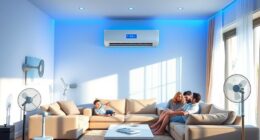
To supplement air conditioning, you can incorporate passive cooling techniques like natural ventilation, shading devices, and evaporative cooling. Cross-ventilation through operable windows, shaded overhangs, and proper material choice help reduce indoor heat and improve airflow. Water features and cool walls also lower temperatures naturally, especially in dry climates. Combining these strategies with your existing system can boost comfort and reduce energy use. Keep exploring to discover how these methods can enhance your space even further.
Key Takeaways
- Incorporate natural ventilation strategies like cross-breezes and stack effect vents to reduce cooling loads.
- Use shading devices such as overhangs and awnings to minimize heat gain and enhance outdoor comfort.
- Install evaporative cooling features like water fountains or wet walls in dry climates to cool indoor air naturally.
- Choose lightweight, breathable building materials to improve heat dissipation and indoor airflow.
- Design with well-placed operable windows and vents to optimize airflow and promote passive cooling alongside air conditioning.
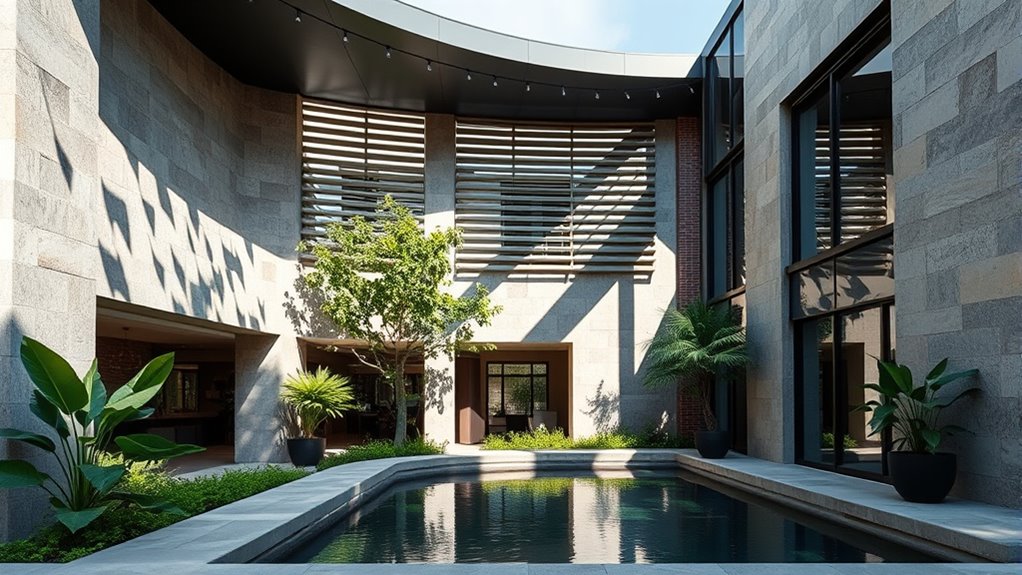
Passive cooling techniques offer an energy-efficient way to keep buildings comfortable without relying on air conditioning. By harnessing natural elements and design strategies, you can reduce your dependence on energy-intensive cooling systems while maintaining a pleasant indoor environment. Evaporative cooling is one such technique that leverages the natural process of water evaporation to lower indoor temperatures. When warm, dry air passes over a wetted surface or evaporates water within a space, it absorbs heat, creating a cooling effect. Installing evaporative coolers or simply using water features like fountains or wet walls can help you achieve this effect, especially in arid climates. These methods are not only energy-efficient but also environmentally friendly, providing a sustainable alternative to traditional air conditioning units.
Natural ventilation is another essential passive cooling strategy that relies on the movement of air through a building to regulate temperature and improve indoor air quality. You can maximize natural ventilation by designing or modifying your space to promote airflow. This involves positioning windows, vents, and openings strategically to create a cross-breeze that carries away hot air and replaces it with cooler outdoor air. Consider using operable windows on opposite sides of a room or building to facilitate this airflow, especially during the cooler parts of the day. In addition, incorporating features like vents at different heights can take advantage of the stack effect, where warm air rises and escapes, pulling in cooler air from below. Proper shading, such as overhangs or shading devices, can prevent heat gain from direct sunlight, maintaining cooler indoor temperatures and enhancing the effectiveness of natural ventilation. Additionally, understanding the importance of indoor air quality can help you optimize passive cooling strategies for a healthier indoor environment.
Both evaporative cooling and natural ventilation work best when integrated into the building design from the outset. You should focus on creating a well-ventilated, shaded environment that encourages airflow and minimizes heat gain. Using lightweight, breathable materials for walls and roofing can also help keep indoor temperatures down. If you’re in a climate with high humidity, evaporative cooling might be less effective, but combining it with other passive techniques can still provide considerable comfort. Remember, the goal is to work with nature rather than against it—by doing so, you can markedly cut energy costs, reduce environmental impact, and create a healthier living or working space. With thoughtful planning and design, passive cooling methods like evaporative cooling and natural ventilation can serve as powerful tools to supplement your air conditioning, making your space more sustainable and comfortable year-round.
Frequently Asked Questions
How Effective Are Passive Cooling Methods in Extremely Hot Climates?
Passive cooling methods can be quite effective in extremely hot climates if you use thermal insulation to block heat transfer and incorporate evaporative cooling techniques. These methods help reduce indoor temperatures naturally, lowering your reliance on air conditioning. By designing your home with proper insulation and ventilation, you can stay cooler and more comfortable during heatwaves, making passive cooling a practical supplement even in the hottest environments.
Can Passive Cooling Techniques Be Combined With Renewable Energy Systems?
Think of passive cooling techniques as your home’s silent guardian, easily teaming up with renewable energy systems. You can incorporate solar integration to power fans or shading devices, while thermal storage stores coolness for later use. This combo reduces energy bills and environmental impact, just like a well-coordinated symphony. By combining these methods, you maximize efficiency and sustainability, creating a comfortable, eco-friendly living space that works harmoniously with nature.
What Are the Initial Costs of Implementing Passive Cooling Strategies?
You’ll find that the initial investment for passive cooling strategies varies, depending on your home’s design and materials. Typically, you’ll need to conduct a cost analysis to weigh expenses like shading, insulation, and natural ventilation systems. While upfront costs can be moderate, they often lead to significant energy savings over time. Investing in passive cooling is a smart move that reduces your reliance on air conditioning and lowers long-term utility bills.
How Do Passive Cooling Methods Impact Indoor Air Quality?
You might think passive cooling harms indoor air quality, but it actually often improves it. By enhancing indoor ventilation, passive methods promote fresh air exchange, reducing pollutants and humidity. Properly designed, they also support air filtration, decreasing dust and allergens. This creates a healthier environment without relying solely on mechanical systems. In fact, integrating passive cooling can boost indoor air quality, making your space more comfortable and safe.
Are There Any Maintenance Requirements for Passive Cooling Features?
You should perform regular maintenance on passive cooling features, focusing on maintenance frequency and cleaning procedures. For example, clean shading devices like blinds or awnings monthly to prevent dust buildup and guarantee they function properly. Ventilation openings need quarterly inspections to clear debris and maintain airflow. Keep in mind that consistent upkeep helps optimize their effectiveness, reduces potential issues, and prolongs their lifespan, making your passive cooling system more reliable and energy-efficient.
Conclusion
By embracing passive cooling techniques, you turn your home into a breath of fresh air, naturally fighting the heat without relying solely on air conditioning. Think of these methods as a gentle breeze guiding you through the hottest days, making your space more comfortable and eco-friendly. When you harness the power of design and nature, you create a sanctuary that stays cool as a cucumber, proving that sometimes, the simplest solutions are the coolest.