SEER, or Seasonal Energy Efficiency Ratio, measures how efficiently your air conditioner or heat pump performs over an entire cooling season. A higher SEER means your system uses less electricity to provide the same cooling, saving you money on energy bills while being better for the environment. It considers real-world conditions like temperature and humidity, making it a useful guide for choosing the right unit. Keep going to understand how SEER can impact your comfort and savings.
Key Takeaways
- SEER measures the seasonal cooling efficiency of air conditioners and heat pumps, with higher ratings indicating better energy use.
- It accounts for varying weather conditions, showing real-world performance during peak summer months.
- Higher SEER units typically cost more upfront but save money through lower energy bills over time.
- Proper installation and regular maintenance are essential to ensure actual efficiency matches the rated SEER.
- Selecting a higher SEER system benefits long-term savings and environmental sustainability, especially in hot climates.
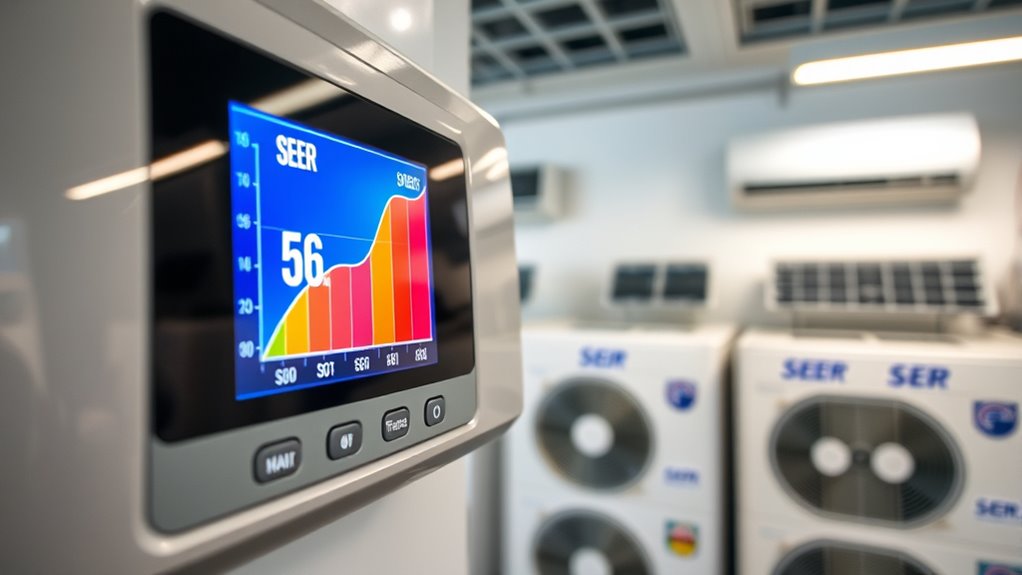
Have you ever wondered what the SEER rating on your air conditioner really signifies? It’s a key number that indicates how energy-efficient your cooling system is. SEER, which stands for Seasonal Energy Efficiency Ratio, measures how well your unit performs over an entire cooling season, rather than just in ideal conditions. The higher the SEER, the more efficiently your air conditioner or heat pump uses electricity to cool your home. This means you’ll spend less on energy bills while still enjoying effective cooling. By understanding SEER ratings, you can make smarter choices when purchasing new equipment, ensuring you get a system that balances performance and cost savings.
SEER ratings are primarily about seasonal performance, which refers to how well your unit operates across different weather conditions throughout the year. Unlike a simple efficiency rating that might focus on a single set of conditions, SEER takes into account variations in temperature, humidity, and usage patterns. This makes it a reliable indicator of how your system will perform in real-world scenarios. For example, a unit with a high SEER rating will run more efficiently during peak summer months when cooling demands are highest. It will also operate more cost-effectively over time, helping you maintain comfort without draining your energy budget. Understanding the performance factors influencing SEER ratings can help you select the most suitable system for your needs.
When evaluating different models, keep in mind that higher SEER ratings generally come with a higher initial cost. However, the long-term savings on energy bills can offset this upfront expense. If you live in a hot climate or plan to keep your system for many years, opting for a higher SEER can be a wise investment. It’ll ensure your home stays comfortable while maximizing energy efficiency throughout the season. Remember, the actual performance of your air conditioner or heat pump also depends on proper maintenance, installation, and usage habits. But a higher SEER rating guarantees that the equipment is designed to be more efficient at converting electricity into cooling power over the entire season.

Westinghouse Natural Gas Tankless Water Heater Indoor Installation Max 7.9 GPM 180,000 BTU, WIFI Enable Temp Self Modulating Non Condensing High Efficiency for House or Commercial, APOLO Performance
【On-Demand Efficiency】 Westinghouse tankless water heater works only needed, saving energy and costs. Compact yet powerful for whole-home...
As an affiliate, we earn on qualifying purchases.
Frequently Asked Questions
How Does SEER Affect Annual Energy Costs?
A higher SEER rating directly lowers your annual energy costs because it improves energy efficiency, leading to significant energy savings over time. When comparing costs, a more efficient system reduces your electricity bills, making it a worthwhile investment. By choosing an air conditioner or heat pump with a higher SEER, you’ll benefit from better energy savings and a clearer cost comparison, ultimately saving you money each year.
Are Higher SEER Ratings Always More Cost-Effective?
Higher SEER ratings generally lead to greater cost savings over time because they use less energy, which also reduces your environmental impact. However, the initial purchase price is higher, so you should consider long-term savings versus upfront costs. If you plan to stay in your home long-term, investing in a higher SEER unit makes sense for both cost efficiency and environmental benefits.
Do SEER Ratings Vary by Climate Zone?
Did you know that SEER ratings can vary by up to 20% across different climate zones? Yes, they do. In warmer regions, units often have higher SEER ratings to maximize efficiency, while cooler zones may have lower ratings because cooling demand is less intense. So, your climate zone influences efficiency variation, making it important to choose an air conditioner or heat pump suited to your area’s specific temperature patterns.
Can Older Units Be Upgraded to Higher SEER?
Yes, you can upgrade older units to higher SEER ratings through retrofitting units or upgrading components. You might replace the compressor, evaporator coil, or add a variable speed blower to improve efficiency. While retrofitting can boost your system’s SEER, it may not always be cost-effective compared to installing a new, high-efficiency unit. Consult a professional to assess whether retrofitting makes sense for your specific equipment.
How Does SEER Compare to Other Efficiency Metrics?
SEER compares to other efficiency metrics by showing how well your cooling system uses energy over a season, making it a key indicator of efficiency. Industry standards set minimum SEER levels, but higher ratings mean better performance and lower energy costs. Unlike COP or EER, which measure efficiency at specific conditions, SEER offers a complete efficiency comparison over an entire cooling season, helping you choose a more energy-efficient unit.

SNDOAS Natural Gas Tankless Water Heater,4.75GPM 102,000BTU Instant Hot Water Heater,18L Forced Exhaust Gas Water Heater Indoor Wall-Mount with LED Display,On Demand Water Heater for Home
【Powerful & Instant Hot Water On Demand】Experience endless hot water for your entire home with this 4.75 GPM...
As an affiliate, we earn on qualifying purchases.
Conclusion
Now that you understand SEER ratings, you’ll see the big picture when choosing an air conditioner or heat pump. Remember, a higher SEER isn’t just a number but a sign of efficiency that can save you money in the long run. Don’t put all your eggs in one basket—consider your climate and needs. With this knowledge, you’re better equipped to make a smart decision and get the most bang for your buck.

FOGATTI Natural Gas Tankless Water Heater Indoor - Max 7.5 GPM 170,000 BTU, CSA Certified Compact Design On Demand Instant Hot Water Heater - Instagas Comfort 170S Series
Powerhouse Performance: The FOGATTI tankless water heater takes up a third of the space of traditional tank heaters...
As an affiliate, we earn on qualifying purchases.

APUS Tankless Water Heater Propane Gas, Up to 4.42 GPM, Indoor Hot Water Heater, 95,000 BTU on Demand Instant Hot Water Heaters with Smart Digital Display, Space Gray
Powerful & High-Capacity: This high-performance propane tankless water heater delivers 95,000 BTU heating capacity with 4.42GPM high flow...
As an affiliate, we earn on qualifying purchases.