TL;DR

Get backup power and energy gear delivered free with Prime
- Fast, free delivery on millions of items
- Prime Video, Amazon Music and more included
- Member-only deals all year
Panelists at the California Energy Storage Alliance’s annual conference discussed how to respond to community concerns about grid-scale batteries. They pointed to an Electric Power Research Institute estimate of a 98% decline in lithium-ion battery failures from 2018 to 2025, while stressing that fire incidents, local trust and emergency preparation remain central to project debates.
Energy officials, industry representatives and clean-energy advocates discussed how to address Californians’ concerns about grid-scale batteries at the California Energy Storage Alliance’s annual conference in Sacramento, pointing to safety data and trusted local messengers as public opposition grows. The discussion comes as California’s battery storage buildout faces resistance after several fires, while the state needs substantially more storage capacity to meet its climate goals.
California has about 21 gigawatts of grid battery capacity, according to the source report, making it the state with the second-most capacity after Texas. The report says the state will need to more than double its current capacity by 2045 to meet its climate goals. At the same time, some city governments are seeking to limit or ban new projects, reflecting concerns heightened by high-profile incidents.
Among the incidents cited were fires at the Moss Landing battery facility and a smaller system in La Verne. The Moss Landing installation caught fire in January 2025, prompting evacuations of nearby residents, and ignited again the month before the report. A fire at the La Verne system also led to evacuations. The report does not provide casualty figures or a full account of the causes of either incident.
California Energy Commissioner Noemí Gallardo cited Electric Power Research Institute data indicating a 98% decrease in lithium-ion grid battery failures worldwide from 2018 to 2025. That is the reported change over the stated period; the source does not provide the underlying failure counts or a detailed definition of failure. Gallardo said alarming fire images can outweigh statistical evidence in public discussion, and argued that current utility-scale projects are built to higher safety standards than older installations.
Safety Concerns Shape Storage Plans
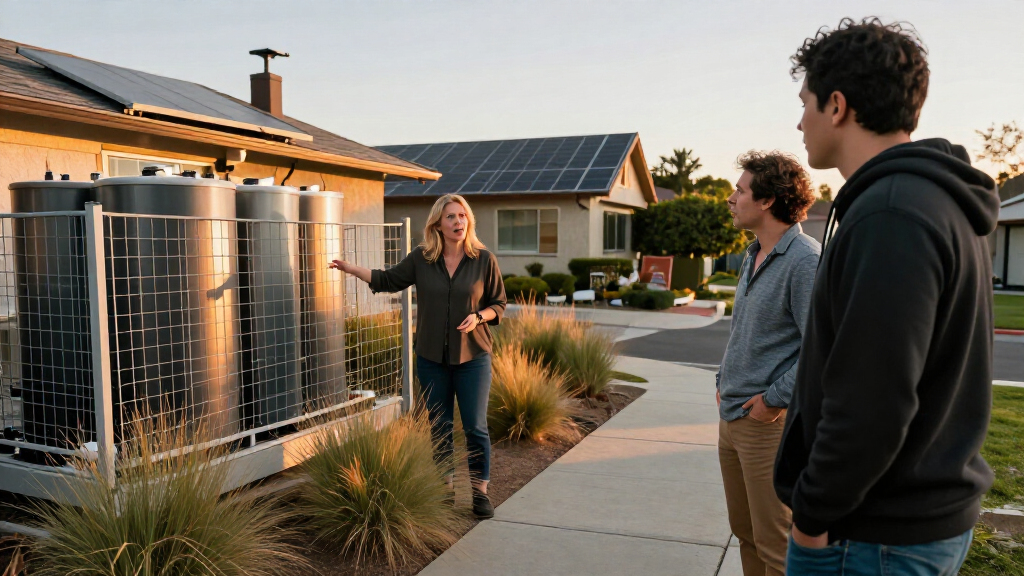
The dispute affects whether and where California can add the storage capacity needed to support its energy goals. Battery projects can store electricity for later use, but communities asked to host them may focus on fire risks, evacuation plans and the credibility of assurances from developers and officials. The conference discussion suggests that project safety is not only a technical issue: public confidence and meaningful local engagement can also influence whether proposals advance.
The panelists did not argue that one statistic should settle those concerns. Instead, they described practical steps, including involving state agencies in reviews, preparing local fire departments and identifying messengers residents trust. Those steps may help communities evaluate specific projects, but they do not guarantee local approval. The source report also describes projects that have faced sharply different responses, underscoring that acceptance can depend on location and the details of the proposal.
As an affiliate, we earn on qualifying purchases.
Fires and New Review Rules
Recent battery fires have become a focal point for public concern in California. The report says the Moss Landing incidents and the La Verne fire prompted evacuations, while images and claims circulated widely on social media. It says misinformation is also present online, but does not identify particular examples or quantify its reach. That distinction matters: documented incidents can raise legitimate questions about emergency readiness even as unsupported claims complicate public discussion.
California strengthened battery fire-safety rules and practices last year, according to the report. The state also offers an Opt-In Certification program through the California Energy Commission for energy projects seeking expedited state review. The 400-megawatt Potentia-Viridi project in rural Alameda County received CEC approval earlier this year under that program. The report says state involvement can bring technical expertise into permitting and coordination with local fire agencies, though some residents have concerns about state intervention.
Community views vary by project. A proposed 320-megawatt battery project in San Diego County was abandoned after neighbors protested, the report says. By contrast, the Potentia-Viridi developer said county officials welcomed working with the state commission. These examples do not establish a general pattern of approval or opposition, but show why local context and emergency planning figure prominently in project discussions.
“Even though there is a minority of people saying batteries are not safe, this data shows they are.”
— Noemí Gallardo, California Energy Commissioner
fire-resistant battery storage system
As an affiliate, we earn on qualifying purchases.
As an affiliate, we earn on qualifying purchases.
What Safety Data Does Not Show
The reported 98% decline in failures is attributed to the Electric Power Research Institute, but the source report does not detail the dataset, the definition of a failure, or how the estimate accounts for the number and size of batteries installed over time. It should not be read as proof that any individual project is risk-free. The report also does not establish the causes of the cited fires or provide a complete comparison of older and newer system designs.
It remains unclear how many local governments are considering restrictions, how California’s strengthened rules are being applied across projects, or whether the state review process will change community opposition. The report notes that one developer abandoned a San Diego County proposal and that some residents have objected to state involvement, but it gives no broader totals. Public support for any specific project will depend on details that are not resolved by statewide data alone.
emergency fire safety kit for batteries
As an affiliate, we earn on qualifying purchases.
As an affiliate, we earn on qualifying purchases.
Permits and Local Preparedness
The immediate next steps are project-specific: agencies and developers will need to address safety questions during permitting, explain how emergency response would work and coordinate with local fire services. The conference participants’ suggestions point to using first responders and state technical agencies as sources of information, while also communicating the potential clean-energy benefits of storage. Those are recommendations from panelists, not a new statewide mandate announced at the conference.
The source report identifies no new deadline or policy decision resulting from the panel. The continuing test will be whether proposed projects can demonstrate credible safety planning and earn local confidence as California pursues more storage. Further details on project approvals, fire-safety requirements and community responses are needed to judge how that effort is progressing.
battery storage fire suppression system
As an affiliate, we earn on qualifying purchases.
As an affiliate, we earn on qualifying purchases.
Key Questions
What was discussed at the Sacramento conference?
Panelists discussed ways to address public concerns about grid-scale batteries, including sharing safety data, involving state agencies and engaging trusted local messengers such as first responders.
What does the reported 98% decline in battery failures mean?
The Electric Power Research Institute data cited by California Energy Commissioner Noemí Gallardo reports a 98% decrease in lithium-ion grid battery failures worldwide from 2018 to 2025. The source report does not provide the underlying counts or explain how the data account for changes in installed capacity.
Why are some Californians concerned about battery projects?
Fires at Moss Landing and a smaller battery system in La Verne led to evacuations, according to the report. Those incidents have contributed to public concern about fire risks and emergency response.
How can residents find out how a proposed project would handle emergencies?
Panelists said state agencies and local first responders can contribute safety expertise and help prepare for emergencies. Residents can ask project developers and permitting agencies about fire prevention, emergency plans and coordination with local fire departments.
Did the conference announce a new battery safety rule?
The report does not describe a new rule announced at the conference. It says California strengthened battery fire-safety rules and practices last year and discusses the state Energy Commission’s existing Opt-In Certification program.
Source: rss
Halloween Picks
halloween
As an affiliate, we earn on qualifying purchases.