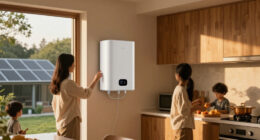
Using a whole-house fan for night cooling is often more effective than AC because it’s energy-efficient and promotes natural airflow. When you open windows at night, cooler outdoor air can quickly replace warm indoor air, helping you save on electricity bills and reduce your carbon footprint. Proper insulation and solar power can boost this process even more. Keep in mind, the right timing and ventilation strategies can make your home stay cool longer—find out how to optimize your approach for best results.

Get backup power and energy gear delivered free — and shop member deals
- Fast, free delivery on millions of items
- Access to Prime Big Deal Days deals on October 6–7
- Prime Video, Amazon Music and more included
Key Takeaways
- Whole-house fans use natural night-time cooling, reducing energy consumption compared to energy-intensive air conditioning.
- They effectively lower indoor temperatures by exhausting warm air and introducing cooler outdoor air.
- Solar-powered fans enhance efficiency, minimizing reliance on grid electricity during peak sunlight hours.
- Proper insulation and sealing prolong cool indoor temperatures, maximizing the fan’s cooling benefits.
- They promote better indoor air quality and are more environmentally friendly than traditional AC units.
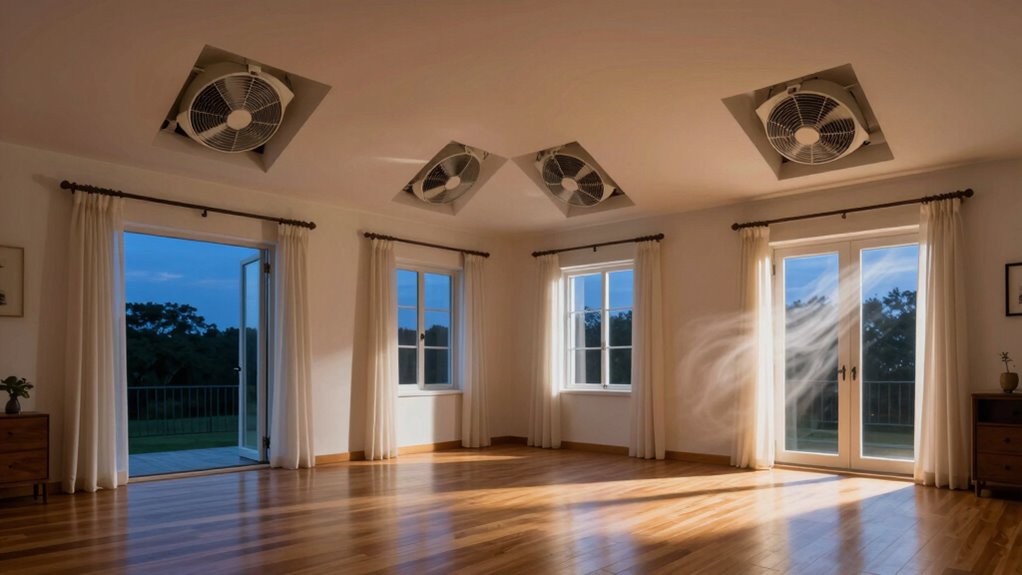
When the outdoor temperatures drop at night, you can take advantage of this cooling trend to lower your home’s indoor temperature efficiently. Whole-house fans are a smart way to harness this natural cooling, especially when compared to air conditioning. Instead of relying solely on power-hungry units, you open your windows and turn on the fan, creating a rush of cool air that replaces the warm indoor air. This method is not only energy-efficient but also helps you cut down on electricity bills. Plus, it’s better for the environment, especially if you incorporate solar energy to power your fan. Using solar panels to run your whole-house fan means you’re leveraging renewable energy, reducing your carbon footprint, and saving money over time.
This approach works best in the evening when outdoor air is cooler than indoor air. As you run the fan, it pulls in fresh, cooler air through open windows and exhausts warmer indoor air through attic vents or other openings. This process lowers indoor temperatures quickly without the need for air conditioning. To maximize efficiency, you should also invest in good insulation techniques. Proper insulation keeps the cool air inside longer, preventing heat from seeping in through walls, windows, or ceilings. By sealing leaks and adding insulation, you maintain a more stable indoor temperature, making the night-cooling trick even more effective.
You might think that using a whole-house fan is just about airflow, but it’s also about smart planning. If you have solar energy, you can run your fan during peak sunlight hours or whenever the sun is shining brightly, ensuring that your energy consumption remains minimal. This synergy between solar energy and insulation techniques enhances your home’s overall energy efficiency. When the outside air cools down in the evening, the fan works best, especially if your home is well-insulated, because it keeps the cool air inside longer.
Compared to traditional air conditioning, whole-house fans are more sustainable and cost-effective. They don’t rely on refrigerants or complex systems, making them easier to maintain. Plus, they promote better indoor air quality by continuously exchanging indoor and outdoor air. When you combine night-time ventilation with effective insulation and solar energy, you create a natural, eco-friendly cooling cycle that’s not only better for your wallet but also for the planet. This simple trick allows you to enjoy a comfortable home without sacrificing efficiency or sustainability.
As an affiliate, we earn on qualifying purchases.
Frequently Asked Questions
How Much Can I Save on Energy Costs Using This Method?
You can save up to 30-50% on energy costs by using this method, as it substantially boosts energy efficiency compared to traditional air conditioning. By relying on a whole-house fan at night, you reduce the need for expensive cooling during peak hours, lowering your utility bills. This cost savings adds up over time, making it a smart, eco-friendly choice that keeps your home comfortable without breaking the bank.
Is This Trick Effective in Extremely Hot Climates?
Sure, in extremely hot climates, this trick’s like using an umbrella in a furnace—ineffective. You’ll need alternative climate solutions like advanced insulation strategies or high-efficiency cooling systems. Relying solely on a whole-house fan won’t cut it when temperatures soar. Think of it as trying to cool a desert with a fan—no matter how much you wish, it just won’t work. So, invest in better insulation and modern cooling options.
What Are the Best Times to Operate the Whole-House Fan?
You should operate your whole-house fan during early mornings and evenings when outdoor temperatures are cooler, maximizing ventilation efficiency. This timing helps remove indoor heat effectively without increasing noise disruptions during the day. Avoid running the fan during peak hot hours, as it becomes less effective and may generate more noise, disturbing your comfort. Proper timing ensures ideal cooling and keeps noise considerations minimal, saving energy and enhancing your home’s comfort.
Can This Method Reduce Indoor Humidity Levels?
Yes, using a whole-house fan can help reduce indoor humidity levels, especially when operated at night. As it pulls in cooler, drier outdoor air, it aids in humidity control and improves indoor air quality. To maximize this benefit, make certain you use the fan when outside air is drier than indoor air, typically during late evenings or early mornings, creating a more comfortable and healthier environment inside your home.
Are There Any Safety Concerns With Nighttime Venting?
There are safety concerns with nighttime venting, mainly related to fire hazards and ventilation safety. You should guarantee your vents are properly installed and maintained to prevent any risk of fire or smoke intrusion. Avoid leaving vents open during windy conditions or storms, which could cause debris or embers to enter. Regularly check your system and follow safety guidelines to keep your home safe while benefiting from natural cooling.
As an affiliate, we earn on qualifying purchases.
Conclusion
So, next time the heat lingers, don’t rush to turn on the AC just yet. Instead, try this simple night-cooling trick with your whole-house fan. It might just surprise you how much cooler your home stays without cranking up the energy bill. But here’s the catch—you’ll have to stay up just a little later to see the full effect. Will this secret change your summer routine? Only one way to find out.
As an affiliate, we earn on qualifying purchases.
As an affiliate, we earn on qualifying purchases.
Halloween Picks
halloween
As an affiliate, we earn on qualifying purchases.