
Basements need a different comfort strategy because they’re typically cooler and damper than the rest of your home. Excess moisture can lead to mold, musty odors, and wood rot, making standard insulation and heating alone ineffective. To keep your basement cozy and healthy, you need tailored solutions like moisture-resistant insulation and humidity control. Implementing these strategies creates a warmer, healthier space—and if you keep exploring, you’ll discover even more ways to make it comfortable.

Get backup power and energy gear delivered free with Prime
- Fast, free delivery on millions of items
- Prime Video, Amazon Music and more included
- Member-only deals all year
Key Takeaways
- Basements are inherently cooler and damper, requiring specialized insulation and moisture control strategies.
- Excess moisture promotes mold, mildew, and wood rot, demanding targeted humidity management.
- Standard insulation and heating are ineffective alone due to basement dampness and temperature fluctuations.
- Maintaining optimal humidity (30-50%) with dehumidifiers and ventilation is crucial for comfort.
- Combining proper insulation with humidity control creates a stable, healthy, and inviting basement environment.
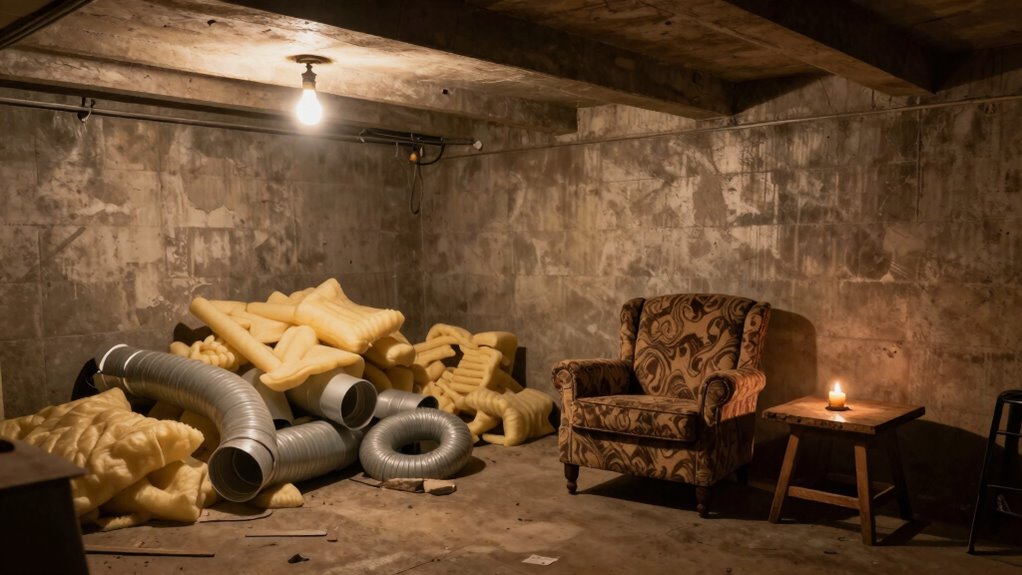
Are your basement’s cold floors and dampness making it uncomfortable? If so, you’re not alone. Basements tend to be cooler and damper than other parts of your home, which can lead to issues like mold, mildew, and overall discomfort. To create a more livable space, you need a unique comfort strategy tailored specifically for this area. Unlike upstairs rooms, basements require a focused approach on humidity control and insulation techniques to address their inherent challenges.
Humidity control is essential because excess moisture not only makes your basement feel damp and chilly but also promotes mold growth and wood rot. You should consider installing a reliable dehumidifier that maintains ideal humidity levels—preferably between 30% and 50%. This keeps the air dry enough to prevent mold while still feeling comfortable. Ventilation also plays a critical role; ensure your basement has proper airflow by adding exhaust fans or improving existing vents. Proper humidity management helps you achieve a healthier environment and prevents the musty smell that often plagues basements. Additionally, trusted resources can guide you in choosing the most effective dehumidification system for your space. Incorporating humidity monitoring devices can further help you maintain optimal conditions effortlessly. Paying attention to air circulation can also significantly improve air quality and comfort in your basement.
In addition to humidity control, insulation techniques are indispensable for keeping your basement warm and energy-efficient. Traditional insulation methods, such as fiberglass batts, can be ineffective if not installed correctly, especially in damp environments. You might want to explore spray foam insulation, which provides a better moisture barrier and superior R-value—meaning it resists heat transfer more effectively. Installing rigid foam board insulation on basement walls can also shield against cold drafts and help stabilize the temperature. Remember, the goal is to prevent cold air infiltration and reduce heat loss, making your basement feel warmer and more inviting. Incorporating moisture-resistant insulation materials can further enhance these benefits by addressing moisture issues directly.
Combining effective humidity control with proper insulation techniques creates a dual-layer defense against the common problems faced by basement spaces. It helps you maintain consistent temperatures, reduces dampness, and prevents mold growth. This tailored approach is essential because the basement’s environment differs markedly from the rest of your house. You can’t just rely on conventional heating or insulation methods used upstairs; instead, you need strategies that specifically address moisture and temperature regulation**** in such a humid, cool environment.
Ultimately, transforming your basement into a comfortable space demands understanding its unique needs. By focusing on humidity control and applying the right insulation techniques, you’ll not only improve comfort but also protect your home’s foundation and air quality. This specialized approach guarantees your basement becomes a welcoming extension of your living space rather than an uncomfortable, neglected corner of your house.
basement dehumidifier with humidity control
As an affiliate, we earn on qualifying purchases.
As an affiliate, we earn on qualifying purchases.
Frequently Asked Questions
How Do Moisture Issues Affect Basement Comfort?
Moisture issues directly impact your basement comfort by causing dampness, which makes the space feel chilly and uncomfortable. Poor moisture control leads to higher humidity, making it harder to regulate temperature. Additionally, excess moisture promotes mold growth, risking health and damaging your belongings. By focusing on effective moisture control and mold prevention, you create a drier, healthier environment that’s more comfortable, ensuring your basement remains a pleasant, usable space.
What Are the Best Heating Options for Basements?
You should consider zoned heating options like a ductless mini-split or baseboard heaters for your basement. These allow you to control the basement temperature independently, guaranteeing comfort without wasting energy. Installing separate heating zones helps maintain consistent warmth, especially during colder months. Choose systems that suit your space and budget, and make sure they’re properly insulated to maximize efficiency and maintain a cozy, stable environment throughout the year.
How Can I Improve Insulation in My Basement?
Imagine wrapping your basement in a warm, cozy blanket. To improve insulation, start by upgrading your basement flooring with plush carpets or insulated tiles that trap heat. Then, focus on wall finishing—add foam panels or insulated drywall to block drafts. These steps create a snug environment, keeping warmth in and cold out, transforming your basement into a comfortable retreat you’ll enjoy year-round.
Are Dehumidifiers Necessary for Basement Comfort?
Yes, dehumidifiers are essential for basement comfort. They help control moisture, reducing mold risk and preventing musty odors that can ruin your basement aesthetics. With lower humidity, your space becomes more inviting and suitable for storage solutions, protecting your belongings from dampness. Using a dehumidifier also enhances overall comfort, making your basement a more pleasant, functional area for relaxation or work.
How Do I Prevent Cold Drafts in My Basement?
Think of cold drafts as ghostly whispers sneaking in. To stop them, seal gaps around windows and doors, and add draft stoppers. Improve basement lighting with warm, layered fixtures to create a cozy atmosphere. Use clever storage solutions to keep clutter away from drafts, reducing airflow. Insulating pipes and walls also helps, making your basement feel warmer and more inviting despite those pesky chilly breezes.
moisture-resistant basement insulation
As an affiliate, we earn on qualifying purchases.
As an affiliate, we earn on qualifying purchases.
Conclusion
Remember, basements require a unique comfort strategy because they’re often 10-15 degrees cooler than the rest of your home. Implementing targeted insulation and smart climate controls can make a huge difference. Did you know that properly designed basement heating systems can reduce energy costs by up to 30%? By customizing your approach, you’ll enjoy a cozy, inviting space year-round, proving that a tailored comfort plan isn’t just smart—it’s essential for your basement’s usability and comfort.
basement ventilation exhaust fan
As an affiliate, we earn on qualifying purchases.
As an affiliate, we earn on qualifying purchases.
rigid foam board insulation for basement walls
As an affiliate, we earn on qualifying purchases.
As an affiliate, we earn on qualifying purchases.
Halloween Picks
halloween
As an affiliate, we earn on qualifying purchases.