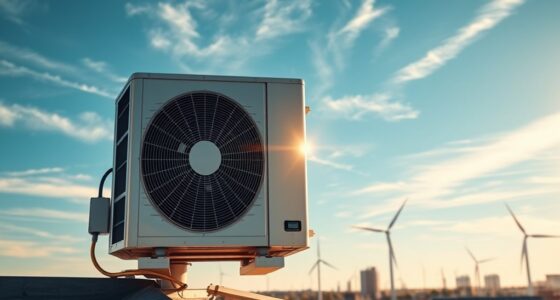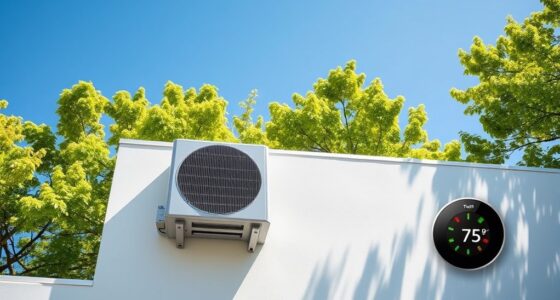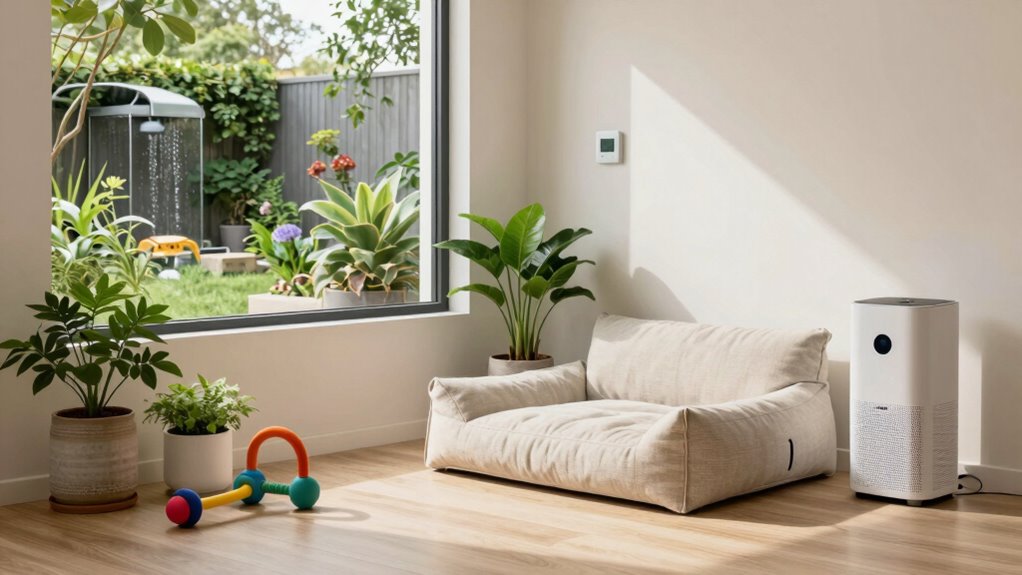

To build a better climate plan for pet rooms, focus on improving air quality with HEPA air purifiers and natural ventilation, while avoiding smoking and strong chemicals. Maintain consistent temperature with thermostats and space heaters, and keep humidity between 30-50% using humidifiers or dehumidifiers. Guarantee proper cleaning, fresh water, and secure windows to prevent escapes. Managing these elements creates a safe, comfortable environment—learn more to optimize your pet’s space further.

Get backup power and energy gear delivered free — and shop member deals
- Fast, free delivery on millions of items
- Access to Prime Big Deal Days deals on October 6–7
- Prime Video, Amazon Music and more included
Key Takeaways
- Incorporate air purifiers with HEPA filters and ensure proper ventilation to improve indoor air quality.
- Maintain optimal humidity levels (30-50%) with humidifiers or dehumidifiers to prevent respiratory issues.
- Use thermostats and safety space heaters to regulate temperature and prevent overheating or cold stress.
- Secure windows and vents to prevent pet escapes while allowing fresh air exchange.
- Keep the environment clean, dust-free, and free of chemicals to reduce pollutants and microplastic accumulation.
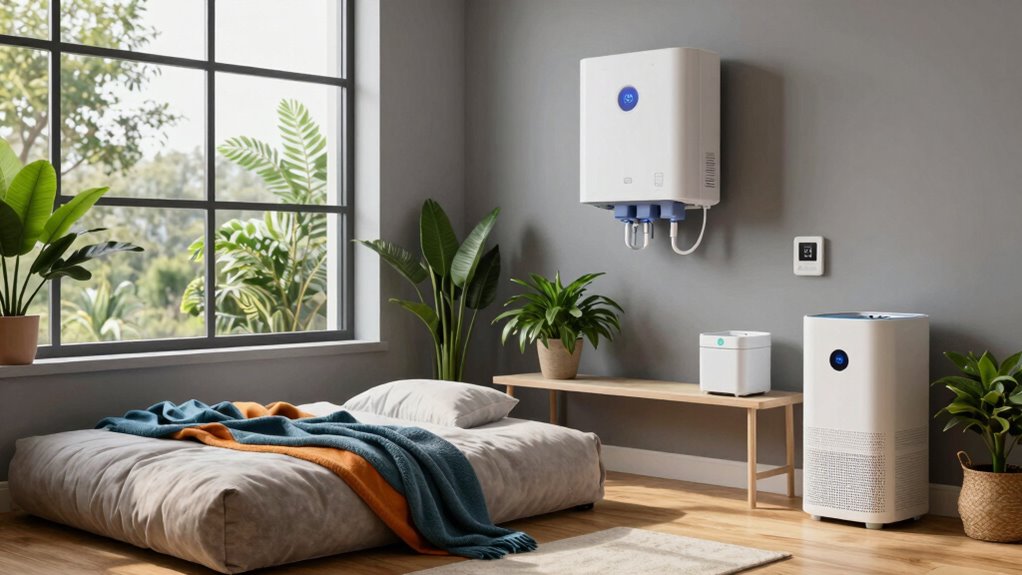
Creating a comfortable and healthy environment for your pets starts with developing a well-thought-out climate plan for their rooms. This plan is essential to guarantee their well-being, comfort, and safety. A key aspect of this is focusing on indoor air quality, which directly impacts your pet’s health. Poor air quality can lead to respiratory issues, allergies, or other health problems. To improve indoor air quality, consider using air purifiers with HEPA filters that can remove pet dander, dust, and other airborne pollutants. Regularly ventilate the room by opening windows when weather permits, allowing fresh air to circulate and reducing the buildup of stale air. Avoid smoking or using strong chemicals inside the room, as these can worsen indoor air quality and harm your pet’s respiratory system. Proper DIY tools and safety tips can help you set up ventilation systems or air purifiers safely and effectively. Additionally, incorporating natural ventilation strategies can further enhance air exchange without relying solely on mechanical systems. Ensuring proper air filtration is also important, as it helps reduce microplastics and other pollutants that can negatively affect your pet’s respiratory health.
Alongside maintaining good air quality, implementing pet safety measures is essential. Secure windows and vents to prevent accidental escapes or falls, especially if your pet is curious or energetic. Keep cords, plants, and small objects out of reach to avoid choking hazards or injuries. If your pet has specific health needs, such as allergies or sensitivities, choose cleaning products and furniture that are non-toxic and hypoallergenic. Temperature regulation is another critical safety measure; keep the room’s temperature consistent and suitable for your pet’s breed and age. Use thermostats or space heaters with safety features to prevent overheating or burns. Avoid placing water bowls or food dishes near heating sources that could cause spills or accidents. Maintaining proper indoor air quality also involves reducing the presence of microplastics in dust and other pollutants, which can impact your pet’s respiratory health.
You should also pay attention to humidity levels, as too much moisture can promote mold growth and respiratory issues, while too little can dry out your pet’s skin and nasal passages. Maintain humidity between 30 and 50 percent using a humidifier or dehumidifier, depending on your climate. Consistently monitor these conditions with a reliable thermometer and hygrometer, adjusting as needed. Additionally, create a designated space that’s quiet and comfortable, away from drafts or noisy areas, so your pet can relax and feel secure. Proper bedding, regular cleaning, and fresh water are basic but indispensable pet safety measures that complement your climate plan.
As an affiliate, we earn on qualifying purchases.
Frequently Asked Questions
How Often Should I Monitor My Pet Room’s Climate?
You should monitor your pet room’s climate daily to guarantee ideal humidity levels and prevent temperature fluctuations. Regular checks help you catch any sudden changes that could stress or harm your pet. Use a reliable thermometer and hygrometer, and adjust heating or cooling as needed. Consistent monitoring ensures your pet stays comfortable and safe, especially during seasonal shifts or extreme weather conditions.
What Are the Best Materials to Insulate Pet Rooms?
Think of your pet’s room as a cozy cocoon, where insulation materials act like a warm embrace. Opt for foam board, spray foam, or fiberglass batt insulation to guarantee effective temperature regulation. These materials create a barrier against harsh outside elements, helping maintain a stable climate. Their high R-value keeps the environment comfortable, making your pet feel secure and cared for, no matter the weather outside.
Can Plants Improve My Pet Room’s Air Quality?
Yes, plants can improve your pet room’s air quality. Choose air purifying plants like snake plants, pothos, or peace lilies, which naturally filter toxins and increase oxygen levels. Proper plant selection is key, as some plants may be toxic to pets. Regularly care for your plants, keep them healthy, and guarantee they’re non-toxic, creating a cleaner, fresher environment for your pets to thrive in.
How Do I Prevent Drafts in Pet Rooms?
You might think drafts add freshness, but they actually make your pet room uncomfortable. To prevent drafts, use draft proofing techniques like sealing gaps around windows and doors with weatherstripping or caulk. Insulation options such as foam panels or draft stoppers help keep the air steady. By securing your space, you guarantee your pets stay cozy and safe, proving that a little effort creates a much warmer, more inviting environment.
What Are Signs of Poor Climate Control in Pet Rooms?
Signs of poor climate control in pet rooms include excessive humidity, which can cause mold or discomfort, and poor ventilation, leading to stale air and odors. You might notice your pets sneezing or scratching more, or observe dampness and mold growth. If ventilation systems aren’t working well, airflow will be limited, and humidity control will be ineffective. Regularly check these factors to guarantee a healthy, comfortable environment for your pets.
As an affiliate, we earn on qualifying purchases.
Conclusion
By prioritizing ventilation, regulating temperature, and maintaining cleanliness, you create a healthier environment for your pets. By monitoring humidity, adjusting lighting, and ensuring comfort, you foster well-being and happiness. By planning proactively, implementing consistently, and caring passionately, you build a climate that nurtures and protects. Remember, a better climate plan isn’t just about conditions—it’s about caring deeply, acting intentionally, and creating a space where your pets truly thrive. Your efforts make all the difference.
room thermostat with safety features
As an affiliate, we earn on qualifying purchases.
As an affiliate, we earn on qualifying purchases.
As an affiliate, we earn on qualifying purchases.
Fall Picks
fall essentials
As an affiliate, we earn on qualifying purchases.