To control indoor comfort in open-plan homes, you should combine smart thermostats with airflow management and air quality monitors. Use smart devices to adapt temperature settings to your schedule and preferences while ensuring consistent temperature throughout the space. Incorporate fans or ventilation to prevent hot or cold spots and monitor air quality to maintain a healthy environment. If you want to discover effective strategies and tools for ideal comfort, you’ll find helpful insights ahead.
Key Takeaways
- Implement smart thermostats that adapt to schedules and enable zone-specific or uniform temperature control.
- Use air quality monitors to detect pollutants and allergens, ensuring a healthier indoor environment.
- Utilize airflow devices like ceiling fans and ducted ventilation to distribute air evenly and prevent hot or cold spots.
- Integrate smart technology with airflow management to optimize temperature regulation and energy efficiency.
- Regularly monitor and adjust indoor air quality and airflow settings for sustained comfort and health.
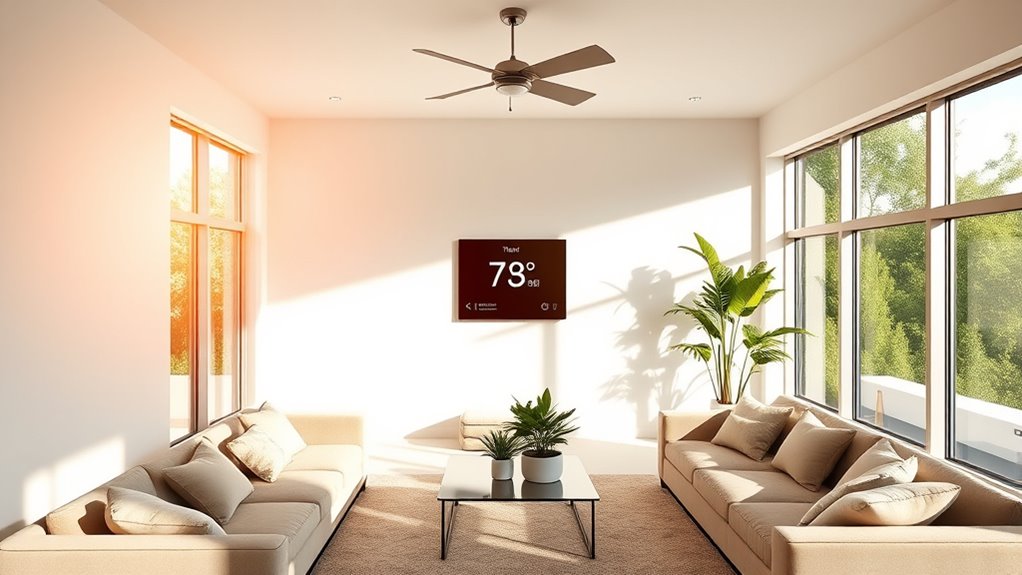
Have you ever wondered how to create the perfect indoor environment? When it comes to open-plan homes, maintaining comfort can be tricky. The key lies in smart technology that adapts to your needs, especially smart thermostats and air quality systems. A smart thermostat isn’t just for saving energy; it’s a essential tool for controlling temperature across large, open spaces. Unlike traditional thermostats, these devices learn your schedule and preferences, adjusting the heating or cooling automatically. With a smart thermostat, you can set different zones or have the system maintain a consistent temperature throughout the entire space. Some models even allow you to control the temperature remotely via smartphone, so you can warm up or cool down your home before you even walk in. This level of control guarantees everyone in the open-plan area remains comfortable without wasting energy.
Air quality plays a critical role in indoor comfort, especially in open spaces where pollutants and allergens can circulate freely. You might not realize it, but poor air quality can lead to discomfort, allergies, or even health issues. To combat this, consider integrating air purifiers or ventilation systems that monitor and improve air quality. These systems can filter out dust, pet dander, pollen, or volatile organic compounds, creating a fresher and healthier environment. Many air quality monitors can connect with your smart home system, providing real-time data and alerts if levels drop or pollutants increase. This way, you’re always aware of what’s circulating in your home and can take action promptly.
In open-plan homes, managing airflow is also essential. Using ceiling fans or ducted ventilation can help circulate air evenly, preventing hot or cold spots. When combined with a smart thermostat, these fans can be scheduled or controlled remotely, ensuring perfect comfort at all times. For example, on a hot day, you can activate ceiling fans through your smartphone to boost cooling efforts, reducing the load on your HVAC system. Similarly, during colder months, strategic airflow helps distribute warm air more effectively, making the entire space comfortable without overworking your heating system.
Ultimately, controlling indoor comfort in open-plan homes involves a combination of smart technology and thoughtful airflow management. By investing in a smart thermostat, you gain precise temperature control, while focusing on air quality guarantees a healthier environment. Together, these elements help you create a space that feels comfortable, healthy, and energy-efficient—no matter how large or open your living area is. Staying proactive with these tools means you’ll enjoy a consistently comfortable home that adapts seamlessly to your lifestyle.

Amazon Smart Thermostat – Save money and energy – Works with Alexa and Ring – C-wire required
Smart upgrade – Amazon Smart Thermostat is an easy way to switch from a traditional thermostat and help…
As an affiliate, we earn on qualifying purchases.
As an affiliate, we earn on qualifying purchases.
Frequently Asked Questions
How Can I Prevent Drafts in Open-Plan Spaces?
To prevent drafts in open-plan spaces, focus on effective airflow management and draft proofing. Seal gaps around windows, doors, and vents with weatherstripping or caulk. Use draft stoppers on door bottoms and add thick curtains or fabric panels to reduce air leaks. Consider installing vent covers or adjusting vents to control airflow, ensuring warm or cool air stays where you want it, making your space more comfortable and energy-efficient.
What Are the Best Zoning Options for Open-Plan Homes?
Imagine your open-plan space as a flowing river needing gentle dams. Zoning solutions act like these dams, guiding airflow management to create distinct comfort zones. You can use sliding doors, smart vents, or curtains to divide areas without sacrificing openness. This way, you control temperature and airflow, ensuring each zone feels cozy and energy-efficient. With effective zoning, your home becomes a harmonious landscape of comfort.
How Do Humidity Levels Affect Overall Comfort?
Humidity levels directly impact your comfort, making you feel too hot, cold, or clammy. Proper humidity regulation ensures moisture control, preventing excess dampness or dryness that can cause discomfort and health issues. Maintaining balanced humidity helps you breathe easier and keeps your home feeling more pleasant. Use dehumidifiers or humidifiers as needed, and guarantee good ventilation, to keep moisture levels in check for ideal indoor comfort.
Can Smart Technology Improve Climate Control Efficiency?
Yes, smart technology can improve climate control efficiency. Smart sensors detect temperature and humidity changes in real-time, allowing your HVAC system to adjust automatically. This targeted approach reduces energy waste and enhances comfort. By optimizing settings based on current conditions, you save energy and money while maintaining a consistent indoor climate. Embracing smart technology makes managing your open-plan home’s environment more effective and effortless.
What Is the Optimal Temperature Range for Open-Plan Areas?
Ever wondered what the perfect temperature is for open-plan spaces? Ideally, keep it between 68-72°F (20-22°C). You’ll want good thermal insulation and efficient air circulation to maintain this range comfortably. Don’t forget, open-plan areas benefit from adjustable vents and smart thermostats that adapt to your needs. This way, you guarantee consistent comfort, no matter how many people are in the room or how the weather changes outside.

Air Quality Monitor Indoor, 10 in 1 Portable Smartair Quality Tester for CO2 | CO | TVOC | HCHO | Temp | AQI | PM0.3-1 Detection Hum for Home Cars Plants, Pets, Car, Hotel
【10-in-1 Smart Air Quality Monitor: Your All-Round Environmental Guardian】 This portable intelligent air quality tester delivers ultra-precise multi-gas…
As an affiliate, we earn on qualifying purchases.
As an affiliate, we earn on qualifying purchases.
Conclusion
By now, you see that mastering indoor comfort in open-plan homes isn’t a walk in the park, but with thoughtful zoning, ventilation, and smart devices, you can keep your space just right. Remember, a stitch in time saves nine—addressing issues early prevents bigger problems down the road. With a bit of effort, you’ll create a cozy, balanced environment where comfort and style go hand in hand, making every day a pleasure to be home.

addlon Ceiling Fans with Lights, 42 Inch Low Profile Ceiling Fan with Light and Remote Control, Flush Mount, Reversible, 3CCT, Dimmable, Quiet, Black Small Ceiling Fan for Bedroom Indoor/Outdoor Use
Ceiling Fan with Light: Bring more than just wind and light, but comfort! addlon modern ceiling fan, with…
As an affiliate, we earn on qualifying purchases.
As an affiliate, we earn on qualifying purchases.

LEVOIT Air Purifier for Home Allergens Pet Hair in Bedroom, Covers Up to 1073 ft² by 56W High Torque Motor, AHAM VERIFIDE, 3-in-1 Filter with HEPA Sleep Mode, Remove Dust Smoke Odor, Core300-P, White
WHY CHOOSE AHAM VERIFIDE AIR PURIFIERS: AHAM (Association of Home Appliance Manufacturers) is an ANSI-accredited organization that sets…
As an affiliate, we earn on qualifying purchases.
As an affiliate, we earn on qualifying purchases.