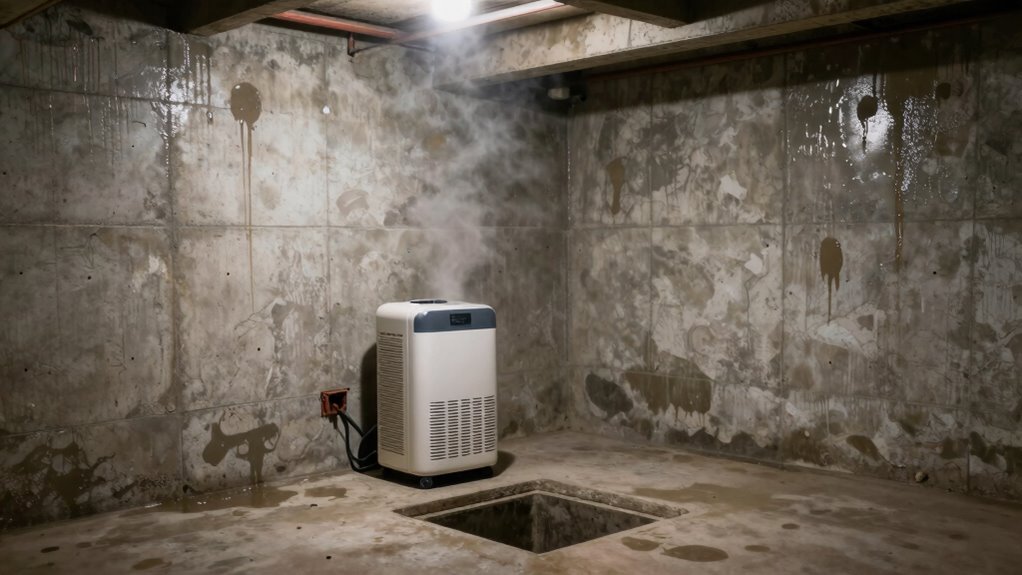

Finished basements need a different moisture strategy because they’re more prone to humidity buildup and water issues due to insulation, drywall, and furnishings that can be damaged by excess moisture. Proper ventilation, humidity control, and moisture management are essential to prevent mold, mildew, and structural damage. Relying only on opening windows isn’t enough—mechanical systems like dehumidifiers and ventilation are vital. Keep exploring to discover how to create a healthier, drier basement environment.
Key Takeaways
- Finished basements are more sensitive to moisture due to furnishings, drywall, and insulation, requiring targeted moisture control measures.
- They lack natural ventilation pathways, making mechanical ventilation essential for effective moisture management.
- Finished spaces are prone to humidity buildup, necessitating stricter humidity levels (30-50%) to prevent mold and damage.
- Exterior drainage and sump pumps are less effective once a basement is finished, increasing reliance on ventilation solutions.
- Proper moisture strategies preserve indoor air quality and protect the integrity of finished materials and furnishings.

Are you tired of battling dampness and musty odors in your basement? If your basement is finished, you’ll need a different moisture strategy to keep it comfortable and dry. Finished spaces are more sensitive to humidity levels because they contain furnishings, drywall, and insulation that can absorb moisture. Proper basement ventilation becomes essential here, as it helps circulate air and prevent excessive humidity from building up. Without good ventilation, moisture can condense on walls and furniture, leading to mold growth and structural damage over time.
Humidity control is key to maintaining a healthy environment in your finished basement. Unlike an unfinished one, where you might rely solely on sump pumps or exterior drainage, a finished basement requires a more nuanced approach. You want to keep humidity levels between 30 and 50 percent, which prevents mold and mildew while avoiding the dryness that can damage wood and other materials. Investing in a quality dehumidifier is often necessary, especially in humid climates, but it’s equally important to ensure proper airflow. This is where basement ventilation systems come into play. Ventilation doesn’t just mean opening windows; it involves mechanical systems that actively exchange indoor air with drier, outside air, or filter and circulate air within the space.
You should also consider integrating ventilation with your overall moisture control plan. For example, exhaust fans in bathrooms or laundry areas help vent moisture outside, preventing it from spreading throughout your basement. If your basement has windows, opening them periodically can assist with air exchange, but this isn’t enough during high humidity seasons or in climates with limited airflow. Mechanical ventilation systems, like HRVs (heat recovery ventilators) or ERVs (energy recovery ventilators), can help maintain consistent air quality and humidity levels without sacrificing energy efficiency. Proper ventilation techniques are essential for controlling moisture levels and ensuring a healthy living environment in your finished basement. Additionally, understanding the role of indoor air quality and how microplastics can accumulate in dust highlights the importance of proper ventilation to reduce airborne contaminants. Regularly inspecting and maintaining your ventilation systems can also prevent issues related to inadequate airflow, such as stale air and increased humidity. Moreover, effective ventilation can contribute to energy efficiency by reducing the load on heating and cooling systems.

2500 Sq.Ft Dehumidifier for Basement with Drain Hose Max 34 Pints, VEAGASO Dehumidifiers for Home, Large Room, Bathroom, Bedroom, Three Modes, Intelligent Humidity Control, Dry Clothes, 24HR Timer
Three Smart Modes Dehumidifiers – Our dehumidifier for basements come with 3 smart modes that make choosing between…
As an affiliate, we earn on qualifying purchases.
As an affiliate, we earn on qualifying purchases.
Frequently Asked Questions
How Often Should I Inspect My Finished Basement for Moisture Issues?
You should inspect your finished basement for moisture issues at least quarterly, especially after heavy rains or snowmelts. Check basement insulation for signs of dampness or mold, and confirm ventilation improvement is effective. Regular inspections help catch leaks or humidity problems early, preventing mold growth and structural damage. Keep an eye on walls, floors, and vents, and address issues promptly to maintain a healthy, dry basement environment.
Are There Specific Materials That Resist Moisture Better in Finished Basements?
You should opt for water-resistant flooring like vinyl, tile, or sealed concrete, which resist moisture better. Additionally, installing a vapor barrier under the flooring helps prevent ground moisture from seeping up, protecting your basement. These materials and techniques work together to keep your finished space dry and mold-free. Regularly check for signs of moisture, and consider these solutions to maintain a healthy, durable basement environment.
Can Indoor Plants Affect Basement Humidity Levels?
Indoor plants can influence basement humidity levels because they release moisture through a process called transpiration. Studies show that plants can increase humidity by 5-10%, which might lead to excess moisture if not managed properly. Proper indoor plant placement helps balance humidity regulation, preventing mold and dampness. To keep your basement dry, avoid overcrowding with plants and monitor humidity levels regularly, ensuring a healthy environment.
What’s the Best Way to Dry Out a Damp Finished Basement?
To dry out your damp finished basement, start by improving basement ventilation to increase air circulation. Place a dehumidifier in a central location, away from walls and furniture, to efficiently remove excess moisture. Run the dehumidifier continuously and keep windows open when possible. Regularly empty the water reservoir and monitor humidity levels with a hygrometer. These steps will help create a drier, healthier space.
How Do I Detect Hidden Mold in My Finished Basement?
To detect hidden mold in your finished basement, start with visual checks for discoloration or musty odors. Use mold testing kits for an initial assessment, but consider hiring professionals for thorough inspection. Pay special attention to areas around hidden leaks, pipes, or behind walls, as these spots are common mold sources. Addressing hidden leaks and conducting regular mold testing help prevent mold growth and keep your basement safe.
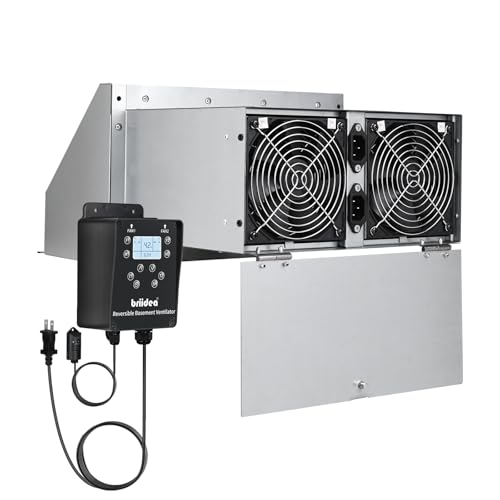
Reversible Basement Ventilation Fan with Dual 100 CFM Fans, Independent Speed Control, Smart Humidity & Timer Modes, Real-Time Display, Fresh Air Supply & Exhaust for Basement, Storeroom, Wine Cellar
REVERSIBLE DUAL FAN DESIGN: Reversible Basement Ventilation Fan features two independently controlled fans with easy reverse function. It…
As an affiliate, we earn on qualifying purchases.
As an affiliate, we earn on qualifying purchases.
Conclusion
Think of your finished basement as a delicate garden—without the right moisture strategy, it can quickly turn into a swamp. By understanding and implementing tailored moisture control, you’re creating a sturdy foundation that keeps water at bay. Just like a gardener tends to their plants, you’re nurturing a space that’s safe, dry, and inviting. With consistent care, your basement stays resilient, transforming from a potential flood zone into a sanctuary of comfort and stability.

Aprilaire V22BEC Energy Recovery Ventilator (ERV), 120 CFM Air Exchanger for Homes up to 6,000 Sq. Ft. – Whole-House Fresh Air Ventilation System (HRV/ERV) with Wall, Ceiling, or Floor Mount Bracket
HEALTHY INDOOR AIR – Replaces stale indoor air with fresh outdoor air to improve Indoor Air Quality throughout…
As an affiliate, we earn on qualifying purchases.
As an affiliate, we earn on qualifying purchases.

Concrobium Moisture Grabbers Pouch, 27.6 oz, Moisture Absorber for Closets, Basements and Bathrooms, Helps Reduce Dampness and Musty Odors, Compact Moisture Control Design
Helps Reduce Excess Moisture and Dampness Designed to absorb excess moisture from the air, helping create a more…
As an affiliate, we earn on qualifying purchases.
As an affiliate, we earn on qualifying purchases.