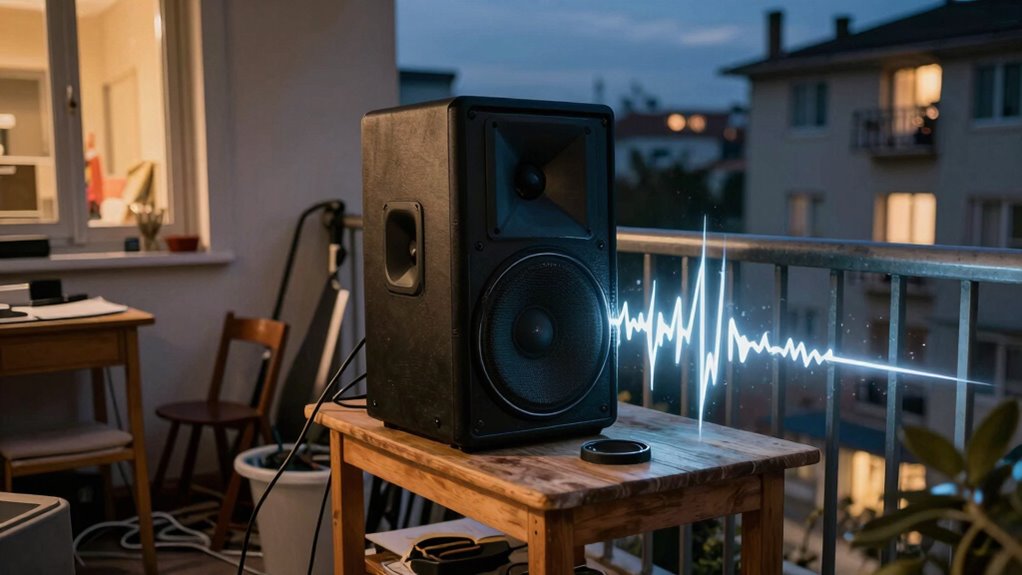
Noise complaints often start because of poor placement of sound sources. When you position speakers, appliances, or furniture carelessly, sound easily escapes through shared walls or windows and amplifies issues. Moving these sources away from boundaries or using soundproofing can considerably reduce disturbances. Understanding how placement affects sound travel helps you control noise better. If you keep exploring, you’ll discover more effective ways to minimize noise issues through strategic positioning and communication.
Key Takeaways
- Poor positioning of sound sources increases sound escape and transmission to neighboring spaces.
- Incorrect placement of appliances and furniture amplifies sound reflection and reverberation.
- Moving noise sources closer to shared boundaries intensifies disturbance and complaints.
- Lack of strategic placement makes soundproofing more difficult and costly later.
- Inadequate communication about placement issues can lead to unresolved noise conflicts.
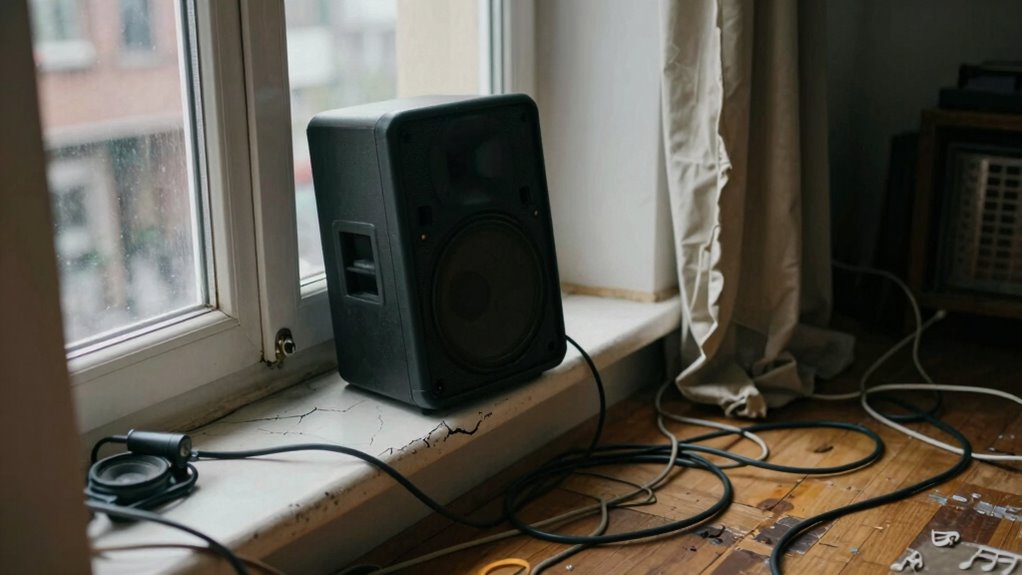
Noise complaints arise, one common culprit is poor placement of sound sources within a building or outdoor space. You might not realize it, but where you position speakers, appliances, or even furniture can considerably influence how much sound escapes and bothers your neighbors. Many people overlook this simple yet essential aspect, leading to unnecessary conflicts and frustration. Understanding how sound travels and applying effective soundproofing techniques can make a real difference. A well-placed sound source minimizes the need for extensive modifications later. Instead of resorting to costly renovations or legal disputes, start by evaluating where noise originates and how it propagates. Moving a loudspeaker away from shared walls or windows, for example, can reduce the impact without much effort. Proper placement also involves considering sound transmission pathways to better control noise spread. Additionally, understanding soundproofing principles can help you implement targeted solutions more effectively. Proper placement is also influenced by the contrast ratio, as higher contrast can make sounds more perceivable or less intrusive depending on positioning. Communication with your neighbors plays a crucial role here. When you recognize that noise issues are linked to placement rather than intent, you foster a collaborative attitude. Explaining your efforts to minimize disturbance shows you’re considerate, which can often resolve complaints amicably. Open neighbor communication also allows you to get insights into specific problem areas—perhaps a certain corner or device causes more noise than you realized. By working together, you can implement targeted soundproofing techniques, such as adding rugs, acoustic panels, or draft stoppers to absorb or block sound at its source. Proper placement isn’t just about physically moving items; it’s about strategic positioning to minimize sound transmission. For example, placing bass-heavy speakers on vibration-isolating pads or away from shared walls can drastically cut down noise levels. Similarly, positioning loud appliances away from common boundaries, or installing sound barriers, can prevent sound from traveling further than you intended. These small adjustments, combined with effective neighbor communication, help create a more peaceful environment. In many cases, the root cause of noise complaints isn’t malicious intent but simple poor placement. When you’re proactive about positioning sound sources thoughtfully, you naturally reduce the need for heavy-handed soundproofing techniques later. Additionally, considering the acoustic environment of your space can help you make more informed placement choices. Being aware of sound reflection within a room can also influence how you position items to minimize noise reverberation. Keeping open lines of communication with neighbors ensures you’re aware of their concerns early, giving you the chance to make adjustments before conflicts escalate. Ultimately, understanding how to properly place sound sources and working collaboratively can turn a noisy situation into a manageable, even harmonious, one.

Focusound 52 Pack Acoustic Foam Panels 1" x 12" x 12" Sound Proof Foam Panles Soundproofing Noise Cancelling Wedge Panels for Home Office Recoding Studio with 300PCS Double-Side Adhesive
Soundproofing – Acoustic foam panels triangular grooves structure for better noise absorption, helps to reduce and absorb unwanted…
As an affiliate, we earn on qualifying purchases.
As an affiliate, we earn on qualifying purchases.
Frequently Asked Questions
How Can I Prevent Noise Issues From Poor Room Layout?
To prevent noise issues from poor room layout, focus on improving your room acoustics and adding soundproofing solutions. Position noisy appliances away from shared walls and bedrooms. Use rugs, curtains, and furniture to absorb sound. Consider installing soundproof panels or seals around doors and windows. By optimizing your space’s layout and incorporating soundproofing, you’ll reduce noise transfer and create a more peaceful environment, preventing future complaints.
Are Certain Building Materials Better at Reducing Noise?
You’ll find that some building materials excel at reducing noise. For example, mass-loaded vinyl blocks up to 30% more sound than standard drywall. Using soundproofing techniques like acoustic insulation and dense materials helps minimize noise transfer. Materials such as concrete, brick, and specially designed acoustic panels are especially effective. Choosing these materials in your construction or renovation can considerably improve soundproofing, making your space quieter and more comfortable.
What Are the Legal Limits for Noise Levels in Apartments?
You need to know that legal noise thresholds for apartments vary by location, but generally, they set specific decibel limits during designated quiet hours. Soundproofing techniques, like adding insulation or acoustic panels, can help you stay within these limits. To avoid complaints, always monitor your noise levels, especially during late hours, and consider implementing soundproofing solutions to guarantee you’re compliant with local laws and respectful to neighbors.
How Do I Communicate Noise Concerns Effectively With Neighbors?
Research suggests that friendly, clear communication fosters better neighbor relations. When addressing noise concerns, approach your neighbor calmly and privately, emphasizing community etiquette and your shared desire for a peaceful environment. Use “I” statements to express how noise impacts you and suggest noise mitigation strategies. This respectful approach encourages cooperation, making it easier to resolve issues without confrontation, and maintains a positive neighborhood atmosphere.
Can Furniture Placement Really Reduce Noise Transmission?
Yes, furniture placement can considerably reduce noise transmission. By strategically positioning large pieces like bookshelves or sofas against shared walls, you create a barrier that absorbs sound. Incorporate soundproofing techniques into your acoustic design, such as adding rugs, curtains, or wall panels, to further dampen noise. Proper furniture placement and these soundproofing elements work together to minimize disturbances, making your space quieter and more comfortable.

Speaker Isolation Pads – 8-Pack 0.75" Platinum Silicone Feet for Speakers, Subwoofers, Turntables – Non-Slip, Vibration Damping Pads with Adhesive – 20 Duro Anti-Vibration Mounts
Optimize Your Stereo Equipment's Sound Quality: Reduce vibration and resonance by up to 95.32% with the help of…
As an affiliate, we earn on qualifying purchases.
As an affiliate, we earn on qualifying purchases.
Conclusion
When you place your speakers or appliances without thought, it’s like planting a pebble in a quiet pond—ripples of noise spread far and wide, disturbing the peace. Your neighbors aren’t mind readers; they feel the vibrations and hear the echoes of poor placement. By choosing better spots, you turn down the volume of conflict, transforming your space into a peaceful haven. Remember, thoughtful placement can keep your home harmonious and your relationships intact.

MAXTID Large Door Draft Stopper for Bottom of Doors 36” Under Door Sweep Noise Blocker Black Gap Stoppers Adjustable Doors Seal Sweep Guard Draft, Window Breeze Stoppers, Home Essentials Gadgets
Large door draft stopper foam is 2 inches in diameter, which is larger than most sellers' foam and…
As an affiliate, we earn on qualifying purchases.
As an affiliate, we earn on qualifying purchases.
Focusound 52 Pack Acoustic Foam Panels 1" x 12" x 12" Sound Proof Foam Panles Soundproofing Noise Cancelling Wedge Panels for Home Office Recoding Studio with 300PCS Double-Side Adhesive
Soundproofing – Acoustic foam panels triangular grooves structure for better noise absorption, helps to reduce and absorb unwanted…
As an affiliate, we earn on qualifying purchases.
As an affiliate, we earn on qualifying purchases.