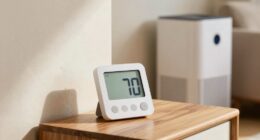
Monitoring your indoor climate with data loggers and sensors helps you keep environments healthy, comfortable, and energy-efficient. These devices track humidity, temperature, and airflow in real-time, allowing you to make instant adjustments or automate systems like humidifiers and fans. They also help identify issues early, such as leaks or poor ventilation. By using these tools, you guarantee ideal air quality and comfort. Keep exploring to discover how to implement and maximize these monitoring solutions effectively.
Key Takeaways
- Data loggers and sensors provide real-time insights into indoor temperature, humidity, and air quality for effective climate management.
- Automated sensors enable active adjustment of ventilation, humidification, and dehumidification systems to maintain optimal conditions.
- Continuous monitoring helps identify airflow restrictions, ventilation issues, and pollutant buildup early.
- Precise data collection supports energy-efficient operation of HVAC and climate control systems.
- Monitoring tools improve indoor comfort, health, and air quality by enabling proactive environmental adjustments.
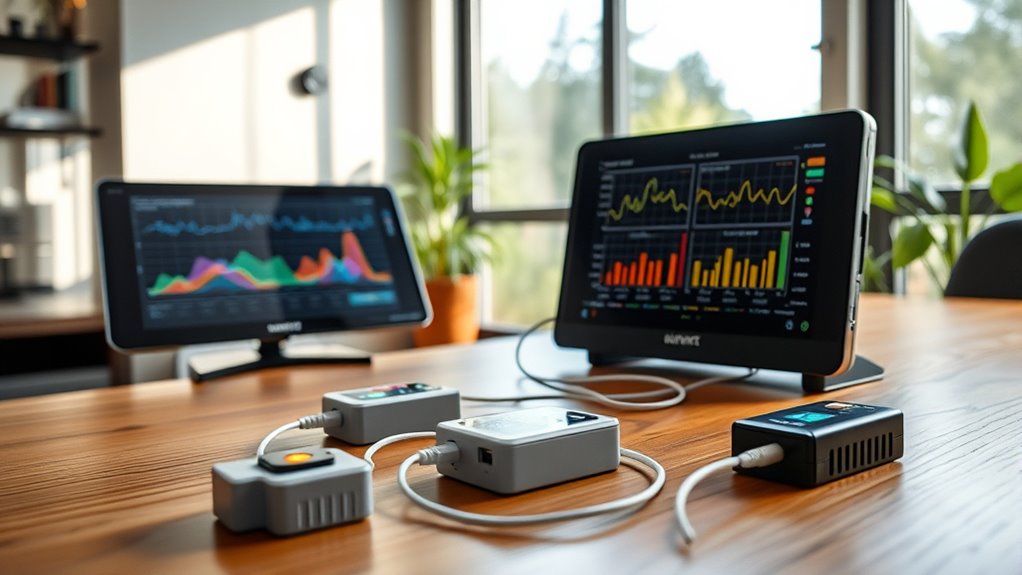
Monitoring indoor climate is vital for ensuring a healthy and comfortable living or working environment. When you keep a close eye on factors like temperature, humidity, and air quality, you can make informed decisions to improve ventilation efficiency and humidity control. Proper ventilation prevents stuffiness and reduces indoor pollutants, ensuring fresh air circulates effectively. By tracking how well your ventilation system performs, you can identify areas where airflow might be restricted or insufficient, helping you optimize your setup for better air exchange. This not only enhances comfort but also minimizes the risk of mold growth and indoor allergens, which thrive in poorly ventilated spaces.
Monitoring indoor climate ensures healthy, comfortable spaces by optimizing ventilation and controlling humidity effectively.
Humidity control plays a key role in maintaining indoor comfort and health. Too much humidity can lead to dampness, mold, and dust mites, while too little can cause dry skin, irritation, and respiratory issues. Data loggers and sensors give you real-time insights into humidity levels, allowing you to adjust heating, cooling, or dehumidification systems accordingly. When you actively monitor humidity, you prevent these issues before they escalate, creating a more stable environment. Sensors placed strategically across different rooms provide detailed data, revealing patterns and fluctuations that might otherwise go unnoticed. This enables you to fine-tune your climate control systems, ensuring consistent conditions that promote well-being.
Using advanced data loggers, you can automate responses to changes in indoor climate, making your environment more energy-efficient and comfortable. For example, if sensors detect rising humidity levels, your dehumidifier can turn on automatically, preventing excess moisture. Conversely, if the air becomes too dry, a humidifier can activate to restore ideal levels. This real-time feedback loop helps maintain balance without constant manual adjustments. Additionally, monitoring indoor climate with sensors allows you to detect potential issues early, such as leaks or ventilation malfunctions, before they cause significant damage or health problems.
Furthermore, understanding the effectiveness of air purification strategies in your space can prevent the accumulation of indoor pollutants and enhance overall air quality. Incorporating these monitoring tools into your indoor environment empowers you to create a space that’s both comfortable and healthy. You’ll be able to maintain ventilation efficiency and humidity control with precision, ensuring fresh air and balanced moisture levels at all times. This proactive approach not only enhances your quality of life but also extends the lifespan of your HVAC systems by preventing overuse or unnecessary wear. Ultimately, data loggers and sensors are invaluable for anyone committed to optimizing indoor climate, providing the insights needed to keep your environment safe, comfortable, and energy-efficient.

Elitech GSP-6 Bluetooth Data Logger Temperature Humidity for Refrigerator with Shadow Data 100000 Points Export PDF/CSV Report, Pharmacy Vaccine DDL Calibration Certificate, MAX MIN with Dual Probe
Upgrade from the GSP-6, features Bluetooth functionality for data transfer via Elitech iCold app. It boasts a 3.3-inch…
As an affiliate, we earn on qualifying purchases.
As an affiliate, we earn on qualifying purchases.
Frequently Asked Questions
How Do Data Loggers Differ From Traditional Thermometers?
Data loggers differ from traditional thermometers because they continuously record temperature data using sensors, offering better data accuracy and detailed climate trends. Unlike thermometers, which provide a single reading at a moment, data loggers store extensive data that you can analyze later. They also require proper sensor calibration to guarantee precision. This makes data loggers ideal for monitoring indoor climate over time, giving you a thorough understanding of temperature fluctuations.
What Is the Optimal Placement for Indoor Sensors?
You should place indoor sensors at a height of around 3 to 6 feet, away from direct sunlight, drafts, or heat sources, to guarantee accurate readings. Calibrate your sensors regularly to maintain placement accuracy. Position them in central locations within the space, avoiding corners or areas with poor airflow, so you get a true reflection of the indoor climate. Proper placement and calibration are key for reliable data.
How Often Should Indoor Climate Data Be Recorded?
Consistently capturing climate conditions keeps your space comfortable and controlled. You should record indoor climate data at least once an hour to guarantee accuracy and responsiveness. Regular sensor calibration is essential to maintain precision, while reliable data storage solutions safeguard your information. By setting a steady schedule, you make certain detailed data collection, supporting ideal indoor environments and effective decision-making. Stay proactive—periodic recordings protect your space’s comfort and safety.
Are There Energy-Efficient Options for Continuous Monitoring?
Yes, you can choose energy-efficient options like solar-powered sensors and data loggers with wireless connectivity. These devices run on solar energy, reducing power consumption, and transmit data wirelessly, eliminating the need for constant power sources or wired connections. This setup allows for continuous indoor climate monitoring while saving energy, making it ideal for sustainable building management. You’ll benefit from real-time data without substantially increasing your energy costs.
Can Sensors Detect Specific Pollutants or Allergens Indoors?
While sensors may not catch every tiny detail, they can effectively monitor indoor air quality and allergen detection. These advanced devices are designed to identify specific pollutants and allergens, helping you maintain a healthier environment. Though they might not be perfect, they offer valuable insights into indoor conditions, allowing you to take proactive steps. Trust in their capabilities to improve your indoor air quality and reduce allergen exposure.

Amazon Smart Air Quality Monitor – Know your air, Works with Alexa
Know your air – Amazon Smart Air Quality Monitor makes it easy to understand what’s in your indoor…
As an affiliate, we earn on qualifying purchases.
As an affiliate, we earn on qualifying purchases.
Conclusion
By using data loggers and sensors, you gain real-time insights, guarantee comfort, and improve air quality. You monitor temperature, humidity, and pollutants, making informed decisions that enhance your indoor environment. You protect your health, optimize your space, and prevent problems before they start. You take control, stay aware, and create a safer, healthier indoor climate. With these tools, you empower yourself to maintain a perfect indoor environment every day.

Leviton Humidity Sensor Switch for Bathroom Exhaust Fan, Automate Ventilation, Air Circulation, Moisture Control, ¼ HP, Single Pole, DHS05-1LW, White
CONVENIENT – automatically turns bath or ventilation fan on/off
As an affiliate, we earn on qualifying purchases.
As an affiliate, we earn on qualifying purchases.

Adfaga Temperature Humidity Sensor Quick Response Dew Point Transmitter for HVAC Systems Greenhouse Monitoring Laboratory Use ABS Material 12V 24V DC Power Supply
[PRECISION MEASUREMENT] Our advanced temperature and humidity sensor delivers exceptional accuracy with ±0.5℃ temperature and ±3% RH humidity…
As an affiliate, we earn on qualifying purchases.
As an affiliate, we earn on qualifying purchases.