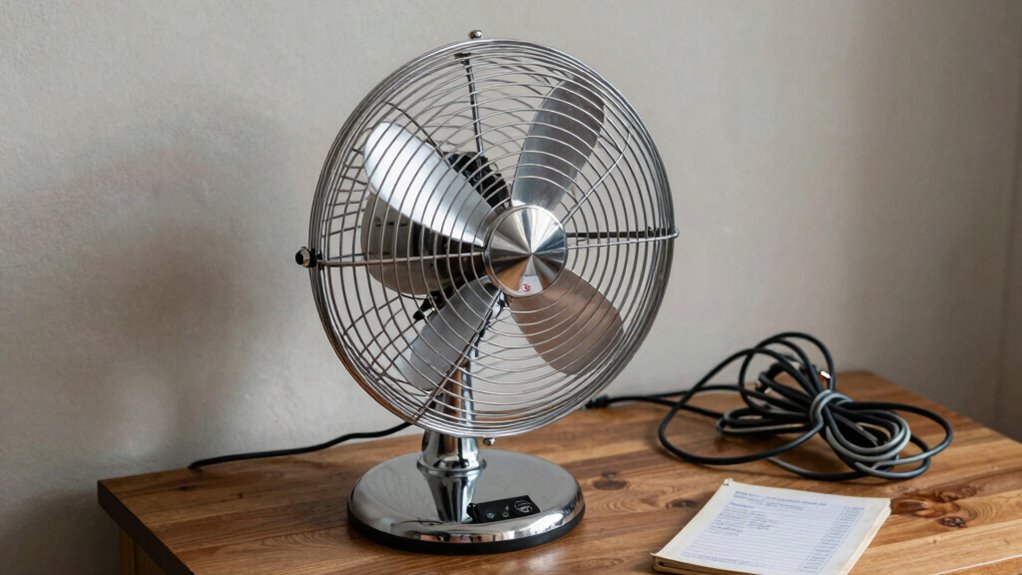

A quiet fan setup depends on more than just the motor; it requires well-balanced, aerodynamic blades to reduce vibration and noise. Proper mounting with rubber dampers or pads prevents vibration amplification. Strategic placement away from reflective surfaces and turbulence also helps. Using sound-absorbing housings, maintaining cleanliness, and controlling airflow direction and speed further improve silence. All these combined elements work together for a peaceful airflow. Keep exploring to discover how to optimize each part for maximum quietness.
Key Takeaways
- Proper mounting and vibration dampening prevent noise amplification beyond motor quietness.
- Strategic placement away from reflective surfaces minimizes sound reflection and turbulence.
- Aerodynamic blade design and balanced rotation reduce airflow noise and vibrations.
- Sound-absorbing enclosures and insulation contain and diminish overall noise levels.
- Regular maintenance, including cleaning and lubrication, ensures sustained quiet operation of all components.
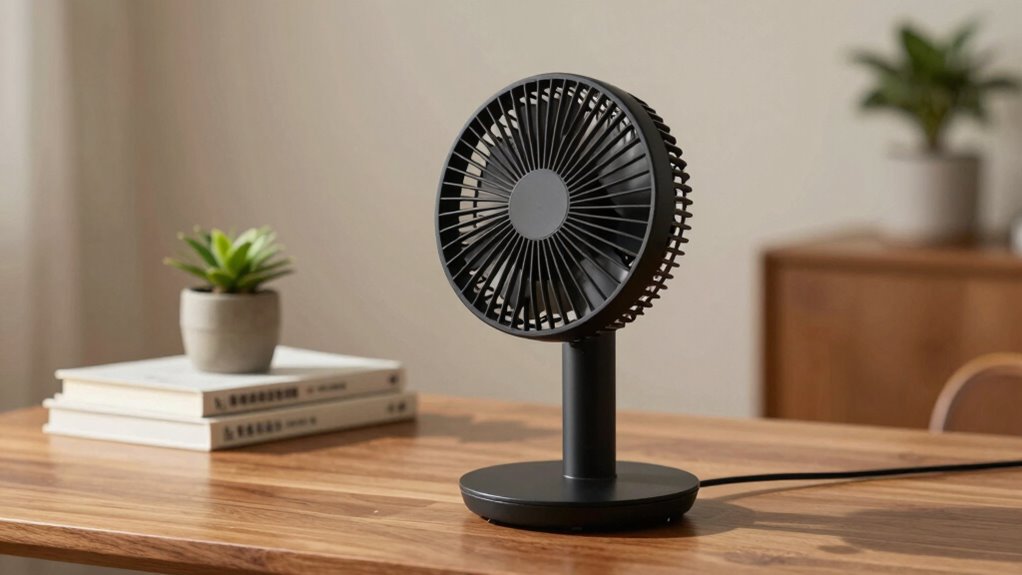
If you’re tired of noisy fans disrupting your peace, setting up a quiet fan can make a noticeable difference. While the motor plays a role in noise levels, the overall quietness depends on more than just the motor’s design. To truly reduce noise, you need to think about noise reduction techniques throughout the entire fan setup, not just the motor. Proper airflow management is key to achieving this goal. When airflow is optimized, the fan operates smoothly, generating less turbulence and vibration that often contribute to unwanted noise. Poor airflow can cause uneven rotation or rattling sounds, so it’s important to your fan moves air efficiently is essential.
Start by choosing a fan with a well-balanced blade design. Blades that are uneven or poorly balanced cause additional vibration, which translates into noise. Look for fans with aerodynamic blades that cut through the air more quietly and efficiently, reducing both noise and energy consumption. When installing your fan, make sure it’s mounted securely. Loose mounting can amplify vibrations, leading to louder sounds. Using rubber dampers or pads between the fan and the mounting surface can absorb vibrations, further decreasing noise levels. These small adjustments make a big difference in noise reduction. Additionally, proper installation techniques can help ensure the fan operates as quietly as possible.
Choose fans with balanced, aerodynamic blades and secure mounting for quieter operation.
Another aspect to keep in mind is the fan’s placement. Position the fan away from walls or surfaces that can reflect sound waves, which can amplify noise. Placing it on a soft, sound-absorbing surface can also help dampen vibrations. Additionally, controlling the airflow direction can improve airflow optimization—directing air where it’s needed most reduces unnecessary turbulence, which often causes noise. If your fan has adjustable settings, use the lowest effective speed to minimize noise while still maintaining proper airflow. Higher speeds tend to generate more noise, so balancing speed and airflow is important. Proper airflow management combined with strategic placement can significantly reduce noise levels.
Finally, consider the fan’s housing and grille design. A well-designed enclosure can contain and absorb some of the sound produced by the moving parts, making the operation quieter. Regular maintenance, like cleaning blades and lubricating moving parts, keeps everything running smoothly and quietly. Incorporating soundproofing techniques into your setup can further enhance noise reduction by minimizing sound reflection and transmission. Using proper insulation around the fan area can also help contain noise and create a more peaceful environment. Additionally, selecting fans with low-noise motors specifically designed for quiet operation can significantly improve the overall sound profile of your setup. When all these elements come together—balanced blades, secure mounting, strategic placement, controlled airflow, and proper maintenance—you’ll create a fan environment optimized for noise reduction and airflow performance. This holistic approach ensures that your setup isn’t just quiet because of the motor but because every aspect of the fan works harmoniously to deliver a peaceful, efficient airflow experience.

Taurus FLASH 20” Industrial Floor Fan | High Velocity Metal Grill Fan with Aerodynamic Plastic Blades | Powerful Quiet Air Circulator for Garage, Patio, Gym or Workshop, Adjustable Tilt
- High Velocity Cooling: 20-inch industrial floor fan for large spaces
- Durable Metal Grill: Steel safety grill for safety and durability
- Aerodynamic Plastic Blades: Engineered for efficient airflow
As an affiliate, we earn on qualifying purchases.
As an affiliate, we earn on qualifying purchases.
Frequently Asked Questions
How Does Airflow Direction Influence Quiet Fan Performance?
Airflow direction greatly impacts quiet fan performance by optimizing blade design and reducing noise. When you direct airflow properly, the blades work more efficiently, minimizing turbulence and vibrations. Good motor insulation also helps by dampening vibrations that could increase noise levels. By adjusting airflow direction, you guarantee smoother operation, quieter performance, and better cooling, making your fan both effective and unobtrusive in your space.
Can Ambient Temperature Affect the Fan’s Noise Level?
Ambient temperature can dramatically affect your fan’s noise level, almost like a thunderstorm in a quiet room. When it’s hotter, thermal regulation becomes more intense, causing the fan to work harder and produce more sound. Acoustic insulation helps, but high temperatures still can increase noise. Cooler environments ease thermal regulation, making your fan quieter. Keep your space well-insulated and at a stable temperature for ideal, peaceful operation.
Are There Specific Materials That Reduce Noise in Fans?
Yes, certain materials can considerably reduce fan noise. You should look for soundproof enclosures made from dense, sound-absorbing materials like foam or mass-loaded vinyl, which dampen noise effectively. Additionally, vibration dampening pads or mounts help minimize vibrations that cause noise. Combining these materials with well-designed fan mounts and enclosures creates a quieter environment, ensuring your fan operates smoothly without disturbing your space.
How Does Fan Placement Impact Overall Noise Reduction?
Your fan placement greatly impacts noise reduction. Position the fan with ideal mounting position to minimize vibrations and sound transfer. Consider how fan blade design influences airflow and noise; blades with fewer, more aerodynamic surfaces produce less sound. Mount the fan on a stable surface or rubber pads to dampen vibrations. Proper placement, combined with thoughtful blade design and secure mounting, ensures quieter operation and a more comfortable environment.
What Maintenance Tips Help Keep the Fan Quiet?
To keep your fan quiet, regularly check for vibration dampening issues and replace worn components. Clean the blades frequently to prevent dust buildup, which can cause imbalance and noise. Opt for fans with blade design engineered for quieter operation, and guarantee the mounting is secure to minimize vibrations. These maintenance tips help reduce noise effectively, keeping your fan running smoothly and quietly over time.

Noctua NA-SAV2 chromax.Black, Silicone Anti-Vibration Fan Mount Set (20-Pack, Black)
- Vibration-Free Fan Mounts: Rubber mounts for easy installation
- All-Black Design: Creates sleek black-themed builds
- Premium Silicone Material: Soft, tear-proof, durable
As an affiliate, we earn on qualifying purchases.
As an affiliate, we earn on qualifying purchases.
Conclusion
Imagine the quiet fan operating smoothly, not just because of a powerful motor but because of the clever design that reduces vibration and noise. It’s like a well-orchestrated dance, where every part plays its role in harmony. When you understand how each element works together, you see that silence isn’t just luck—it’s a carefully crafted masterpiece. This setup proves that sometimes, less noise is the result of more than just a quiet motor; it’s about thoughtful engineering.

LUNTHINK Dual-Fan Steel Soundproof Generator Box 15000W
- Dual-Fan High-Heat Protection: Efficient cooling prevents overheating
- Noise Reduction with Airflow: Soundproof design with strong airflow
- All-Weather Heavy-Duty Construction: Rust-resistant galvanized steel enclosure
As an affiliate, we earn on qualifying purchases.
As an affiliate, we earn on qualifying purchases.

Comfort Zone Electric Oscillating Pedestal Fan, Stand Fan, 16 inch, 3 Speed, 90 Degree Oscillating Head, Adjustable Height and Tilt, Airflow 7.48 ft/sec, Ideal for Home, Bedroom & Office, CZST161BTEBK
- Three-Speed Settings: Low, Medium, High airflow options
- Wide-Angle Oscillation: Covers broad room areas
- Adjustable Tilt Head: Customize airflow direction
As an affiliate, we earn on qualifying purchases.
As an affiliate, we earn on qualifying purchases.