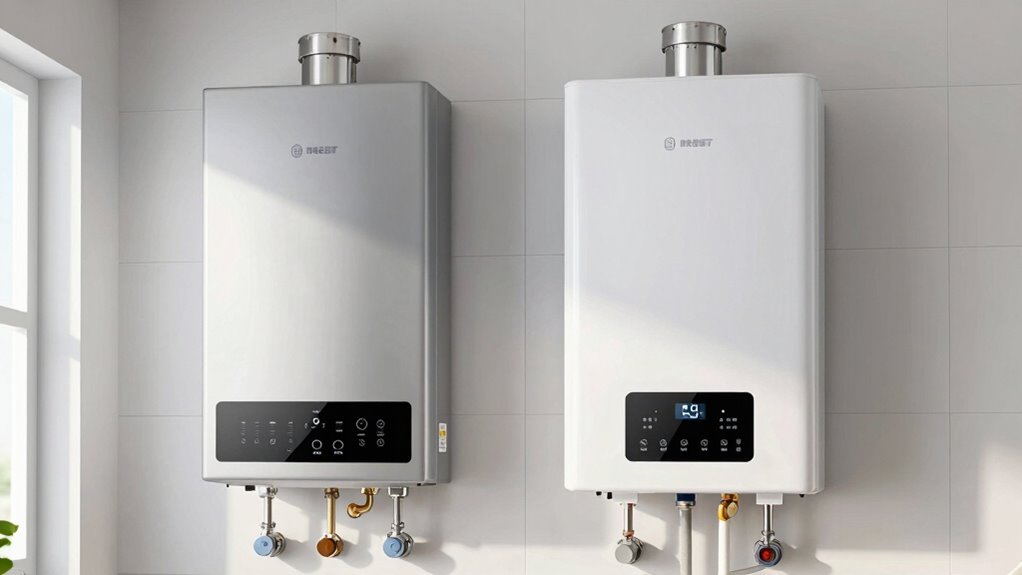

Switching from a standard water heater to a hybrid system can reduce your energy bills by up to 50%, thanks to their higher efficiency and lower operating costs. Hybrid units preheat water using ambient air, which means they use less energy than traditional models that heat water directly. While they cost more upfront, the significant savings on monthly energy bills and potential rebates make them a smart long-term investment. To discover how much you could save, keep exploring the benefits of hybrid water heaters.
Key Takeaways
- Hybrid water heaters typically have higher upfront costs but lower monthly energy bills compared to standard models.
- Operating costs for standard water heaters are higher due to greater energy consumption.
- Hybrid units use ambient air to preheat water, significantly reducing energy use and costs.
- Over time, savings from lower energy bills usually offset the initial higher investment in hybrid systems.
- Rebates and incentives for hybrid units can further decrease overall energy-related expenses.

Choosing between a standard and a hybrid water heater can notably impact your energy bills. When deciding which to install, it’s essential to contemplate how each option affects your overall costs and environmental footprint. Standard water heaters, which rely solely on electric or gas heating elements, tend to be less expensive upfront but often consume more energy over time. Hybrid water heaters, on the other hand, combine traditional heating elements with a heat pump system, making them more energy-efficient and potentially more cost-effective in the long run.
Choosing between standard and hybrid water heaters impacts costs and environmental impact significantly.
The key difference in cost savings lies in how each type uses energy. Standard models heat water directly and maintain a constant temperature, which can lead to higher energy consumption, especially if the water heater runs continuously or has poor insulation. In contrast, hybrid water heaters leverage ambient air to preheat water, markedly reducing the energy needed to reach desired temperatures. This efficiency means lower monthly energy bills, translating into substantial savings over the lifespan of the unit. Although hybrid units typically have a higher initial purchase price, the reduced operating costs often offset this expense within a few years.
From an environmental perspective, hybrid water heaters make a more sustainable choice. Because they use less electricity or gas, they produce fewer greenhouse gas emissions compared to standard models. If you’re committed to reducing your carbon footprint, a hybrid system can help you achieve that goal without sacrificing hot water availability. Additionally, many hybrid units are rated highly for energy efficiency and may even qualify for rebates or incentives, further enhancing their environmental appeal. Energy efficiency is a crucial factor that can influence both your savings and environmental impact. Moreover, hybrid models often incorporate advanced technology that optimizes their operation and further reduces energy use. Understanding the long-term benefits of hybrid systems can help you make a more informed decision about your water heating options. It’s also worth noting that the availability of rebates and incentives can significantly improve the return on investment for hybrid units.
In terms of maintenance and longevity, hybrid water heaters tend to be more durable due to the less strenuous operation of their heat pump components. They also tend to operate more quietly than traditional units, which can be an added comfort. On the downside, hybrid models require sufficient space and ventilation for their heat pumps, and their performance can decline in extremely cold climates. If you’re in a colder region, you might need to weigh the environmental benefits against potential efficiency losses.
Ultimately, choosing between a standard and a hybrid water heater involves balancing upfront costs, ongoing energy expenses, and your environmental values. If your goal is to maximize cost savings and reduce your environmental impact, investing in a hybrid system makes a compelling case. It’s a smart move for your wallet and the planet, especially if you’re prepared for the initial investment and can accommodate the unit’s installation requirements.
As an affiliate, we earn on qualifying purchases.
Frequently Asked Questions
How Long Does a Hybrid Water Heater Typically Last?
A hybrid water heater typically lasts around 8 to 12 years, thanks to efficiency improvements in modern models. You’ll want to take into account cost considerations, as higher initial prices may be offset by lower energy bills over time. Proper maintenance can extend its lifespan, so regularly checking the unit guarantees you get the most out of your investment. Overall, hybrids offer a durable, energy-efficient solution for your hot water needs.
Are Hybrid Water Heaters Suitable for All Climate Zones?
Hybrid water heaters are generally suitable for most climate zones, thanks to their excellent climate adaptability. They perform well in both hot and cold regions, though regional suitability might vary based on local energy costs and insulation. In colder climates, you might need additional insulation or backup heating to guarantee efficiency. Overall, hybrids are versatile and can be effectively integrated into diverse regional settings.
What Maintenance Is Required for Hybrid Water Heaters?
You need to perform regular maintenance on your hybrid water heater to guarantee efficiency. This includes checking and adjusting temperature regulation settings, typically around 120°F, and flushing the tank annually to remove sediment. Also, monitor the system for any issues and troubleshoot problems like strange noises or leaks. Proper maintenance helps extend the lifespan of your unit and keeps it running smoothly, saving you energy and money over time.
Can Hybrid Systems Be Integrated With Existing Solar Setups?
Yes, you can integrate hybrid water heaters with existing solar setups, especially if they’re designed for solar compatibility. However, you should consider upgrade options, like adding compatible solar controllers or tanks, to optimize efficiency. Assess your current system’s capacity and consult a professional to guarantee seamless integration. This way, you maximize energy savings while making the most of your solar investment.
Do Hybrid Water Heaters Qualify for Any Energy Efficiency Rebates?
Think of hybrid water heaters as golden tickets—many qualify for rebate eligibility through various incentive programs. You can often access financial incentives that help offset initial costs, making your eco-friendly upgrade more affordable. Check local utility or government programs, as they frequently offer rebates for energy-efficient appliances. By choosing a hybrid, you’re not only saving energy but also revealing potential savings through these valuable incentive programs.

Rheem PROE50 M2 RH95 50-Gallon Professional Classic Medium Residential Electric Water Heater, Gray; Enhanced-flow Brass Drain Valve; 18.75 Amps; Automatic Thermostat; Anode Rod
- Hot Water Capacity: Suitable for 3-5 people or multiple bathrooms
- Space-Saving Design: Compact size for easy replacement
- Trusted Brand: Rheem's reliable water heating
As an affiliate, we earn on qualifying purchases.
As an affiliate, we earn on qualifying purchases.
Conclusion
Switching from a standard to a hybrid water heater can substantially cut your energy bills, saving you money each month. With higher efficiency and advanced technology, hybrid systems offer long-term benefits that outweigh the initial investment. Isn’t it worth considering a smarter, more cost-effective choice for your home? By making this switch, you not only reduce your expenses but also contribute to a greener environment. Isn’t your home ready for an energy upgrade?
As an affiliate, we earn on qualifying purchases.
As an affiliate, we earn on qualifying purchases.