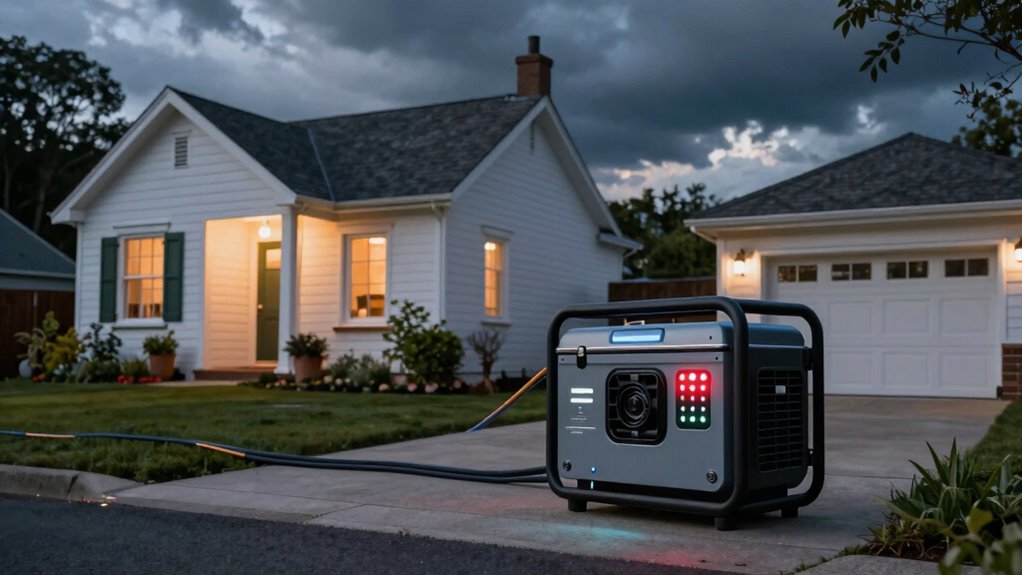
Even in small homes, big backup power is sometimes needed because outages can disrupt essential systems like refrigeration, medical devices, and heating, which are crucial for your safety and comfort. Relying only on portable generators or small systems might not be enough during extended outages or emergencies. Installing a larger, resilient backup setup guarantees continuous power for what matters most. If you want to discover more about creating a reliable backup plan, keep exploring the options available.

Get backup power and energy gear delivered free with Prime
- Fast, free delivery on millions of items
- Prime Video, Amazon Music and more included
- Member-only deals all year
Key Takeaways
- Critical devices like refrigerators and medical equipment require uninterrupted power during outages.
- Extended power outages demand larger backup systems beyond portable generators for sustained needs.
- Renewable energy and battery storage enable resilient, long-term backup solutions for small homes.
- Smart power management optimizes backup capacity and prioritizes essential appliances effectively.
- Dependence on reliable energy sources ensures safety, comfort, and functionality during grid disruptions.
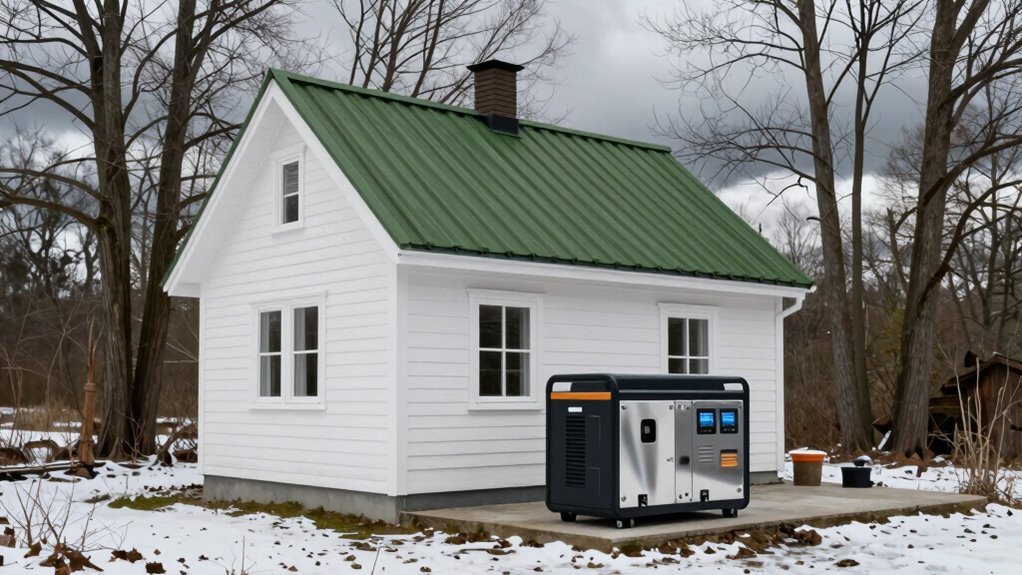
Have you ever experienced a power outage that left your small home in the dark? It’s a sudden reminder of how much we depend on electricity, even in a cozy, compact space. While small homes often boast energy efficiency and simplicity, they still need reliable backup power to keep essentials running smoothly. That’s why integrating renewable energy sources and smart technology can make a real difference.
Renewable energy, like solar panels or small wind turbines, can be a game-changer for small homes. These systems not only reduce your dependence on the grid but also provide a sustainable way to generate power during outages. When the grid goes down, your solar panels can keep feeding energy to your home, especially if paired with a robust battery storage system. This way, you’re not just relying on a portable generator for a few hours—you’re creating a resilient power setup that can sustain your needs over an extended period. Smart technology enhances this setup even further. With smart energy management systems, you can monitor your power consumption, prioritize critical devices, and even automate switching between renewable sources and backup power. These systems give you full control, ensuring your energy is used efficiently, and your backup power is reserved for the essentials, like refrigeration, medical devices, or communication tools.
Renewable energy and smart systems create resilient, efficient backup power for small homes during outages.
Even in a small home, backup power needs can vary widely depending on your lifestyle. If you work from home, you might require enough power to keep your computer, Wi-Fi, and essential appliances running during outages. If you have medical devices, reliability becomes even more critical. Smart technology allows you to set up alerts and automation, so you’re immediately notified of outages and can activate your backup power seamlessly. Additionally, renewable energy systems with smart controls can optimize energy use, charging batteries when the sun is shining or wind is blowing, and distributing power when it’s most needed. This not only ensures continuous operation but also reduces your overall energy costs and environmental impact. Incorporating power quality monitoring can further enhance reliability by detecting and addressing any issues before they disrupt your system. Moreover, understanding the importance of energy independence can motivate homeowners to invest in more resilient systems that decrease reliance on external sources. Staying informed about comprehensive energy management strategies helps you adapt your system as your needs evolve. Furthermore, utilizing smart grid technology can improve your system’s responsiveness and efficiency during outages.
The integration of advanced inverter technology can also improve the stability and efficiency of your backup power system, ensuring smoother transitions during outages. Ultimately, a small home doesn’t mean you should settle for unreliable power. By combining renewable energy sources with smart technology, you can create a resilient, efficient backup power system that keeps your home running smoothly regardless of external disruptions. It’s about upgrading your small space into a smart, sustainable sanctuary that’s prepared for anything.
Products Worth Considering

Bose Home Speaker 500 Smart Speaker with Alexa, Black

Blueair Blue Pure 211i Max Smart Air Purifier for Large Rooms

LG OLED evo C4 55-Inch 4K Smart OLED TV (OLED55C4PUA) with 144Hz Refresh Rate, HDMI Cable, 24-Month Protection Plan, and Streaming Bundle
As an affiliate, we earn on qualifying purchases.
Frequently Asked Questions
What Size Generator Is Ideal for Small Homes?
You should consider a generator with a capacity of around 5,000 to 7,500 watts for your small home. This size balances appliance efficiency and power consumption, ensuring essential devices like refrigerators, lights, and heating systems stay operational during outages. Choosing a generator within this range helps you avoid overloading, provides reliable backup power, and keeps your energy use efficient without wasting fuel or risking damage to your appliances.
How Long Can a Small Home Run on Backup Power?
It’s a coincidence that your small home’s backup power lasts as long as your energy efficiency and power management strategies allow. Typically, with a properly sized generator, you can run essential appliances for several hours—anywhere from 8 to 24 hours—depending on your energy consumption. Efficient use of power, like turning off unnecessary devices, can extend your backup time, ensuring you stay comfortable and connected during outages.
Are Portable Generators Suitable for Small Homes?
Yes, portable generators are suitable for small homes, especially when combined with solar integration for sustainable backup power. They’re easy to deploy during outages, but you need to keep up with generator maintenance to guarantee reliable operation. Portable units can handle essential appliances, and pairing them with solar energy reduces fuel dependence. Just make sure you follow safety guidelines and perform regular maintenance to keep your backup power ready when needed.
What Safety Precautions Are Necessary for Backup Power?
You never want safety to be an afterthought, especially with backup power. Always follow safety regulations, like proper grounding and avoiding overloads, to prevent hazards. Consider integrating renewable sources safely, making sure they’re compatible with your system. Keep a fire extinguisher nearby, and never operate generators indoors or in enclosed spaces. Regularly inspect your equipment, and consult professionals to guarantee your backup power setup remains safe and reliable during emergencies.
How Does Backup Power Affect Home Insurance Policies?
Backup power can influence your home insurance coverage by potentially reducing risks associated with power outages, like water damage or food spoilage, which might lower premiums. However, some policies may have specific clauses about backup generators or alternative power sources, so it’s essential to review your policy details. Installing reliable backup power can provide peace of mind and better protection during power outage risks, but always check with your insurer first.
Conclusion
Even in a small home, backup power isn’t just a luxury—it’s your silent shield against the chaos of outages. Think of it as the lighthouse guiding your daily life through stormy nights. When the lights go out, your backup system becomes your steadfast guardian, ensuring comfort, safety, and peace of mind. Don’t wait for the storm to strike—prepare now, and let your home be the sanctuary that withstands whatever nature throws your way.