Utility rate structures like time-of-use and tiered billing can make your heat pump seem more expensive by increasing your electricity costs during peak hours or once you surpass certain usage thresholds. If you don’t understand these rates, you might be surprised by higher bills, especially in colder months when your system runs longer. Knowing how these charges work can help you avoid hidden costs—stick with it to discover how to keep your expenses in check.
Key Takeaways
- Peak-hour rates can significantly increase operating costs, making heat pumps appear more expensive overall.
- Tiered pricing may push heat pump energy use into higher-cost tiers, raising bills unexpectedly.
- Surpassing consumption thresholds can trigger higher rates, offsetting energy savings from efficient systems.
- Lack of understanding utility rate structures can lead to underestimating true operating costs.
- Strategic scheduling and rate plan choices are essential to avoid hidden costs and maximize savings.
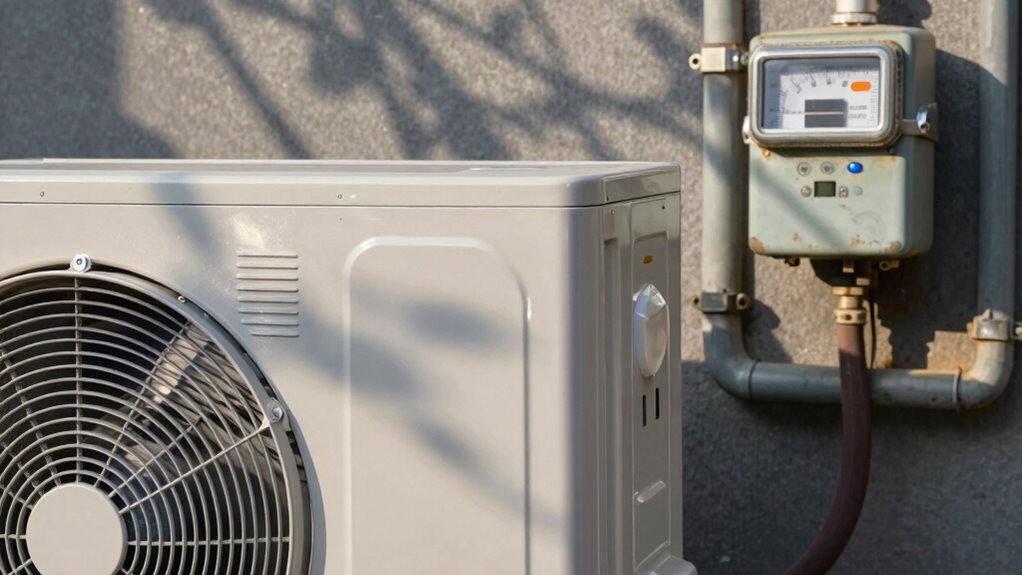
Many utility providers implement complex rate structures that can make operating a heat pump more expensive than you might expect. If your utility uses time-of-use rates, electricity costs fluctuate throughout the day, often being more expensive during peak hours. A heat pump’s efficiency means it runs more frequently and for longer periods, especially during colder months, when heating demand is high. If your utility charges higher rates during these times, your monthly bills can spike, making your energy savings harder to realize. It’s a trap because the initial cost of the heat pump might be offset by savings in theory, but in practice, the variable electricity pricing can eat into those savings quickly. Additionally, many utility companies use tiered pricing systems that can increase costs as your energy consumption rises, which can counteract the energy savings from a heat pump. Furthermore, some utility companies charge higher rates for certain tiers of electricity consumption. If your heat pump causes your overall usage to surpass a set threshold, you could find yourself paying a premium rate. This tiered pricing system makes it tempting to think that your energy costs will stay steady, but in reality, increased consumption can push you into higher-paying brackets. The result is that the cheaper, energy-efficient system isn’t as cost-effective as it appears at first glance. Recognizing these pricing complexities can help you make more informed decisions about your energy investments. Being aware of how your utility’s rates are structured can also help you identify potential savings opportunities through optimized energy use.
Time-of-use rates can cause higher bills during peak hours, undermining energy savings from efficient heat pumps.
The key to avoiding this utility rate trap is understanding your utility’s pricing structure before deciding on a heat pump. Look into whether you’re on a time-of-use plan or tiered rates, and consider how your energy consumption will change. Sometimes, switching to a different rate plan, or pairing your heat pump with smart home technology that optimizes usage, can help you save more in the long run. Remember, the upfront costs are just part of the equation. To truly gauge the affordability of a heat pump, you need to account for electricity pricing patterns and how they’ll impact your bills over time. Ignoring these factors can make a system seem more expensive than it really is, leading you to overlook a potentially cost-effective upgrade.
Frequently Asked Questions
How Can I Estimate My Actual Heat Pump Costs?
To estimate your actual heat pump costs, start by calculating the installation costs, including labor and equipment. Consider the heat pump’s efficiency, which affects your energy bills—more efficient models save money long-term. Review your utility rate structure, especially any hidden fees that could inflate costs. Add these factors together to get a realistic picture of your total investment, helping you decide if a heat pump is worth it for your home.
Do Utility Rate Structures Vary by Region?
Utility rate structures vary by region like a patchwork quilt, reflecting local regulations and energy needs. You’ll notice rate fluctuations depending on where you live, with some areas charging more during peak hours or seasons. These regional differences can impact your heat pump costs considerably. So, it’s essential to understand your local utility policies to accurately estimate your energy expenses and avoid surprises on your bills.
Are There Incentives to Offset High Utility Rates?
Yes, there are incentives like utility rebates that can help offset high utility rates. You should do a rate comparison to find the best deals and maximize savings. Many utility companies offer rebates for installing energy-efficient heat pumps, which can greatly reduce upfront costs and ongoing expenses. Taking advantage of these incentives guarantees you get the most value from your investment, even in regions with higher utility rates.
How Does Time-Of-Use Pricing Affect Heat Pump Expenses?
You’ll notice that during peak hours, rate fluctuations can cause your heat pump expenses to spike by up to 50%. When you operate your system during these high-cost times, you pay more, making energy bills seem unpredictable. To save, try running your heat pump during off-peak hours when rates are lower. Being aware of peak hours helps you manage costs better and avoid unexpected bill surprises.
What Are the Long-Term Savings With Heat Pumps?
You’ll find that heat pumps offer significant long-term savings through improved efficiency analysis, which helps you optimize energy use and reduce costs. Although maintenance costs are generally low, staying on top of regular upkeep extends your system’s lifespan and keeps it running efficiently. Over time, these factors combine to lower your overall energy bills, making a heat pump a smart investment despite initial expenses.
Conclusion
So, don’t get caught in the utility rate trap. It’s like falling for a siren’s song, making heat pumps seem pricier than they truly are. Remember, with a little research and savvy planning, you can avoid hidden costs and enjoy the comfort of modern energy solutions without the sting of unexpected bills. Think of it as your own personal quest—like a modern-day Robin Hood, fighting for fair costs in a world that’s often anything but.