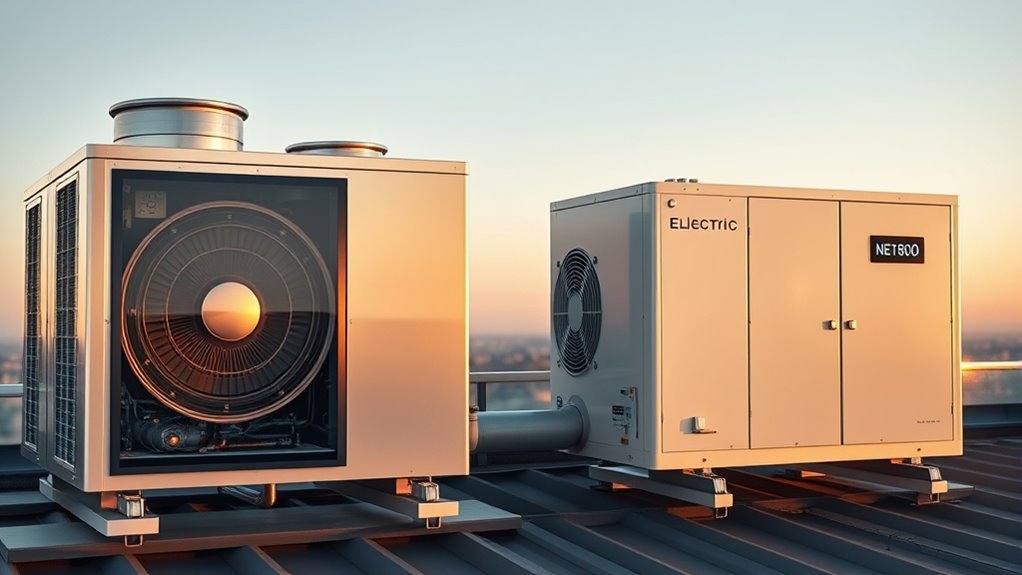

Absorption heat pumps generally use less electrical energy than electric models because they harness waste heat or renewable sources like solar or natural gas. This makes them more energy-efficient, especially when combined with industrial processes or renewable energy availability. Electric models depend solely on electricity, which can lead to higher energy consumption. If you’re curious about how these systems compare in detail and their long-term savings, there’s more to explore.
Key Takeaways
- Absorption heat pumps often consume less electrical energy by utilizing waste heat or renewable sources, reducing overall energy consumption.
- Electric models depend solely on electricity, which can lead to higher electrical energy use for the same heating or cooling output.
- Absorption systems can lower energy consumption when waste or renewable heat sources are available, improving efficiency.
- The energy efficiency of absorption pumps depends on the heat source quality and temperature, potentially outperforming electric models in certain conditions.
- Overall energy consumption varies based on application, resource availability, and system design, making each model suitable for different scenarios.
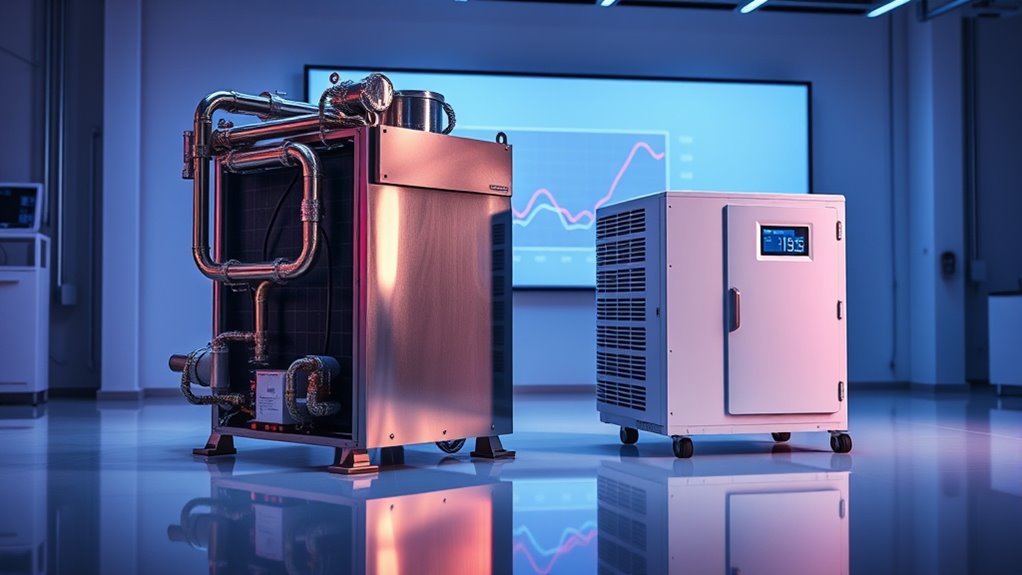
Have you ever wondered how absorption heat pumps consume energy compared to traditional systems? If you’re exploring energy-efficient solutions, understanding their operation helps you make smarter choices. Absorption heat pumps stand out because they can utilize waste heat or renewable energy sources, making them attractive for renewable integration. Unlike electric models that rely solely on electricity, absorption systems often incorporate heat sources such as natural gas, solar thermal energy, or waste heat from industrial processes. This flexibility allows for a more diverse and sustainable energy profile, reducing dependence on the electrical grid and promoting greener energy consumption.
When it comes to cost efficiency, absorption heat pumps can offer significant advantages, especially in large-scale or industrial applications. Since they can leverage renewable or waste heat, operational costs tend to be lower over time compared to electric models that constantly draw power from the grid. This reduced energy consumption not only cuts down on utility bills but also aligns with long-term sustainability goals. If you’re aiming to decrease your carbon footprint, absorption systems provide a compelling option because they can integrate renewable energy sources seamlessly, making your energy use cleaner without sacrificing performance.
However, it’s important to contemplate the initial investment. Absorption heat pumps typically have higher upfront costs due to their complex design and the need for auxiliary heat sources. But, when you evaluate total cost of ownership, including lower operating expenses and potential incentives for renewable integration, they can be more economical over their lifespan. The choice often hinges on the availability of renewable energy sources in your area and whether your facility can benefit from waste heat or solar thermal integration. In such scenarios, absorption systems become a strategic investment that enhances overall energy efficiency while aligning with environmental objectives.
Additionally, absorption heat pumps tend to operate more quietly and have fewer moving parts compared to electric models, which can translate into reduced maintenance costs and longer service life. This makes them particularly appealing for applications where reliability and low maintenance are priorities. While electric models are often simpler to install and initially less expensive, they don’t always offer the same level of renewable integration potential or long-term cost savings. Understanding the energy consumption of these systems helps you make informed decisions aligned with your sustainability goals.
Ultimately, your choice depends on your specific energy needs, availability of renewable resources, and budget considerations. If maximizing renewable integration and achieving cost efficiency are your goals, absorption heat pumps present a compelling alternative. They harness renewable and waste heat sources effectively, reducing energy consumption and fostering sustainable practices—benefits that can outweigh their higher initial costs in the long run.

30 Pint Dehumidifier for Basement, 2500 Sq. Ft Dehumidifiers for Home with Drain Hose, 3 Modes, Smart Humidity Control, 24H Timer, 0.52 Gal Water Tank, for Whole House, Bedroom, Bathroom, Garage, Rv
Powerful 30-Pint Moisture Removal for Spaces up to 2500 Sq. Ft: High humidity can make rooms feel damp,...
As an affiliate, we earn on qualifying purchases.
Frequently Asked Questions
How Do Absorption Heat Pumps Perform in Extreme Weather Conditions?
In extreme weather conditions, absorption heat pumps offer good weather resilience, maintaining reliable heating or cooling. However, their efficiency stability can decrease in very cold temperatures, as the absorption process relies on heat sources that may be less effective when it’s freezing outside. You might notice reduced performance during severe weather, but overall, they remain a dependable option if properly maintained and designed for your climate.
What Are the Long-Term Cost Savings of Absorption Versus Electric Models?
You’ll likely save money long-term with absorption heat pumps because their initial purchase cost is often higher, but their superior energy efficiency reduces your energy bills over time. These models use less electricity and can tap into alternative heat sources, lowering operational costs. So, despite the initial investment, you benefit from lower energy consumption, making absorption heat pumps a cost-effective choice for sustained savings.
Are There Environmental Benefits Unique to Absorption Heat Pumps?
You’ll be glad to know that absorption heat pumps offer notable eco-friendly benefits, including significant emission reductions—up to 50% less than traditional electric models. This makes them a smart choice if you want to lower your carbon footprint. Their ability to run on waste heat or renewable energy sources enhances sustainability, helping you contribute to a cleaner environment while enjoying efficient heating and cooling.
How Does Maintenance Differ Between Absorption and Electric Heat Pumps?
You’ll find that maintenance routines differ markedly between absorption and electric heat pumps. Absorption units generally require more frequent inspections of components like the generator and absorber, which are less durable and need regular cleaning. Electric heat pumps have fewer moving parts, making their component durability higher and maintenance routines simpler. Overall, electric models tend to be easier and less costly to maintain over time.
Can Absorption Heat Pumps Be Integrated With Renewable Energy Sources?
Sure, you can integrate absorption heat pumps with renewable energy sources—ironic, isn’t it? This seamless renewable integration boosts your sustainability benefits, making your system more eco-friendly and efficient. By pairing them with solar or waste heat, you harness natural resources effectively, reducing reliance on grid power. So, while absorption heat pumps might seem old-fashioned, they actually offer a smart, sustainable choice for modern green energy initiatives.

5000 Sq.Ft Energy Star Most Efficient 2024 Dehumidifier,DECIUU Max 100 Pint Dehumidifier for Basement with Drain Hose,Intelligent Humidity Control for Home Bathroom Garage Bedroom
Most Efficient 2024 Energy Star Dehumidifier: Tired of battling stubborn humidity? Our ENERGY STAR certified dehumidifier removes 70...
As an affiliate, we earn on qualifying purchases.
Conclusion
When comparing absorption heat pumps to electric models, think of them as two different tools in your energy toolbox. Absorption systems often run on waste heat or renewable sources, making them more efficient in certain situations, like a well-oiled machine. Electric models are straightforward but can consume more power. Ultimately, choosing depends on your needs—like selecting the right key for a lock—so consider what fits best for your energy goals.

ALORAIR Whole House Dehumidifier, 90 PPD Commercial Grade Whole Home Dehumidifiers for Garages, Water Damage Restoration, 2300 Sq.Ft dehumidifiers for Crawl Space
Energy Efficient Whole House Dehumidifier: 90 pints per day at AHAM condition, 70 Pint at DOE, up to...
As an affiliate, we earn on qualifying purchases.

Waykar 158 Pints Crawl Space Dehumidifier with Remote Control and Pump, Dual Duct HVAC Commercial Whole-House Dehumidifier for Basement, Industry Water Damage Unit - 5-Year Quality Coverage
【158 Pint Crawl Space Dehumidifier】The Waykar whole-house dehumidifier extracts up to 158 pints of water per day (under...
As an affiliate, we earn on qualifying purchases.