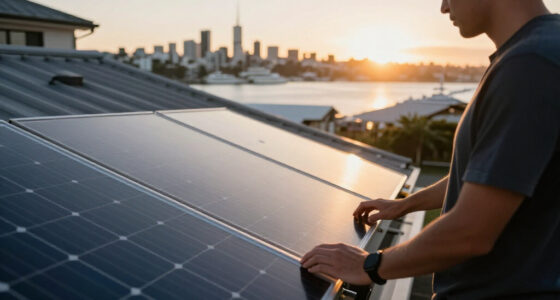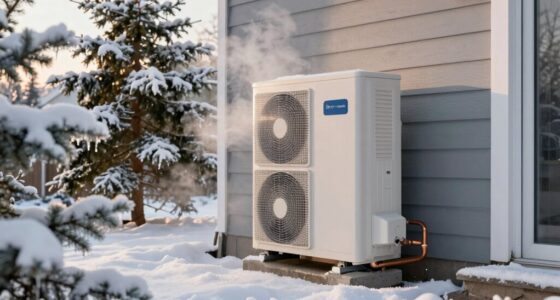
Hybrid heating systems with heat pumps optimize your energy use by switching between renewable sources like ambient air or geothermal heat and traditional furnaces depending on outdoor temperatures and energy costs. This intelligent switching helps you save money during milder weather while providing reliable warmth when it’s colder. These systems also integrate solar or geothermal energy, reducing reliance on fossil fuels and lowering your environmental impact. To discover how you can maximize savings and efficiency, keep exploring the details below.

Get backup power and energy gear delivered free with Prime
- Fast, free delivery on millions of items
- Prime Video, Amazon Music and more included
- Member-only deals all year
Key Takeaways
- Hybrid systems optimize energy use by switching between heat pumps and traditional furnaces based on outdoor temperature and energy costs.
- Heat pumps efficiently provide heating during milder weather, reducing electricity consumption compared to fossil fuel-based systems.
- Incorporating renewable sources like geothermal or solar thermal further decreases reliance on grid electricity and fossil fuels.
- Smart controls adapt system operation in real-time, maximizing energy efficiency and minimizing waste.
- Overall, hybrid systems lower energy consumption and costs while reducing environmental impact through renewable integration.
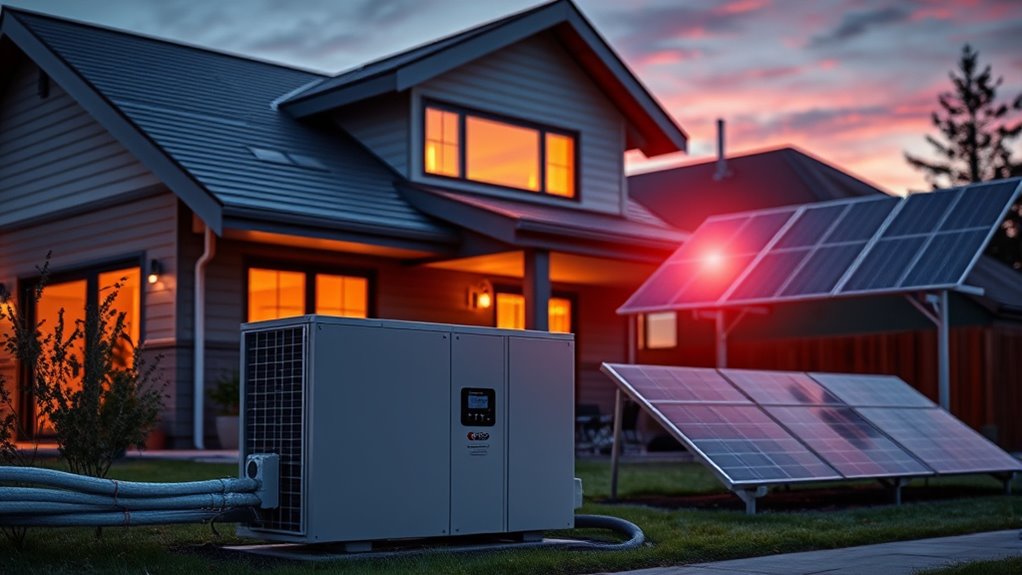
Have you ever wondered how hybrid heating systems manage energy consumption to optimize efficiency? These systems cleverly balance different energy sources, often combining traditional furnaces with heat pumps, to deliver reliable warmth while minimizing costs. One of the key strategies they use is renewable integration, which means harnessing renewable energy sources like ambient air or geothermal heat. By integrating these sustainable options, hybrid systems can reduce reliance on fossil fuels, lower greenhouse gas emissions, and contribute to a greener environment. This not only benefits the planet but also helps you cut down on energy expenses over time. Furthermore, many systems utilize chlorophyll-based processes to enhance efficiency by improving how natural resources are harnessed and converted into usable energy.
A major advantage of hybrid heating systems is their ability to maximize cost efficiency. They automatically switch between energy sources based on factors like outdoor temperature, energy prices, and system performance. For example, during milder weather, the heat pump can efficiently provide heating by extracting heat from the air, which consumes less electricity compared to traditional heating methods. When temperatures drop markedly, the system shifts to the more powerful furnace, ensuring consistent warmth without overworking the heat pump. This intelligent switching reduces energy waste, making your heating more economical.
Moreover, the integration of renewable energy sources within hybrid systems enhances their cost efficiency even further. For instance, some systems incorporate solar thermal collectors or geothermal heat pumps, which tap into natural, renewable resources. These options can considerably lower your dependence on grid electricity or fossil fuels, translating to lower utility bills. The system’s ability to optimize energy use based on real-time conditions means you’re not paying for inefficient heating during less favorable weather. Instead, it leverages renewable sources when available, making your overall energy expenditure more predictable and affordable.
Additionally, hybrid systems often come with advanced controls that learn your usage patterns and adapt accordingly. This smart management ensures that the system operates at peak efficiency, avoiding unnecessary energy consumption. Over time, this intelligent operation translates into substantial savings, especially if energy prices fluctuate. The combination of renewable integration and smart controls creates a heating setup that is not only environmentally friendly but also cost-effective.
Frequently Asked Questions
How Do Hybrid Systems Impact Overall Energy Bills Long-Term?
Hybrid systems lower your overall energy bills long-term by providing significant energy savings through optimized heating. They switch efficiently between heat pumps and traditional systems, reducing energy consumption during milder weather. Conducting a cost analysis shows that initial investment pays off over time with lower utility costs. You’ll enjoy consistent comfort while saving money, making hybrid systems a smart choice for long-term energy efficiency.
Can Hybrid Heating Systems Qualify for Government Energy Efficiency Incentives?
Like opening a hidden treasure, hybrid heating systems often qualify for government incentives when they meet efficiency standards. You can take advantage of these programs to reduce upfront costs and boost your home’s energy efficiency. Check local policies, as eligibility varies, but many regions reward eco-friendly upgrades. By choosing a hybrid system that complies, you’re not only saving money but also contributing to a greener future.
What Maintenance Is Required for Heat Pumps in Hybrid Systems?
You need to regularly check and replace the heat pump filters to guarantee efficient airflow and performance. Additionally, you should have refrigerant levels inspected and topped off if necessary, as low refrigerant can reduce heating efficiency. Schedule annual professional maintenance to clean coils, verify system components, and ensure everything runs smoothly. Proper upkeep keeps your hybrid system energy-efficient and prolongs its lifespan.
How Do Outdoor Temperatures Affect Heat Pump Performance?
Outdoor temperatures markedly impact your heat pump’s performance. When it gets very cold, your heat pump works harder, reducing efficiency and increasing energy use. To counter this, solar efficiency improvements and geothermal integration can help maintain consistent comfort and efficiency. With proper planning, these systems optimize energy use even during extreme weather, ensuring your hybrid heating system remains effective and reliable year-round, regardless of outdoor temperature fluctuations.
Are Hybrid Systems Suitable for All Climate Zones?
You might think hybrid systems fit every climate, but that’s not always true. They’re highly adaptable for various climates, especially moderate zones, offering energy efficiency and flexibility. However, in extreme cold or hot environments, installation challenges can arise, making them less suitable. Assess your local climate’s demands carefully to determine if a hybrid system provides the ideal climate adaptability and manageable installation for your needs.
Conclusion
By choosing a hybrid heating system with heat pumps, you’re practically revealing the secret to slashing energy use like a superhero wielding a mighty power! Imagine your energy bills shrinking so fast they might vanish into thin air, while your home stays toasty warm no matter what. It’s like having a magic wand for comfort and savings—so don’t just sit there, unlock the full potential of hybrid heating and turn your house into an energy-efficient fortress!
Halloween Picks
halloween
As an affiliate, we earn on qualifying purchases.