
The defrost cycle in your fridge can add to your energy bills, especially if it runs frequently or lasts longer than necessary. While it consumes power each time it activates, excessive frost buildup forces your appliance to work harder, increasing overall energy use. Proper maintenance, like sealing doors and checking thermostats, can reduce unnecessary cycles and save money. If you want to discover how to manage these costs better, there’s more to uncover.
Key Takeaways
- The defrost cycle consumes energy each time it runs, adding to overall appliance energy use.
- Frequent defrosting or excessive frost buildup increases energy consumption and reduces efficiency.
- Malfunctions causing continuous defrost cycles can significantly raise electricity costs.
- Proper maintenance, like sealing doors and cleaning vents, reduces unnecessary defrost cycles and energy waste.
- Modern adaptive defrost systems minimize energy costs by activating only when needed.

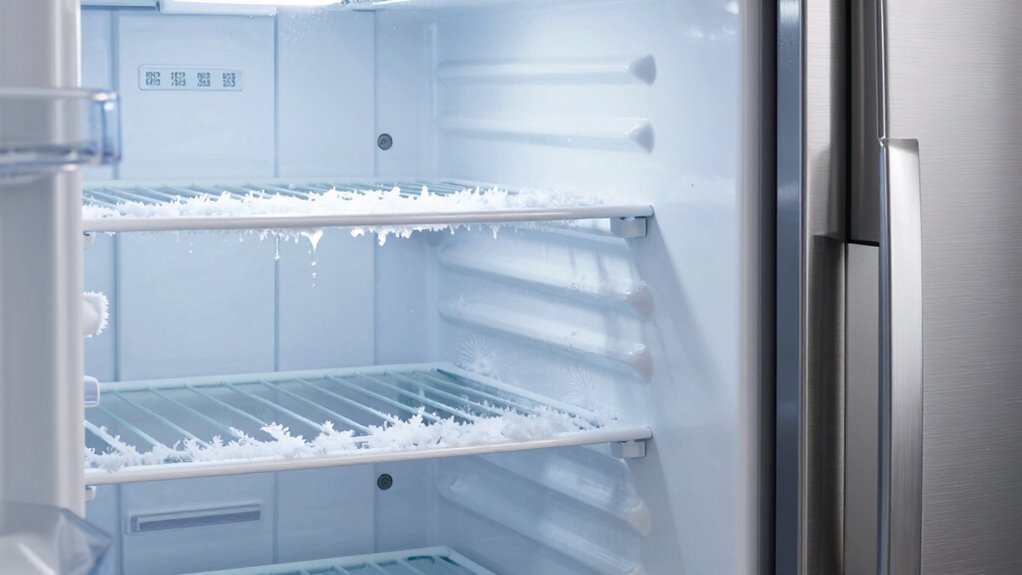
The defrost cycle is designed to melt accumulated frost or ice inside your fridge or freezer, usually at scheduled intervals. While it’s a necessary process, it also consumes energy—sometimes quite a bit—especially if it’s running more frequently than it should. Frequent defrost cycles can be a sign of underlying issues, like a faulty thermostat or a door that doesn’t seal properly, which cause excessive frost buildup. When ice accumulates, your appliance has to work harder to maintain the set temperature, increasing energy consumption. Over time, this extra effort can degrade appliance efficiency, making your fridge or freezer less effective at keeping things cold without consuming more power. Proper maintenance and understanding of how the defrost cycle impacts energy use can help prevent these issues. If you notice your appliance running nonstop or the compressor cycling frequently, it’s worth considering the impact of the defrost cycle. An inefficient defrost process not only wastes energy but also shortens the lifespan of your appliance. Modern refrigerators often come with adaptive defrost systems that run only when needed, considerably reducing unnecessary energy use. If your unit lacks this feature, manually defrosting periodically might help improve efficiency and lower energy costs. Keeping the door seals tight and ensuring proper ventilation around your appliance also minimizes frost buildup, reducing the frequency of defrost cycles and helping you manage energy consumption better. Additionally, understanding the costs of defrosting can help you prioritize maintenance and upgrades to make your appliance more energy-efficient. Regularly checking and cleaning the door seals can prevent frost buildup and reduce defrost frequency, saving energy and extending your appliance’s life. Proper ventilation and airflow around the appliance can further prevent frost accumulation and improve efficiency. It’s also helpful to monitor the overall energy efficiency of your appliance to identify potential savings and performance issues early. Increased frost buildup can also be a sign of other malfunctions, so addressing these problems promptly can lead to better energy savings. Ultimately, the cost of the defrost cycle in terms of electricity isn’t just about the immediate power draw; it’s also about how it affects your appliance’s overall efficiency. An efficient defrost system minimizes unnecessary energy use, saving you money on utility bills and prolonging the lifespan of your appliance. By paying attention to how often your fridge or freezer goes through its defrost cycle and addressing issues promptly, you can strike a balance between keeping your food fresh and keeping costs down. Proper maintenance and awareness can make a noteworthy difference in controlling energy consumption while ensuring your appliance runs smoothly.
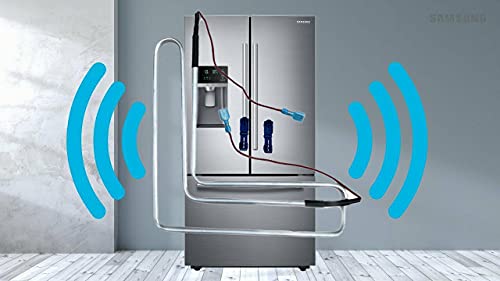
INVERTEC Refrigerator Defrost Booster Kit – Ice Buildup & Noises Repair Kit, Compatible with Most Smsung French Door Refrigerators
FITS TO ANY SAMSUNG OR KENMORE FRENCH DOORS REFRIDGERATORS
As an affiliate, we earn on qualifying purchases.
As an affiliate, we earn on qualifying purchases.
Frequently Asked Questions
How Can I Reduce Defrost Cycle Energy Costs?
To reduce defrost cycle energy costs, follow energy saving tips like adjusting the thermostat, keeping door seals tight, and avoiding frequent door openings. Regular maintenance routines, such as cleaning condenser coils and defrosting when necessary, help guarantee efficient operation. These steps minimize unnecessary defrost cycles, saving electricity. Properly maintaining your appliance not only reduces costs but also extends its lifespan, making your energy use more sustainable and cost-effective.
Does the Type of Refrigerator Affect Defrost Cycle Power Consumption?
They say, “You are what you eat,” but in your fridge, you are what it’s made of. The type of refrigerator markedly impacts defrost cycle power consumption. An energy-efficient model reduces ice buildup, which lessens compressor strain and cuts energy costs. Conversely, older or less efficient units tend to consume more power during defrost cycles due to increased ice buildup, leading to more compressor strain and higher electricity bills.
Are Newer Models More Energy-Efficient During Defrost Cycles?
Yes, newer models are more energy-efficient during defrost cycles because they incorporate energy-saving innovations like smart defrost technology. This technology monitors and adjusts defrost timing, reducing unnecessary cycles and energy use. You benefit from lower electricity bills and a more eco-friendly appliance. Manufacturers continuously improve these features, so investing in the latest models guarantees you get the most efficient performance and savings on your energy consumption.
How Often Should My Fridge Go Through a Defrost Cycle?
Think of your fridge’s defrost cycle like a well-trained gardener pruning plants—necessary for healthy growth. Typically, your fridge should go through a defrost cycle every 8 to 12 hours, depending on usage and model. This process helps maintain proper temperature regulation and prevents ice buildup. If your fridge defrosts too often or rarely, it could signal issues affecting efficiency. Regular defrosting keeps everything running smoothly and saves energy.
Can Manual Defrosting Save More Electricity Than Automatic Cycles?
Manual defrosting can save you more electricity than automatic cycles because it allows you to remove ice buildup, which makes your fridge work harder and consume more energy. By defrosting manually when needed, you prevent excessive frost, improving efficiency. Regular manual defrosting reduces energy costs, extends appliance lifespan, and guarantees your fridge runs smoothly. So, taking control with manual defrosting helps you achieve better energy savings overall.

50 Feet D-Shape Rubber Weather Stripping Door Seal Strip, Fingwerk Self-Adhesive Backing Door Weatherstripping for Door Frame Insulation Large Gap, Easy Cut to Size with Tailor Scissors(Black)
【PACKAGE INCLUDES】Total length 50 feet, with a pair of tailor scissors. Width: 0.35inch/(7/20inch)/9mm; Thickness: 0.23inch/(23/100inch)/6mm; Suitable for gaps…
As an affiliate, we earn on qualifying purchases.
As an affiliate, we earn on qualifying purchases.
Conclusion
While it might seem like the defrost cycle costs a lot in electricity, understanding its true impact helps you make smarter choices. You might worry it’s a waste, but regular defrosting actually prevents bigger problems and energy drain down the line. By keeping your fridge or freezer running efficiently, you save money overall. So, don’t skip the defrost cycle—it’s a small step that keeps your appliance and your wallet in better shape, long-term.

7.0 Cu Ft Chest Freezer – Energy Efficient & Quiet Mini Freezer with Adjustable Thermostat – Compact Deep Freezer for Home, Apartment, and Garage – Removable Basket & Defrost Drain
Spacious 7.0 cu. ft. Chest Freezer: Our chest freezer offers ample storage space for all your frozen favorites,…
As an affiliate, we earn on qualifying purchases.
As an affiliate, we earn on qualifying purchases.

4pcs Flexible Cleaning Brush Set for Dryer Vents, Fridge Coils, HVAC Systems & Tight Spaces – Multi-Use Lint and Dust Remover with Crevice Brush and Detailing Tools
【Deep Cleaning, Done Right】 Flexible stainless-steel shafts bend effortlessly into dryer vents, fridge coils, AC units, and behind…
As an affiliate, we earn on qualifying purchases.
As an affiliate, we earn on qualifying purchases.