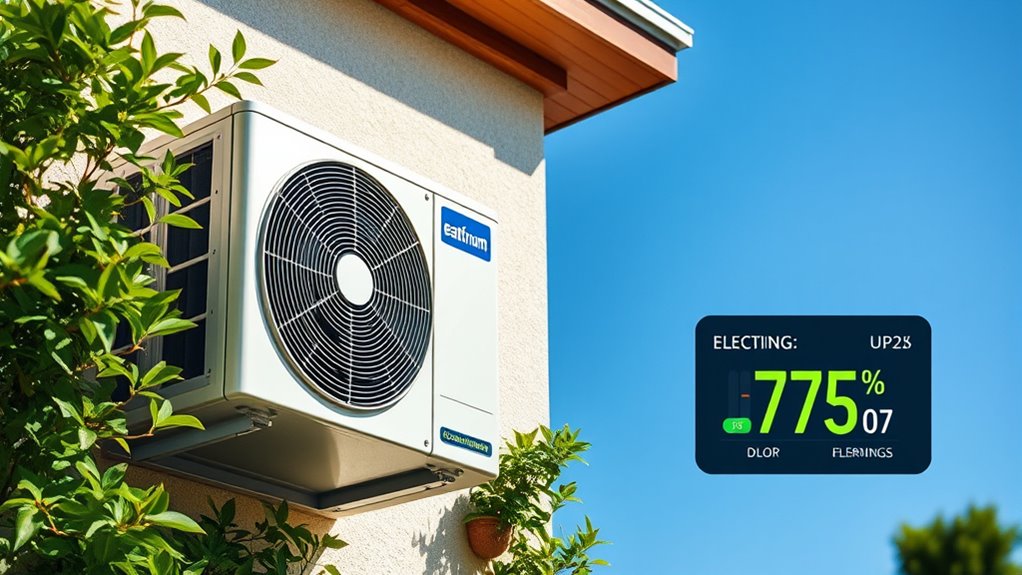

Heat pumps cut your electricity use by up to 75% by transferring heat rather than generating it directly. They move heat from outside air, ground, or water into your home, making them much more efficient than traditional electric resistance heaters. Modern models are designed to maximize performance and reduce energy consumption further. By using less electricity for heating and cooling, you’ll save money and reduce your carbon footprint. Keep exploring to understand how these systems achieve such impressive savings.
Key Takeaways
- Heat pumps transfer heat efficiently from the environment, requiring less electrical energy compared to traditional heating systems.
- Modern heat pumps utilize advanced technology to maximize energy transfer and minimize electricity consumption.
- Their ability to produce multiple times more heat energy than the electrical energy used significantly reduces overall energy use.
- Integration with renewable energy sources like solar power enhances efficiency and decreases reliance on grid electricity.
- Improved system designs and variable-speed components optimize performance, leading to savings of up to 75% in electricity consumption.
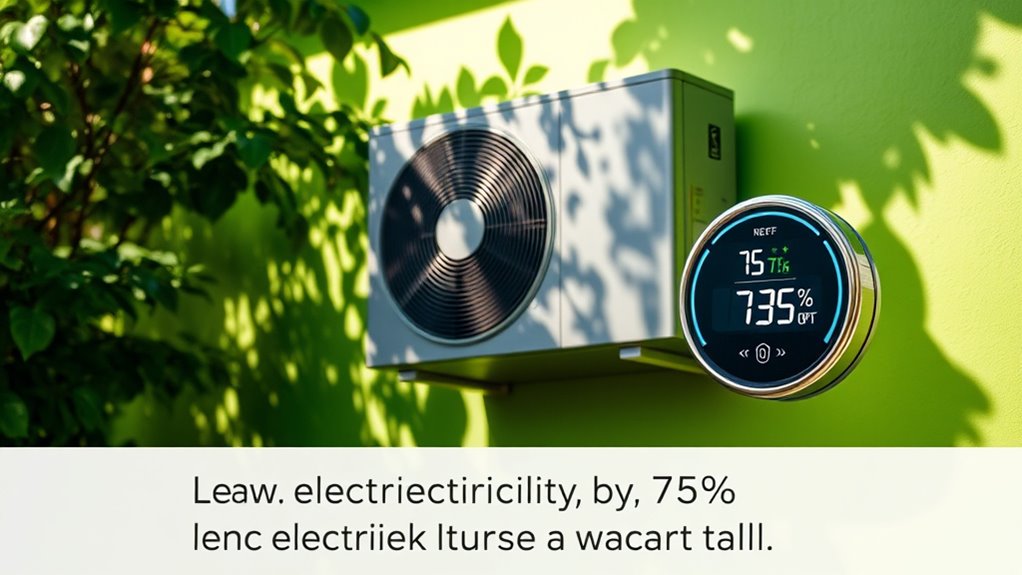
Heat pumps are proving to be an effective way to cut electricity bills and reduce energy consumption. When you opt for a heat pump, you’re choosing a system that markedly enhances energy efficiency compared to traditional heating and cooling methods. Unlike electric resistance heaters, which convert electricity directly into heat, heat pumps transfer heat from the outside air, ground, or water into your home. This process requires less energy, which means you get the same amount of warmth or cooling while using much less electricity. As a result, your energy bills drop, and you enjoy a more sustainable way of managing your home’s climate.
Heat pumps cut bills by efficiently transferring heat, reducing energy use and environmental impact.
One of the key advantages of heat pumps is their ability to deliver high energy efficiency. They can produce up to three times more heat energy than the electrical energy they consume. This efficiency stems from their ability to move heat rather than generate it, making them much more economical and effective. Because they require less electricity to operate, heat pumps help you save money over time. Plus, with advances in technology, newer models operate even more efficiently, further reducing your energy consumption and costs.
The environmental benefits of using heat pumps are also noteworthy. By consuming less electricity, you’re lowering your home’s carbon footprint, which directly impacts the climate positively. Electricity generation often involves fossil fuels, so reducing your energy use decreases greenhouse gas emissions. This makes heat pumps a smart choice for eco-conscious homeowners who want to minimize their climate impact. Their ability to efficiently heat and cool your home means you’re contributing to a cleaner environment while still maintaining comfort and convenience.
Additionally, heat pumps support sustainability by integrating well with renewable energy sources. If your home is connected to solar panels or other green energy systems, a heat pump can maximize the use of renewable power. This synergy further reduces reliance on fossil fuels and enhances your home’s overall energy profile. Furthermore, system efficiency improvements in modern heat pumps ensure they continue to deliver maximum performance with minimal environmental impact. Not only do you save money, but you also play a part in combating climate change by choosing a technology that emphasizes energy efficiency and environmental responsibility.
Frequently Asked Questions
Are Heat Pumps Effective in Extremely Cold Climates?
In cold climates, heat pumps can still be effective, but they face efficiency challenges at very low temperatures. Modern cold climate heat pumps are designed to operate efficiently even during harsh winters, using advanced refrigerants and technology. You’ll find these models perform well and help reduce energy costs, but in extreme cold, you might need a backup heating system to verify consistent warmth and maintain efficiency.
Do Heat Pumps Require Special Electrical Wiring or Upgrades?
Yes, heat pumps may require special electrical wiring or system upgrades. You might need to upgrade your electrical panel or wiring to handle the additional load, especially for larger units. It’s essential to have a professional inspect your current system to determine if upgrades are necessary. Proper wiring guarantees safe operation and maximum efficiency, helping you get the most out of your heat pump without risking electrical issues.
How Long Is the Typical Lifespan of a Heat Pump?
A typical heat pump lasts about 10 to 15 years, depending on heat pump durability and its maintenance. Factors like regular servicing, climate conditions, and usage patterns influence its lifespan. You can extend its life by keeping filters clean, checking refrigerant levels, and scheduling professional inspections. Proper care guarantees you get the most out of your investment, and understanding lifespan factors helps you plan for eventual replacement or upgrades.
Can Heat Pumps Be Used for Both Heating and Cooling?
Think of a heat pump as a versatile chameleon, seamlessly switching colors for every season. Yes, it offers dual functionality, providing both heating and cooling options. With this clever device, you can enjoy year-round comfort, transforming your home into a cozy retreat in winter and a cool oasis in summer. Its adaptability makes it a smart investment, ensuring you stay comfortable no matter the weather outside.
What Maintenance Is Needed to Keep a Heat Pump Efficient?
To maintain your heat pump effective, follow a regular maintenance checklist that includes cleaning or replacing filters, checking the outdoor unit for debris, and inspecting ducts for leaks. Troubleshooting tips like listening for unusual noises or noticing reduced airflow can help spot issues early. Schedule annual professional inspections to ensure peak performance, and always address any problems promptly to maximize energy savings and extend your heat pump’s lifespan.
Conclusion
So, go ahead and embrace the magic of heat pumps—your new best friend in slicing electricity bills by up to 75%. Who knew saving energy could be so effortless? Soon, you’ll be the envy of your neighbors, basking in the glow of eco-friendly living, all while secretly chuckling at how simple it was to outsmart traditional heating methods. After all, why settle for less when you can have high tech, low bills, and a touch of green superiority?