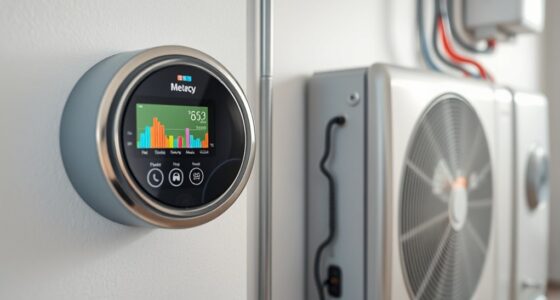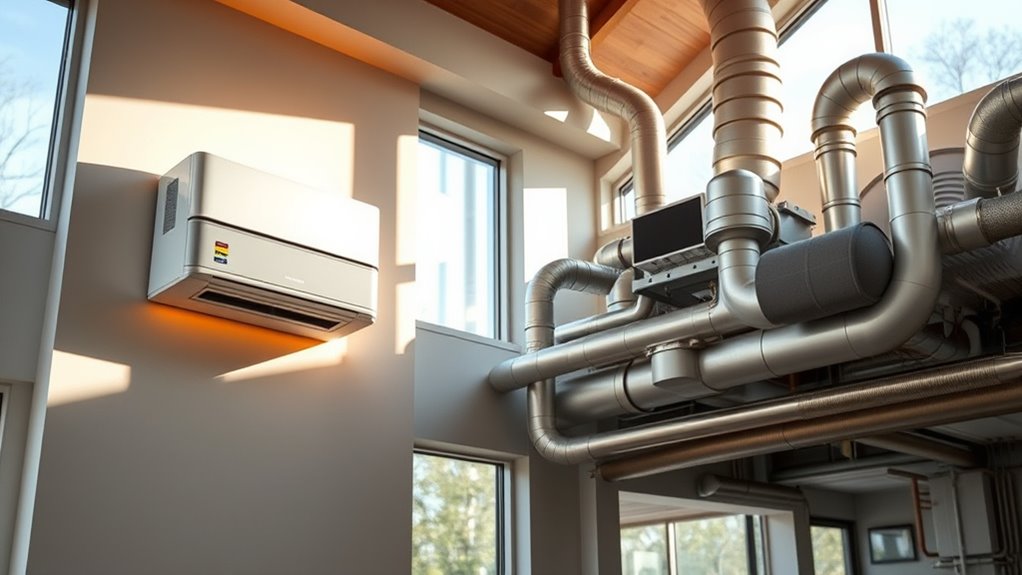

If you’re comparing energy use for heating and cooling, a heat pump often uses less electricity and is more efficient, especially in moderate climates. It transfers heat rather than generates it, saving you money while reducing your carbon footprint. Central HVAC systems may work better in very cold weather but tend to be less efficient overall. To discover which system best suits your climate and needs, exploring further can provide helpful insights.

Get backup power and energy gear delivered free with Prime
- Fast, free delivery on millions of items
- Prime Video, Amazon Music and more included
- Member-only deals all year
Key Takeaways
- Heat pumps generally consume less electricity and are more energy-efficient for heating and cooling in moderate climates.
- Central HVAC systems often use fossil fuels or electricity, leading to higher energy use and costs in cold or extreme climates.
- Heat pumps excel in energy savings and environmental impact, especially when properly maintained and used in suitable climates.
- HVAC units with high-efficiency furnaces can be more effective in very cold conditions but may increase energy consumption.
- Overall, heat pumps tend to have lower operational energy costs compared to traditional central HVAC systems.
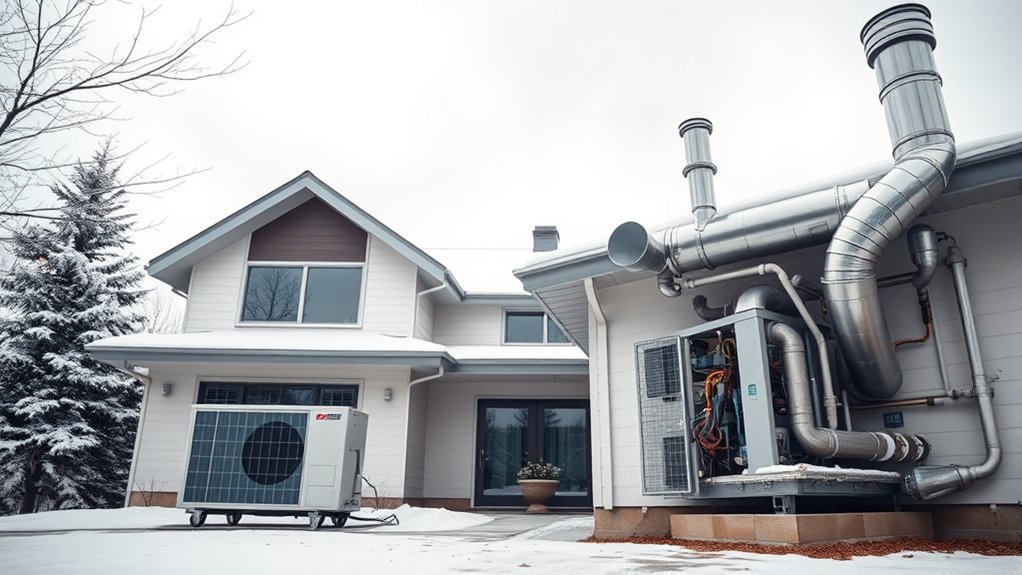
Heating and cooling account for a noteworthy portion of your home’s energy consumption, impacting both your bills and the environment. When choosing between a heat pump and a central HVAC system, understanding how each affects your energy efficiency and environmental impact can help you make a smarter decision. Both systems aim to keep your home comfortable, but they do so in different ways, leading to varying effects on energy use and sustainability.
Choosing between a heat pump and HVAC impacts your energy bills and environmental footprint.
A heat pump is designed to transfer heat rather than generate it. During winter, it pulls warmth from the outside air and moves it inside, while in summer, it reverses to remove heat from your home. Because it relies on transferring existing heat, a well-maintained heat pump can be highly energy-efficient, often consuming less electricity than traditional heating systems. This efficiency not only reduces your energy bills but also lessens your home’s carbon footprint, making it a more environmentally friendly choice. Plus, heat pumps work effectively in moderate climates, which means they can operate efficiently year-round, further lowering their environmental impact.
Conversely, a central HVAC system typically combines a furnace and an air conditioner, often powered by natural gas, oil, or electricity. These systems generate or compress refrigerants to heat or cool your home. While central HVAC units are powerful and can handle larger spaces effectively, they tend to be less energy-efficient than heat pumps, especially if they rely heavily on fossil fuels. This leads to higher energy consumption, increased utility costs, and greater environmental impact due to the emissions generated by burning fossil fuels or using inefficient electric systems. However, central HVAC systems are often more effective in extremely cold climates where heat pumps might struggle to extract enough heat from the outside air.
When comparing these systems, it’s essential to think about not only their initial cost but also their ongoing energy efficiency and environmental impact. A heat pump generally offers a better balance of both, especially in moderate climates, by providing efficient heating and cooling with less energy use. Upgrading to a heat pump can notably reduce your household’s carbon footprint, aligning your comfort needs with your environmental values. Additionally, understanding Gold IRA options can help you diversify your investments and secure your financial future while making environmentally conscious choices. Meanwhile, if you live in an area with harsh winters, a central HVAC system with a high-efficiency furnace might be more practical, though it may come with higher long-term energy costs and environmental considerations. Ultimately, your choice should reflect your climate, budget, and commitment to energy efficiency and environmental responsibility.
As an affiliate, we earn on qualifying purchases.
Frequently Asked Questions
How Do Climate Zones Affect Heat Pump Efficiency?
Climate zone impacts your heat pump’s efficiency variations. In warmer zones, heat pumps work efficiently year-round, providing both heating and cooling with less energy. However, in colder climates, their efficiency drops, and they may require supplementary heating. You should consider your climate zone when choosing a heat pump, as it directly influences performance and energy savings. Properly matching your system to your climate ensures maximum efficiency and comfort.
What Are the Maintenance Costs for Heat Pumps Versus Central HVAC?
You’ll find that maintenance costs for heat pumps are generally lower than central HVAC systems due to simpler components, but they may need more frequent servicing during extreme weather. The cost comparison depends on your climate and usage, with heat pumps often requiring less frequent service, saving you money over time. Regular inspections and filter changes keep both systems running efficiently, but overall, heat pumps tend to be more cost-effective in maintenance.
Can a Heat Pump Adequately Heat and Cool Large Homes?
Yes, a heat pump can adequately heat and cool large homes, but it depends on the model and installation quality. For DIY installation, make certain you follow instructions carefully to avoid issues. Keep noise levels in mind, as some units can be loud, especially in large spaces. Proper sizing and professional help can ensure your heat pump efficiently manages your home’s temperature, providing comfort year-round.
How Do Energy Rebates Influence the Choice Between Heat Pump and HVAC?
Rebate programs and financial incentives can be a game-changer in your decision-making. They often tip the scales toward choosing a heat pump over traditional HVAC systems by substantially cutting upfront costs. These incentives make energy-efficient options more accessible, encouraging you to save money now and in the long run. Keep an eye out for rebates—you might find yourself with a win-win situation, turning a good choice into a great one.
What Is the Lifespan Comparison Between Heat Pumps and Central HVAC Systems?
You’ll find that heat pumps generally have a slightly shorter lifespan, around 10-15 years, compared to central HVAC systems, which often last 15-20 years. This difference is due to variations in system durability and usage. To maximize your investment, consider regular maintenance and timely replacements, as these factors influence replacement intervals and make certain your system operates efficiently for as long as possible.
As an affiliate, we earn on qualifying purchases.
Conclusion
Choosing between a heat pump and central HVAC can totally transform your energy bills—think of saving enough to buy a yacht or take a world cruise! With a heat pump, you’ll slash your energy use so dramatically that your old system will seem like a relic from the Stone Age. Imagine cooling and heating your home effortlessly, while your wallet breathes a huge sigh of relief. Make the switch — your future self will thank you forever!
As an affiliate, we earn on qualifying purchases.
As an affiliate, we earn on qualifying purchases.
Halloween Picks
halloween
As an affiliate, we earn on qualifying purchases.